Roswell, New Mexico is one of the few places in America where a visitor can buy a coffee, photograph an alien mural, tour a serious research library, and casually debate whether the government misplaced a flying saucer before lunch. That is the magic of a video tour of Roswell with a true believer guide: it is part travel documentary, part history lesson, part roadside Americana, and part cosmic eyebrow raise.
The title sounds playful, but the subject has surprising depth. Roswell is not simply a town that sells green inflatable aliens to road-trippers. It is a real city with a military past, a famous 1947 incident, an international museum, a festival culture, and a community that has learned to turn mystery into identity. A good Roswell video tour does not just point a camera at alien statues. It follows the story through streets, former military sites, old newspaper headlines, museum exhibits, local businesses, and the desert landscape where rumor and record have been arguing for decades.
And when the guide is a true believer? Buckle up. The trip becomes less like a sightseeing reel and more like sitting beside someone who has memorized the footnotes, interviewed the witnesses, and is personally offended by vague explanations involving balloons.
Why Roswell Still Pulls Viewers In
The Roswell story begins in the summer of 1947, when rancher W. W. “Mac” Brazel found strange debris on a ranch northwest of town. The Roswell Army Air Field issued a now-famous press release saying it had recovered a “flying disc.” Soon after, military officials changed the explanation to a weather balloon. Later government reports connected the debris to Project Mogul, a classified Cold War balloon program designed to detect Soviet nuclear tests.
For skeptics, that is the practical explanation: secret military work, confusing materials, an awkward public statement, and decades of mythmaking. For believers, the official account leaves too many gaps, too many reversed statements, too many witness stories, and too much smoke for there to be no fire. Or, because this is Roswell, no landing scorch mark.
That tension is exactly why a Roswell UFO tour works so well on video. The viewer is not only watching buildings and streets. The viewer is watching a debate move through physical space. A good guide turns “something happened here” into a series of questions: Who saw what? Where was the debris taken? Why did the story change? Which buildings still stand? Which landmarks disappeared before anyone thought to preserve them?
The True Believer Guide: More Than a Character
A “true believer guide” is not just someone wearing an alien T-shirt and pointing toward the sky whenever a cloud looks suspicious. The best kind of believer-guide acts like a local historian with a strong thesis. UFO researcher Dennis Balthaser, for example, became known for his efforts to preserve Roswell’s UFO history and to keep attention on the sites connected to the 1947 incident. His kind of tour is valuable not because every viewer must accept every claim, but because it shows what belief looks like when it is organized, researched, and tied to place.
In that style of Roswell video tour, the guide becomes the bridge between the myth and the map. He may describe former locations connected with Roswell Army Air Field, point out where certain figures worked, explain where information allegedly moved, and lament the loss of older buildings that once gave the story more visible texture. The guide’s conviction gives the tour energy. A neutral narrator can explain Roswell. A true believer makes Roswell feel alive.
That said, a strong article or video should not confuse enthusiasm with proof. The smartest approach is to let the guide speak passionately while also giving viewers enough context to understand the official record. Belief is compelling; balance keeps the spaceship from crashing into the credibility barn.
Stop One: Downtown Roswell and the Alien Welcome Mat
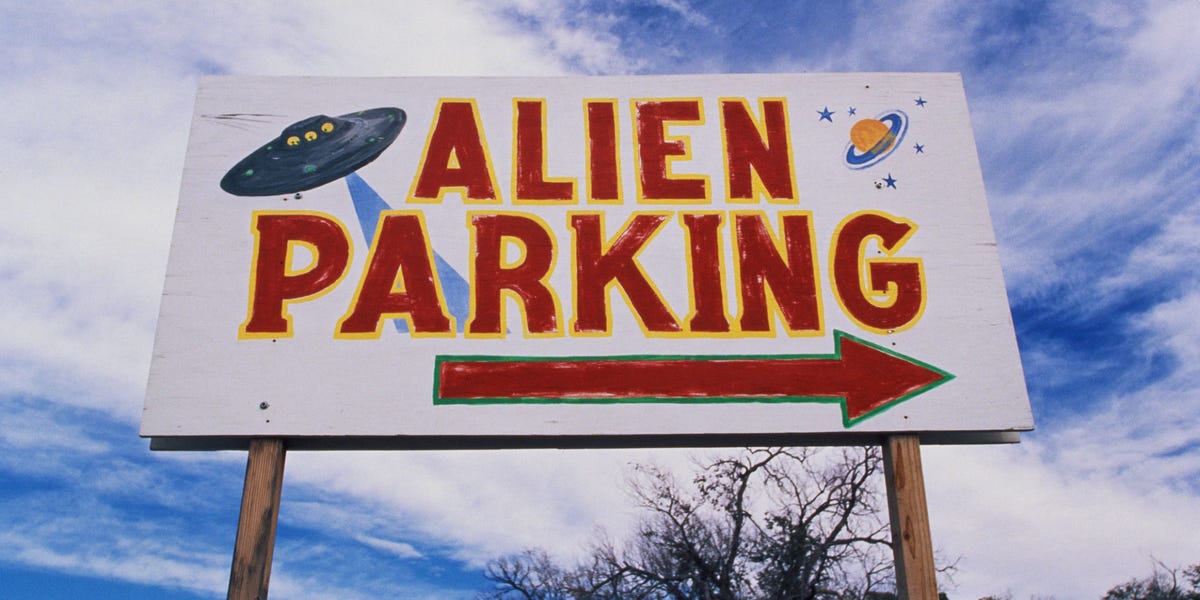
Downtown Roswell is where the town’s UFO identity becomes impossible to miss. Alien faces appear in windows, murals, shop signs, souvenirs, and the cheerful kitsch of Main Street. Even everyday civic branding has leaned into the theme. Roswell has become one of America’s most recognizable examples of a town turning a mystery into a tourism engine.
For a video tour, downtown is the perfect opening shot. It gives viewers instant visual payoff: storefront aliens, glowing green signs, painted saucers, and visitors posing like they have just received instructions from the mothership. The mood is friendly rather than frightening. Roswell’s public personality says, “Yes, we know why you came. Please enjoy the aliens, and maybe buy a magnet before returning to your planet.”
But downtown is not just a novelty backdrop. It is also where the legend has been commercialized, debated, and preserved. A guide can use the alien-themed streetscape to explain how Roswell changed from a quiet southeastern New Mexico city into a UFO tourism destination. The transformation took decades. The 1947 incident did not instantly turn the town into a saucer capital. Much of the broader popular fascination grew later, especially as UFO books, interviews, television shows, documentaries, and annual events revived the story.
Stop Two: The International UFO Museum and Research Center
No Roswell video tour is complete without the International UFO Museum and Research Center. Located on North Main Street, the museum is the symbolic heart of UFO tourism in Roswell. It presents exhibits on the Roswell Incident, UFO sightings, crop circles, Area 51, ancient astronaut theories, alleged abductions, and the wider cultural history of unidentified flying objects.
The museum is interesting because it does not function like a traditional science museum with a single settled conclusion. Its public-facing spirit is closer to: here are the claims, here are the documents, here are the witness stories, here is the cultural context, and now you may decide how far down the rabbit hole you would like to travel. Please watch your step; the rabbit may have security clearance.
The research center side matters, too. Roswell is not only selling alien lunchboxes. The museum’s research library has been described as housing thousands of books, periodicals, pamphlets, and video materials related to UFO phenomena. That gives the place a more serious layer. Researchers, writers, students, and enthusiasts visit not merely to snap photos but to examine how the story has been recorded, argued, repeated, and reinterpreted.
What a Video Should Capture Inside the Museum
A good video tour should not rush the museum like a person sprinting through an airport gift shop. It should pause on exhibit panels, archival-style images, newspaper headlines, dioramas, witness-centered displays, and the contrast between serious research material and delightfully theatrical alien imagery. That contrast is the Roswell experience in miniature: half archive, half cosmic carnival.
The guide can help viewers understand what they are seeing. For example, a believer may emphasize inconsistencies in the official story, the importance of eyewitness accounts, or the significance of locations tied to the handling of debris. A skeptical narrator may counter with Project Mogul, Cold War secrecy, misremembered timelines, and the role of later media. The strongest tour lets both forces exist without turning the whole thing into a shouting match with souvenir ray guns.
Stop Three: The Old Military Footprint
Roswell’s UFO legend cannot be separated from its military history. Roswell Army Air Field was an important World War II and early Cold War installation. After the formation of the U.S. Air Force, the base became Walker Air Force Base. Its military past gives the 1947 story much of its atmosphere: secrecy, classified programs, aircraft, intelligence officers, and a desert landscape where unusual equipment could plausibly appear without warning.
For a true believer guide, former military sites are especially important. They anchor the story in real geography. Instead of saying “the government took the debris somewhere,” the guide can discuss the roads, buildings, airfield connections, and local infrastructure that shaped how the incident entered public memory. Even when buildings are gone or access is limited, the act of standing near the historical footprint changes the way viewers process the story.
That is one reason preservation matters. When old structures disappear, the story becomes easier to flatten into myth. Physical places remind us that the Roswell Incident was not born as a meme. It involved real people, real offices, real newspapers, real military personnel, and a real Cold War moment when Americans were already anxious about the sky.
Stop Four: The Roswell UFO Tour Experience
Modern visitors can take guided UFO tours in Roswell that visit historic locations connected to the 1947 story. These tours typically combine transportation, storytelling, on-site interpretation, and a timeline of the incident. For travelers, this is often more satisfying than simply reading a plaque or wandering around downtown trying to guess which building once had cosmic importance.
In video form, the guided tour format is powerful because it creates movement. The camera follows the guide from place to place, and each stop adds another piece to the narrative. You might begin at a tourism hub, move past downtown landmarks, approach former military-related areas, and listen as the guide describes who allegedly saw what and where. The result feels almost like a detective walk-through, except the detective may believe the suspect came from Zeta Reticuli.
Visitors who are skeptical can still enjoy the tour. In fact, skepticism may make the experience better. Roswell is most interesting when approached with curiosity rather than certainty. The question is not only “Did aliens crash here?” It is also “How did one event become one of the most durable modern American legends?” A guided UFO tour answers that question through place, personality, and performance.
Stop Five: Spaceport Roswell and Immersive Alien Fun
Roswell’s newer attractions add a more immersive, entertainment-driven layer to the trip. Spaceport Roswell, for example, offers a virtual experience themed around space, time, and Roswell’s place in UFO lore. Attractions like this show how the city blends history with interactive tourism. Not every visitor wants to evaluate government reports over coffee. Some want to climb into the fantasy, take photos, and tell friends they survived a close encounter without even losing their sunglasses.
A video tour can use these attractions as tonal variety. After heavier discussion of military records and disputed testimony, an immersive stop gives the viewer a breath of fun. Roswell understands something many destinations forget: mystery is more memorable when people can play with it. The city does not force every visitor to choose between courtroom-level evidence and total disbelief. It lets people explore the spectrum, from research library to alien selfie booth.
Stop Six: The UFO Festival and the Joy of Believing Out Loud
The annual Roswell UFO Festival is one of the clearest signs that the city has embraced its extraterrestrial identity. The festival brings together UFO enthusiasts, families, speakers, authors, vendors, costume contests, entertainment, and a cheerful crowd of humans dressed as beings who may or may not require oxygen. It is part convention, part street fair, and part communal wink at the unknown.
For SEO readers planning a Roswell New Mexico travel itinerary, the festival season is a major consideration. The event usually happens around the Independence Day period, connecting the 1947 timeline with summer tourism. During festival days, downtown becomes louder, greener, stranger, and far more crowded. For a video creator, it is visual gold: costumes, music, vendor booths, families, pets dressed as aliens, and enough antennas to make a conspiracy theorist feel underdressed.
The festival also highlights an important truth: Roswell attracts believers and skeptics alike. Some people arrive searching for disclosure. Others arrive because aliens are fun. Many are somewhere in the middle, willing to laugh at the inflatable Martians while still wondering why the original story became so confusing.
What the Official Record Says
Any responsible Roswell article should acknowledge the official explanations. The U.S. Air Force concluded in the 1990s that the recovered debris was connected to Project Mogul, a balloon-borne surveillance program. Later claims about alien bodies were officially explained as confusion involving high-altitude test dummies, military accidents, and memories of events from different years becoming merged into a single dramatic narrative.
The National Archives has also made clear that Project Blue Book records do not contain documentation proving the 1947 Roswell crash was an extraterrestrial event. Project Blue Book, the Air Force’s historical UFO investigation program, recorded thousands of reports between 1947 and 1969, with a smaller number remaining unidentified, but “unidentified” does not automatically mean “alien.” It often means the available information was not enough to make a confident identification.
For skeptics, this settles the matter. For believers, it does not. They argue that official reports arrived decades later, that witnesses described unusual materials, that the press release was extraordinary, and that government secrecy during the Cold War makes simple explanations difficult to trust. This is why Roswell remains culturally powerful. It is not merely a question of evidence. It is a story about trust, memory, secrecy, and how Americans interpret authority when the first explanation changes.
Why Video Is the Best Format for Roswell
Roswell was practically built for video storytelling. The setting offers desert horizons, vintage military history, neon-green storefronts, museum exhibits, quirky roadside visuals, and tour guides who can make a street corner sound like the final scene of a science-fiction thriller. Written articles explain Roswell; video lets viewers feel the town’s odd rhythm.
A true believer guide adds narrative momentum. The guide’s voice becomes the thread connecting locations. Instead of dumping facts, he can say, “This is where that person worked,” or “That building used to matter,” or “According to witness accounts, this is where the story moved next.” Viewers may agree or disagree, but they keep watching because the guide believes the map itself has something to confess.
The best Roswell video tour also uses contrast. Show the museum, then show the street. Show official history, then show believer interpretation. Show the serious archive, then show a smiling alien statue holding a welcome sign. That contrast is not a flaw. It is the entire personality of Roswell: mystery with merch, history with humor, belief with a gift shop.
How to Plan Your Own Roswell UFO Tour
Start downtown. Give yourself time for the International UFO Museum and Research Center, especially if you enjoy reading exhibit text and exploring the research side of the story. Then consider a guided Roswell UFO tour to connect the major sites into a coherent timeline. If you are filming, capture establishing shots of Main Street, close-ups of alien-themed signs, exterior shots of museums and attractions, and wide desert views to give the story breathing room.
Add non-UFO stops if you have time. The Roswell Museum and the Robert H. Goddard Planetarium connect the city to art, science, and space history beyond alien folklore. Walker Aviation Museum helps place the military context in a broader frame. Bitter Lake National Wildlife Refuge, located near Roswell, offers a complete tonal shift with wetlands, birds, desert ecology, and the refreshing reminder that not everything in the sky needs to be suspicious.
For the best experience, arrive with curiosity. Do not treat Roswell as a joke, and do not treat every claim as confirmed truth. The town rewards people who can enjoy kitsch while respecting local history. In other words, bring both your camera and your critical thinking. A foil hat is optional, though admittedly photogenic.
Conclusion: Roswell Is a Story You Walk Through
A video tour of Roswell with a true believer guide works because Roswell is not just a destination. It is a living argument. The official explanation points to Project Mogul and Cold War secrecy. The believer tradition points to witness accounts, shifting statements, missing certainty, and places where the story still feels unresolved. Between those poles, Roswell has built a tourism culture unlike anywhere else in the United States.
Whether you arrive as a skeptic, a believer, or a traveler who simply enjoys strange American places, Roswell offers a rare combination: real history, theatrical fun, military context, museum research, local pride, and enough alien faces to make your camera roll look like it was hacked by a small green intern. The true believer guide does not have to convince every viewer. The guide only has to make the mystery visible.
And that is Roswell’s lasting power. It turns a question from 1947 into a tour you can still take today. Maybe it was a balloon. Maybe it was something else. Either way, the story landedand Roswell has been giving it directions ever since.
Experience Notes: What It Feels Like to Tour Roswell With a True Believer Guide
The first thing you notice on a Roswell video tour is that the town has a sense of humor about itself. The alien imagery is everywhere, but it does not feel mean-spirited or tacky in the lazy way people sometimes expect. It feels like a community-wide inside joke that visitors are warmly invited to join. A lamppost looks a little otherworldly. A storefront has alien eyes in the window. A family poses under a flying saucer sign, and nobody seems embarrassed. Roswell has decided that if the world is going to stare, it might as well wave back with three fingers.
Then the guide starts talking, and the mood changes. A true believer guide does not simply say, “Look, aliens!” He builds a timeline. He names people. He points to streets, former buildings, airfield connections, and newspaper history. He explains how the 1947 story moved from ranch debris to military response to public confusion. Even if you are skeptical, you begin to understand why the legend survived. The story has shape. It has characters. It has missing pieces. Most of all, it has places, and places are persuasive in a way that internet arguments are not.
Standing near a historic site while someone describes the alleged movement of debris or the role of a military office feels different from reading about it on a screen. The desert light helps, too. Southeastern New Mexico has a wide, exposed quality that makes secrets feel both impossible and inevitable. There is nowhere to hide, and yet somehow there is room for anything. The sky is huge. The roads stretch out. The silence between tour stops feels ready to be filled with speculation.
The museum portion of the experience adds another layer. Inside the International UFO Museum and Research Center, visitors move from playful expectation into a more documentary atmosphere. There are displays, witness-centered materials, newspaper references, and exhibits about broader UFO culture. Some sections feel theatrical, some feel archival, and some feel like a family argument that has been carefully mounted on panels. That mix is part of the charm. Roswell never lets you forget that belief is both emotional and organized.
The most memorable part of traveling with a true believer guide is not necessarily whether the guide changes your mind. It is how seriously he takes memory. He may talk about witnesses passing away, buildings being demolished, or stories becoming harder to verify as time moves on. That gives the tour a surprisingly human undertone. Beneath the aliens and shiny souvenirs is a question every historian recognizes: What happens when the people who remember are gone?
By the end, the experience feels less like chasing proof and more like examining how mystery becomes heritage. You may leave believing in Project Mogul. You may leave believing something stranger happened. You may leave believing only that Roswell makes excellent use of green paint. But you will probably leave with a better understanding of why this place still matters to so many people. Roswell is not just selling UFOs. It is inviting visitors to stand inside one of America’s most durable modern myths and look around for themselves.
Note: This article synthesizes public historical records, official Roswell tourism information, museum context, reputable reporting, and current travel details. Source links are intentionally omitted for publication-style readability.