At first glance, the idea sounds like something cooked up by a dockside philosopher after too much sun and not enough water: how can a boat powered by wind possibly travel faster than the wind itself? It sounds wrong in the same way “quiet thunder” sounds wrong. And yet it happens. Not just in theory, not just in glossy race promos, but in real sailingfrom iceboats and foiling catamarans to high-performance skiffs and record-setting speed machines.
The trick is that sailing is not just about being pushed from behind like a shopping cart in a parking lot. Fast sailing is really about aerodynamics, apparent wind, lift, and reducing drag. In other words, the boat is not merely “catching” the wind. It is using the wind with the sly efficiency of a pickpocket who also happens to be an engineer.
Once you understand that difference, the mystery starts to disappear. Better yet, the sport starts to look even cooler than it already did. And yes, that is possible.
Why This Sounds Impossible at First
Most people picture sailing in the simplest possible way: wind blows into a sail, the sail gets pushed, and the boat moves. That mental image is not completely wrong, but it is incomplete. It describes some downwind sailing, especially in slower boats, but it does not explain high-performance sailing at all.
If a boat were only pushed directly by the wind from behind, logic would say it could never go faster than the breeze pushing it. Once the boat matched wind speed, the air would no longer move across the sail in a useful way, and the push would fade. End of story. Cue the credits.
But real sailboats do something more interesting. They often travel at an angle to the wind, and their sails act more like wings than like bedsheets flapping on a clothesline. That changes everything.
The Real Secret: Apparent Wind
The most important idea in this whole story is apparent wind. True wind is the wind blowing over the water. Apparent wind is the wind the crew actually feels on the moving boat. Once the boat starts accelerating, the boat creates its own airflow component by moving forward through the air, and that combines with the true wind.
Think about sticking your hand out a car window. Even on a calm day, your hand feels wind because the car is moving. Sailboats experience the same effect. As they speed up, the apparent wind often becomes stronger and shifts forward. That means the sails can keep generating useful force even when the boat is already moving very fast.
This is why fast boats frequently sail on a reach rather than aiming straight downwind. By moving across the wind and building speed, they create more favorable apparent wind. Ironically, the faster they go, the more efficiently the sails can work. It is one of those rare feedback loops that sailors love and accountants probably dream about.
How Sails Really Work
Sails Are Airfoils, Not Just Wind Catchers
A well-trimmed sail behaves like an airfoil, much like an airplane wing turned upright. As air moves over both sides of the sail, differences in pressure and flow produce lift. That lift acts roughly perpendicular to the apparent wind. Some of that force tries to pull the boat sideways, which sounds unhelpful until the underwater parts join the party.
The Keel, Centerboard, and Foils Finish the Job
The keel, centerboard, rudder, and in modern boats the hydrofoils, resist sideways slip and redirect that force into forward motion. So the boat is not being shoved in a straight line by the wind. It is balancing aerodynamic lift above the water and hydrodynamic resistance below the water.
That balance is why a sailboat can move partly against the wind, and it is also why a well-designed fast boat can exceed true wind speed. The sail generates power from airflow, while the underwater surfaces give the boat something to push against. It is less like a kite drifting and more like a machine converting fluid forces into motion.
Why Some Points of Sail Are Much Faster Than Others
The fastest point of sail is usually a beam reach or a broad reach, not dead downwind. On these angles, the sail can generate strong lift with manageable drag, and the hull or foils can stay efficient. This lets the boat accelerate until the apparent wind swings forward. Once that happens, the boat can keep acting like a wing-powered vehicle rather than a parachute.
That is also why high-performance race boats often take what looks like a longer route downwind. They are not lost. They are not confused. They are not trying to ruin GPS maps for everyone else. They are sailing hotter angles, gybing back and forth, and often making better velocity made good toward the finish than a boat sailing straight downwind.
In plain English: the zigzag can be faster than the straight line.
What Keeps Ordinary Boats from Doing This Easily
If sailing faster than the wind is possible, why does every sleepy weekend cruiser not do it all afternoon? Because speed is not only about power. It is also about drag.
Traditional displacement sailboats drag a lot of hull through the water. As speed rises, wave-making resistance rises sharply too. At some point, the boat is spending more energy climbing its own bow wave than accelerating. That is why many cruising monohulls feel excellent at five to eight knots but do not suddenly turn into aquatic fighter jets.
High-performance boats reduce drag in several ways. Multihulls are lighter and narrower. Skiffs plane on top of the water. Foiling boats lift much of the hull clear of the surface. Iceboats slash friction to almost comical levels by running on blades over hard ice. Once drag drops dramatically, the apparent-wind magic gets far more dramatic too.
Modern Proof: Boats That Routinely Outrun the Breeze
Foiling Race Boats
Modern foiling race boats have made the “faster than the wind” idea visible to people who never cared about sailing until a boat appeared to levitate and then sprinted across a racecourse like it had broken several maritime laws. SailGP’s F50 catamarans and America’s Cup AC75 yachts are prime examples.
These boats use hydrofoils to lift the hull largely out of the water, drastically cutting drag. Once airborne, they accelerate hard, and the apparent wind shifts so far forward that even downwind sailing begins to resemble high-speed reaching. That is why some of these boats use flatter sail plans and surprisingly forward apparent-wind angles. At extreme speed, the geometry of sailing changes.
In practical terms, this means a foiling race boat can travel at multiples of true wind speed in the right conditions. The boat is still absolutely wind-powered. It is just using the wind through lift and efficient force conversion rather than through a simple push.
Iceboats
If you want the purest demonstration of this principle, look at iceboats. Because steel runners on smooth ice create so little friction, iceboats can reach three, four, or even five times wind speed in favorable conditions. That sounds outrageous until you remember that the biggest enemy of speed is usually drag, and ice takes a sledgehammer to that problem.
Iceboats have been showing humans this truth for generations: when you reduce resistance enough, the wind can do a ridiculous amount of work.
Record-Speed Sailing Machines
Speed specialists push the idea even further. Designs built specifically for outright sailing speed focus on aligning aerodynamic force, keeping the boat stable, and minimizing every unnecessary source of drag. The result is a category of craft that no longer looks like the sailboat in a children’s picture book. It looks more like science fiction wearing a wetsuit.
Can You Go Directly Downwind Faster Than the Wind?
This is where the conversation gets spicy.
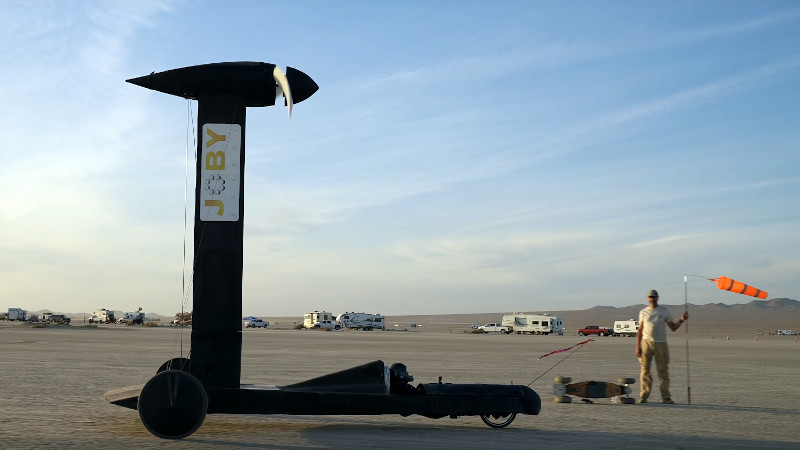
A conventional sailboat usually goes fastest by sailing at angles, not by aiming squarely downwind. However, some wind-powered vehicles have shown that it is possible to travel directly downwind faster than the wind under specialized conditions. Land-based craft such as the famous Blackbird cart demonstrated this using a propeller and drivetrain system that extracted energy from the difference between air speed and ground speed.
That does not mean your average sailboat can casually point dead downwind and blast past the breeze like it is late for dinner. But it does prove something important: “faster than the wind” does not violate physics. It only violates our first, oversimplified intuition about how wind-powered motion works.
For most sailors, the practical lesson is simpler: the fastest route downwind is often not dead downwind at all. It is a series of fast, efficient angles that keep the apparent wind alive and the boat loaded up.
Why Foiling Changed Public Understanding of Sailing
For decades, sailors understood apparent wind in theory and in practice, but the wider public rarely saw it. Then foiling arrived on television and social media in a way no textbook ever could. Suddenly, people could watch boats accelerate into flight, hit astonishing speeds, and throw rooster tails while still being driven by sails.
Foiling made visible what had always been true: sailing is not just an old-fashioned mode of transport; it is applied fluid dynamics at full volume. It is a contest between lift, drag, angle, and stability. That is why today’s fastest sailboats look less like museum pieces and more like aerodynamic experiments that accidentally wandered into a regatta.
And honestly, good for them.
What This Means for Everyday Sailors
You do not need a carbon-fiber foiler or a seven-figure budget to appreciate the principle. Even on ordinary dinghies, keelboats, and sport boats, sailors feel the same physics at work. Trim the sails right, hit the right angle, build speed, and the apparent wind shifts forward. Suddenly the helm gets lighter, the wake changes, the boat stands up, and everything feels smoother and more alive.
That little surge is the local, affordable version of the same miracle you see in elite racing. The scale is different. The grin is not.
Sailing faster than the wind itself is not a magic trick. It is what happens when design, trim, balance, and physics finally start pulling in the same direction.
Experiences That Make the Idea Feel Real
Ask sailors what it feels like when a boat starts outrunning the breeze, and the answers are remarkably similar. First comes surprise. Not because they do not understand the theory, but because the body notices the contradiction before the mind explains it. The water noise rises, the hull feels lighter, and yet the wind on the face does not disappear. In many cases it feels stronger. That is the delicious weirdness of apparent wind: the boat accelerates, and instead of the world getting calmer, everything feels more charged.
On a fast reach in a dinghy or sport boat, the sensation is immediate. The leeward side settles, the tiller pressure cleans up, and the boat stops feeling sticky. It starts feeling eager. Crew who were bracing themselves suddenly shift from survival mode to fine-tuning mode. They stop asking, “Are we okay?” and start asking, “Can we press a little more?” That is usually the moment sailing changes from transportation to addiction.
On foiling boats, sailors often describe takeoff as a moment of quiet hidden inside speed. Before foiling, the hull slaps and drags through chop. After takeoff, much of that noise disappears, and the boat feels cleaner, sharper, and strangely more surgical. The acceleration is dramatic, but the real shock is the reduction in mess. Less hull in the water means less pounding, less turbulence, and a sense that the boat is no longer negotiating with the sea so much as skimming over it with aristocratic impatience.
Iceboaters describe the experience even more vividly because the friction is so low and the speed builds so quickly. Veterans talk about steering by feel, tiny corrections, and the surreal realization that the craft is covering distance at a rate that makes the landscape behave differently. Corners arrive sooner. Gusts feel heavier. The wind becomes less like weather and more like a live power source connected directly to your hands. It is sailing stripped to its essentials: force, balance, nerve, and a healthy respect for whatever frozen lake you have decided to trust with your dignity.
Even cruisers on modest monohulls get a taste of this. There is a moment on a good dayclean water, steady breeze, sails trimmed just rightwhen the boat locks into a groove. The wake narrows. The bow wave softens. The rig hums. Conversation on deck gets interrupted not by danger but by mutual recognition. Everyone can feel that the boat has found another gear. Nobody says, “Ah yes, the vector relationship between true wind and apparent wind is now favorable.” They just smile like fools. Which, to be fair, is the correct human response.
That is why the phrase “faster than the wind” matters beyond headlines. It captures the emotional payoff of sailing well. You are not overpowering nature. You are learning how to cooperate with it so effectively that the result feels impossible. The best experiences on the water come from that partnership: reading pressure correctly, choosing the right angle, trusting the boat, and letting physics reward precision. When it all clicks, the boat does not feel as though it is being pushed. It feels released.
And that may be the most beautiful part of the whole phenomenon. Sailing faster than the wind itself is not about beating the wind. It is about understanding it deeply enough to let it do more for you than common sense ever expected.
Conclusion
Sailing faster than the wind itself sounds like a contradiction until you understand the tools involved: apparent wind, airfoil-shaped sails, underwater lift, smart angles, and ruthless drag reduction. Once those pieces come together, the impossible starts looking inevitable. High-performance boats prove it dramatically, but the underlying principle exists across the whole sport. Every sailor who has felt a boat accelerate onto a reach has brushed against the same truth.
The wind is not just something that pushes. In skilled hands and on the right machine, it becomes something you can shape, multiply, and turn into speed that seems to mock the forecast. That is the real wonder of sailing. It is not that the boat breaks physics. It is that it uses physics so elegantly that the result feels like magic anyway.