Randomly generating Atari games sounds like something a sleep-deprived programmer would whisper at 2:00 a.m. while surrounded by coffee cups, pixel art, and one suspiciously warm circuit board. Yet the idea is more than retro-gaming mischief. It sits at the crossroads of procedural content generation, artificial intelligence, classic game design, and one of the most beautifully stubborn machines ever sold: the Atari 2600.
The Atari 2600 was not built for luxury. It had a tiny amount of memory, no modern frame buffer, and a graphics system that expected programmers to race the television beam line by line. That sounds awful until you realize it is also the perfect playground for creative constraints. When a machine gives you almost nothing, every enemy, maze, rule, sound effect, and score counter has to earn its rent.
Randomly generating Atari games means using algorithms to create game elements automatically: levels, enemy behavior, objectives, color palettes, scoring rules, difficulty curves, or even entire playable concepts. Instead of hand-designing every screen, the system rolls the dice with rules. The trick is making sure the dice do not produce a game where the player spawns inside a wall, loses instantly, and begins questioning the meaning of electricity.
What Does “Randomly Generating Atari Games” Actually Mean?
In modern game development, procedural generation usually refers to content created by code rather than manually placed by designers. A procedural system can build a dungeon, shuffle item locations, generate terrain, vary enemy waves, or remix objectives. In the Atari context, the phrase becomes even more interesting because the hardware pushes the generator to be small, fast, and brutally efficient.
A random Atari game generator could work at several levels. At the simplest level, it might create new variations of a familiar game: a tank battle with different walls, a shooter with new enemy speeds, or a maze game with fresh layouts every run. At a deeper level, it might generate rules: what counts as a collision, what gives points, what ends the game, and how the player wins. At the wildest level, it could generate a complete ROM-like design from a set of building blocks.
The important word is not “random.” It is “structured.” Pure randomness is chaos with a joystick. Good procedural generation uses constraints, patterns, probability, and testing. It makes surprising results while still respecting playability. A generated Atari-style game should feel like it came from an alternate 1982 cartridge catalog, not like the console sneezed into assembly language.
Why the Atari 2600 Is a Perfect Lab for Procedural Game Design
The Atari 2600 popularized cartridge-based home gaming and helped turn video games into living-room culture. It also forced programmers to become magicians. The system used a 6507 processor, had only 128 bytes of RAM, and generated visuals through the Television Interface Adaptor, or TIA. Instead of drawing a full screen and then displaying it, a game had to update video registers as the television drew each scanline.
That limitation matters for random generation. On modern hardware, a generator can store huge maps, simulate thousands of objects, and politely ask the GPU to make everything shiny. On the Atari 2600, storing a large world was not realistic. A designer had to think in tiny states, reusable patterns, mirrored playfields, compact lookup tables, and on-the-fly decisions.
This is where random generation becomes elegant. If you cannot store an entire maze, you generate one row at a time. If you cannot store dozens of enemy formations, you create them from a seed number. If you cannot include massive art assets, you reuse sprites in clever ways. The machine’s weakness becomes a design philosophy: make the rules rich enough that small parts produce big variety.
Classic Atari Already Had the Seeds of Random Design
Random generation is not some alien technology dropped onto retro games by modern AI researchers wearing hoodies. Early Atari games already used variation, modes, difficulty switches, randomized positions, and compact design tricks. The famous pack-in game Combat offered many variations, changing vehicles, obstacles, missile behavior, and battlefield conditions. That was not procedural generation in the modern sense, but it showed how a small cartridge could feel larger through recombination.
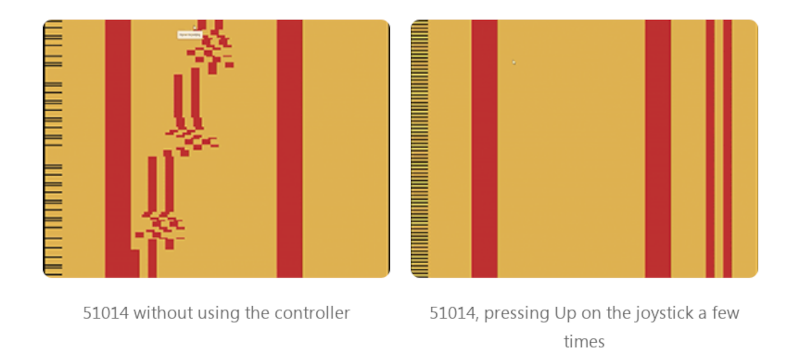
The Atari 2600 maze game Entombed is one of the most fascinating examples. Its maze could not simply be stored as a huge finished map. Instead, researchers studying the game found that it generated maze rows efficiently as the game ran. That approach captured the spirit of procedural design: create the next slice of the world only when needed, using a compact algorithm that fits the machine.
Those old design choices are useful lessons for anyone interested in randomly generating Atari games today. The best generator does not need infinite memory. It needs a smart grammar. It needs rules that say, “A wall can appear here, but not if it traps the player unfairly.” It needs probabilities that create tension without creating nonsense. Most of all, it needs a strong sense of what makes an Atari game feel like an Atari game.
The Core Ingredients of a Random Atari Game Generator
1. A Small Library of Game Verbs
Atari-style games usually revolve around simple verbs: move, shoot, dodge, collect, bounce, chase, block, escape, survive. A generator can begin by choosing one or two of these verbs. For example, “move and collect” might create a maze scavenger game. “Dodge and shoot” might create a space shooter. “Bounce and block” might create a strange cousin of Breakout that looks like it was invented during a thunderstorm.
2. A Rule System
The rules define what objects do. Does touching the enemy end the round? Does collecting a dot increase speed? Does the missile wrap around the screen? Can the player destroy walls? A random generator can combine rule modules, but it must test whether the result is playable. “The player wins by touching the enemy, but touching the enemy also causes instant death” is not a game. It is a tiny legal dispute.
3. A Visual Grammar
The Atari 2600 had limited on-screen objects, so a generator must think like a 1980s programmer. Use mirrored playfields. Recolor sprites. Reuse shapes as different objects. A square can be a treasure, a shield, a reactor core, or a haunted sandwich depending on the rules around it. Atari graphics are abstract by nature, which gives procedural systems room to improvise.
4. Seeds and Repeatability
A seed is a starting number that controls the generator. The same seed creates the same result, which is essential for debugging and sharing. If a generated game turns out to be brilliant, the designer can save the seed. If it creates a maze that traps the player forever, the designer can also save the seed, print it out, and ceremonially blame it.
5. Automated Playtesting
This is where artificial intelligence becomes useful. The Arcade Learning Environment made Atari 2600 games a major testbed for AI agents. A random Atari game generator can borrow that mindset by using automated agents to test whether a game is playable, whether progress is possible, and whether the difficulty curve is reasonable. The goal is not to replace human taste. The goal is to catch obvious disasters before a human tester loses five minutes to a rectangle that cannot jump.
Procedural Generation Meets Artificial Intelligence
Procedural content generation has grown into a serious field of game research. It includes search-based methods, evolutionary methods, grammar-based methods, constraint solving, machine learning, and hybrid systems. For Atari-style games, these approaches can be scaled down into compact experiments.
An evolutionary generator might create hundreds of small game variations, test them, rank them, mutate the best ones, and repeat the process. Over time, the system could discover surprisingly fun ideas: a shooter where enemies become shields, a maze where walls shift after scoring, or a chase game where the safest route becomes dangerous if you wait too long.
A grammar-based generator might define game structures like sentences. For example: “player collects object while avoiding enemy in arena.” Swap the noun and verb modules, and the system creates new designs. A constraint-based generator can enforce rules such as “the player must have a path to every collectible” or “the first enemy cannot reach the player in under three seconds.” This keeps randomness from turning into comedy, unless comedy is the goal.
Modern AI can also analyze generated games. It can estimate whether the player has meaningful choices, whether scoring rewards skill, and whether a level has enough variety. Still, Atari-style generation benefits from restraint. The point is not to make a giant AI system that produces a 900-page lore bible for a two-pixel spaceship. The point is to create tight, playable, surprising games from minimal parts.
Specific Examples of Random Atari Game Ideas
The Endless Maze Runner
This game generates a vertical maze row by row. The player moves downward while the maze scrolls upward. Some walls are fixed, some are random, and some respond to the player’s score. The generator must guarantee that at least one route stays open most of the time, while still creating pressure. Add a rare “wall breaker” item, and suddenly the player has strategy instead of pure panic.
The One-Screen Alien Garden
The player collects energy pods while avoiding creatures that move according to randomly selected behavior patterns. One creature chases directly. Another patrols. Another waits until the player scores, then accelerates like it remembered it left the oven on. The map is generated from mirrored playfield shapes, making it feel authentic to the hardware.
The Mutating Tank Duel
Inspired by early combat games, this generator creates small arenas with different wall layouts, missile rules, and visibility conditions. Some rounds have bouncing shots. Some have fog. Some have disappearing barriers. The basic game stays understandable, but each seed creates a new duel.
The Cosmic Delivery Job
The player pilots a ship from one side of the screen to the other, delivering cargo while asteroids, enemy drones, and fuel limits are generated from a seed. The generator changes object speed, spawn timing, and scoring bonuses. The result feels like an arcade challenge that keeps saying, “Sure, you survived last time, but what about this nonsense?”
The Biggest Challenge: Making Random Feel Designed
The main danger in randomly generating Atari games is not technical failure. It is blandness. A generator can create a thousand games that technically work but feel like chores with pixels. Good Atari design needs instant readability, fast feedback, and a reason to play again. The player should understand the goal in seconds, then discover depth through motion.
That means every generated game needs a strong loop. Move, risk, score, recover. Shoot, dodge, reposition, repeat. Collect, escape, choose a route, survive. The loop is the heartbeat. Randomness should decorate and challenge that loop, not bury it under confusing rules.
Another challenge is fairness. A generated game may be difficult, but it should not be cruel by accident. If enemies spawn directly on the player, the experience feels broken. If a maze has no exit, the player blames the designer, not fate. A good generator checks its own work. It can simulate movement, verify paths, measure reaction time, and reject bad layouts before the player sees them.
Why This Matters Beyond Nostalgia
Randomly generating Atari games is not just a retro hobby. It teaches modern designers how to create more with less. Today’s games can become enormous, expensive, and visually overwhelming. The Atari 2600 reminds us that strong rules matter more than asset volume. A few objects, a clear goal, and a clever twist can still create memorable play.
It also offers a compact testing ground for AI. If an AI system can generate a playable Atari-style game, explain its rules, test its difficulty, and improve it through feedback, that same design logic can apply to larger games. Atari constraints make the problem smaller, cleaner, and easier to study. The little machine becomes a laboratory for creativity.
There is also cultural value. Modern homebrew developers continue to build new Atari 2600 games, and official releases like Mr. Run and Jump 2600 show that the platform still has life. Random generation could give homebrew creators new tools: prototype helpers, level generators, challenge-mode systems, or cartridge concepts where every playthrough feels different.
Practical Workflow for Building a Random Atari-Style Game
A smart workflow begins with boundaries. Choose one genre, one player verb, and one type of generated content. Do not begin by trying to generate every possible Atari game in the universe. That way lies madness, and possibly a screen full of angry squares.
Start with a template. For example: “single-screen collector game.” Define the player, collectible, enemy, wall, score, and fail condition. Then create a generator that places walls and collectibles. Add checks for reachable paths. Next, randomize enemy behavior from a small list. Finally, test many seeds and keep the ones that feel exciting.
Once the design works, add personality. Give each generated game a title, color scheme, and tiny premise. A maze collector becomes Moon Cheese Mission. A dodging game becomes Asteroid Janitor. A tank duel becomes Laser Parking Lot. Atari game names have always had room for bold simplicity, and random generation should embrace that charm.
Conclusion
Randomly generating Atari games is a delightful mix of engineering discipline and creative chaos. It asks one big question: how much fun can you squeeze out of tiny rules, tiny memory, and tiny sprites? The answer is: a lot, if the generator respects the player.
The Atari 2600 remains a powerful reminder that limitations can sharpen design. Its hardware forced developers to invent tricks that still feel clever decades later. Procedural generation brings a modern twist to that old challenge. By combining seeds, rules, constraints, automated testing, and retro-style design grammar, creators can produce games that feel surprising without feeling broken.
In the end, randomly generating Atari games is not about replacing human designers. It is about giving them a strange little idea machine. Sometimes the machine will produce junk. Sometimes it will produce a game where a blue square chases a yellow square through a haunted maze and somehow, against all odds, it is fun. That is the magic of Atari: even randomness has to learn good manners.
Experience Notes: What Randomly Generating Atari Games Feels Like
Working with random Atari-style game generation feels less like commanding a powerful computer and more like negotiating with a tiny, opinionated goblin that lives inside a cartridge. You begin with a simple idea: “Let’s generate a maze.” Ten minutes later, you realize the maze has no exit, the player is trapped in the corner, and one enemy has discovered a pathfinding strategy best described as “psychological warfare.”
The first lesson is humility. Randomness does not care about your design document. It will happily produce a level that looks interesting but plays terribly. That is why testing becomes part of the creative process. You generate a layout, run it, break it, adjust the rules, and try again. After enough attempts, you stop asking, “Can the system make something random?” and start asking, “Can the system make something I would willingly play twice?”
The second lesson is that constraints are weirdly freeing. Because Atari-style games are small, you do not waste time designing 47 kinds of collectible hats. You focus on essentials: movement, danger, reward, timing, and clarity. A single wall placement can change the entire feel of a round. One enemy speed adjustment can turn a sleepy maze into a pulse-raising escape. Small changes matter, which makes experimentation satisfying.
There is also a special joy in watching a generator surprise you. Maybe it creates a battlefield where bouncing shots become hilarious. Maybe it places obstacles in a way that forces a risky shortcut. Maybe it chooses colors that accidentally make the game look like a disco emergency. Not every surprise is good, but the good ones feel like discovering a lost prototype from an alternate timeline.
The best experience comes when the generator starts behaving like a collaborator. You set the boundaries, and it offers variations you might not have designed by hand. You reject the dull seeds, save the promising ones, and refine the rules. Eventually, the process feels like panning for gold in a river made of pixels. Most of what appears is ordinary gravel. Then suddenly, there it is: a tiny game with a clear goal, a memorable rhythm, and just enough chaos to make you smile.