Note: This article is written as original web-publishing content based on real information about Iceland’s landscapes, wildlife, photography conditions, and responsible travel practices. Replace the suggested photo captions with your actual 38 images before publishing.
Iceland is the kind of place that makes a camera feel underqualified. One minute you are standing beside a waterfall so loud it rearranges your thoughts, and the next you are watching a puffin pose on a sea cliff like it has just signed with a modeling agency. The island has a dramatic personality: volcanoes, glaciers, black-sand beaches, mossy lava fields, steaming geothermal valleys, restless weather, and wildlife that seems designed by nature’s most imaginative art department.
Traveling around Iceland to photograph landscapes and wildlife is not simply a matter of pointing a lens at pretty things. It is a lesson in patience, timing, humility, and waterproof clothing. Lots of waterproof clothing. The country rewards early mornings, late evenings, careful planning, and the ability to laugh when the wind turns your tripod into a musical instrument.
This photo journey brings together the spirit of a 38-picture Iceland travel gallery: sweeping landscapes, intimate wildlife encounters, practical photography tips, and the little behind-the-scenes moments that happen between the postcard shots. Whether you are planning your own Iceland photography trip or simply daydreaming from a warm chair with coffee, here is what makes this island unforgettable.
Why Iceland Is a Dream Destination for Landscape Photography
Iceland is often called the “Land of Fire and Ice,” and for once, the nickname is not marketing fluff wearing hiking boots. The island sits on the Mid-Atlantic Ridge, where the North American and Eurasian tectonic plates pull apart. Add a volcanic hotspot beneath the surface, and you get a place where the ground feels alive. Lava fields stretch like frozen waves, geothermal steam curls from the earth, and mountains appear carved by both ancient ice and explosive fire.
For photographers, this creates an unusual advantage: variety within short driving distances. A single day may include sunrise over a glacier lagoon, midday at a basalt beach, afternoon beside a waterfall, and sunset beneath a sky that looks like it has been edited by someone who enjoys drama. Iceland does not ask photographers to choose one mood. It offers the whole emotional menu.
Glaciers, Lagoons, and Ice That Glows Blue
Glaciers cover a significant part of Iceland, and they are among the country’s most powerful visual subjects. Vatnajökull, one of Europe’s largest ice caps, dominates the southeast and feeds glacier tongues, rivers, and lagoons. At places like Jökulsárlón Glacier Lagoon and Diamond Beach, broken chunks of ice drift, roll, and wash onto black volcanic sand. The contrast is almost unfair: blue ice, dark shore, white foam, gray sky. Even a phone can come home feeling like a professional camera.
The trick is to slow down. Ice changes with the light. A dull-looking piece can suddenly glow when the sun slips through clouds. Long exposures can soften the Atlantic waves around ice blocks, while faster shutter speeds capture splashes as they explode against the shore. The best photograph is often not the biggest iceberg, but the one with shape, texture, and a sense of movement.
Waterfalls That Steal the Show
Iceland has waterfalls in such abundance that after a week you may become dangerously casual about them. “Oh look, another enormous cascade falling off a cliff like a mythological curtain.” But each waterfall has its own personality. Seljalandsfoss lets visitors walk behind the falling water. Skógafoss delivers classic power and mist. Goðafoss spreads elegantly across a horseshoe-shaped ledge. Dettifoss feels less like a waterfall and more like the planet clearing its throat.
Waterfall photography in Iceland benefits from a wide-angle lens, a microfiber cloth, and emotional resilience. Mist will get everywhere. Your lens will look like it has been sneezed on by a cloud. A neutral-density filter can help create silky water in daylight, while a circular polarizer can reduce glare on wet rocks and deepen colors in the surrounding landscape.
Wildlife Photography in Iceland: Small Subjects, Big Personality
Iceland’s wildlife may not include lions, bears, or tropical parrots, but what it does offer is deeply connected to the island’s rugged environment. The animals here are resilient, seasonal, and often wonderfully photogenic. Wildlife photography in Iceland is less about rushing and more about observing. The best images come when you respect distance, understand behavior, and let the animal remain the main character of its own story.
Atlantic Puffins: The Clowns of the Cliffs
Atlantic puffins are among Iceland’s most beloved summer visitors. They arrive along coastal cliffs during the warmer months, nesting in grassy burrows and flying out to sea to fish. With bright beaks, round bodies, and slightly confused expressions, puffins have mastered the art of looking adorable while doing extremely practical seabird things.
Popular viewing areas include Látrabjarg in the Westfjords, Dyrhólaey on the south coast, Borgarfjörður Eystri in the east, and several offshore islands. Early morning and evening often provide softer light and more activity near the nesting areas. A telephoto lens is ideal, not because puffins are always far away, but because getting too close can disturb them and damage fragile cliffside habitat.
The Arctic Fox: Iceland’s Native Survivor
The Arctic fox is Iceland’s only native land mammal, and photographing one feels like winning a quiet lottery. These foxes are masters of adaptation, living in harsh coastal and highland environments where weather can shift from gentle to theatrical in minutes. Some are white in winter, blending into snow, while blue morph foxes remain darker and often fit beautifully into rocky coastal scenes.
Hornstrandir Nature Reserve in the Westfjords is one of the best-known places for Arctic fox encounters, though reaching it requires planning, respect for wilderness conditions, and usually boat access. For photographers, the goal should never be to chase or bait wildlife. The better approach is to wait, watch, and let the fox move naturally through the frame. A calm image of a fox in its environment often tells a stronger story than a tight portrait taken at the animal’s expense.
Whales, Seals, and the Wildlife of the North Atlantic
Iceland’s surrounding waters are rich feeding grounds for marine life. Whale-watching tours from Reykjavík, Húsavík, Akureyri, and other coastal towns may encounter humpback whales, minke whales, white-beaked dolphins, harbor porpoises, and occasionally other species. Húsavík is especially famous for whale watching, and the north coast can be excellent during the summer season.
Photographing whales is a beautiful exercise in humility. You will aim at empty water many times. You will photograph splashes that looked much more impressive in person. Then, suddenly, a tail rises, a back arches, or a whale breathes in golden light, and every missed shot becomes part of the price of admission.
Seals are another rewarding subject, often seen lounging along beaches or near glacier lagoons. As with all wildlife, distance matters. A longer lens keeps both photographer and animal comfortable, and images that include habitat can feel more honest than extreme close-ups.
38 Photo Moments From an Iceland Journey
A strong Iceland photo essay needs variety. It should move from grand landscapes to small details, from famous landmarks to unexpected roadside scenes. Below are 38 suggested photo captions that can structure a web gallery or inspire your own Iceland photography collection.
- Sunrise over Jökulsárlón Glacier Lagoon, where blue ice drifts like floating sculpture.
- Ice diamonds scattered across black sand at Diamond Beach.
- Skógafoss waterfall thundering into mist under a pale morning sky.
- A lone traveler in a red jacket for scale against a giant basalt cliff.
- Puffins resting near their burrows on a summer sea cliff.
- A winding road disappearing into the mossy lava fields of the south coast.
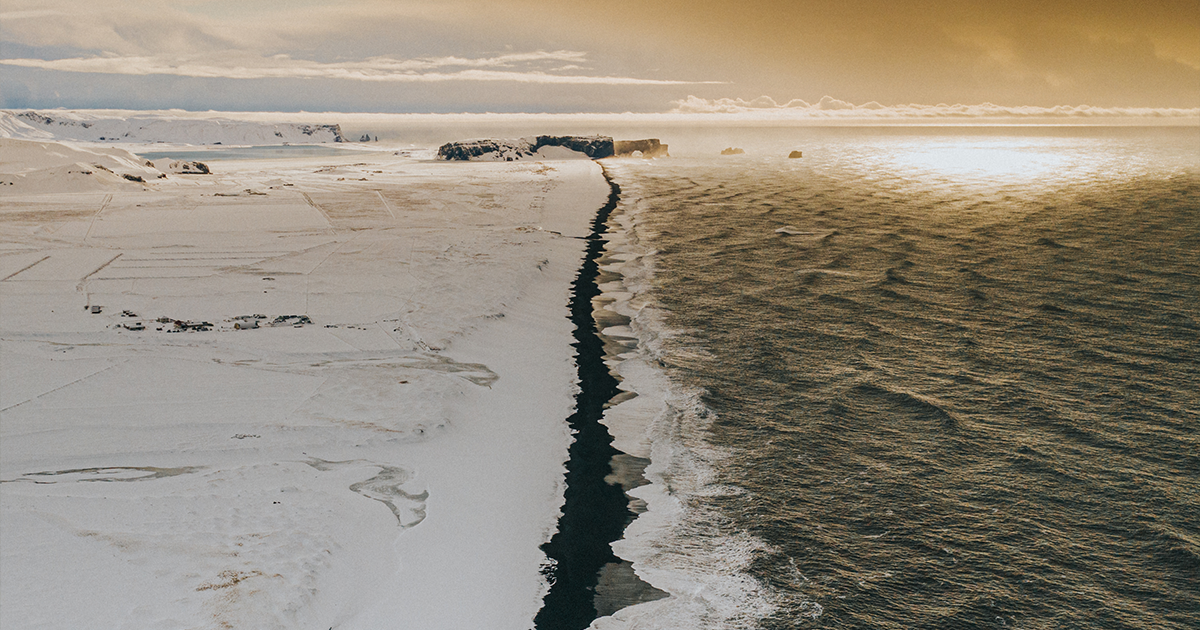
- Reynisfjara black-sand beach with sea stacks rising offshore.
- Storm clouds rolling across the mountains near Vík.
- Icelandic horses standing in wind, looking wiser than everyone in the car.
- Seljalandsfoss glowing from behind the curtain of falling water.
- A close-up of volcanic rock covered in soft green moss.
- Arctic terns diving and calling above a coastal nesting area.
- A glacier tongue stretching down from Vatnajökull.
- Reflections of snowy peaks in a still fjord.
- Steam rising from a geothermal field like the earth is making soup.
- A rainbow forming in waterfall spray after a sudden break in the clouds.
- A seal watching quietly from dark water near a lagoon.
- Basalt columns arranged like nature’s pipe organ.
- A gravel road leading toward the remote highlands.
- Golden-hour light washing over a sheep-dotted valley.
- Humpback whale fluke lifting above the North Atlantic.
- The blue curve of an ice cave wall in winter.
- Small wildflowers growing beside a lava field.
- An Arctic fox moving across rocks in the Westfjords.
- Goðafoss waterfall under soft evening light.
- A photographer bracing against the wind behind a tripod.
- Cloud shadows sliding across a glacier.
- A quiet fishing village framed by steep mountains.
- The Northern Lights rippling above a dark winter landscape.
- A long exposure of waves sweeping around sea stacks.
- Dettifoss exploding with raw power and spray.
- Aerial-style view from a hiking ridge over braided rivers.
- Reindeer grazing in East Iceland, photographed from a respectful distance.
- A roadside church standing alone beneath a huge sky.
- Fresh snow softening the edges of a lava field.
- A puffin with fish in its beak returning from the sea.
- Sunset turning glacier ice pink and gold.
- The final road shot: headlights, mountains, and the feeling of not wanting to leave.
How to Photograph Iceland Without Fighting the Weather
The weather in Iceland is not background information; it is a cast member. Wind, rain, fog, sun, snow, and sideways drizzle may all appear before lunch. For photographers, this can be frustrating, but it can also be the secret ingredient. Flat blue skies are pleasant for postcards, but Iceland often looks more powerful under moody clouds, shifting light, and mist.
Pack camera protection, extra batteries, lens cloths, and layers that allow you to keep shooting when conditions get uncomfortable. Cold drains batteries quickly, so keeping spares close to your body helps preserve power. A sturdy tripod is useful for waterfalls, night skies, and long exposures, but it must be stable enough to handle wind. Lightweight travel tripods are convenient until Iceland starts laughing.
For lenses, a wide-angle lens captures big landscapes, a mid-range zoom handles travel scenes, and a telephoto lens is essential for wildlife. A drone may be tempting, but Iceland has strict rules in many areas, including protected sites and crowded attractions. Always check local regulations before flying, and never use a drone near wildlife colonies.
Responsible Travel: Take the Photo, Leave the Place Wild
Iceland’s beauty can look rugged and indestructible, but much of its environment is fragile. Moss-covered lava fields can take decades to recover from footprints or tire tracks. Nesting birds need space. Geothermal areas can be dangerous. Waves at black-sand beaches can be stronger than they appear. The photo is never worth harming the land, disturbing animals, or testing the ocean’s patience.
Stay on marked paths, respect fences, check weather and road conditions, and avoid off-road driving. If a sign says an area is closed, it is not a personal challenge from the Icelandic landscape department. It is there for safety and conservation. The best travel photographers are not just image collectors; they are careful guests.
Best Times to Visit Iceland for Photography
Each season in Iceland offers a different visual story. Summer brings long days, green landscapes, accessible roads, nesting puffins, and more comfortable wildlife watching. The midnight sun creates extended golden-hour opportunities, which is wonderful for photography and terrible for anyone who confidently says, “I’ll go to bed early tonight.”
Autumn adds color, fewer crowds, and the first real chances for Northern Lights as nights grow darker. Winter offers ice caves, snow-covered lava fields, low sun, and aurora photography, but it also demands serious respect for road conditions and weather warnings. Spring can be a transitional season, with melting snow, returning birds, and a feeling that the island is waking up one dramatic scene at a time.
Personal Field Notes: Extra Experiences From Photographing Iceland
The most memorable moments in Iceland often happen between the famous stops. Everyone knows the big names: the waterfalls, the glacier lagoon, the black beach, the aurora. But the real experience of traveling around Iceland with a camera is built from smaller scenes that sneak up on you. A sheep blocking the road with the confidence of a customs officer. A sudden shaft of sunlight landing on a mountain for twelve seconds. A gas station hot dog that tastes like survival and victory. These are not always the photos that win awards, but they become the images that make the trip feel personal.
One of the biggest lessons is that Iceland rewards flexibility. A strict itinerary is useful, but the weather will edit it. Sometimes the mountain you planned to photograph disappears behind fog, while a random roadside valley becomes the best scene of the day. I learned to treat the forecast as advice, not a contract. When rain covered the coast, I looked for details: water drops on lupine leaves, dark patterns in wet basalt, reflections in puddles, sheep wool caught on a fence. Bad weather can shrink the landscape, but it also sharpens attention.
Wildlife photography taught a different kind of patience. Puffins may look comical, but they are fast, alert, and deeply committed to making photographers miss focus. The best approach was to watch their patterns: where they landed, how they turned into the wind, when they returned from the sea. After a while, the chaos became readable. The same was true with whales. Instead of chasing every splash, I watched the rhythm of the boat, the birds, and the surface of the water. The best shot usually came after I stopped panicking.
Driving through Iceland also changed how I thought about scale. On a map, places look close. On the ground, every kilometer contains a possible stop: a horse in perfect light, a cliff wrapped in cloud, a waterfall with no famous name, a line of mountains that makes conversation fade out in the car. Photography became less about checking locations off a list and more about noticing how the island constantly rearranges itself.
The final experience is harder to photograph: the silence. Not total silence, of course. There is wind, water, birds, tires on gravel, rain on a jacket. But there are places in Iceland where human noise drops away and the land feels older than language. Standing near a glacier or on a cliff above the Atlantic, you remember that photography is not only about capturing proof that you were there. It is about paying attention while you are there. The camera becomes a reason to look longer, wait longer, and care more carefully. That, more than any single image, is the gift Iceland gives back.
Conclusion
Traveling around Iceland to photograph landscapes and wildlife is a wild, beautiful, occasionally damp adventure. It is a place where glaciers meet volcanoes, puffins decorate cliffs, waterfalls shake the air, and foxes move like secrets through remote valleys. The island offers famous scenes, but it also rewards curiosity: the unnamed stream, the moody road, the quiet harbor, the tiny bird on a windy ledge.
For photographers, Iceland is not just a destination. It is a teacher. It teaches patience when the light refuses to cooperate, humility when the weather wins, responsibility when nature is fragile, and joy when a perfect moment appears without warning. Bring good gear, yes. Bring waterproof layers, absolutely. But most importantly, bring time, respect, and a willingness to be surprised. Iceland does not perform on command, but when it does perform, it puts on one unforgettable show.