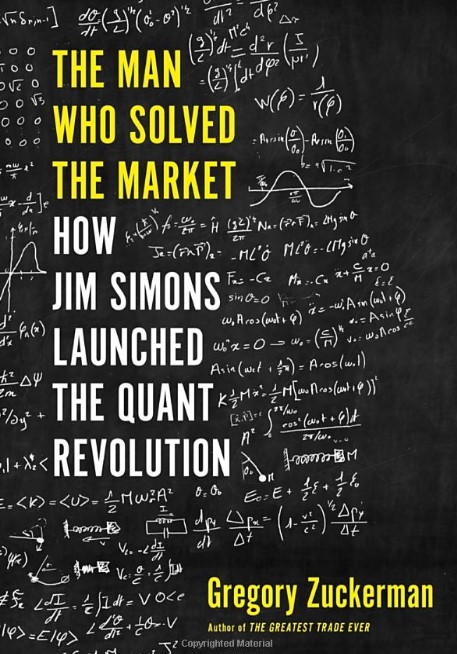
Most investing stories begin with a heroic genius staring at stock charts, sipping coffee, and somehow “feeling” that a company is about to moon. Jim Simons’ story is almost the opposite. The man often called the greatest money maker in modern finance did not build his edge by shouting at a Bloomberg terminal or giving dramatic speeches about interest rates. He built it with mathematicians, code breakers, physicists, mountains of data, and a stubborn belief that markets contained patterns humans were too emotional, too slow, and frankly too confident to see.
That is what makes the lessons from The Man Who Solved the Market, Gregory Zuckerman’s fascinating book about Simons and Renaissance Technologies, so unusual. The obvious takeaway is “use data.” But that is like saying the obvious takeaway from a championship kitchen is “use food.” The deeper lessons are stranger, more useful, and more uncomfortable. Simons’ success with the Medallion Fund suggests that the best ideas often look ridiculous before they look inevitable.
This article explores the non-intuitive lessons from Jim Simons’ life, work, and investing philosophy. Whether you are an investor, entrepreneur, creator, analyst, or just someone trying not to make decisions like a raccoon trapped in a vending machine, Simons’ career offers a powerful reminder: the world rewards people who can think clearly when everyone else is busy being certain.
Who Was Jim Simons?
Jim Simons was not the typical Wall Street legend. Before he became the founder of Renaissance Technologies, he was a brilliant mathematician, a former code breaker, and a professor who made important contributions to geometry and topology. His work with Shiing-Shen Chern helped produce what became known as Chern-Simons theory, a concept with influence in modern mathematics and theoretical physics.
Simons later turned his attention to financial markets, founding Renaissance Technologies in 1978. Instead of hiring traditional stock pickers, he recruited mathematicians, scientists, statisticians, and computer experts. Their mission was not to tell elegant stories about companies. It was to detect faint statistical patterns across huge volumes of market data and build systems that could trade those patterns with discipline.
The result was the Medallion Fund, one of the most successful investment vehicles ever reported. It became famous for extraordinary long-term returns, secrecy, and an almost mythical aura. But the real magic was not magic at all. It was process, talent, experimentation, risk control, and a willingness to trust evidence over ego.
Lesson 1: The Best Opportunities May Look Boring, Weird, or Wrong
Human intuition loves clean stories. We like heroic founders, hot products, visionary speeches, and “obvious” market trends. Simons looked elsewhere. He searched for tiny, repeatable signals that often had no satisfying explanation. If the data suggested that a price movement had predictive value, Renaissance cared less about whether the pattern sounded impressive at dinner.
This is non-intuitive because most people want their ideas to feel smart. Simons showed that a profitable idea does not need to feel smart; it needs to work. In markets, business, and life, the edge may come from something unglamorous: faster execution, better measurement, cleaner data, or fewer emotional decisions.
For example, a traditional investor might ask, “Is this company changing the world?” A quant might ask, “Does this measurable pattern repeat often enough after transaction costs?” The second question is less poetic, but poetry does not always compound.
Lesson 2: You Do Not Need to Predict the Future Like a Prophet
Many people think investing is about making grand predictions. Where will inflation go? Who will win the election? Which company will dominate artificial intelligence? What will the Federal Reserve do next? These questions matter, but Simons’ approach suggests another path: stop pretending to be a prophet and start building systems that adapt.
Renaissance Technologies did not become legendary because someone guessed one giant trend correctly. Its strength came from finding many small statistical advantages and combining them with rigorous execution. This is a profoundly different mindset. It replaces “I know what will happen” with “I know how to test what tends to happen.”
That distinction is valuable outside finance. A content creator does not need to know exactly which headline will go viral next year. They need a system for testing topics, measuring engagement, improving structure, and learning from feedback. A founder does not need perfect foresight. They need fast learning loops. A job seeker does not need to predict the entire economy. They need repeatable signals about which skills and opportunities are gaining demand.
Lesson 3: Talent Density Beats Star Worship
One of Simons’ most surprising moves was hiring people who were not Wall Street insiders. Renaissance became known for recruiting scientists, mathematicians, physicists, and programmers. Many had little conventional investing experience. In a traditional finance firm, that might have looked like hiring chefs to repair airplanes. But Simons understood that markets had become a data problem, and data problems require data minds.
The non-intuitive lesson is that the best person for a job may not have the most obvious résumé. If an industry is changing, yesterday’s credentials can become tomorrow’s blindfold. Simons did not merely collect smart people; he created an environment where they could argue, test, fail, and improve models together.
This matters for any team. A company does not win because it has one genius in a corner polishing a trophy. It wins because it builds a culture where talent compounds. The best teams are not built around worship. They are built around shared standards, honest feedback, and the freedom to challenge weak assumptions before those assumptions become expensive disasters.
Lesson 4: Secrecy Can Be a Strategy, Not a Personality Quirk
Renaissance Technologies became famous for secrecy. That secrecy was not merely eccentric billionaire behavior, though billionaires do occasionally act like they are guarding a dragon egg. In quantitative investing, an edge can disappear when too many people copy it. If a pattern becomes widely known, competitors trade against it, and the advantage shrinks.
The broader lesson is that not every advantage should be performed publicly. In the age of personal brands, many people rush to explain everything they are doing. But some advantages grow best in quiet rooms. A business process, research method, customer insight, or creative workflow may be more valuable when protected.
This does not mean becoming paranoid or secretive about everything. It means knowing the difference between marketing and machinery. Marketing can be public. Machinery often should not be. Simons understood that the engine mattered more than the parade.
Lesson 5: Models Are Powerful, But Humility Keeps Them Alive
It would be easy to turn Simons’ story into a cartoon: math genius builds perfect machine and defeats market forever. Reality is more interesting. Models break. Conditions change. Data can mislead. A pattern that worked yesterday may stop working tomorrow, especially when other smart people discover similar signals.
That is why humility is not a soft virtue; it is a technical requirement. A model is only useful if you keep asking whether it still reflects reality. Renaissance’s success was tied not just to building models, but to constantly testing, adjusting, and controlling risk.
This lesson applies painfully well to modern artificial intelligence. AI tools can produce confident answers, slick designs, and impressive forecasts. But confidence is not correctness. The Simons mindset would not say, “The model said it, so it must be true.” It would ask, “How has this model performed, where does it fail, and what evidence would make us change it?”
Lesson 6: Small Edges Become Enormous When Repeated Correctly
Most people underestimate small advantages because they do not look exciting. A tiny improvement in decision quality, repeated thousands of times, can become enormous. The Medallion Fund’s reported success was not built on one dramatic trade but on many trades supported by statistical edges, disciplined execution, and careful risk management.
This is one of the most useful non-intuitive lessons from the man who solved the market: greatness often looks unimpressive at the unit level. One better meeting agenda, one cleaner spreadsheet, one stronger headline, one fewer emotional purchase, one extra hour of deep worknone of these feels life-changing. Repeated consistently, they become a different life.
People love breakthroughs because breakthroughs make great stories. Systems make great outcomes. Simons’ genius was not only seeing patterns in markets. It was building an organization that could harvest small patterns repeatedly without getting drunk on its own cleverness.
Lesson 7: Data Beats Stories, But Only If the Data Is Clean
“Follow the data” sounds simple until you actually meet data. Data is messy. It arrives with errors, gaps, distortions, survivorship bias, and enough weird formatting to make a spreadsheet beg for retirement. Renaissance invested heavily in collecting, cleaning, and organizing information because a model is only as good as the material it consumes.
This is especially relevant today, when everyone talks about data-driven decisions. Many teams are not data-driven; they are dashboard-decorated. They have charts, graphs, and metrics, but the numbers are not always reliable or connected to useful decisions.
Simons’ example teaches that the boring foundation matters. Before insight comes infrastructure. Before prediction comes preparation. Before the elegant model comes the unglamorous work of making sure the inputs are not garbage wearing a bow tie.
Lesson 8: Do Not Confuse Complexity With Intelligence
Because Renaissance used advanced mathematics and computing, it is tempting to assume that complexity itself was the secret. But the more practical lesson is subtler: use as much complexity as the problem requires, not as much as your ego desires.
Bad complexity hides confusion. Good complexity captures reality. A model, business strategy, or content plan should be judged by performance, not by how impressive it sounds in a meeting. Simons valued results. If a simple signal worked, it mattered. If a complex theory failed, it did not get a trophy for effort.
This is refreshing in a world where people often dress simple ideas in expensive vocabulary. You do not need to say “multi-channel engagement optimization framework” when you mean “post useful things where your audience spends time.” Simons’ legacy reminds us that intelligence is not the art of sounding complicated. It is the discipline of being less wrong.
Lesson 9: The Best Leaders Build Machines That Outgrow Them
Jim Simons eventually stepped back from day-to-day leadership, but Renaissance Technologies continued. That is a major leadership lesson. The strongest founders do not merely make themselves indispensable. They build systems, cultures, and teams that can operate beyond their direct control.
Many leaders secretly want to be the hero in every chapter. Simons seemed more interested in building an engine that could keep running. He brought together unusual talent, encouraged scientific thinking, and created a structure where ideas could be tested rather than simply believed.
For entrepreneurs and managers, this is a hard but important truth. If everything depends on your personal brilliance, you have not built a company; you have built a very stressful mirror. A durable organization turns individual insight into collective process.
Lesson 10: Wealth Can Be a Tool for Curiosity
Simons’ story did not end with trading profits. Through the Simons Foundation, he and his wife, Marilyn Simons, supported mathematics, basic science, life sciences, autism research, education, and computational research. This philanthropic chapter matters because it reveals another non-intuitive lesson: money is most interesting when it funds questions bigger than money.
Simons spent much of his life around people who loved hard problems. That curiosity moved from mathematics to markets and then to philanthropy. The same respect for deep research that shaped Renaissance also appeared in his support for scientific institutions and educators.
For readers, the takeaway is not “become a billionaire first.” A more useful lesson is to ask what your resources are ultimately serving. Time, money, skills, relationships, and attention become more powerful when pointed toward meaningful problems. Simons’ life suggests that curiosity can be a career strategy, an investing strategy, and a legacy strategy.
What Investors Often Get Wrong About Jim Simons
The most common mistake is thinking Simons’ lesson is simply “be quantitative.” That is incomplete. Plenty of people use numbers badly. A spreadsheet can be just as delusional as a horoscope if the assumptions are weak enough.
The deeper lesson is disciplined empiricism. Simons tested ideas. He hired people who could challenge assumptions. He focused on repeatability. He treated markets as complex systems rather than morality plays. He did not need every trade to come with a beautiful explanation.
Another mistake is assuming individual investors can easily copy Renaissance. They cannot. Medallion’s edge came from extraordinary talent, proprietary data, infrastructure, execution, and decades of refinement. A person with a laptop and a motivational quote is not automatically a quant fund. That said, ordinary investors can still learn from Simons by avoiding emotional overconfidence, respecting evidence, diversifying intelligently, controlling risk, and not mistaking financial entertainment for strategy.
Why These Lessons Matter More in the AI Age
Today, artificial intelligence has made everyone feel a little like a quant. We have tools that can analyze data, generate code, summarize research, and create models faster than ever. But Simons’ story warns us that tools are not enough. The advantage belongs to people who ask better questions, verify outputs, build feedback loops, and understand the limits of automation.
AI can make bad thinking faster. It can also make good thinking more powerful. The difference is process. Simons’ success came from combining human talent with computational power, not from blindly worshiping machines. That distinction matters now more than ever.
In other words, the future will not reward people who merely use AI. It will reward people who use AI with taste, skepticism, measurement, and patience. The machine is useful. The judgment around the machine is priceless.
Experience-Based Reflections: Applying Simons’ Lessons in Real Work and Life
The most useful way to apply the lessons from Jim Simons is to stop treating them as Wall Street trivia and start treating them as operating principles. In practical work, the first shift is moving from opinion-first thinking to evidence-first thinking. For example, when building a blog, launching a product, or managing a portfolio, people often begin with what they like. They choose topics, designs, investments, or strategies because they feel right. A Simons-inspired approach asks a colder but more helpful question: what does the evidence suggest?
In content creation, this might mean testing headlines before committing to a full campaign. It might mean studying search intent instead of guessing what readers want. It might mean updating old articles because the data shows they still have potential, even if writing something new feels more exciting. The non-intuitive part is that creativity often improves when it accepts measurement. Data does not kill creativity; bad data and lazy interpretation do.
In business, Simons’ lessons encourage leaders to hire for problem-solving ability rather than familiar backgrounds. The best person to improve a workflow may not be the person who has spent twenty years inside the same industry. Sometimes an outsider can see the broken machinery because they have not been trained to politely ignore it. This does not mean experience is useless. It means experience should be tested against results.
Another practical experience is learning to respect small improvements. Many people abandon systems because the early gains look tiny. They want dramatic progress, preferably by Thursday. But most durable advantages begin as quiet improvements: a cleaner customer database, a better weekly review, a more consistent publishing schedule, a sharper risk checklist, or a smarter way to compare options. These changes are not glamorous, but they reduce friction. Over time, reduced friction becomes speed.
Simons’ story also teaches emotional discipline. In investing and decision-making, the dangerous moments are often the ones that feel the most obvious. When everyone agrees that something is a sure thing, independent thinking becomes rare. A practical habit is to create a “what would prove me wrong?” checklist before major decisions. This simple question can prevent expensive confidence. It forces humility into the room before reality kicks down the door.
Finally, there is a personal lesson about curiosity. Simons moved through mathematics, code breaking, finance, and philanthropy with a deep attraction to hard problems. Most careers are not straight lines, even when LinkedIn tries to make them look like inspirational train tracks. The lesson is to keep collecting skills that improve your ability to understand systems: statistics, writing, coding, communication, research, psychology, and judgment. You never know which combination will become your edge.
The man who solved the market did not do it by being louder than everyone else. He did it by being more curious, more rigorous, and more willing to let reality disagree with him. That may be the most valuable lesson of all.
Conclusion
Jim Simons’ career is often described as mysterious, and in many ways it was. Renaissance Technologies guarded its methods closely, and the Medallion Fund remains one of finance’s most fascinating success stories. But the broad lessons are not locked in a secret server room. They are visible enough for anyone willing to look carefully.
The non-intuitive lessons from the man who solved the market are not about copying his trades. They are about thinking differently. Trust evidence more than stories. Build systems instead of chasing heroic predictions. Hire unusual talent. Protect real advantages. Respect small edges. Stay humble when models work, because that is exactly when arrogance starts shopping for furniture.
Simons showed that the future belongs not only to people with information, but to people who know how to test it. In markets, business, creativity, and life, that may be the ultimate edge.