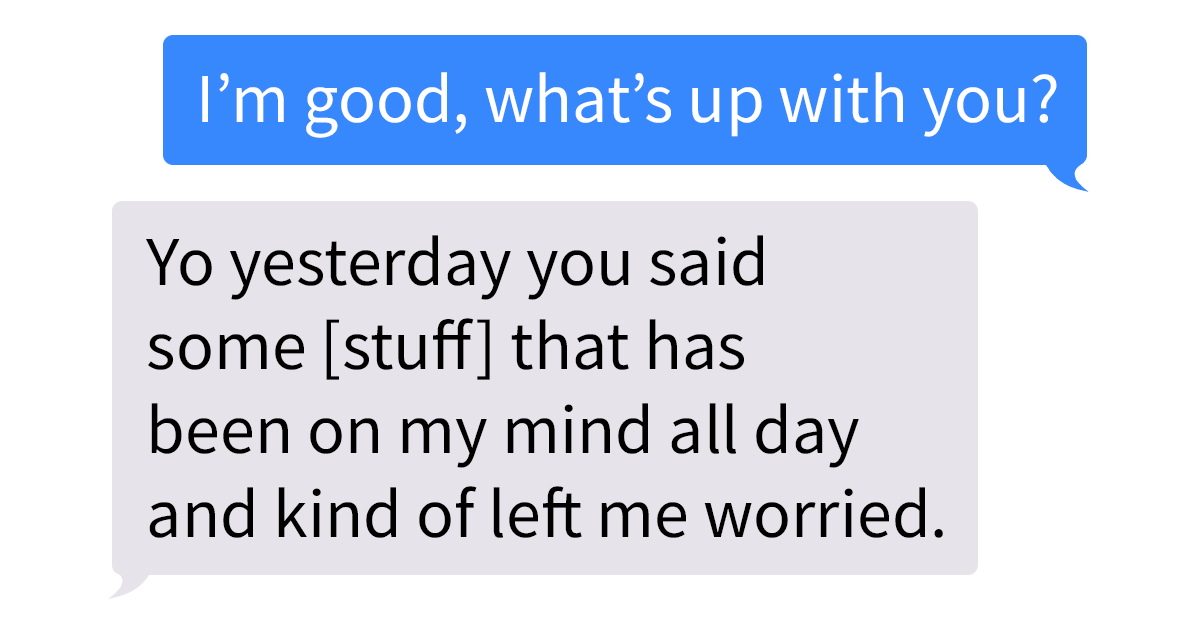
Sometimes friendship looks like pizza at midnight, badly timed memes, or pretending to enjoy someone’s 47-minute explanation of their fantasy football lineup. But every once in a while, friendship looks like something quieter and much more powerful: a simple text message that says, “I see you. I’m worried about you. You don’t have to handle this alone.”
That is why the story of a man who sent his friend a heartwarming text message after noticing he “hasn’t been himself” for the past few months resonated with so many people online. The message was not dramatic. It was not polished like a greeting card that spent three weeks in therapy. It was honest, direct, and deeply human. One friend noticed another friend seemed different, and instead of ignoring it or waiting for things to magically fix themselves, he reached out.
The viral moment became more than a sweet internet story. It turned into a reminder that emotional support does not always arrive wearing a cape. Sometimes it arrives as a phone notification from someone who has been paying attention.
Why This Heartwarming Text Message Hit So Many People Right In The Feelings
The original story centered on a man named Jay, who shared a message from a friend who had grown concerned about him. His friend noticed that Jay had not seemed like himself for several months. Rather than interrogating him, judging him, or offering the classic unhelpful “just cheer up” speech, the friend chose compassion.
He told Jay he was loved. He said he did not want to pry, but he was paying attention. He offered to listen, give advice, or simply be there as a shoulder to lean on. He even said he would keep his phone on at night in case Jay needed him. That one detail made the internet collectively clutch its emotional support coffee mug.
People responded because the message felt real. It was not a performance. It was not a grand rescue mission. It was one person telling another, “You matter enough for me to notice.” In a world where everyone is “busy,” “fine,” and “just tired,” that kind of attention can feel revolutionary.
The Power Of Noticing When A Friend Hasn’t Been Himself
One of the most meaningful parts of the story is that the friend did not wait for a perfect explanation. He noticed a change and acted with care. That matters because people who are struggling emotionally do not always announce it with a billboard, a marching band, and a dramatic weather change.
Sometimes the signs are subtle. A friend stops replying as quickly. He skips plans he used to enjoy. His jokes feel a little forced. He seems tired, irritated, distant, or unusually quiet. Maybe he says things that sound heavier than usual, then tries to laugh them off. Many people, especially men, are taught to hide emotional pain behind sarcasm, silence, work, or the always-popular “I’m good.” Spoiler alert: “I’m good” has carried more emotional weight than most pickup trucks.
Noticing these changes does not mean diagnosing someone. Friends are not expected to become therapists overnight. But friends can notice patterns. They can ask gentle questions. They can create a small opening where honesty feels safer.
Why Men Often Struggle To Talk About Mental Health
This story also touched a nerve because it involved male friendship. Many men grow up hearing that strength means staying quiet, handling things alone, or turning every emotion into either humor or back pain. The result is that some men may not recognize emotional distress in themselves, and others may feel uncomfortable admitting they need support.
Mental health challenges can show up differently from person to person. For some men, distress may look less like obvious sadness and more like irritability, isolation, low energy, physical complaints, risk-taking, or a sudden loss of interest in things they used to enjoy. That is why a friend noticing “you haven’t been yourself” can be so important. It names the change without shaming the person.
The beauty of the viral text was that it did not say, “What is wrong with you?” It said, in effect, “Something seems different, and I care.” That difference is huge. One sentence feels like an accusation. The other feels like a door opening.
What Made The Message So Emotionally Intelligent?
The text worked because it combined several things people often need when they are struggling: observation, reassurance, respect, and availability. The friend did not demand details. He did not make the conversation about himself. He did not try to fix everything in one heroic paragraph. He simply made it clear that Jay was not alone.
1. He Spoke From Concern, Not Judgment
A supportive message usually lands better when it starts with what you have noticed rather than what you assume. Saying “I’ve noticed you seem quieter lately” is much gentler than saying “You’re acting weird.” One sounds caring. The other sounds like a customer service complaint about someone’s personality.
2. He Offered Options
The friend said he could listen or offer advice, depending on what Jay needed. That matters because not everyone wants solutions immediately. Sometimes a person wants help making a plan. Other times, they just want someone to sit with them emotionally without turning the conversation into a motivational podcast.
3. He Respected Boundaries
He admitted he did not want to pry. That small line showed emotional maturity. Support is not the same as forcing someone to reveal everything. A good friend gives space while making it clear the door is open.
4. He Followed Through With Availability
Offering support is meaningful. Offering specific availability is even better. “Call me anytime” can sound polite. “I’ll keep my phone on tonight” feels concrete. It says, “I mean this.”
How To Send A Supportive Text When A Friend Seems Off
You do not need to be a poet, therapist, or person who owns seven scented candles labeled “healing energy” to send a good check-in text. You just need sincerity. The best supportive messages are simple, specific, and low-pressure.
For example, you might write: “Hey, I’ve noticed you’ve seemed a little distant lately. No pressure to explain anything, but I care about you and I’m here if you want to talk.” That message does several things well. It names the concern, removes pressure, expresses care, and offers support.
Another option: “You crossed my mind today. I know life has seemed heavy for you lately, and I just want you to know you don’t have to carry everything by yourself.” It is warm without being dramatic. It also avoids turning the friend into a problem that needs to be solved.
If your friendship runs on humor, you can still be yourself. Something like, “Not to be emotionally responsible on main, but I miss you and I’m checking in. Want to talk, walk, eat tacos, or silently exist in the same room?” can work beautifully if it matches your relationship. The goal is not perfect wording. The goal is connection.
What Not To Say When Someone Is Struggling
Even caring people sometimes say things that accidentally make a friend feel worse. Phrases like “others have it worse,” “just think positive,” or “you’ll get over it” may be intended as encouragement, but they can feel dismissive. Emotional pain is not a contest, and nobody wins a trophy for pretending they are fine the longest.
It is also best to avoid immediately giving advice before listening. Advice can be helpful, but timing matters. If someone opens up and the first response is a six-step improvement plan, they may feel like a broken appliance instead of a person.
A better approach is to ask, “Do you want advice, or do you just want me to listen?” This small question can save friendships, conversations, and possibly several group chats from unnecessary chaos.
Why Small Acts Of Friendship Can Matter So Much
Friendship is often built through tiny repeated signals of care. A check-in text. A shared meal. A ride to an appointment. A message that says, “Made it home?” A meme sent at exactly the right moment. These small gestures tell people they are connected to someone.
Research and public health guidance have increasingly emphasized the importance of social connection. Loneliness and isolation are not just sad feelings; they can affect overall well-being. Strong friendships can help people feel seen, supported, and less alone during difficult seasons.
The viral text message mattered because it showed friendship in action. Not the movie version with swelling music and a dramatic airport scene, but the everyday version: one person paying attention and choosing to reach out.
When A Text Message Is A Beginning, Not The Whole Solution
A caring message can be powerful, but it is not a substitute for professional support when someone needs it. Friends can listen, encourage, and stay connected. They can help someone feel less alone. But they do not have to carry the full weight of another person’s mental health by themselves.
If a friend seems overwhelmed, encourage them to talk with a trusted family member, counselor, doctor, therapist, school support person, or another reliable adult. If there is immediate concern for someone’s safety, emergency or crisis support should be contacted right away. In the United States, the 988 Lifeline offers 24/7 call, text, and chat support for people in emotional distress or crisis.
Being a good friend does not mean becoming someone’s entire support system. It means helping them stay connected to one.
Why The Internet Needed This Story
The internet is often a noisy place where people argue over everything from politics to pineapple on pizza. So when a genuinely compassionate moment goes viral, it feels like finding a handwritten letter in a pile of junk mail.
People loved this story because it showed emotional honesty between men. It pushed back against the idea that caring is weakness. It reminded readers that checking in on a friend is not awkward; it is brave. It also showed that a message does not have to be perfect to be meaningful.
Many people who saw the text likely thought of someone they had not checked on in a while. Others may have wished someone would send a message like that to them. That is the quiet power of viral kindness: it does not just entertain people; it nudges them to act.
Examples Of Real-Life Check-Ins That Can Help
A supportive check-in can fit almost any friendship style. If your friend is direct, you can be direct: “You haven’t seemed like yourself lately, and I’m worried about you. Want to talk tonight?” If your friend is more private, try: “No pressure to answer this deeply, but I care about you and I’m around.”
If your friend has been isolating, suggest something simple: “Want to grab coffee this week? We don’t have to talk about anything serious unless you want to.” Low-pressure plans can be easier to accept than a serious sit-down conversation.
If your friend is overwhelmed, offer specific help: “Do you want company while you run errands?” or “Can I bring food over?” Specific offers are better than vague ones because people who are struggling may not have the energy to decide what they need.
And if your friend does open up, try not to panic. You do not need to deliver a perfect response. Try: “Thank you for telling me. I’m really glad you did.” That one sentence can make someone feel less embarrassed and more supported.
Experience Section: What This Story Teaches Us About Friendship In Real Life
Stories like this one feel heartwarming online, but their real value appears when we apply them offline. Most people have experienced a season when a friend changed. Maybe he became quieter after a breakup. Maybe he stopped showing up after losing a job. Maybe he still laughed in the group chat, but something about the laugh felt like it had a flat tire. The hard part is deciding whether to say something.
Many people hesitate because they worry about making things awkward. They think, “What if I’m wrong?” But being wrong kindly is usually better than being silent out of fear. If your friend is fine, they may simply say so. If they are not fine, your message may become the first safe place they have had in weeks.
One common experience is the “delayed confession” moment. A person checks on a friend, the friend says, “I’m good,” and then days later sends a longer message explaining what has really been happening. That delay does not mean the first message failed. It means the person needed time to trust the opening. Support often works like knocking on a door. You may not be invited in immediately, but the person inside knows someone is there.
Another experience many people recognize is the friend who helps through presence rather than words. Not everyone wants a deep conversation right away. Some people feel supported when a friend sits beside them during a movie, goes for a walk, plays video games, studies in the same room, or grabs fast food without demanding an emotional documentary. Companionship can be a quiet form of care.
There is also the experience of realizing that strong friends need support too. The funny friend, the responsible friend, the “I’ll handle it” friend, and the friend who always gives advice may be struggling behind the scenes. Sometimes the people who seem most capable are the least likely to ask for help because everyone assumes they are fine. Checking in with them can feel especially powerful.
The viral text also teaches that friendship should not depend on mind-reading. Many people secretly hope others will notice their pain, but they also hide it well. That creates a confusing emotional game where everyone loses. A caring text breaks the pattern. It says, “I may not know the whole story, but I know you matter.”
In real life, the best friendships are not built on constant perfection. They are built on repair, honesty, humor, patience, and the willingness to show up when things are not fun. Anyone can be around during the good times. A true friend can sit with you when life feels messy, boring, heavy, or uncertain.
Of course, boundaries matter. Supporting a friend should not mean ignoring your own well-being. You can care deeply while still encouraging professional help, involving trusted support when needed, and admitting when a situation is bigger than what you can handle alone. Healthy friendship is not one person drowning while trying to keep another person afloat. It is two people reaching for steadier ground.
The biggest lesson is simple: do not underestimate the power of reaching out. A text message may seem small, but small things can arrive at exactly the right time. A few thoughtful sentences can interrupt someone’s loneliness. A sincere “I’m here” can make a difficult night feel less endless. A friend noticing can remind someone that they are not invisible.
Conclusion: A Good Friend Pays Attention
The story of a man sending his friend a heartwarming text after noticing he “hasn’t been himself” is more than a viral feel-good moment. It is a blueprint for everyday compassion. Notice changes. Speak gently. Offer support without pressure. Listen before fixing. Encourage help when needed. And most importantly, let the people you love know they are not alone.
In a culture that often celebrates being busy, tough, and emotionally unavailable, this message stood out because it was tender without being weak. It showed that caring is not embarrassing. Checking in is not dramatic. Being there for a friend is not complicated. Sometimes the most powerful thing you can say is, “I’ve noticed, I care, and I’m here.”
Note: This article is an original, fully rewritten piece inspired by a public viral story and general mental-health guidance. It is intended for informational and human-interest publishing purposes and should not replace advice from qualified professionals.