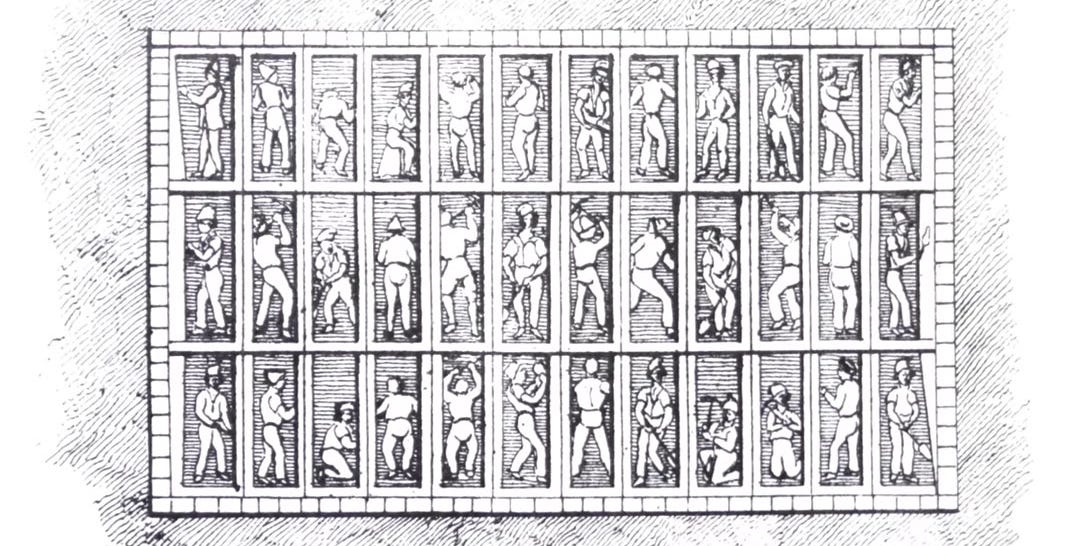
The London Underground was not built with one grand push of a magic Victorian button. It was built in stages, with mud, sweat, brickwork, steam, lawsuits, engineering nerve, and the kind of optimism only a 19th-century city choking on traffic could produce. Today, the Tube feels like a normal part of London life: people squeeze onto trains, pretend not to make eye contact, and trust that a train will appear from a dark tunnel like a punctual metal badger. But in the 1800s, the idea of running trains under a crowded capital was almost absurd.
So, how was the London Underground built? The short answer is: first by digging open trenches through city streets, then covering them over, and later by boring deep circular tunnels through London clay using tunneling shields. The longer answer is more fascinating. The Underground grew from a desperate solution to surface congestion into one of the most influential public transportation systems in the world. Its construction changed urban planning, railway engineering, and the daily rhythm of city life.
The Problem: Victorian London Was a Traffic Nightmare
By the mid-19th century, London was the world’s busiest, biggest, and arguably most chaotic city. Railways had reached the edges of the capital, but major terminal stations sat around the city rather than in its commercial heart. Passengers and goods arrived at places such as Paddington, Euston, King’s Cross, and London Bridge, then had to fight their way through packed streets to reach offices, markets, docks, and homes.
Surface traffic was powered mostly by horses, which sounds charming until you imagine thousands of carts, buses, carriages, and delivery wagons moving through narrow streets at the same time. Congestion was slow, noisy, smelly, and expensive. London did not need a cute shortcut. It needed a transport revolution with a shovel.
Charles Pearson and the Big Underground Idea
One of the strongest advocates for an underground railway was Charles Pearson, a London solicitor and city reformer. He believed a railway beneath the streets could reduce congestion, connect mainline stations, and make commuting easier for workers. His vision helped push the idea from “interesting but ridiculous” into “expensive but necessary.”
Parliament eventually authorized the Metropolitan Railway, the project that would become the first underground passenger railway in the world. The first section was planned to run between Paddington and Farringdon Street, connecting important railway terminals and bringing travelers closer to the City of London. Construction began in 1860, and the line opened to the public on January 10, 1863.
The First Method: Cut-and-Cover Construction
The earliest London Underground lines were built using a method called cut-and-cover construction. It was exactly as direct as it sounds. Workers cut a trench along the street, built the railway inside it, covered the structure with a roof, and restored the road above. Simple idea. Enormous inconvenience.
How Cut-and-Cover Worked
The process usually followed several steps. First, workers excavated a long trench, often along existing roads. Then they supported the sides with timber or masonry to stop the earth from collapsing. Next, they built brick walls and laid tracks along the bottom. After that, they added a roof using brick arches or iron girders. Finally, they covered the tunnel with soil and rebuilt the street above.
This method was practical because the first Underground lines were shallow. Engineers did not yet have modern tunnel-boring machines, and steam trains required ventilation. A shallow railway, close to the surface, made construction easier and allowed shafts and openings to help release smoke and steam.
Of course, “easier” is doing a lot of work in that sentence. Cut-and-cover meant ripping open busy streets, redirecting traffic, disturbing businesses, moving utilities, and dealing with complaints from residents who understandably did not enjoy having London’s future railway under construction outside their front doors.
Why London Clay Was an Engineering Gift
One reason the Underground was possible was London’s geology. Much of the city sits on London clay, a relatively stable material for tunneling compared with loose sand or waterlogged gravel. Clay can hold its shape better during excavation, which gave engineers a fighting chance. It was not a friendly pillow, but for tunnel builders it was better than digging through something that behaved like wet cake.
The clay also supplied material that could be used in brickmaking, helping support the construction of tunnel linings. The city’s geology did not make the Underground easy, but it made the dream more realistic.
The Metropolitan Railway Opens in 1863
When the Metropolitan Railway opened in 1863, it ran roughly 3.75 miles from Paddington to Farringdon. The journey took about 18 minutes, which was impressively fast compared with crawling through street traffic. Passengers rode in wooden carriages pulled by steam locomotives. The trains were gas-lit, atmospheric, and smoky enough to make modern air-quality inspectors faint into their clipboards.
Despite the fumes, the railway was a success almost immediately. Tens of thousands of people rode it on opening day, and millions used it during its first year. The public had discovered something powerful: going underground could make city travel faster. London had not merely built a railway. It had invented a new urban habit.
Steam Underground: Brilliant, but Smoky
The first Underground trains were powered by steam locomotives. Engineers tried to reduce smoke by using coke at first, then coal, and by designing ventilation openings where possible. Still, steam underground was never ideal. Passengers had to tolerate heat, soot, sulfurous fumes, and the general feeling of being inside a chimney that had learned timetabling.
Yet the system worked well enough to prove the concept. The Metropolitan Railway showed that underground railways could move huge numbers of people through a crowded city. It also encouraged more railway schemes, including the Metropolitan District Railway, which opened in 1868 and helped form what later became part of the Circle and District lines.
Building the Early Network
The Underground did not begin as one unified system. It grew through separate companies, private investment, parliamentary approvals, rival plans, and practical compromises. The Metropolitan Railway and Metropolitan District Railway both expanded, aiming to connect key stations and districts. Over time, their routes formed an “inner circle” around central London.
Because these early lines were shallow and often followed roads, their routes were influenced by the street pattern above. That is one reason parts of the Underground twist, curve, and bend in ways that can seem mysterious on a map. The railway was not designed on a blank sheet. It was threaded through an already crowded city.
The Big Leap: Deep-Level Tube Tunnels
Cut-and-cover worked for shallow railways, but it had serious limits. It caused major disruption, required routes near streets, and became more difficult in dense areas. The next breakthrough was the deep-level tube: circular tunnels bored far below the surface.
Deep-level tunneling allowed engineers to pass beneath buildings, roads, utilities, and older railway works with far less surface disruption. This is where the “Tube” nickname truly makes sense. The tunnels were round, narrow, and lined with iron segments, forming a tube-like structure through the clay.
The Tunneling Shield Changes Everything
The key technology behind deep tube construction was the tunneling shield. Earlier shield technology had been used by Marc Isambard Brunel in the Thames Tunnel, a pioneering but difficult project that opened as a pedestrian tunnel in 1843. Later, engineers refined the idea for railway use.
James Henry Greathead became one of the most important figures in this story. His improved tunneling shield supported the ground while workers excavated ahead. As the shield moved forward, crews installed circular iron lining segments behind it, creating a strong tunnel wall. This method reduced the risk of collapse and made deep tunneling faster and safer than earlier approaches.
Imagine a giant metal cookie cutter inching through clay while workers dig at the front and build a tunnel behind it. That is not a perfect technical description, but it does capture the basic mood: controlled progress through an underground world that would very much prefer to fall in.
The City and South London Railway
The first successful deep-level electric tube railway was the City and South London Railway, which opened in 1890. It ran between the City and south London and now forms part of the Northern line. This line was important for two reasons: it used deep bored tunnels, and it relied on electric traction rather than steam.
Electric trains solved one of the biggest problems of early underground railways. Deep tunnels could not safely or comfortably use steam locomotives because ventilation would have been extremely difficult. Electricity allowed trains to run in enclosed tunnels without filling them with smoke. This was a turning point. Once electric traction proved practical, the Tube could grow deeper, cleaner, and more flexible.
How Workers Built the Deep Tubes
Deep tube construction involved sinking vertical shafts from the surface down to the required tunnel depth. From these shafts, workers assembled tunneling shields and began excavating horizontally. The shield protected the working face, while spoil was removed through the shaft. As the tunnel advanced, iron lining segments were bolted together behind the shield to form a permanent circular tunnel.
Work was physically demanding and dangerous. Workers operated in cramped conditions, underground, with limited light and ventilation. They handled heavy materials, battled water seepage, and worked under pressure from investors, engineers, politicians, and the public. Modern commuters may complain when a train is delayed three minutes, but the original builders were literally carving the railway out beneath the city by hand and machine.
Stations: The Underground’s Hidden Architecture
Building tunnels was only part of the challenge. Stations had to be fitted into crowded neighborhoods where land was expensive and buildings already stood shoulder to shoulder. Early shallow stations could be built with open cuttings and covered platforms, but deep-level stations required shafts, lifts, stairways, ticket halls, and later escalators.
Deep stations often used elevators because platforms were far below the surface. Passengers descended in large lifts before reaching the tunnels. Later, escalators transformed station design and passenger flow, making it easier to move large crowds between street and platform levels.
Electrification and the Modern Tube
By the late 19th and early 20th centuries, electrification became essential to the Underground’s expansion. Electric trains were cleaner, more powerful for underground operation, and better suited to frequent service. American financier Charles Tyson Yerkes played a major role in funding and organizing several electric tube lines in London. The Underground name appeared in the early 20th century, and the separate railway companies gradually moved toward a more coordinated identity.
Electrification also changed the passenger experience. The Underground became less smoky, more reliable, and better prepared for the intense demand of a growing metropolis. It was still crowded, noisy, and occasionally confusingsome traditions are sacredbut it became a modern rapid transit system.
Why the London Underground Was So Important
The London Underground mattered because it proved that a large city could build mass transit beneath itself. It helped people live farther from work, supported suburban growth, reduced pressure on surface roads, and inspired other cities to build underground railways. Systems in places such as Boston, Paris, New York, and beyond followed after London demonstrated that the concept could work.
The Underground also changed the psychology of the city. Londoners began to think vertically, not just horizontally. The city was no longer only streets, bridges, and buildings. It became layers: roads above, sewers below, railways beneath, and later electrical, communication, and service networks woven through the ground like urban spaghetti.
Challenges Engineers Had to Overcome
Congestion Above Ground
Cut-and-cover construction disrupted daily life. Roads had to be dug up, buildings protected, traffic diverted, and businesses kept alive during construction. The method was effective but messy. It was the engineering version of renovating a kitchen while still trying to cook dinner for a city.
Ventilation Below Ground
Steam trains created smoke and heat. Ventilation was one of the biggest design concerns for the early lines. Open sections, vents, and station spacing helped, but steam underground remained uncomfortable until electrification offered a better solution.
Financing and Politics
The Underground required huge investment and parliamentary approval. Different companies wanted different routes, and not every proposal made sense. Investors needed confidence that passengers would use the system. Fortunately for them, Londoners were very willing to pay for a faster way across town.
Safety and Ground Conditions
Tunneling under a city meant working near building foundations, water mains, sewers, gas pipes, and other hazards. Deep tunneling reduced surface disruption but required precise engineering. The use of shields and iron linings helped make the work safer and more predictable.
Cut-and-Cover vs. Deep Tube: What Was the Difference?
The early Underground was mostly shallow and built from the surface. This cut-and-cover method was cheaper and practical for the first lines, but it disturbed the city above. Deep tube lines, by contrast, were bored far below the surface using shields. They were more technically advanced and depended on electric trains, but they allowed routes to pass under buildings and streets with less surface chaos.
In simple terms, cut-and-cover was like opening the floor, installing a railway, and closing the floor again. Deep tube construction was like sending a mechanical mole underground and building a tunnel as it moved. Both methods shaped the Underground, and both were essential at different stages of its growth.
Examples of Early Underground Innovation
The Metropolitan Railway demonstrated that underground passenger rail could succeed commercially. The Thames Tunnel showed that tunneling under difficult conditions was possible, even if painfully hard. The Tower Subway helped prove the usefulness of circular iron-lined tunnels beneath the Thames. The City and South London Railway showed that deep-level electric railways could become a practical part of urban transportation.
Each project contributed a lesson. Some were financial successes. Some were engineering experiments wrapped in economic headaches. But together they formed the knowledge base that made the modern Tube possible.
Experiences Related to How the London Underground Was Built
Understanding how the London Underground was built changes the way you experience it. A normal ride from Baker Street to King’s Cross can suddenly feel less like a commute and more like a trip through engineering history. The walls, curves, platforms, and station depths are not random. They are clues left behind by different eras of construction.
One of the most interesting experiences is noticing the difference between older shallow stations and deeper tube stations. On some lines, platforms feel broad, close to the surface, and connected to older brick-lined spaces. These areas often reflect the cut-and-cover era, when railway builders opened the street and built downward. On deeper lines, the platforms feel more cylindrical and enclosed. The train seems to arrive through a round tunnel bored into the earth. That shape tells the story of shield tunneling and the deep tube revolution.
Walking through older Underground stations can also reveal how engineering had to adapt to the city above. Passages bend unexpectedly. Stairways appear in odd places. Platforms are sometimes narrow because they were squeezed into limited underground space. The Tube is not a perfectly symmetrical machine. It is a living museum of compromises. Every awkward corridor seems to whisper, “We had a building, a sewer, and a legal problem in the way.”
Another memorable experience is visiting places connected to early underground history, such as the areas around Paddington, Farringdon, Baker Street, and King’s Cross. These were not chosen by accident. They were part of the original logic of connecting railway terminals and moving people into the city efficiently. When you stand near these stations today, surrounded by buses, taxis, cyclists, pedestrians, and modern trains, it is easy to understand why Victorian London needed relief from street congestion.
Riding the Northern line also takes on new meaning when you remember that parts of it grew from the City and South London Railway, the pioneering deep-level electric tube. The line may now be famous for crowds, branches, and the occasional commuter face of deep spiritual exhaustion, but historically it represents a major leap in underground railway design. Its origins show how electricity and shield tunneling allowed London to expand beneath itself in ways the first steam lines could not.
For travelers, the best way to appreciate the Underground’s construction is to compare depth, shape, and atmosphere. Older sub-surface lines such as parts of the Circle, District, Hammersmith & City, and Metropolitan lines often feel different from deep-level lines like the Piccadilly, Central, Bakerloo, and Northern lines. The difference is not just design style. It reflects the technology available when those routes were built.
There is also a human experience hidden in the system. The Underground was built by workers who labored in difficult, dirty, and sometimes dangerous conditions. They dug trenches through crowded streets, handled brick and iron, operated tunneling shields, removed spoil, and worked in spaces most passengers would never see. Modern riders benefit from their effort every time a train slips under a traffic-clogged road in minutes.
Finally, learning how the London Underground was built makes the Tube feel less ordinary. It becomes a story of problem-solving under pressure. London had too many people, too much traffic, and too little space. Instead of surrendering to the jam, engineers went below it. The result was imperfect, smoky at first, politically complicated, and expensive. It was also brilliant. The Underground proved that cities could build downward when they could no longer move efficiently across the surface.
Conclusion
The London Underground was built through a combination of necessity, engineering invention, and Victorian boldness. Its first lines used cut-and-cover construction, digging trenches through streets and roofing them over. Later deep-level lines used tunneling shields to bore circular tunnels through London clay, making it possible to build beneath roads, buildings, utilities, and older infrastructure. Steam powered the first trains, but electricity unlocked the true potential of the Tube.
What began in 1863 as a smoky underground railway between Paddington and Farringdon became a model for urban transportation around the world. The London Underground was not built all at once, and it was not built easily. It grew through experiments, failures, improvements, and public demand. That is what makes it so impressive. It is not only a railway system. It is a layered record of how a city solved one of its biggest problems by digging straight into the future.