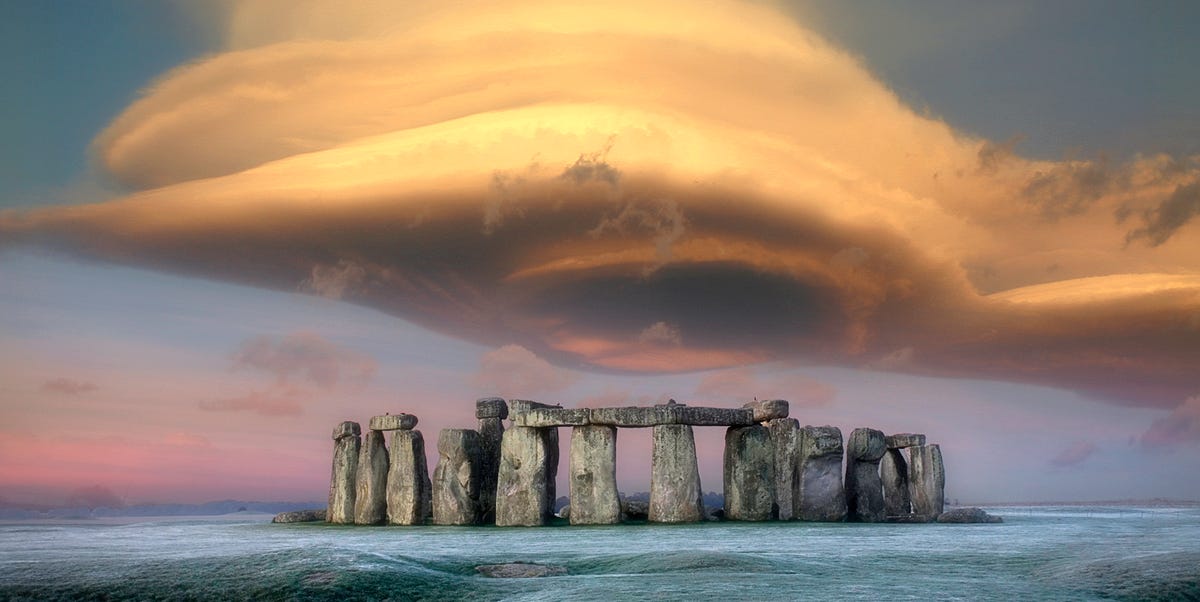
Stonehenge has spent thousands of years being mysterious, which is a remarkably successful branding strategy for a pile of enormous stones. Just when scholars think they have pinned down one piece of the puzzle, another rock politely clears its throat and says, “Actually, I came from much farther away.” That is essentially what happened with the famous Altar Stone, a large sandstone slab at the heart of Stonehenge whose geological “fingerprint” has changed the conversation about the monument’s origins.
To be clear, this is not a detective story involving a Neolithic handprint smudged onto a stone like an ancient crime scene. The “fingerprint” is chemical and mineralogical. Researchers analyzed tiny mineral grains inside fragments of the Altar Stone and compared their ages and chemistry with rocks from different regions of Britain. The result was a surprise big enough to make every Stonehenge documentary narrator sit up straighter: the Altar Stone appears to have originated in the Orcadian Basin of northeast Scotland, not Wales as many experts had long suspected.
That discovery matters because Stonehenge is not just a monument. It is a record of movement, coordination, belief, engineering, and human ambition in prehistoric Britain. If a six-ton sandstone block traveled hundreds of miles before reaching Salisbury Plain, then the people who built Stonehenge were not isolated villagers dragging rocks around on a slow weekend. They were part of a connected, organized world with the ability to plan, cooperate, and move materials across astonishing distances.
What Is the Stonehenge “Fingerprint” Discovery?
The key object in this new chapter is the Altar Stone, one of Stonehenge’s most intriguing stones. It is a large, recumbent sandstone block lying near the center of the monument, partly buried and partly hidden beneath fallen sarsen stones. For decades, many researchers linked it to Wales, partly because other smaller Stonehenge stones, known as bluestones, have strong connections to west Wales.
But the Altar Stone did not fully behave like a Welsh stone under scientific scrutiny. Recent research tested its mineral grains, especially zircon, apatite, and rutile. These minerals act like geological time capsules. Their internal chemistry and uranium-lead ages can point toward the ancient rocks and sedimentary basins from which they came. In plain English: rocks carry receipts, and this one’s receipt did not say “Wales.”
The fingerprint showed mineral grains mostly between about 1 billion and 2 billion years old, with other grains around 450 million years old. That pattern matches rocks associated with the Orcadian Basin in northeast Scotland much better than the previously proposed Welsh sources. For a monument already famous for raising more questions than a toddler in a museum, this is a major twist.
Why the Altar Stone Matters So Much
Stonehenge is made from different types of stone, and each group has its own story. The huge outer stones are sarsens, the hard sandstone megaliths that form the iconic upright-and-lintel structure. Research has linked most of these sarsens to West Woods near the Marlborough Downs, roughly 15 miles north of Stonehenge. That is still impressive, because some of those stones weigh more than 20 tons, but at least the journey was local by prehistoric heavy-haul standards.
The smaller bluestones tell a longer-distance story. Many of them have been traced to the Preseli Hills in west Wales, more than 140 miles away. That already suggested that Neolithic communities were capable of moving selected stones over extraordinary distances. The Altar Stone, however, may stretch that story even further. If it came from northeast Scotland, its journey to Salisbury Plain may have covered more than 450 miles in a straight-line estimate and likely more in practical travel distance.
This makes the Altar Stone more than a central slab. It becomes evidence for a prehistoric network that reached across Britain. The stone may have been chosen because of its appearance, symbolic meaning, geological uniqueness, social value, or connection to distant communities. Nobody can say with certainty why it mattered, but its transport suggests it mattered a lot.
How Scientists Read a Rock’s Past
Minerals as Geological ID Cards
Geological fingerprinting works because rocks are not random. Their mineral grains form in particular environments, at particular times, under particular conditions. When those grains erode from older rocks and become part of younger sedimentary rocks, they carry clues from their previous lives. Zircon is especially useful because it is tough, chemically stable, and excellent at preserving age information.
Researchers do not need the whole Altar Stone to solve the mystery. Even small fragments can reveal a surprising amount. By measuring the ages and chemistry of tiny mineral grains, scientists can compare the stone’s signature with known rock formations across Britain. If the pattern lines up with one region and fails to match another, the map starts to narrow.
In the case of the Altar Stone, the evidence pointed away from the Anglo-Welsh Basin and toward the Orcadian Basin. That is a dramatic shift because earlier ideas often placed the stone’s origin closer to the sources of other Stonehenge bluestones. The new data suggest the Altar Stone has a separate, more northern story.
Why “Fingerprint” Is the Perfect Word
The word “fingerprint” works because the method is about matching identity. A detective compares patterns on a fingertip; a geologist compares chemical and isotopic patterns in minerals. Neither method is magic, although both can feel suspiciously close to wizardry when explained at a dinner party.
This kind of analysis is also powerful because it moves Stonehenge research beyond legends, guesses, and “maybe they rolled it on logs” debates. Those questions are still fun, but fingerprinting gives researchers hard evidence. It lets the stones speak in the only language they know: mineral chemistry.
From Wales to Scotland: Why the New Origin Changes the Story
For years, a Welsh origin made sense. Several Stonehenge bluestones came from Wales, and the idea of stones moving from west Wales to Wiltshire had become part of the broader Stonehenge origin story. Some theories even suggested that the stones were connected to earlier monuments in Wales before being moved or reassembled on Salisbury Plain.
The Scottish origin does not erase Wales from Stonehenge’s story. The Preseli Hills remain important for many of the bluestones. What changes is the assumption that the Altar Stone belongs to the same Welsh supply chain. Instead, the monument may represent a wider map of meaning, one that stretched from southern England to Wales and possibly all the way to northern Scotland.
That raises a fascinating possibility: Stonehenge may not have been built from stones chosen only for convenience. It may have been assembled from meaningful materials collected from different landscapes. In that sense, the monument becomes less like a construction project and more like a stone-built map of relationships, alliances, memories, and sacred places.
How Could Neolithic People Move a Six-Ton Stone So Far?
This is the question everyone asks, usually while looking at their own furniture and remembering they once struggled to move a couch through a doorway. The Altar Stone weighs around six tons. Moving it from northeast Scotland to southern England would have required planning, labor, and technical skill.
Overland transport would have been extremely difficult. Rivers, hills, forests, wetlands, and uneven terrain would turn a six-ton stone into the world’s least cooperative travel companion. Some researchers therefore consider a coastal or marine route plausible. A stone could have been moved by water along parts of Britain’s coast, then transported inland toward Salisbury Plain.
That does not mean the answer is simple. Boats capable of carrying heavy stone, safe loading methods, seasonal timing, and coordination between groups would all have been necessary. Even if water transport reduced the physical strain, it still required expertise. Neolithic builders may not have had metal tools, trucks, or GPS, but they clearly had knowledge, organization, and probably a few project managers with very strong opinions.
The Discovery Makes Neolithic Britain Look More Connected
The most important impact of the Stonehenge fingerprint discovery is not just geographical. It is social. A Scottish Altar Stone suggests that communities across prehistoric Britain may have been more connected than once assumed. People, objects, ideas, and rituals may have moved through networks that linked distant regions.
Modern readers sometimes imagine Neolithic life as small, local, and simple. That image is increasingly outdated. Archaeology continues to show that prehistoric people were capable of large-scale building, long-distance exchange, astronomical observation, and complex ceremonial life. Stonehenge itself is proof that “ancient” does not mean “unsophisticated.” It simply means they had fewer apps and more patience.
If the Altar Stone was deliberately moved from Scotland, it suggests cooperation across communities. The journey may have involved stages, handoffs, ceremonies, feasts, or social agreements. The stone could have served as a gift, a symbol of unity, a sacred object, or a material link between distant groups. We cannot read Neolithic minds, but we can see the scale of what they achieved.
What About the Glacier Theory?
For more than a century, one debate has hovered around Stonehenge: did people move the stones, or did glaciers carry some of them closer to Salisbury Plain during the Ice Age? The glacier theory has had supporters because ice sheets can transport huge rocks over long distances. If glaciers delivered the stones near Stonehenge, human builders would only have needed to move them the final stretch.
Recent mineral-fingerprinting research has made that theory harder to defend. A 2026 study examined zircon and apatite grains in stream sediments around Salisbury Plain to test whether glacial material from Wales or Scotland was present in the area. If glaciers had brought large quantities of rock from those distant regions, they should have left behind telltale mineral signatures.
The study found that local sediment patterns fit southern British sources rather than glacial material from the far north or west. That does not answer every detail of Stonehenge transport, but it strengthens the case that people, not glaciers, were responsible for moving the famous stones. In other words, the ice may need to stop taking credit.
Stonehenge as a Monument of Effort, Not Accident
One reason the fingerprint discovery feels so important is that it pushes Stonehenge further into the realm of deliberate human achievement. The more scientists learn about the stones’ origins, the less accidental the monument appears. The builders did not simply use whatever rocks were lying nearby. They selected stones from specific places, moved them with purpose, and arranged them in a monument aligned with seasonal events.
Stonehenge’s famous solstice alignment has long suggested that the monument was tied to cycles of time, light, death, renewal, or ceremonial gathering. The stone origins add another layer. If the materials came from multiple distant landscapes, Stonehenge may have served as a gathering point for communities across Britain. It could have been a place where geography, ritual, and identity were brought together in stone.
This does not mean every mystery is solved. Archaeology rarely hands over a neat final answer with a bow on top. The exact quarry or outcrop of the Altar Stone still needs further investigation. The transport route remains uncertain. The reason for choosing that stone is unknown. But the discovery changes the scale of the questions. Instead of asking, “Was Stonehenge connected to Wales?” researchers now ask, “How far did Stonehenge’s world reach?”
What This Means for the Origins of Stonehenge
The phrase “Stonehenge origins” can mean several things. It can refer to where the stones came from, who built the monument, why it was constructed, or how its meaning changed over time. The Altar Stone fingerprint mainly affects the first question, but it has ripple effects across the others.
If the central sandstone slab came from Scotland, the monument’s origin story becomes more complex. Stonehenge may reflect not one local culture but a network of communities. It may have drawn power from distant places. It may have been designed to incorporate stones with their own histories before they ever reached Salisbury Plain.
That idea fits with a broader shift in archaeology. Researchers increasingly view prehistoric Britain as dynamic and connected. People moved. Materials moved. Ideas moved. Ceremonies may have drawn groups together from far away. Stonehenge was not built in a vacuum; it was built in a world full of paths, waterways, relationships, and shared meanings.
Why the Discovery Captures Public Imagination
Stonehenge has always been a magnet for big theories. Some are scholarly. Some are poetic. Some involve aliens, because apparently no ancient human achievement is safe from being handed to extraterrestrials by cable television. The Altar Stone discovery is exciting because it is both dramatic and evidence-based. It gives the public a genuine “wow” moment without needing lasers from space.
There is also something deeply human about the story. Imagine deciding that a stone from hundreds of miles away was important enough to move across Britain. Imagine the labor, the danger, the planning, and the commitment. Whether the stone traveled by land, water, or a combination of both, it carried meaning long before it arrived at the monument.
The fingerprint reminds us that Stonehenge was not only built from stone. It was built from choices. Every megalith had to be selected, transported, shaped, raised, and placed. The Altar Stone’s likely Scottish origin makes those choices feel even more extraordinary.
Experience: Visiting Stonehenge After the Fingerprint Discovery
Knowing about the Altar Stone’s possible Scottish origin changes the way a visitor experiences Stonehenge. Before, it was easy to stand on Salisbury Plain, admire the massive sarsens, take the required windswept photo, and think mainly about size. The stones are huge, the landscape is open, and the monument has that rare ability to make modern people whisper even when there is no sign asking them to. But after learning about the geological fingerprint, the experience becomes less about “How did they lift that?” and more about “How far did this story travel?”
When you look toward the center of the monument, the Altar Stone is not as visually dominant as the towering sarsens. It does not pose for postcards in quite the same way. It lies low, partly hidden, almost modest. Yet that quiet slab may carry one of the longest journeys in the whole structure. That contrast is powerful. The stone that does not shout may have the most surprising biography.
A visitor who understands the fingerprint discovery may also notice the landscape differently. Salisbury Plain can feel remote, but Stonehenge was not isolated in the Neolithic imagination. It sat within a wider ceremonial landscape filled with burial mounds, earthworks, avenues, and nearby monuments. The Scottish connection expands that mental map even further. Suddenly the view is not limited to Wiltshire. It stretches north through rivers, coastlines, settlements, and unknown routes of travel.
This makes Stonehenge feel less like a frozen relic and more like the final stop in a very long human journey. You begin to imagine people gathering, negotiating, hauling, watching the seasons, and telling stories about where the stones came from. The monument becomes a meeting place of landscapes. Wales may be present in the bluestones. Marlborough Downs may be present in the sarsens. Scotland may be present in the Altar Stone. The circle becomes a conversation between places.
There is also an emotional side to this experience. Modern life makes distance feel easy. We can cross hundreds of miles with snacks, podcasts, and complaints about legroom. Neolithic people had none of that convenience. If they moved the Altar Stone from northeast Scotland, the journey required commitment on a level that is difficult to fully appreciate. Standing near Stonehenge with that in mind makes the monument feel less like an ancient puzzle and more like a monument to shared effort.
The discovery also makes the visitor experience more humble. For generations, experts proposed explanations based on the best evidence available. Then new technology allowed a tiny mineral grain to revise the story. That is the beauty of archaeology: the past is old, but our understanding of it is still young. Stonehenge keeps changing because science keeps learning how to ask better questions.
For anyone planning to write about or visit Stonehenge, the fingerprint discovery offers a fresh lens. Do not only ask who built it or how. Ask what each stone meant, where it came from, and why people cared enough to move it. The Altar Stone suggests that Stonehenge’s origins are not a single dot on a map. They are a network of places, people, and decisions. And somehow, after thousands of years, a few microscopic minerals managed to deliver the plot twist.
Conclusion: A Tiny Fingerprint, a Huge Rewrite
The fingerprint from Stonehenge does not solve every mystery, but it changes the scale of the story. The Altar Stone’s mineral signature points to northeast Scotland, challenging older assumptions about a Welsh origin and suggesting that Neolithic Britain was more connected, organized, and ambitious than many people imagined.
This discovery also reinforces a bigger lesson: Stonehenge was not an accident of available rocks. It was a monument of intention. Its builders selected stones from meaningful places, moved them across difficult landscapes, and created a structure that still commands attention thousands of years later. The Altar Stone’s journey, if confirmed in even greater detail, may become one of the most powerful examples of prehistoric cooperation in Britain.
In the end, Stonehenge remains mysterious, but not because we know too little to care. It is mysterious because every new discovery makes the achievement feel larger. A chemical fingerprint hidden inside a stone has opened a wider world: one of travel, connection, engineering, ceremony, and human determination. Not bad for a rock that spent millennia lying quietly in the middle of a field.