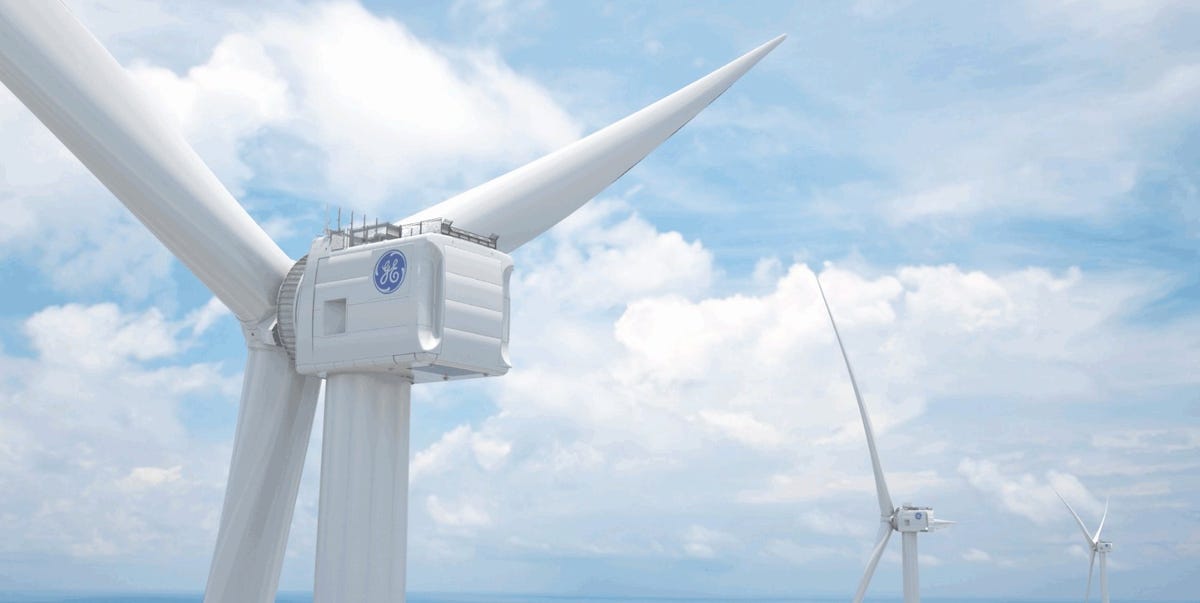
Some machines are big. Some machines are enormous. And then there is GE’s Haliade-X, the kind of wind turbine that makes a lighthouse look like a garden ornament and turns “go big or go home” into a serious energy strategy. Built and tested in Rotterdam, the Netherlands, GE’s offshore wind giant became one of the most important symbols of the clean-energy race: taller towers, longer blades, more electricity, and fewer excuses for treating renewable power like a cute side project.
When GE Renewable Energy introduced the Haliade-X platform, it was promoted as the world’s most powerful offshore wind turbine of its generation. The prototype began operating in 2019 at Maasvlakte, a port and industrial area in Rotterdam. That location was not chosen because engineers wanted a nice Dutch vacation with stroopwafels. It was practical: Rotterdam offered port infrastructure, access to heavy equipment, coastal wind conditions, and the ability to test a massive offshore machine onshore before sending the technology into rougher seas.
The original 12 MW Haliade-X helped push offshore wind into a new era. Later versions of the platform reached 13 MW, 14 MW, and 14.7 MW ratings, with a rotor diameter of 220 meters and blades stretching about 107 meters each. For perspective, one blade is longer than a football field. If that sounds dramatic, goodit is dramatic. Offshore wind is not only about spinning blades; it is about rethinking how much energy one machine can produce.
Why the Netherlands Became the Testing Ground
The Netherlands has long treated water, wind, and engineering as part of daily life. This is a country that looked at the sea and said, “Nice try,” then built dikes, pumps, ports, and an economy around managing nature with precision. Rotterdam, one of Europe’s most important ports, is especially suited for testing a turbine like the Haliade-X because the machine is too large for ordinary logistics.
Wind turbine parts are not delivered like furniture from a warehouse. A nacelle can weigh hundreds of tons. Blades longer than city blocks need special transport. Tower sections require cranes that look like they were designed by someone who got bored with normal cranes. Rotterdam’s heavy-lift capacity, industrial space, and proximity to the North Sea made it a smart proving ground.
Testing the prototype onshore also gave GE engineers easier access to sensors, hardware, software systems, and maintenance areas. Offshore turbines eventually need to survive salt spray, storms, waves, shifting temperatures, and the occasional bad mood of the North Sea. Before placing such a machine far from shore, engineers want datalots of data. Onshore testing allowed GE to measure performance, validate design choices, improve reliability, and prepare for commercial offshore deployment.
Meet the Haliade-X: A Giant With a Job
The Haliade-X is not large simply for bragging rights, although let’s be honest, the bragging rights are pretty impressive. Its size has a clear purpose: capturing more wind with every rotation. The turbine’s 220-meter rotor sweeps an enormous circular area, allowing it to harvest energy from a wider slice of the sky. The longer the blades, the more wind they can intercept, especially in offshore areas where winds are generally stronger and steadier than on land.
Key Features That Made It Stand Out
- Massive rotor diameter: Around 220 meters, giving the turbine a huge swept area.
- Long blades: Each blade is about 107 meters long, designed to capture more wind per rotation.
- High power rating: The platform began at 12 MW and evolved into higher-rated versions.
- Direct-drive technology: Designed to reduce mechanical complexity compared with some geared systems.
- Offshore durability: Built for harsh marine conditions, including corrosion, heavy wind loads, and long service intervals.
In practical terms, one turbine can produce a huge amount of electricity when placed in the right wind conditions. GE has estimated that the higher-rated Haliade-X models can generate enough annual energy to serve tens of thousands of European homes, depending on wind conditions and local electricity use. The exact number varies because a home in one country may use far less electricity than a home in another, but the bigger point remains: a single offshore turbine can now do the work that once required many smaller machines.
Why Bigger Wind Turbines Matter
In wind energy, bigger is not automatically better, but bigger can be extremely useful. A larger turbine can produce more electricity per foundation, per cable connection, and per maintenance visit. Offshore wind farms are expensive to build because everything happens in a difficult environment. Crews need specialized vessels, weather windows, ports, subsea cables, marine coordination, and enough coffee to power a small nation.
When each turbine produces more power, developers may need fewer turbines to reach the same wind farm capacity. That can reduce the number of foundations, array cables, installation operations, and maintenance trips. In theory, this helps lower the cost of offshore wind energy. In practice, it also creates new challenges: bigger blades are harder to manufacture, harder to transport, harder to install, and harder to repair when something goes wrong.
The Haliade-X represents this tradeoff perfectly. It is a technological leap, but not a magic wand. Offshore wind projects still depend on financing, permitting, grid connections, port upgrades, supply chains, skilled labor, and public trust. The turbine is the star of the show, but the show also needs a stage, lights, crew, insurance, and a very patient project manager.
From Rotterdam Prototype to Offshore Wind Farms
The Rotterdam prototype was not the final destination. It was the classroom. After years of testing and certification work, the Haliade-X platform moved into major offshore wind projects, including Dogger Bank Wind Farm in the United Kingdom and Vineyard Wind 1 in the United States. Dogger Bank, located far off the northeast coast of England, is one of the most ambitious offshore wind developments in the world and uses Haliade-X turbines in the 13 MW and 14 MW range.
This matters because a prototype becomes truly meaningful only when it proves it can scale. One turbine standing proudly in Rotterdam is impressive. Hundreds of turbines producing electricity offshore are transformative. Commercial deployment shows whether the technology can handle real-world conditions, construction schedules, grid requirements, and maintenance demands.
Certification has also been important. The Haliade-X 14.7 MW-220 received full type certification from DNV, an independent certification body, confirming that the turbine design met recognized safety and performance standards. For wind farm developers and investors, certification is not just paperwork; it is confidence. It tells the market that the turbine has gone through a serious review process and is ready for commercial use under defined conditions.
The Engineering Challenge Behind the Giant
Building a turbine this large is not as simple as taking a normal turbine and pressing “enlarge” on an engineering printer. Every extra meter changes the forces acting on the machine. Longer blades bend more. Taller towers face stronger loads. Larger rotors create greater torque. Offshore foundations must hold everything steady while waves, wind, and currents try their best to turn engineering confidence into humility.
Blade design is especially demanding. A 107-meter blade must be light enough to rotate efficiently, strong enough to survive extreme weather, and precise enough to maintain aerodynamic performance. Even small defects can matter when the structure is that large. Manufacturing quality, inspection systems, materials science, and transport handling all become critical.
The nacellethe housing at the top of the tower that contains key generating componentsalso has to balance power and reliability. Offshore maintenance is expensive, so every hour of downtime matters. A repair that might be routine on land can become a major operation offshore if it requires a vessel, calm seas, and specialized technicians.
How the Haliade-X Changed the Offshore Wind Conversation
Before machines like the Haliade-X, offshore wind was already growing, but the economics were tougher. Developers wanted larger turbines because they could improve project efficiency. GE’s giant platform helped prove that 12 MW-plus turbines were not science fiction. They could be built, tested, certified, and deployed.
That changed expectations across the industry. Competitors accelerated their own large turbine programs. Offshore wind planning began to assume bigger machines, larger installation vessels, upgraded ports, and more powerful grid connections. The Haliade-X did not end the race; it helped fire the starting pistol for the next lap.
Since then, the “world’s largest” title has kept moving. Newer offshore turbines, especially from Chinese manufacturers, now claim higher power ratings, including machines above 20 MW. That does not make the Haliade-X irrelevant. It makes it historically important. The machine helped shift the industry from the 8 MW era toward the 12 MW-plus era, and that shift continues to influence offshore wind design today.
Benefits for Clean Energy and Climate Goals
The clean-energy value of a turbine like the Haliade-X is straightforward: more electricity with fewer direct carbon emissions during operation. Offshore wind can complement solar power, land-based wind, hydropower, batteries, and other technologies in a cleaner grid. It is especially attractive near coastal population centers where electricity demand is high and open land can be limited.
Offshore wind also tends to benefit from stronger, steadier winds than many onshore sites. That can increase energy output and improve reliability. For countries with shallow coastal waters, strong marine winds, and established port infrastructure, offshore wind can become a major power source.
There are economic benefits too. Large offshore wind projects can create demand for engineers, welders, vessel crews, port workers, electricians, environmental specialists, cable manufacturers, and maintenance technicians. A single turbine may look lonely on the horizon, but behind it is a large industrial ecosystem.
The Hard Parts Nobody Should Ignore
Offshore wind is promising, but it is not problem-free. Large turbines require careful environmental review, marine planning, and community engagement. Developers must consider fishing activity, shipping routes, seabed conditions, birds, marine mammals, visual impacts, and grid infrastructure. If the public feels ignored, even the best engineering can run into political headwinds.
There are also supply-chain risks. The bigger the turbine, the fewer factories and vessels can handle its components. Ports may need wider quays, stronger surfaces, deeper channels, and larger storage areas. Installation vessels must be capable of lifting massive components at great heights offshore. In other words, building giant turbines also means building a giant support system.
Reliability is another serious issue. Offshore turbine failures can be expensive and highly visible. The industry has seen blade problems and project delays in recent years, reminding everyone that scaling up quickly comes with quality-control pressure. Bigger machines can reduce costs, but only if they perform reliably over time.
What GE’s Netherlands Project Means for the Future
GE’s work in Rotterdam showed that the next generation of offshore wind would be measured not only in megawatts but also in ambition. The Haliade-X became a bridge between older offshore machines and today’s mega-turbine era. It proved that a 12 MW-plus turbine could move from concept to prototype, from prototype to certification, and from certification to real wind farms.
The project also demonstrated why ports matter in the clean-energy transition. We often talk about wind turbines as if they appear magically at sea, but they are born in factories, moved through ports, lifted by cranes, assembled by crews, and connected by cables. Rotterdam’s role shows that the future of renewable energy depends as much on logistics as on invention.
For the Netherlands, hosting the Haliade-X prototype reinforced the country’s position as a serious player in offshore wind innovation. For GE, it provided a platform to test, refine, and commercialize one of the most important turbines of the modern offshore era. For the global energy industry, it sent a clear message: offshore wind was growing up, and it was going to be hugeliterally.
Experience Notes: What This Turbine Teaches People in the Real World
To understand a turbine like the Haliade-X, numbers help, but experience makes the idea stick. Imagine standing near a machine whose blade is longer than many city blocks. At first, the turbine does not feel like “energy infrastructure.” It feels like architecture, aerospace, and weather science all shook hands and agreed to become one object. The tower rises with the calm confidence of a skyscraper, but unlike a skyscraper, it moves. Slowly. Quietly. With the kind of power that makes you realize the wind has been doing free labor for Earth since the beginning of time.
The first lesson is scale. People often underestimate renewable energy because sunlight and wind feel gentle in daily life. A breeze cools your face. A sunny day makes the sidewalk warm. But when engineers build machines large enough to harvest these natural flows at industrial scale, the softness disappears. The Haliade-X shows that renewable energy is not small, fragile, or decorative. It is heavy industry with a cleaner purpose.
The second lesson is patience. A turbine like this is not created overnight. Before one blade turns, teams spend years modeling loads, testing materials, checking electrical systems, preparing ports, negotiating contracts, and reviewing safety standards. The public usually sees the final machine and says, “Wow, that’s big.” Engineers see thousands of decisions stacked inside one structure. Every bolt, sensor, coating, and cable has a reason for being there.
The third lesson is humility. Wind is free, but capturing it is not easy. Offshore conditions punish weak design. Saltwater corrodes. Storms stress materials. Waves limit access. A simple repair can become a scheduling puzzle. The Haliade-X reminds us that clean energy still requires discipline, maintenance, and honest conversations about risk.
The fourth lesson is optimism with work boots on. It is easy to talk about climate goals in conference rooms. It is harder to build the machines, ports, vessels, grids, and supply chains that make those goals real. GE’s giant turbine in the Netherlands is exciting because it turns ambition into steel, fiberglass, data, and electricity. It is not a slogan. It is a machine that must perform.
For students, energy professionals, policymakers, and curious readers, the Haliade-X offers a useful mental picture of the energy transition. The future will not be powered by one perfect technology. It will be built from many systems working together: offshore wind, solar power, storage, transmission lines, smarter grids, and better efficiency. The world’s largest turbines may grab headlines, but their real value is in helping millions of ordinary devices turn on without depending so heavily on fossil fuels.
That is the lasting experience of learning about GE’s wind turbine in the Netherlands. It makes renewable energy feel less abstract. It shows that progress has height, weight, noise, paperwork, maintenance schedules, and sometimes a very large crane. The Haliade-X is not just a big turbine. It is a reminder that the clean-energy transition is becoming visible on the skyline.
Conclusion
GE’s Haliade-X project in the Netherlands marked a turning point in offshore wind. By building and testing one of the most powerful wind turbines of its generation in Rotterdam, GE helped prove that massive offshore machines could deliver serious clean-energy potential at commercial scale. The turbine’s enormous rotor, long blades, high capacity, and later certification milestones pushed the industry forward and influenced the design of offshore wind farms around the world.
The “world’s largest” title will continue to change as newer turbines arrive, and that is a good thing. Innovation should not sit still like a bored intern at a Monday meeting. The Haliade-X matters because it helped make the next step possible. It showed that offshore wind could be bigger, smarter, and more productiveand that the Netherlands, with its ports and engineering culture, was an ideal place to help launch that future.