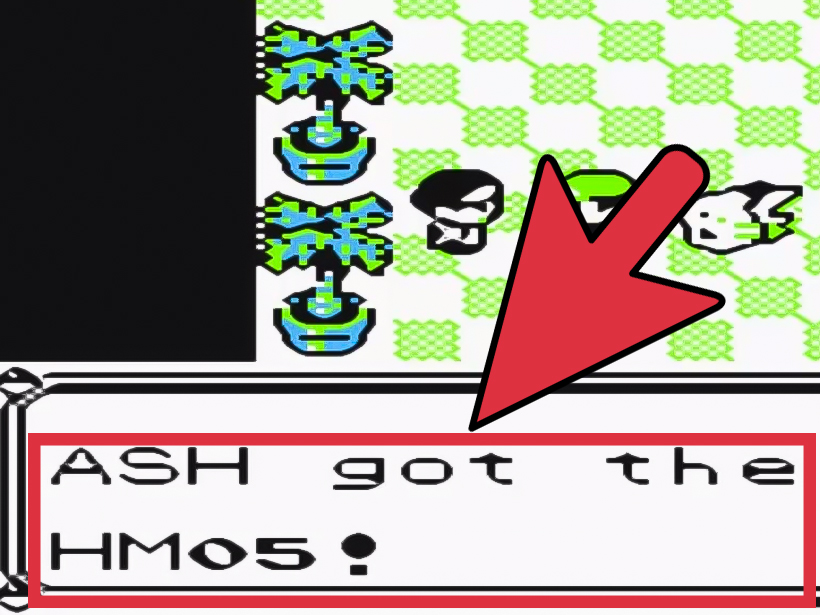
If you have reached the point in Pokémon Yellow where Rock Tunnel looks less like a cave and more like a power outage with attitude, you are in the right place. Flash is the move that makes that dark maze much easier to navigate, and getting it is not hard once you know the route. The trick is that Pokémon Yellow does not hand you HM05 Flash automatically. You need to earn it by catching enough different Pokémon, reaching the right place, and taking a quick detour through Diglett’s Cave.
This guide breaks the whole process into nine simple steps, with no fluff, no weird detours, and no “just magically know where the aide is” nonsense. You will also find tips on which Pokémon should learn Flash, what mistakes make players miss it, and why this little side quest is one of the most memorable parts of an early Yellow playthrough.
Why Flash Matters in Pokémon Yellow
Flash is HM05 in Pokémon Yellow. In battle, it lowers the target’s accuracy, which sounds nice until you realize it is about as exciting as watching a Slowpoke file paperwork. Outside battle, though, Flash is genuinely useful because it lights up Rock Tunnel, the dark cave on the way to Lavender Town. Technically, you can stumble through Rock Tunnel without Flash, but that is the kind of challenge people usually accept by accident, not by choice.
The good news is that once you have the Boulder Badge, you are allowed to use Flash outside of battle. So if you already beat Brock, the badge requirement is covered. Now you just need the HM itself.
How to Get Flash in Pokémon Yellow: 9 Steps
-
Step 1: Make sure you already beat Brock
Your first checkpoint is simple: defeat Brock in Pewter City and earn the Boulder Badge. This badge is what allows Flash to be used outside battle in Generation I. If Brock is already in your rearview mirror, good news: you do not need to do anything extra for the badge requirement. You are already qualified to light up caves like a tiny electric contractor.
-
Step 2: Reach Vermilion City
To get Flash in Pokémon Yellow, you need to work your way to Vermilion City. This is the city where the S.S. Anne is docked, where Lt. Surge runs the Gym, and where your journey starts bending back toward Route 2 through Diglett’s Cave. If you are not in Vermilion yet, keep advancing through Cerulean City, the Nugget Bridge area, Bill’s house, and the path south through Routes 5 and 6.
This matters because Vermilion is the launch point for the rest of the Flash quest. No Vermilion, no Diglett’s Cave. No Diglett’s Cave, no helpful Oak’s aide. No helpful Oak’s aide, no cave lantern move.
-
Step 3: Board the S.S. Anne
Once you are in Vermilion City, head to the harbor and board the S.S. Anne using your ticket. Explore the ship, battle trainers, and eventually make your way to the captain’s room. Before that, you will run into your rival, because of course he chose a cruise ship for dramatic timing.
The S.S. Anne is important because it gives you access to HM01 Cut, which is one of the key tools that opens up more of the map around this part of the game. Even if you only use Cut for a small number of roadblocks right now, it is still essential progress.
-
Step 4: Get HM01 Cut from the captain
After dealing with your rival, enter the captain’s quarters and help the seasick captain feel better. In return, he gives you HM01 Cut. Teach Cut to a Pokémon that can learn it. In Yellow, this is one of those classic moments where the game politely says, “Congratulations, now go trim random shrubbery to save the region.”
Cut is valuable here for two reasons. First, it lets you continue normal story progress around Vermilion. Second, some players use it around the Route 2 area near Diglett’s Cave, depending on how they approach the Oak’s aide building. Either way, having Cut before you go after Flash is the smart play.
-
Step 5: Catch at least 10 different Pokémon
This is the requirement many players miss. Professor Oak’s aide on Route 2 will only give you Flash if you have 10 different Pokémon listed as owned in your Pokédex. Seen Pokémon do not count. You need to have actually caught them.
Thankfully, getting 10 species by this point is very realistic in Yellow. A sample set could include Pikachu, Pidgey, Rattata, Caterpie, Metapod, Nidoran♀, Nidoran♂, Mankey, Spearow, and Diglett. If you are still short, Drowzee near Vermilion or Abra on nearby routes can help fill the gap. The easiest mistake here is assuming evolutions or trainer battles alone are enough. They are not. Open your Pokédex and check your owned count before making the trip.
-
Step 6: Go to Diglett’s Cave near Vermilion City
Once you have Cut and at least 10 owned Pokémon, head east from Vermilion toward Route 11 and enter Diglett’s Cave. This cave is the shortcut that connects the Vermilion side of Kanto to the east side of Route 2 near Pewter and Viridian.
Walk all the way through the cave until you emerge on Route 2. Diglett’s Cave is not complicated, but it is a nice place to catch Diglett if you still need another species for your Pokédex count. It is also a sneaky reminder that Gen 1 loved making players loop back across the world map in clever ways.
-
Step 7: Head south to the Route 2 gatehouse
After exiting Diglett’s Cave on Route 2, move south on the east side of the route. You will pass the house where an in-game trade is available in Yellow, and nearby you can reach the gatehouse with one of Professor Oak’s aides. Depending on how you approach the area, have Cut ready in case you need to clear a small tree along the path.
This is the real destination. If you reached the east side of Route 2 and found yourself wondering whether you are lost, you are probably not. You are very close. In classic Pokémon fashion, the reward is hidden in a perfectly ordinary building that looks like it might contain nothing more exciting than a chair and mild disappointment.
-
Step 8: Talk to Oak’s aide and collect HM05 Flash
Go inside the building and talk to Oak’s aide. If your Pokédex shows 10 owned Pokémon or more, he will hand over HM05 Flash. That is it. No boss fight. No riddle. No scavenger hunt involving twelve invisible switches and one angry bird. Just proof that you caught enough Pokémon.
If he refuses to give it to you, do not panic. The fix is usually simple: catch more unique species, then come back. This is one of the few moments in early Pokémon Yellow where the game directly rewards you for playing like a collector instead of speed-running from Gym to Gym.
-
Step 9: Teach Flash to a Pokémon and use it in Rock Tunnel
Now that you have Flash, teach it to a Pokémon that can learn it. Common practical choices in Yellow include Pikachu, Drowzee, Abra’s line, Clefairy, Jigglypuff, or Mr. Mime. If you do not want to waste a permanent move slot on a main team member, pick a temporary helper.
That last point matters because in Generation I, HM moves are a pain to remove. Once Flash is taught, it tends to stick around for a while. After teaching it, continue your journey to Route 9 and Route 10, enter Rock Tunnel, open your Pokémon menu, and use Flash outside battle. Suddenly the cave stops feeling like a haunted basement and starts feeling like an actual route.
Best Pokémon to Teach Flash in Pokémon Yellow
If you are wondering who should carry Flash, the answer depends on how much you hate wasting moveslots. Since Flash is mostly useful for field utility, many players put it on a Pokémon that is not central to their long-term battle plans. Drowzee is a solid candidate because it is easy to catch near Vermilion. Abra can work too, although catching one can feel like trying to bottle a lightning bolt that knows Teleport.
Pikachu can learn Flash, and some players simply teach it to their starter for convenience. That works fine, especially if you are playing casually and do not care about perfect move optimization. But if you are trying to build a stronger final moveset, a temporary user is usually the better choice.
Common Mistakes That Keep Players from Getting Flash
- Thinking “seen” Pokémon count: Oak’s aide wants owned Pokémon, not just species you battled.
- Skipping the S.S. Anne: You need Cut from the captain to make progression smoother and open nearby areas properly.
- Forgetting where Diglett’s Cave is: It is near Vermilion and leads back to Route 2.
- Teaching Flash without thinking: In Gen 1, HM moves are annoying to get rid of, so choose carefully.
- Assuming Flash is mandatory: It is technically optional, but for most players, especially first-timers, it is absolutely worth getting.
A 500-Word Look at the Experience of Getting Flash in Pokémon Yellow
One of the reasons this part of Pokémon Yellow sticks in players’ memories is that getting Flash feels like a real adventure instead of a simple item pickup. You are not just walking into a shop and buying a flashlight. You are weaving through several systems the game quietly taught you up to this point: catching different species, backtracking through an older route, using HMs to unlock shortcuts, and paying attention to NPC rewards that are easy to miss if you charge ahead too fast.
For a lot of players, the Flash quest is the first moment when Kanto starts to feel interconnected. Earlier in the game, routes can seem linear. You move from town to town, beat trainers, and keep going. But once you hit Vermilion City, the map starts folding back on itself in a very satisfying way. You board the S.S. Anne, earn Cut, discover Diglett’s Cave, pop out near Route 2, and suddenly the world feels more alive. Areas you saw before are not just background anymore; they are part of a larger puzzle.
There is also something unmistakably old-school about the requirement to catch 10 different Pokémon. Modern games are often more aggressive about pointing giant neon arrows at your next objective. Pokémon Yellow is more relaxed and a little sneaky. It gently encourages you to engage with the “catch them” side of the series, then rewards you with a useful HM. That design makes Flash feel earned. It is not just a progress key. It is a payoff for actually playing like a Pokémon trainer instead of a one-Pikachu demolition crew.
The trip through Diglett’s Cave adds its own flavor. It is short, but it feels important. You leave busy Vermilion, disappear underground, and come out near a quieter, earlier part of the region. That transition gives the whole quest a secret-path energy, like you found a staff door in the back of Kanto and somehow wandered into the game’s utility department. Then you step into an ordinary building, talk to an aide, and receive one of the most practical moves in the early game. It is wonderfully understated.
And then comes Rock Tunnel, where Flash really proves its value. Without it, the cave is navigable but awkward, the kind of place where every ladder feels suspicious and every trainer seems to materialize out of pure bad timing. With Flash, the route becomes readable, and your confidence goes up instantly. That emotional shift is part of why players remember the move so fondly. It turns confusion into momentum.
In that sense, getting Flash in Pokémon Yellow is more than a quick errand. It is a mini-story about preparation, exploration, and finally seeing where you are going. Also, yes, it saves you from wandering face-first into cave walls like an ambitious but underqualified Zubat.
Final Thoughts
If you want the shortest answer possible, here it is: beat Brock, get Cut from the S.S. Anne captain, catch 10 different Pokémon, go through Diglett’s Cave, and talk to Professor Oak’s aide on Route 2. That is how to get Flash in Pokémon Yellow. Once you have it, Rock Tunnel becomes far less annoying, your route to Lavender Town becomes much smoother, and you get to enjoy one of the most classic little detours in the original Kanto games.
It is a simple side mission, but it captures what made early Pokémon so charming. The game rewards curiosity, backtracking, and a decent-sized Pokédex. Not bad for a move most people remember as “the cave light thing.”