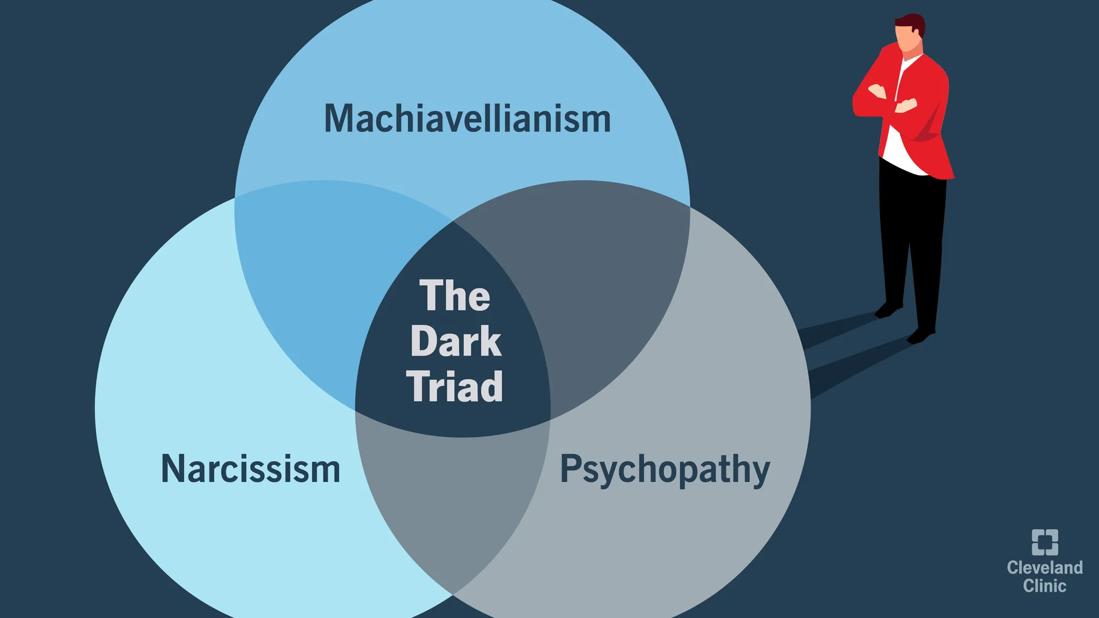
The Dark Triad sounds like a villain group from a superhero movie, but it is actually a psychology term for three personality traits that can make relationships, workplaces, friendships, and family dynamics feel like emotional dodgeball. The three traits are narcissism, Machiavellianism, and psychopathy. On their own, each can create trouble. Together, they can form a pattern of charm, manipulation, low empathy, and self-serving behavior that leaves other people confused, drained, or second-guessing themselves.
Before we go further, here is the important grown-up disclaimer in normal human language: the Dark Triad is not a casual label to throw at every annoying coworker, dramatic ex, strict boss, or cousin who “borrows” your charger and somehow never returns it. These traits exist on a spectrum. A person may show a few behaviors during stress without having a deeply harmful personality pattern. A mental health professional is the right person to assess serious personality concerns.
Still, understanding Dark Triad traits can help you spot red flags, protect your boundaries, and stop mistaking manipulation for confidence. Let’s unpack what the Dark Triad means, why it matters, and the nine signs to watch for.
What Is the Dark Triad?
The Dark Triad is a personality framework that describes three overlapping but distinct traits: narcissism, Machiavellianism, and psychopathy. The term became widely known after researchers Delroy Paulhus and Kevin Williams used it to describe socially aversive personality traits that can appear in everyday populations, not just clinical settings.
In simple terms, Dark Triad traits are linked to a callous and manipulative interpersonal style. Someone high in these traits may be charming, strategic, bold, or socially smooth, but their behavior often serves one main goal: getting what they want, even when it costs other people peace, dignity, money, opportunity, or trust.
The Three Traits of the Dark Triad
1. Narcissism: “I am the main character, and everyone else is background music.”
Narcissism involves grandiosity, entitlement, a strong need for admiration, and difficulty recognizing other people’s emotional needs. A person with high narcissistic traits may believe they deserve special treatment, become irritated when they are not praised, or treat relationships like mirrors that exist to reflect their greatness.
Not all confidence is narcissism. Healthy confidence says, “I have value.” Narcissism says, “I have more value than you, and please clap while I explain why.”
2. Machiavellianism: “People are chess pieces.”
Machiavellianism is associated with manipulation, deception, emotional detachment, and a calculated focus on personal gain. A highly Machiavellian person may plan carefully, hide their motives, flatter someone for access, or create situations where others feel trapped into doing what they want.
This trait is less about dramatic ego and more about strategy. While narcissism wants applause, Machiavellianism wants control. It is the quiet spreadsheet of manipulation, and yes, it probably has color-coded tabs.
3. Psychopathy: “Rules are optional, remorse is inconvenient.”
Psychopathy, in the Dark Triad context, usually refers to subclinical traits such as low empathy, impulsivity, fearlessness, callousness, and limited remorse. It does not automatically mean someone is violent or criminal. In everyday life, these traits may show up as risk-taking, lying without visible guilt, using intimidation, or treating consequences as other people’s problem.
When psychopathic traits are strong, a person may seem emotionally cold when others are hurt, act recklessly, or repeat harmful behavior without meaningful accountability.
Why the Dark Triad Matters
Dark Triad traits can appear in romantic relationships, friendships, families, schools, workplaces, online communities, and leadership roles. People high in these traits may be impressive at first because charm, confidence, and boldness can look attractive. The trouble often comes later, when the pattern reveals itself: admiration turns into entitlement, confidence turns into control, and humor turns into humiliation.
Understanding these traits helps you separate a one-time mistake from a repeated pattern. Everyone can be selfish, jealous, defensive, or insensitive sometimes. A Dark Triad pattern is more persistent. It shows up across situations and often benefits the person showing the behavior while harming others.
9 Signs of Dark Triad Traits To Watch For
1. Superficial Charm That Feels Too Perfect
People with Dark Triad traits can be highly charming, especially early on. They may know exactly what to say, mirror your interests, praise you intensely, or make you feel unusually special very quickly. This can happen in dating, friendship, sales, networking, or leadership situations.
The red flag is not charm by itself. Plenty of kind people are charming. The red flag is charm that seems like a tool. If someone turns warmth on and off depending on what they want, or if their kindness disappears the moment you set a boundary, pay attention.
2. A Pattern of Lying or Twisting the Truth
Dark Triad behavior often involves deception. This may include obvious lies, half-truths, fake innocence, exaggeration, selective memory, or rewriting events so they look like the victim and everyone else looks unreasonable.
For example, they may promise something privately, deny it publicly, then act offended that you “misunderstood.” They may tell different versions of the same story to different people. Over time, you may feel like you need a detective board with red string just to understand what happened. That level of confusion is often a sign that honesty is not the operating system.
3. Lack of Empathy When It Counts
One major warning sign is a lack of genuine concern for other people’s feelings, especially when empathy would require inconvenience, accountability, or sacrifice. They may understand emotions intellectually but not respond with care.
For instance, if someone hurts your feelings and responds with, “You are too sensitive,” instead of listening, that may suggest low emotional responsibility. If they repeatedly mock others’ pain, dismiss boundaries, or seem bored when people need support, the issue is not just poor manners. It may be a deeper pattern of emotional coldness.
4. Manipulation Disguised as Help, Advice, or Love
Manipulation is one of the clearest signs of Dark Triad traits. It does not always look like obvious bullying. Sometimes it arrives wearing a friendly sweater. A person may say, “I am only telling you this because I care,” while pressuring you to do what benefits them. They may offer help that creates obligation, give advice that lowers your confidence, or use guilt to make you responsible for their emotions.
Healthy support gives you more clarity and freedom. Manipulative support makes you feel smaller, indebted, or afraid to disagree.
5. Entitlement and Special Treatment
People high in narcissistic traits often believe normal rules should bend for them. They may expect instant replies, special favors, public praise, extra patience, or forgiveness without changed behavior.
In a workplace, this might look like taking credit for group work while blaming others for mistakes. In a friendship, it might look like expecting emotional support at all hours but disappearing when you need help. In a relationship, it might look like demanding loyalty while refusing honesty.
Entitlement has a favorite phrase: “That rule should not apply to me.” Unfortunately, reality did not receive the memo.
6. Using People as Tools
A Dark Triad pattern often treats people according to usefulness. Someone may be warm when you can help them and cold when you cannot. They may network aggressively, flatter people in power, ignore those with less status, or maintain relationships only when there is a benefit.
This can feel subtle. You might notice that every conversation somehow becomes a request. Every favor leads to another favor. Every connection becomes an opportunity for them. If you feel more like a resource than a person, that is a serious signal.
7. Jealousy, Rivalry, and Status Obsession
Dark Triad traits are often linked with competitiveness, envy, and status-seeking. The person may resent others’ success, downplay achievements, or turn ordinary situations into contests. If someone else gets attention, they may sulk, attack, gossip, or suddenly need to prove they are better.
This does not always look loud. Sometimes it sounds like “I am happy for you, but…” followed by a sentence that immediately cancels the happiness. They may frame themselves as superior while secretly monitoring everyone else’s progress like a suspicious hawk with Wi-Fi.
8. Bullying, Intimidation, or Quiet Cruelty
Dark Triad traits can show up as bullying, public humiliation, threats, sarcasm used as a weapon, or subtle intimidation. Some people use direct aggression. Others use social punishment, exclusion, rumor-spreading, or strategic silence.
A key sign is enjoyment or indifference when others feel uncomfortable. They may claim it was “just a joke,” but the joke always seems to target someone’s insecurity, status, or vulnerability. Humor that repeatedly leaves one person bleeding emotionally while the other person laughs is not humor. It is a power move wearing a clown nose.
9. No Real Accountability
Perhaps the biggest sign is what happens after harm is pointed out. A healthy person may feel defensive at first, but they can usually reflect, apologize, and adjust. Someone with strong Dark Triad traits may deny, deflect, attack, minimize, or create a new conflict to avoid responsibility.
Common responses include: “You are overreacting,” “Everyone agrees with me,” “I only did that because you made me,” or “After all I have done for you?” Notice the pattern: the conversation moves away from their behavior and becomes a trial about your reaction.
Dark Triad vs. Normal Human Flaws
It is important not to confuse Dark Triad traits with ordinary imperfection. Everyone has bad days. People can be selfish under stress, brag when insecure, lie out of fear, or act cold because they are overwhelmed. A pattern matters more than a single moment.
Ask yourself these questions:
- Does this person repeatedly benefit while others feel used or hurt?
- Do they show remorse only when there are consequences?
- Do they change behavior, or just change explanations?
- Do I feel more confused, anxious, or dependent after interacting with them?
- Are my boundaries respected, mocked, or treated as negotiations?
If the same red flags keep showing up across time and situations, you are not “being dramatic.” You may be recognizing a pattern.
How To Protect Yourself From Dark Triad Behavior
Set Clear Boundaries
Boundaries work best when they are specific and enforceable. Instead of saying, “Please be nicer,” try, “I will not continue this conversation if you insult me.” Then follow through calmly. A boundary without follow-through is just a suggestion wearing a tiny hat.
Do Not Try To Win Their Approval
People with strong Dark Triad traits may use approval as bait. They praise you when you comply and withdraw warmth when you resist. The goal is to make you chase the “good version” of them. Try not to build your self-worth on someone who keeps moving the finish line.
Keep Records When Necessary
In work, school, financial, or co-parenting situations, written communication can help reduce confusion. Save important messages, confirm agreements in writing, and avoid relying only on private conversations if the person often denies what was said.
Limit Personal Information
Be careful with vulnerable details around someone who uses information as leverage. You do not need to share your fears, plans, finances, or insecurities with someone who has shown they may weaponize them later.
Seek Support
Talk to trusted friends, family members, mentors, managers, school counselors, or licensed mental health professionals. Outside perspective matters because manipulative patterns often work by isolating you and making you doubt your own judgment.
Can Someone With Dark Triad Traits Change?
Change is possible when a person has self-awareness, motivation, accountability, and the right professional support. However, change is not guaranteed just because someone gives a dramatic apology or says exactly what you hoped to hear. Watch behavior over time.
A sincere person accepts consequences, respects boundaries, and makes consistent adjustments. A manipulative person may apologize to reset the situation, avoid losing access, or protect their image. The difference is not in the speech. It is in the pattern after the speech.
Real-Life Experiences Related to the Dark Triad: What It Often Feels Like
Many people do not recognize Dark Triad behavior immediately because it rarely begins with obvious cruelty. It often begins with intensity. The person may seem magnetic, confident, funny, and unusually interested in you. At first, you may feel chosen. They remember details, compliment your strengths, and seem to understand exactly what you want to hear. In a workplace, they may look like the bold leader who can “get things done.” In a friendship, they may feel exciting and loyal. In dating, they may create the feeling of instant connection. The early experience can be flattering, which is why later confusion feels so disorienting.
Then small contradictions appear. They are kind to powerful people but dismissive toward servers, classmates, junior employees, or anyone who cannot help them. They tell a story that makes them look heroic, but the details shift later. They say they hate drama, yet drama follows them like a loyal golden retriever. When you raise a concern, they do not respond with curiosity. They respond with performance. Suddenly they are offended, wounded, furious, or amused by your “overreaction.” Somehow the original issue disappears, and you are now defending your tone, timing, memory, loyalty, or personality.
Another common experience is emotional exhaustion. You may feel like every interaction has hidden rules. Praise them, and things go smoothly. Question them, and the temperature drops. Say no, and they become cold, sarcastic, or wounded. You may start editing yourself to avoid conflict. You may rehearse simple conversations in your head because you already know they will twist your words. That is not a normal level of relationship maintenance. That is emotional unpaid overtime.
People often describe a strange cycle: charm, pressure, confusion, apology, repeat. The apology may sound convincing, especially if the person is socially skilled. They may say, “You are right, I need to do better,” and for a short time they do. But if the same behavior returns whenever they want control, the apology may be part of the cycle rather than the end of it.
In professional settings, Dark Triad experiences can be especially tricky because confidence is sometimes mistaken for competence. A person may take credit, charm leadership, blame teammates, and quietly undermine anyone who threatens their status. They may present themselves as the only rational person in the room while creating the very problems they claim to solve. The best protection is documentation, calm communication, and not letting their version of reality become the only version available.
In personal relationships, the biggest turning point often comes when you stop asking, “How do I make them understand?” and start asking, “What pattern am I seeing?” Some people do not misunderstand your boundaries. They dislike them. Some do not forget your needs. They rank them below their convenience. Recognizing this is painful, but it can also be freeing. You do not need a perfect psychological label to protect your peace. You only need enough clarity to notice what repeatedly harms you and enough self-respect to respond.
Conclusion
The Dark Triad describes three overlapping personality traits: narcissism, Machiavellianism, and psychopathy. These traits can show up as charm without sincerity, manipulation, entitlement, low empathy, exploitation, jealousy, intimidation, and refusal to take accountability. The key is not to diagnose people casually, but to notice patterns that affect your well-being.
If someone repeatedly leaves you feeling used, confused, small, or afraid to set boundaries, take that seriously. You do not have to prove they are a “Dark Triad person” before you protect yourself. Clear boundaries, outside support, written records, and emotional distance can help you stay grounded. And if the situation involves serious fear, ongoing harassment, or emotional harm, reach out to a qualified professional or trusted support system.
Note: This article is for educational purposes only. It is not a diagnosis, treatment plan, or substitute for guidance from a licensed mental health professional.