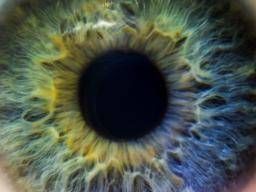
Eye color looks simple at first glance. Brown, blue, green, hazel, gray, amberpick a shade and move on, right? Not quite. The color of your eyes is not the result of one tiny switch hidden in your DNA labeled “make blue” or “make brown.” If only biology were that tidy. Instead, eye color is shaped by a surprisingly elegant mix of genetics, pigment, light scattering, ancestry, and development. In other words, your iris is doing more backstage work than a Broadway lighting crew.
The short answer is this: eye color is mainly determined by the amount and distribution of melanin in the iris, guided by many genes that influence how that pigment is made, stored, and expressed. The longer answer is far more interesting. Brown eyes are not simply “dominant,” blue eyes are not just “recessive,” and two blue-eyed parents are not guaranteed to have only blue-eyed children. Eye color inheritance is more like a recipe than a light switch. A little more pigment here, a little less gene expression there, and suddenly the family photo includes brown, hazel, green, and one cousin whose eyes look different in every group selfie.
The Iris: Where Eye Color Begins
The colored part of the eye is called the iris. It sits around the pupil and helps control how much light enters the eye. While we often think of the iris as a decorative feature, it has a practical job: it expands and contracts to regulate light, like a built-in camera aperture. The color we see comes from pigment inside the iris and from the way light interacts with its structure.
The most important pigment involved is melanin, the same broad family of pigment that helps determine skin and hair color. People with more melanin in the front layers of the iris usually have darker eyes, such as brown or deep hazel. People with less melanin often have lighter eyes, such as blue, gray, or green. The iris does not contain blue pigment in the way a paint tube contains blue paint. Blue eyes appear blue mostly because of how light scatters through the iris when melanin levels are low. So yes, blue eyes are partly an optical trick. Biology enjoys a little drama.
Melanin: The Main Character in the Eye Color Story
If eye color were a movie, melanin would get top billing. The more melanin present in the iris, especially in its front layer, the darker the eye appears. Brown eyes contain a larger amount of melanin. Hazel eyes often have a medium amount and uneven distribution, which can create a mix of brown, gold, and green tones. Green eyes usually have less melanin than brown eyes but more than blue eyes. Gray and blue eyes tend to have very low melanin in the front of the iris.
This is why eye color is not always a flat, single shade. Look closely at many eyes and you may see rings, flecks, gradients, or starburst patterns. A person may describe their eyes as green, but under sunlight they look gold. Another person may say they have brown eyes, yet their iris has copper, amber, or almost black tones. Eye color depends not only on how much melanin is present but also on where it sits, how densely it is packed, and how light bounces through the iris.
Why Brown Eyes Are So Common
Brown is the most common eye color worldwide because higher melanin levels have historically been more common in populations from regions with stronger sunlight. More melanin can offer some protection from bright light and ultraviolet exposure. That does not mean brown eyes are “better” or light eyes are “weaker.” It simply means human variation often reflects long histories of ancestry, geography, and adaptation.
In many parts of Africa, Asia, the Middle East, Latin America, and Southern Europe, brown eyes are extremely common. Blue, green, and gray eyes are more frequently associated with ancestry from Northern and Eastern Europe, though migration and mixed ancestry mean eye color is now wonderfully unpredictable in many families. Human genetics does not care about keeping neat categories for school worksheets.
The Genetics of Eye Color: More Than One Gene
For years, many people learned that brown eyes are dominant and blue eyes are recessive. That simplified model was useful for classroom introductions, but it is incomplete. Eye color is polygenic, meaning it is influenced by multiple genes. These genes affect melanin production, melanin storage, and how pigment appears in the iris.
Two of the most important genes are OCA2 and HERC2, both located on chromosome 15. OCA2 helps provide instructions for a protein involved in melanin production and storage. HERC2 contains a regulatory region that can influence how strongly OCA2 is expressed. When certain variants reduce OCA2 activity, less melanin may develop in the iris, often resulting in lighter eye colors such as blue or green.
But OCA2 and HERC2 are not the whole story. Other genes, including ones involved in pigment production and transport, also contribute to the final shade. This is why eye color exists on a spectrum rather than in a few tidy boxes. Brown can be honey brown, chestnut, dark chocolate, or nearly black. Blue can be icy, steel, or deep ocean. Hazel can look green on Monday and golden on Tuesday, especially if the lighting has decided to participate.
Can Two Blue-Eyed Parents Have a Brown-Eyed Child?
It is uncommon, but not impossible. The old single-gene model suggested that two blue-eyed parents could not have a brown-eyed child. Modern genetics shows that eye color is more complex. Because many genes contribute to pigment, parents may carry genetic variants that are not obvious from their own eye color. A child can inherit a combination that produces more melanin than expected.
This is also why online baby eye color calculators should be treated as entertainment, not prophecy. They can offer a rough probability, but they cannot capture the full genetic recipe unless they analyze many relevant gene variants. Even then, prediction is not perfect. Your future baby’s eye color is less like ordering a pizza and more like waiting for a mystery cake to come out of the oven.
Why Babies’ Eye Color Can Change
Many babies are born with eyes that appear blue, gray, or lighter than they will later become. This is especially common in babies with lighter skin tones, though not universal. At birth, the iris may not yet contain its full amount of melanin. As a baby grows and the eyes are exposed to light, melanocytesthe cells that produce melaninmay become more active. Over the first several months, the iris can darken as more pigment develops.
Most noticeable changes happen during the first six to twelve months of life. Some children continue to show subtle changes into early childhood. A baby born with blue-gray eyes may develop green, hazel, or brown eyes. A baby born with dark brown eyes is less likely to experience a dramatic lightening because the iris already has a substantial amount of melanin.
Parents often inspect their baby’s eyes like tiny fortune-tellers: “Are they blue today? Wait, are they green near the center? Grandma says they’re definitely hazel.” The truth is that baby eye color can be a slow reveal. The final shade depends on inherited genetics and how pigment develops over time.
How Different Eye Colors Form
Brown Eyes
Brown eyes have higher levels of melanin in the iris. The pigment absorbs more light, giving the eyes a darker appearance. Brown eyes can range from light caramel to deep espresso. In some lighting, very dark brown eyes may appear almost black, although true black irises are extremely rare.
Blue Eyes
Blue eyes contain little melanin in the front layer of the iris. Their color comes largely from light scattering within the iris structure. This is similar in concept to why the sky appears blue, although the eye is obviously not a tiny weather system. There is no actual blue pigment sitting in the iris like paint on a wall.
Green Eyes
Green eyes usually contain a low to moderate amount of melanin and may involve a mix of light scattering and yellowish or amber tones. They are relatively rare worldwide. Green eyes can look especially changeable because lighting, clothing, makeup, and surrounding colors may emphasize different parts of the iris.
Hazel Eyes
Hazel eyes are famous for refusing to pick a lane. They often contain brown or gold near the pupil and greenish tones toward the outer iris. Their appearance can shift depending on light and environment. This does not mean the eye is actually changing color minute by minute; it means the mixed pigments and reflective structure make different colors more noticeable in different settings.
Gray Eyes
Gray eyes are often grouped with blue eyes, but they may appear more silver, smoky, or slate-like. Their color is associated with low melanin and differences in iris structure that affect light scattering. Gray eyes are considered uncommon, and like blue eyes, they may look different depending on lighting.
Amber Eyes
Amber eyes have a golden, copper, or honey-like appearance. They are different from hazel eyes because they tend to be more uniform in color rather than a mix of green and brown. Amber eyes are less common and can look striking because of their warm, clear tone.
Why Some People Have Two Different Eye Colors
Heterochromia is the term for differences in iris color. It can mean one eye is a different color from the other, or it can describe variations within the same iris. Complete heterochromia occurs when each eye has a different color, such as one brown eye and one blue eye. Sectoral heterochromia means one section of an iris has a different color. Central heterochromia appears as a ring of different color around the pupil.
Heterochromia can be present from birth and may be harmless. However, if a person develops a new difference in eye color later in life, especially if it affects only one eye or comes with pain, vision changes, cloudiness, or injury, it should be evaluated by an eye care professional. Eye color is usually stable after childhood, so sudden changes deserve attention.
Can Eye Color Change in Adults?
Adult eye color usually stays fairly stable. However, it can appear to change because of lighting, pupil size, clothing, makeup, or surrounding colors. A green shirt may make green flecks in hazel eyes stand out. Bright sunlight may make brown eyes look warmer. A large pupil can make the iris look darker because less of the colored area is visible.
Actual eye color changes in adulthood are less common and may be related to medication, injury, inflammation, certain medical conditions, or changes in the eye’s structures. Some glaucoma medications, especially prostaglandin analogs, may darken the iris over time in some people. Conditions affecting the iris can also alter its appearance. If one eye changes color suddenly or the eye looks cloudy, painful, red, or different from usual, it is wise to get an eye exam.
Does Eye Color Affect Vision?
For most people, eye color itself does not determine whether they have good or poor vision. A person with brown eyes can need glasses, and a person with blue eyes can have perfect vision. The focusing parts of the eye, such as the cornea and lens, matter more for sharpness of vision than iris color.
That said, melanin can affect light sensitivity. People with lighter eyes may be more sensitive to bright sunlight because their irises contain less pigment to absorb light. This does not mean light-eyed people are doomed to live like vampires avoiding windows. It simply means sunglasses with UV protection are a smart idea. Actually, they are a smart idea for everyone, regardless of eye color. Your eyes appreciate accessories with purpose.
Common Myths About Eye Color
Myth 1: Brown Eyes Always Beat Blue Eyes
Brown eye color is often associated with higher melanin and can be more likely in many inheritance patterns, but eye color is not controlled by one simple dominant-recessive pair. Multiple genes interact, so outcomes can surprise families.
Myth 2: Blue Eyes Contain Blue Pigment
Blue eyes do not contain blue pigment. Their appearance is largely due to low melanin and light scattering in the iris. Your eyes are not secretly carrying microscopic sapphire paint. Nature is just very good at optical effects.
Myth 3: Eye Color Reveals Personality
Eye color does not scientifically determine whether someone is loyal, mysterious, adventurous, shy, or destined to become the main character in a fantasy novel. Cultural stories about eye color are fun, but personality comes from a much wider mix of biology, environment, experience, and choices.
Myth 4: You Can Permanently Change Eye Color Safely at Home
Colored contact lenses can temporarily change how your eyes look, but they should be prescribed and fitted by an eye care professional, even if they are cosmetic. Unsafe lenses can cause irritation, infection, or damage. Permanent eye color change procedures are controversial and may carry serious risks. When it comes to eyes, “DIY” should mean “do it yesterday? no.”
What Eye Color Can Teach Us About Human Variation
Eye color is a small feature with a big story. It reflects genetics, ancestry, pigment biology, development, and light physics all at once. It also reminds us that human traits rarely fit into simple categories. Even two people who both say they have brown eyes may have completely different shades, patterns, and undertones. Two people with blue eyes may share a broad color label but differ in genetics and iris structure.
This is why eye color remains such a popular topic. It is personal, visible, and just mysterious enough to keep people curious. Families compare baby photos. Friends debate whether someone’s eyes are green or hazel. Photographers chase the right lighting. Scientists keep studying the genetic architecture behind pigmentation. Meanwhile, your iris quietly continues doing its job, completely unimpressed by the attention.
Experiences Related to Eye Color: Everyday Moments That Make the Science Feel Real
One of the most common experiences people have with eye color starts in childhood, usually with a family member leaning in and saying, “You have your mother’s eyes.” Sometimes that is true. Sometimes it is a generous attempt to create family poetry during Thanksgiving dinner. Eye color can feel deeply personal because it is one of the first features people notice, yet it also connects us to parents, grandparents, and ancestors we may never have met.
In many families, eye color becomes a friendly mystery. A brown-eyed father and green-eyed mother may have a blue-eyed child, leading everyone to suddenly become an amateur geneticist at the kitchen table. Someone pulls out old photos. Someone mentions great-grandpa’s gray eyes. Someone else confidently explains dominant genes using information last updated in a seventh-grade notebook. The real answer, of course, is that multiple genes are involved, and inherited traits can skip, blend, hide, or reappear in surprising ways.
Another relatable experience is watching a baby’s eyes change. New parents may take photos every week, convinced the baby’s eyes are shifting from blue to gray to green to “wait, is that brown?” This slow transformation can feel almost magical, but it usually reflects melanin developing in the iris. The baby is not changing identities; their pigment cells are simply getting to work. Still, it is easy to understand why parents turn it into a family event. Baby eye color changes are nature’s version of a suspense series, except the season finale may take a year.
Adults often experience eye color as something that changes with lighting. A person with hazel eyes may hear, “I thought your eyes were brown,” one day and “Are your eyes green?” the next. This does not mean the iris is redecorating overnight. It means hazel, green, gray, and even some brown eyes can reflect light in complex ways. Sunlight, indoor lighting, clothing colors, and pupil size can all affect how eye color appears. Anyone with hazel eyes has probably lived through the identity crisis of checking three boxes on a form and still feeling inaccurate.
There is also a social side to eye color. Some people receive constant compliments for unusual eye shades, while others may feel their common brown eyes are overlooked. But brown eyes are not boring. They can be warm, golden, deep, glossy, or richly patterned. In close-up photography, brown eyes often reveal impressive detail: amber rings, dark limbal borders, copper flecks, and soft gradients. The idea that rare equals better is more marketing than science. Eye color is not a ranking system; it is variation.
For people with heterochromia, the experience can be especially memorable. Having two different eye colors or a distinct ring around the pupil often invites questions. Some enjoy the uniqueness; others may get tired of explaining it. If heterochromia has been present since birth and an eye doctor has confirmed everything is healthy, it may simply be a harmless variation. But if the difference appears suddenly, that experience changes from “interesting feature” to “time for a professional checkup.”
Eye color also shows up in small daily choices. People choose clothing to bring out green flecks, pick glasses frames that contrast with blue eyes, or use makeup shades to warm up brown eyes. Photographers learn that the best eye color is often the one captured in good natural light. And nearly everyone has taken at least one close-up photo of their iris and thought, “Honestly, this looks like a tiny planet.” They are not wrong. The iris has ridges, rings, textures, and color patterns that make each person’s eyes remarkably individual.
In the end, the experience of eye color is both scientific and emotional. It is pigment and light, but it is also identity, family resemblance, curiosity, and beauty. Whether your eyes are brown, blue, green, hazel, gray, amber, or a shade that refuses to cooperate with labels, they are the result of a complex biological recipe. And that recipe is far more interesting than the old “brown beats blue” story ever suggested.
Conclusion
So, what determines eye color? The biggest factor is melanin in the iris, especially how much is present and how it is distributed. Genetics guides that process, with OCA2 and HERC2 playing major roles alongside many other genes. Light scattering helps explain blue and gray eyes, while mixed pigment patterns create shades like green and hazel. Baby eye color can change as melanin develops, but adult eye color usually remains stable unless lighting, medication, injury, or a medical issue changes its appearance.
Eye color is a perfect example of why human biology is more interesting than simple charts. It is not just brown, blue, green, or hazel. It is a living blend of DNA, pigment, ancestry, development, and physics. Your eyes are not only windows to the soul; they are also tiny science museums with excellent lighting.