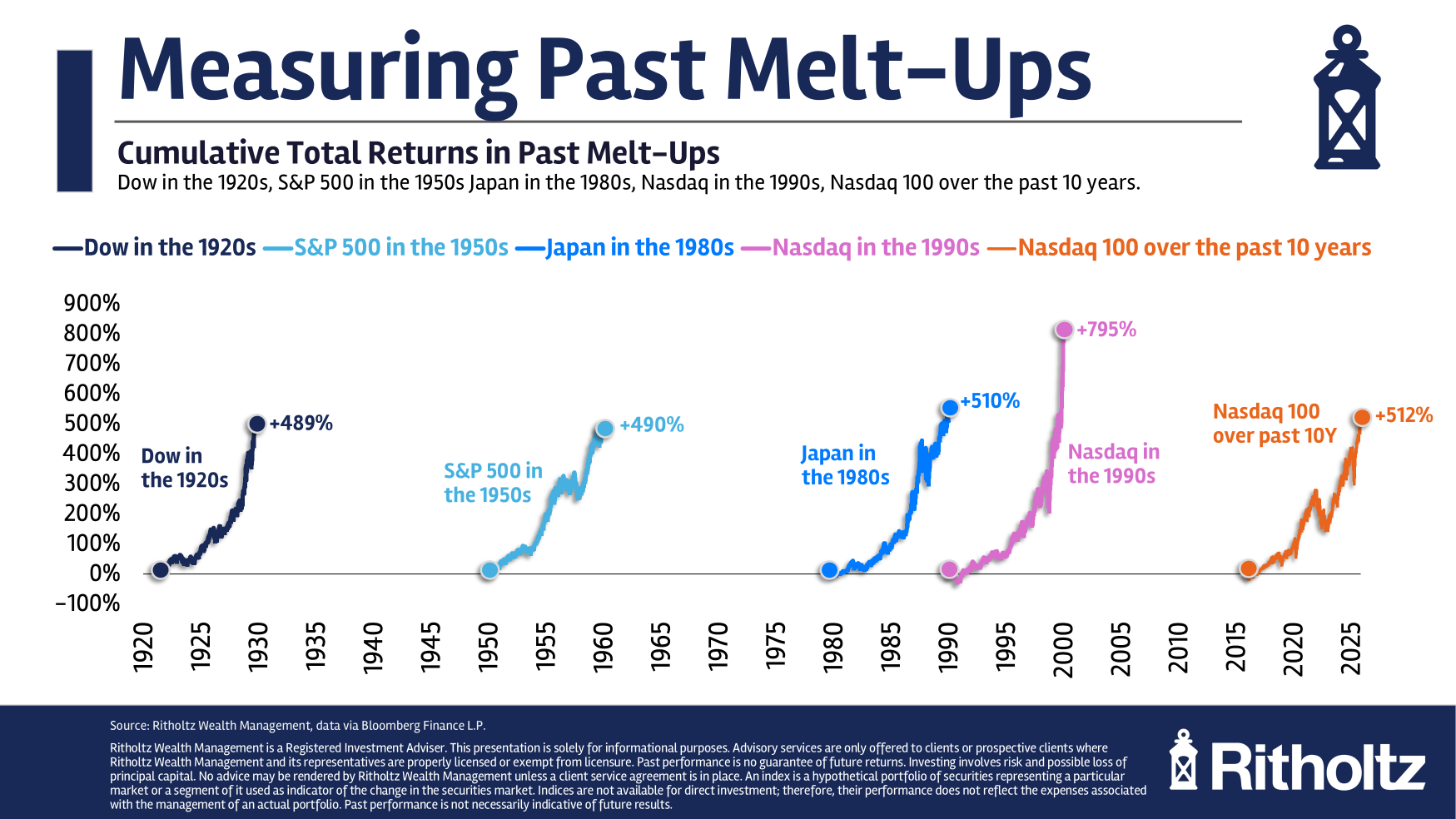
When investors talk about legendary bull markets, the same names usually show up like celebrities on a red carpet: the Roaring Twenties, the 1980s, the dot-com boom, the post-2009 recovery, and the AI-led rally of recent years. They get the documentaries, the dramatic charts, the “I should have bought earlier” regret, and occasionally a very serious-looking analyst pointing at a screen like it owes him money.
But one of the greatest bull markets in American history rarely gets invited to the party: the U.S. stock market boom of the 1950s. It was powerful, broad, surprisingly durable, and built on a postwar economic machine that reshaped the country. The S&P 500 delivered one of its best decades ever, yet the era is often remembered more for diners, tailfins, suburban lawns, and black-and-white family sitcoms than for extraordinary stock market performance.
That is a shame, because the 1950s bull market tells us something important: not every powerful rally needs to begin with excitement, and not every great bull market has to end with a spectacular crash. Sometimes the market climbs a wall of worry, walks past the skeptics, tips its hat politely, and keeps going.
Why the 1950s Bull Market Gets Ignored
The 1950s are not ignored because the returns were boring. They were anything but boring. The decade produced several exceptional years for stocks, including huge total returns in 1950, 1954, 1955, and 1958. In fact, 1954 and 1958 stand among the great calendar-year performances in U.S. market history.
So why does this bull market receive so little attention? One reason is simple: it did not come with a dramatic villain. The Roaring Twenties had speculation and the 1929 crash. The dot-com era had sock-puppet commercials, profitless startups, and office furniture auctions. The 2000s had the housing bubble and financial crisis. The 1950s bull market, by comparison, was almost annoyingly respectable. It wore a suit, paid its mortgage, and probably reminded you to change the oil in your car.
Another reason is that the people living through it were still emotionally anchored to the Great Depression. The memory of the 1929 collapse and the brutal 1930s did not vanish just because stocks started rising. Many Americans remained cautious about equities. To them, the stock market was not a magical wealth-building machine; it was the place where fortunes had once gone to be eaten by wolves.
This is what makes the decade so fascinating. The 1950s bull market was not born from wild optimism. It was born from disbelief. Investors were not piling in because they expected easy riches. Many were still suspicious, and that caution may have helped the rally last longer than a more euphoric boom would have.
The Numbers Were Not Quiet at All
The S&P 500’s total returns during the 1950s were remarkable. The market gained more than 30% in 1950, more than 50% in 1954, more than 30% in 1955, and more than 40% in 1958. There were down years, of course, because the market enjoys reminding humans that confidence is not a permanent condition. But the losses were relatively contained compared with the devastation that followed other famous bubbles.
The decade’s strength was not just a one-year wonder wrapped in nostalgia. It was a long stretch of compounding returns. Dividends mattered. Valuations rose. Corporate profits improved. The American economy expanded. Consumers bought homes, cars, appliances, televisions, and all kinds of modern comforts that turned factories into profit engines.
The best part? Most people were not talking about the 1950s market as if it were the investment event of a lifetime. That is usually how the best bull markets work. They do not arrive with trumpets. They arrive when everyone is tired, nervous, skeptical, and busy explaining why the good times cannot possibly last.
The Economic Engine Behind the Rally
A bull market does not need a perfect economy, but it does need fuel. The 1950s had plenty. The United States came out of World War II with industrial strength, household savings, pent-up consumer demand, and a rising middle class. Factories that had supplied the war effort shifted toward civilian production. Families bought cars, refrigerators, washing machines, televisions, and homes. Corporate America had customers, and customers had paychecks.
Suburbanization also played a major role. Homeownership rose sharply in the mid-twentieth century, and housing became one of the central wealth-building assets for American households. New homes needed furniture, appliances, roads, schools, shopping centers, and cars. In other words, one house purchase could set off a small economic parade. The house needed a driveway. The driveway wanted a car. The car wanted gasoline. The family wanted a television. The television wanted advertisers. The advertisers wanted consumers. Everyone wanted a snack.
The Federal-Aid Highway Act of 1956 accelerated this transformation by supporting a vast interstate highway system. The law helped connect cities, suburbs, factories, ports, and consumers. It also changed the shape of American commerce. Retail expanded, trucking became more efficient, and businesses reached customers more easily. The market did not rise because highways alone made investors rich, but infrastructure helped support the broader growth story.
Inflation Was Modest, but Fear Was Not
One of the most interesting parts of the 1950s is that inflation was generally modest compared with the inflation shocks of World War I, World War II, the 1970s, or the early 2020s. Yet inflation remained a major public concern. This sounds familiar because humans have an impressive ability to worry about inflation at almost every inflation level. If inflation is high, people panic. If inflation is low, people ask whether it is about to become high. If inflation is zero, someone will still complain that candy bars are smaller.
The modest inflation backdrop gave businesses and households something valuable: planning confidence. Companies could invest without constantly guessing whether costs would explode. Consumers could borrow, spend, and save with less uncertainty. Investors, after years of economic trauma, slowly learned that the postwar economy was not simply a temporary sugar rush.
Monetary policy also evolved during this period. After the Treasury-Fed Accord of 1951, the Federal Reserve gained more independence in managing monetary conditions. Under Chairman William McChesney Martin, the Fed emphasized price stability and the famous idea of “leaning against the wind.” That did not eliminate recessions or market declines, but it helped create a more disciplined monetary environment than the war-finance era that came before it.
The Recessions Did Not Break the Bull
The 1950s were not an uninterrupted economic fairy tale. The United States experienced recessions in 1953-1954 and 1957-1958, and another began in 1960. The market also suffered corrections, including a sharp decline around the 1957 recession. But the remarkable thing is that these setbacks did not destroy the broader advance.
In 1957, the Soviet launch of Sputnik added a psychological shock. Americans worried that the United States had fallen behind technologically. The Cold War was not exactly the kind of background music that makes investors feel cozy. Yet the market recovered strongly in 1958, delivering one of the great rebound years in stock market history.
This is one of the most useful lessons from the 1950s bull market: a good long-term market does not require a clean road. It only requires that the economy, earnings, confidence, and liquidity recover faster than fear can permanently damage them. Markets can absorb recessions. They can absorb scary headlines. They can even absorb national anxiety, provided the underlying system remains productive.
Why This Bull Market Did Not End Like 1929 or 2000
Investors often assume that a huge bull market must end in a huge crash. It is an understandable belief because the most famous bull markets often have explosive endings. The 1920s ended with the crash of 1929 and the Great Depression. The 1990s ended with the dot-com bust. The housing boom ended with the global financial crisis. These endings are memorable because they are dramatic, painful, and easy to turn into cautionary tales.
The 1950s were different. The market did not end the decade by falling off a cliff while investors screamed into their rotary phones. The 1960s brought more complicated conditions, including tighter policy, geopolitical tension, changing inflation dynamics, and eventually the speculative “Go-Go” era. But there was no single catastrophic crash that erased the entire 1950s story.
That matters. It means investors should be careful with simple narratives. A strong market is not automatically a bubble. A decade of excellent returns does not guarantee immediate disaster. Valuation matters, but so do earnings, productivity, demographics, capital investment, household formation, and policy. The market is not a fortune cookie. It is a messy voting machine in the short run and a compounding machine in the long run.
The Human Side: Why Investors Miss Great Bull Markets
The biggest bull markets are often hardest to believe at the beginning. In 1949 and 1950, investors had fresh memories of depression, war, inflation, rationing, and recession. They were not sitting around saying, “Ah yes, the next decade will be historic for equities.” More likely, they were saying, “Are we sure this stock market thing is safe?” and then nervously checking whether the bank was still open.
This pattern repeats across generations. After a painful bear market, investors become experts in caution. They can list every reason the next rally is fake. Earnings are suspicious. The economy is fragile. Rates are wrong. Politics are messy. Consumers are stretched. The chart looks weird. The neighbor is too optimistic. The moon is in the wrong phase. There is always a reason not to invest.
The 1950s remind us that the beginning of a bull market rarely feels like a beginning. It often feels like a temporary bounce inside a permanent problem. By the time the evidence becomes obvious, prices may already be much higher. That does not mean investors should blindly buy anything with a ticker symbol. It means humility is useful. Markets can improve before moods do.
What Today’s Investors Can Learn From the 1950s
1. Sentiment Can Stay Too Bearish for Too Long
Investors are often slow to change their minds after major trauma. The Great Depression shaped attitudes toward stocks for decades. In the same way, the dot-com crash, the 2008 crisis, the 2020 pandemic crash, and the inflation shock of the early 2020s shaped modern investor psychology. People do not forget losses just because a chart starts moving upward.
2. Economic Growth Can Be Broader Than One Theme
The 1950s bull market was not only about one hot industry. It was supported by housing, autos, infrastructure, manufacturing, consumer goods, finance, and rising household formation. A bull market with several engines is often healthier than one powered by a single glamorous story.
3. Dividends and Compounding Matter
Modern investors often focus on price charts, but total return includes dividends. In the 1950s, dividends were a meaningful part of investor returns. Reinvested income quietly did what it always does: it made patient investors look smarter than they felt at the time.
4. A Bull Market Does Not Need Universal Participation
Many Americans still distrusted stocks during the 1950s. That did not stop the market from rising. In fact, skepticism may have kept valuations from reaching the kind of extreme mania seen in more famous bubbles. Bull markets can advance while plenty of people remain unconvinced.
5. Not Every Boom Ends in Fireworks
The 1950s did not conclude with a single market apocalypse. This is a useful reminder for investors who believe every strong period must be followed by immediate catastrophe. Sometimes returns cool. Sometimes leadership changes. Sometimes the market spends years digesting earlier gains instead of collapsing in one dramatic scene.
Specific Examples That Made the 1950s Market Special
Consider the automobile industry. Car ownership became central to suburban life. More cars meant more demand for steel, rubber, glass, gasoline, roads, insurance, financing, and maintenance. A single consumer trend created a chain reaction across the economy.
Television offers another example. In the early postwar period, television moved from novelty to household staple. That changed entertainment, advertising, consumer behavior, and national culture. Companies suddenly had a powerful new way to reach the American living room. Imagine social media, but with fewer dance trends and more cigarette ads that aged terribly.
Housing may have been the most important example. The expansion of suburbs created demand for construction materials, appliances, furniture, local banks, utilities, and retail centers. It also built household wealth unevenly, since not every group had equal access to mortgage credit or homeownership. That inequality is an important part of the story and should not be airbrushed out of the decade.
This combination of consumer demand, infrastructure, financial development, and corporate earnings created the conditions for a powerful stock market. The rally was not magic. It was the market pricing in a country that was becoming richer, more suburban, more connected, and more productive.
Experience-Based Reflections: What This Forgotten Bull Market Feels Like From an Investor’s Chair
The most practical experience related to the greatest bull market no one talks about is not about memorizing 1954 returns or impressing friends at dinner with mid-century stock trivia. Although, to be fair, if your friends enjoy that kind of conversation, protect them at all costs. The real experience is psychological. The 1950s bull market shows how difficult it is to recognize opportunity when the emotional atmosphere is still shaped by yesterday’s disaster.
Many investors today have lived through their own “never again” moments. Some watched the 2008 financial crisis damage retirement accounts and trust in banks. Others saw the pandemic crash happen at shocking speed. Younger investors experienced meme-stock mania, crypto volatility, inflation scares, rising interest rates, and constant recession predictions. After enough chaos, caution begins to feel like intelligence. Sometimes it is. But sometimes it becomes a comfortable cage.
The 1950s offer a useful emotional mirror. Imagine being an investor in 1950. You had grown up hearing about 1929. You had seen banks fail, jobs disappear, and families struggle. You had lived through a world war. Even if the economy looked better, your nervous system might not have received the memo. Buying stocks would have felt risky, maybe even irresponsible. Yet that was precisely when one of the greatest decades for U.S. equities was beginning.
The experience lesson is not “always be bullish.” That would be silly, and the market charges tuition for silliness. The lesson is that investors need a process stronger than mood. A good process asks: Are earnings improving? Are balance sheets healthy? Are consumers spending? Is innovation spreading? Are valuations extreme or reasonable? Is the market broadening? What risks are already reflected in prices? These questions do not remove uncertainty, but they keep fear from making every decision.
Another experience from studying this market is learning to respect boring progress. The 1950s were not powered by one viral product or one celebrity CEO. The decade was built on millions of ordinary decisions: families buying houses, companies expanding factories, banks making loans, engineers building roads, workers earning wages, and consumers filling their homes with modern goods. Markets often turn these ordinary improvements into extraordinary returns.
Finally, the 1950s teach patience. A bull market is easy to admire in a historical chart and hard to hold through real time. Every correction feels like proof that the skeptics were right. Every recession feels like the end. Every scary headline sounds smarter than a long-term plan. Yet investors who survived the noise and stayed diversified were rewarded. That is not a promise about the future. It is a reminder that wealth is often built by people who can remain calm while the world provides daily reasons not to be.
Conclusion: The Quiet Bull That Roared
The greatest bull market no one ever talks about deserves a better seat in market history. The 1950s were not just a pleasant postwar decade with shiny cars and cheerful advertisements. They were a period of extraordinary stock market performance, powered by economic expansion, rising homeownership, consumer demand, infrastructure growth, and a gradual return of confidence after years of trauma.
Its greatest lesson is not that the future will look like the past. It will not. The 1950s had unique demographics, policy conditions, global circumstances, and industrial advantages. But the decade does show that investors can underestimate recovery for years. They can remain haunted by old crashes while a new cycle is already underway. They can assume every powerful rally must end in disaster, even when history offers more than one ending.
The 1950s bull market was not loud. It did not have a catchy brand name. It did not trend on social media, mostly because social media at the time was a neighbor leaning over a fence. But it compounded wealth at a stunning pace and quietly became one of the most impressive chapters in U.S. market history. Sometimes the market’s greatest stories are not the ones everyone is shouting about. Sometimes they are the ones hiding in plain sight, wearing a gray flannel suit and collecting dividends.
Note: This article is for educational and editorial purposes only. It is not financial advice, investment advice, or a recommendation to buy or sell any security.