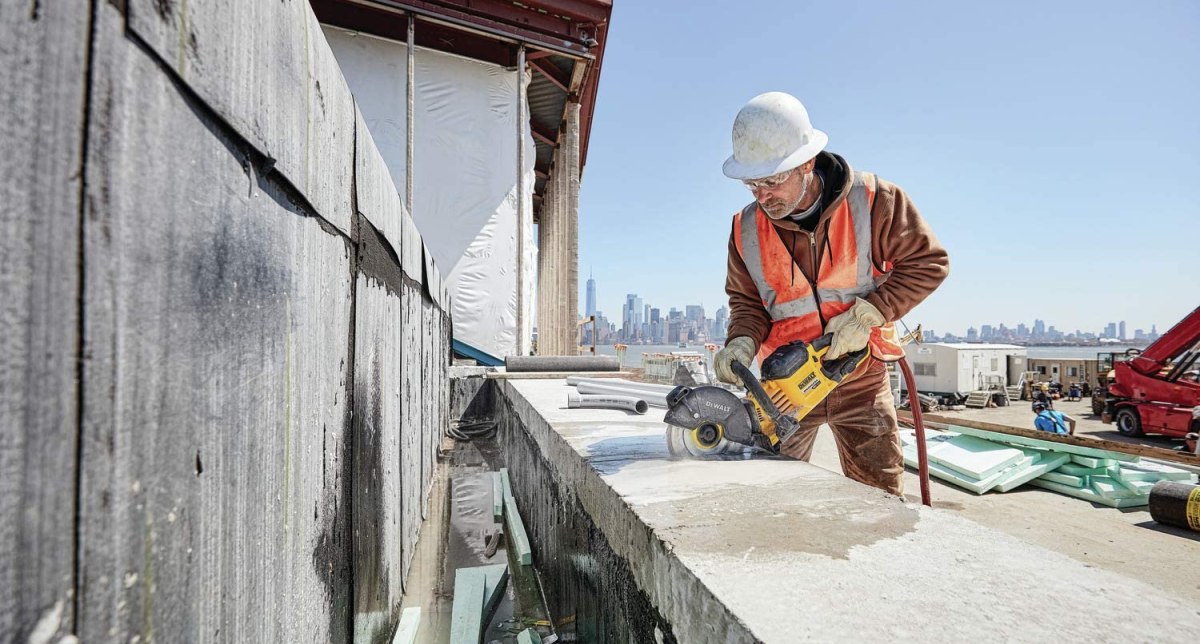
Cutting concrete is not a casual handshake with home improvement. It is loud, dusty, demanding work that rewards the right saw and punishes the wrong one with crooked cuts, smoked blades, and the kind of back soreness that makes you reconsider every life choice since breakfast. The best concrete saws of 2025 are not just about raw power. They are about choosing the right blade size, power source, dust control, cutting depth, balance, and jobsite practicality.
Whether you are opening a doorway in block, trimming pavers, cutting expansion joints, slicing through asphalt, or tackling reinforced concrete, the right concrete saw can turn a brutal task into a controlled one. The wrong saw? That turns your Saturday into a gritty opera starring sparks, dust, and regret.
This guide breaks down the best concrete saws of 2025 by real-world use: gas power cutters, cordless cut-off saws, corded concrete saws, walk-behind saws, and compact options for DIYers. Instead of chasing shiny marketing words, we are focusing on what matters: cutting depth, runtime, ergonomics, wet-cutting capability, dust management, blade compatibility, serviceability, and whether the tool feels like a professional machine or a gym membership with a trigger.
Quick Picks: Best Concrete Saws of 2025
| Category | Best Pick | Why It Stands Out |
|---|---|---|
| Best Overall Gas Concrete Saw | Husqvarna K 770 | Excellent power-to-weight balance, 14-inch blade capacity, deep cutting, and proven jobsite reliability. |
| Best Classic Pro Cut-Off Saw | STIHL TS 420 | A contractor favorite with strong filtration, anti-vibration features, and up to about 4.9 inches of cutting depth. |
| Best Cordless 14-Inch Saw | Milwaukee MX FUEL 14-Inch Cut-Off Saw | Gas-like convenience without fumes, push-button start, full 14-inch capacity, and strong safety technology. |
| Best Cordless 9-Inch Saw | DeWalt 60V MAX 9-Inch Cut-Off Saw | Portable, fast, and ideal for scoring concrete, pavers, rebar, and smaller masonry cuts. |
| Best Corded Concrete Saw for DIY and Light Trade | Evolution R230DCT | Affordable, easy to use, grinder-like convenience with better control and deeper cut capacity. |
| Best Concrete Saw for Slab Scoring | SKILSAW MEDUSAW | Purpose-built for concrete scoring with integrated dust management and worm-drive stability. |
| Best Heavy-Duty Rental-Style Option | 14-Inch Walk-Behind Concrete Saw | Better for long, straight slab cuts, driveway work, asphalt, and expansion joints. |
How We Chose the Best Concrete Saws
A concrete saw earns its keep by doing three things well: cutting straight, cutting deep enough, and not making the operator feel like they wrestled a parking lot. For 2025, the best models fall into two broad camps: traditional gas-powered workhorses and newer battery-powered machines that are finally strong enough to be taken seriously on professional jobsites.
We evaluated these saws based on blade size, maximum cutting depth, power delivery, wet-cutting compatibility, dust control, vibration reduction, portability, safety features, and practical use cases. A 14-inch gas saw is still the king of deep, rough, outdoor work. A 9-inch cordless cut-off saw, meanwhile, is often the smarter pick for quick scoring, paver trimming, and indoor or enclosed spaces where gas fumes are not welcome guests.
One important note: the best concrete saw is not always the biggest one. Buying a massive 14-inch gas power cutter for one patio paver project is like renting a bulldozer to plant basil. Impressive? Yes. Necessary? Probably not. The right saw is the one that matches your depth, material, environment, and frequency of use.
Best Overall Concrete Saw: Husqvarna K 770
The Husqvarna K 770 remains one of the safest recommendations in the concrete saw world because it does nearly everything well. It is powerful enough for serious cutting, manageable enough for all-day professional use, and supported by a long-standing reputation in construction, masonry, roadwork, and landscaping.
With a 14-inch blade option and cutting depth around 5 inches, the K 770 is a strong fit for concrete, asphalt, stone, brick, block, and general jobsite demolition. Its standout feature is not just horsepower; it is balance. A saw can have plenty of power and still feel terrible if it fights you through every cut. The K 770 feels more refined than many brute-force machines, especially when making repeated cuts.
Why It Wins
The K 770 is the best overall concrete saw for contractors and serious users who want a gas-powered tool that can handle a wide range of work without feeling over-specialized. It has strong cutting depth, a dependable powertrain, smart belt-tensioning features, and low-vibration design. It is also easy to recommend because rental yards and crews have relied on this family of saws for years.
Best For
Choose the Husqvarna K 770 if you cut concrete regularly, work outdoors, need professional reliability, and want one saw that can handle slabs, masonry, pavers, curbs, and asphalt without drama.
Best Classic Pro Gas Saw: STIHL TS 420
The STIHL TS 420 is the saw many contractors picture when someone says “cut-off saw.” It is compact, powerful, familiar, and widely respected. In a world full of battery platforms and digital tool tracking, the TS 420 still succeeds for an old-fashioned reason: it works.
Its 14-inch wheel capacity allows cuts up to about 4.9 inches deep, which is plenty for common masonry, landscaping, and road construction work. STIHL also gives this saw practical features that matter in dusty environments, including a serious filtration system, semi-automatic belt tensioning, a water connection, and an anti-vibration system.
Why Contractors Like It
The TS 420 is not trying to be trendy. It is trying to start, cut, and survive jobsite abuse. That is exactly why it remains so popular. The filtration system helps reduce maintenance headaches, the balance is familiar, and the power is suitable for demanding cuts without jumping into a larger, heavier saw.
Best For
Pick the STIHL TS 420 if you want a proven gas concrete saw for masonry, roadwork, hardscape projects, and general construction. It is especially appealing for crews that already maintain STIHL equipment and want parts, service, and dealer support.
Best Cordless 14-Inch Concrete Saw: Milwaukee MX FUEL 14-Inch Cut-Off Saw
The Milwaukee MX FUEL 14-inch cut-off saw is one of the clearest signs that battery-powered concrete cutting has grown up. It offers full 14-inch capacity, a cutting depth around 5 inches, push-button starting, zero gas fumes, and fewer engine-maintenance headaches. For indoor work, enclosed spaces, hospitals, schools, remodels, and utility work, that is a major advantage.
Gas saws still have the edge for continuous all-day outdoor cutting where refueling is faster than charging. But cordless saws are changing the conversation. No pull cord. No carburetor mood swings. No fuel mixing. No “why does this smell like a lawn mower in a basement?” moment.
Why It Stands Out
The MX FUEL saw is not a toy pretending to be a concrete saw. It is built for professional users who need a cleaner power source without giving up serious capacity. Features such as a brushless motor, push-button activation, safety braking technology, and compatibility with cut-off saw carts make it a strong choice for commercial work.
Best For
Choose this Milwaukee concrete saw if you need a fume-free 14-inch saw for indoor concrete cutting, mechanical work, utility jobs, commercial renovations, or crews already invested in the MX FUEL system.
Best Cordless 14-Inch Alternative: Makita 80V Max XGT 14-Inch Power Cutter
Makita’s 80V Max XGT 14-inch power cutter is another strong cordless option for 2025. It uses two 40V XGT batteries and is designed to deliver gas-replacement performance for concrete, masonry, and metal cutting. With a 14-inch wheel and up to 5 inches of cutting depth, it belongs in the same serious conversation as gas-powered professional saws.
Makita’s strengths are smooth operation, thoughtful ergonomics, and a strong cordless ecosystem. The electric brake, anti-restart protection, bind-up control, and water delivery system make it a smart fit for users who care about safety and dust control as much as raw cutting force.
Best For
The Makita XGT 14-inch cutter is best for contractors already using the XGT platform, remodelers who cut indoors, and professionals who want cordless convenience without stepping down to a smaller blade.
Best Cordless 9-Inch Concrete Saw: DeWalt 60V MAX Cut-Off Saw
The DeWalt 60V MAX 9-inch cut-off saw is a compact, practical machine for users who do not need the bulk of a 14-inch cutter. It reaches up to 6,600 no-load RPM and cuts up to about 3-1/4 inches deep, making it useful for pavers, concrete scoring, rebar, steel, brick, block, and quick jobsite adjustments.
This is the kind of saw you grab when a full gas cutter feels like overkill. It is portable, fast to start, and easy to move around a site. For many remodelers, landscapers, electricians, plumbers, and punch-list crews, that convenience matters more than maximum depth.
Why It Works
The best thing about the DeWalt is its practicality. It does not pretend to replace a walk-behind slab saw. Instead, it fills the daily-use gap between an angle grinder and a full-size power cutter. If your work involves pavers, block, shallow concrete, or metal cutting, it is a very useful size.
Best For
Choose the DeWalt 60V MAX 9-inch saw if you want a cordless concrete saw for fast cuts, smaller masonry jobs, and jobsite portability.
Best New Compact Cordless Option: Bosch GCS18V-230N
The Bosch GCS18V-230N is a 9-inch cordless cut-off saw designed for concrete and metal cutting. With a cutting depth up to about 3.3 inches, a brushless motor, a six-position guard, water-control features, and an ergonomic wrap-around handle, it is a smart compact choice for users who value control and mobility.
Its big appeal is the combination of cordless freedom and a relatively approachable size. The Bosch is not trying to bully a highway into submission. It is designed for pros who need quick, accurate cuts in concrete, brick, stone, block, pipe, and rebar without dragging out a heavier saw.
Best For
Choose the Bosch if you are already in the Bosch 18V battery system and want a compact saw for concrete and metal cutting with modern ergonomics and useful safety features.
Best Corded Concrete Saw for DIYers: Evolution R230DCT
The Evolution R230DCT is one of the most appealing concrete saws for DIYers and light-trade users because it solves a common problem: an angle grinder is often too small and awkward, while a gas saw is expensive, loud, heavy, and slightly intimidating. The R230DCT gives you a 9-inch corded electric concrete saw with up to 3-1/2 inches of cut capacity.
It is built for masonry, brick, concrete, stone, and pavers. It is not the tool for cutting miles of expansion joints, but for homeowners trimming patio slabs, cutting blocks, or making occasional masonry cuts, it offers a lot of value.
Why It Is a Smart Buy
The Evolution is easier to start, easier to store, and easier to justify financially than many professional gas saws. No fuel. No batteries. No starting ritual. Plug it in, use the right blade, manage the dust, and cut with patience.
Best For
Choose the Evolution R230DCT if you are a homeowner, handyman, landscaper, or light-trade user who needs better concrete-cutting control than a grinder without paying for a full professional gas saw.
Best Concrete Scoring Saw: SKILSAW MEDUSAW
The SKILSAW MEDUSAW is a purpose-built worm-drive concrete saw designed for scoring and cutting concrete accurately. Unlike a general circular saw forced into masonry duty, the MEDUSAW includes concrete-specific features such as dust management, plunge-cut adjustment, a front pointer, and a stable cutting platform.
Its 7-inch blade and 2-inch cutting capacity make it better for scoring, shallow slab work, control joints, and surface cuts than deep demolition. That may sound limited, but it is exactly what many jobs require. If you need clean, controlled, repeatable scoring, this saw is more civilized than improvising with a grinder while praying to the dust gods.
Best For
Choose the SKILSAW MEDUSAW for slab scoring, control joints, shallow concrete cuts, and jobs where precision and dust management matter more than maximum depth.
Best Heavy-Duty Gas Alternative: Hilti DSH 700-X
The Hilti DSH 700-X is a serious gas cut-off saw built for professional concrete, masonry, and metal cutting. With a 14-inch blade, cutting depth around 5 inches, and wet-or-dry operation, it is clearly aimed at contractors who need a rugged saw with strong support and premium features.
Hilti tools are rarely the cheapest, but they are designed around professional service, jobsite durability, and fleet management. For larger companies, that support can matter as much as the tool itself. Downtime is expensive. A saw sitting in the corner looking sad and broken is not exactly generating revenue.
Best For
Choose the Hilti DSH 700-X if you are a contractor, rental customer, or fleet manager who values durability, dealer support, and premium jobsite performance.
Best for Long Straight Slab Cuts: 14-Inch Walk-Behind Concrete Saw
Handheld saws are excellent for versatility, but they are not always the best answer for long slab cuts. If you are cutting expansion joints, trench lines, driveways, parking lots, or asphalt, a walk-behind concrete saw is usually smarter. It gives better line control, less operator fatigue, more stability, and often deeper cutting capacity.
Rental-style 14-inch walk-behind saws commonly cut around 4.9 to 5.5 inches deep, depending on the model. They are heavier and less flexible than handheld cutters, but for long straight work, that weight becomes an advantage. The saw tracks better, the cut stays cleaner, and your arms do not have to act as the entire guidance system.
Rent or Buy?
Most homeowners should rent a walk-behind concrete saw. Buying one only makes sense if you regularly cut slabs, asphalt, or expansion joints. For one driveway project, renting saves storage space, maintenance, and the awkward experience of explaining to your family why there is a 135-pound saw living in the garage.
Concrete Saw Buying Guide: What Actually Matters
1. Blade Size and Cutting Depth
A 14-inch concrete saw usually cuts about 4.75 to 5 inches deep, while a 9-inch model typically cuts around 3.25 to 3.5 inches. A 7-inch saw may cut around 2 inches. Before buying, measure the material. If you need to cut a 6-inch slab all the way through, a compact saw will not magically become taller because you ask nicely.
2. Gas vs. Cordless vs. Corded
Gas saws remain the best choice for long outdoor jobs, heavy cutting, and crews that need quick refueling. Cordless saws are better for indoor work, enclosed areas, quick starts, and lower maintenance. Corded saws are affordable and useful for DIY projects, but they require access to power and careful cord management.
3. Wet Cutting and Dust Control
Concrete dust is not just messy; silica dust is a serious health hazard. Wet cutting helps suppress dust at the source, and many professional saws include water connections or integrated water delivery systems. If dry cutting, use a compatible dust collection system and appropriate respiratory protection. Do not treat concrete dust like harmless gray flour. It is not baking. It is construction.
4. Weight and Ergonomics
More power often means more weight. A heavy saw can be stable in the cut, but exhausting during vertical work or overhead positioning. Look for vibration reduction, good handle placement, balanced weight, and easy blade changes.
5. Blade Quality
A great concrete saw with a bad blade is like a sports car on shopping-cart wheels. Use the right diamond blade for cured concrete, green concrete, asphalt, brick, stone, or reinforced material. Match the arbor size, RPM rating, wet/dry use, and material type.
Best Concrete Saw by User Type
For Contractors
Go with the Husqvarna K 770, STIHL TS 420, Hilti DSH 700-X, Milwaukee MX FUEL 14-inch, or Makita XGT 14-inch. These saws have the depth, durability, and jobsite credibility needed for repeated professional use.
For Landscapers
The DeWalt 60V MAX 9-inch, Bosch GCS18V-230N, Evolution R230DCT, or Husqvarna K 770 make sense depending on the scale of work. For pavers and block, a compact saw may be enough. For curbs and thick slabs, move up to 14 inches.
For Homeowners
Most homeowners should consider the Evolution R230DCT for smaller masonry projects or rent a gas/walk-behind saw for larger jobs. Buying a pro gas saw for one cut is usually unnecessary unless you enjoy collecting expensive machines with aggressive personalities.
For Indoor Cutting
Cordless and electric saws are the better choices because they avoid gas fumes. Look at Milwaukee MX FUEL, Makita XGT, DeWalt 60V MAX, Bosch 18V, or Evolution corded models depending on depth requirements.
Common Mistakes to Avoid
The first mistake is buying too small. If the saw cannot reach the required depth, you will be forced into multiple passes, flipping material, or finishing the cut with another tool. Sometimes that is acceptable. Sometimes it is a recipe for ragged edges and creative language.
The second mistake is ignoring dust. Concrete dust travels everywhere. It gets into tools, lungs, garages, cars, and somehow the sandwich you left 30 feet away. Use water suppression or dust collection whenever possible.
The third mistake is pushing too hard. Let the blade cut. Forcing the saw overheats the blade, stresses the motor, increases kickback risk, and makes the cut wander. Concrete cutting is not a strength contest. The concrete does not care how many push-ups you can do.
The fourth mistake is using the wrong blade. Asphalt, cured concrete, green concrete, masonry block, stone, and reinforced concrete can require different blade designs. A premium blade often cuts faster, cleaner, and longer than a bargain blade that gives up halfway through the job like it remembered an appointment.
Final Verdict: What Is the Best Concrete Saw of 2025?
The best overall concrete saw of 2025 is the Husqvarna K 770 because it delivers the strongest mix of power, cutting depth, balance, reliability, and professional versatility. It is the safest recommendation for contractors and serious users who want one gas saw that can handle most concrete and masonry work.
The STIHL TS 420 is the best classic pro choice, especially for users who want a familiar, serviceable, contractor-approved gas saw. The Milwaukee MX FUEL 14-inch and Makita XGT 14-inch are the best cordless 14-inch options for crews moving away from gas. The DeWalt 60V MAX 9-inch and Bosch GCS18V-230N are excellent compact cordless picks, while the Evolution R230DCT is the best value for DIYers and light-duty users.
In other words, there is no single concrete saw for everyone. There is only the right saw for the cut in front of you. Choose by depth, power source, dust control, job frequency, and comfort. Your blade, your lungs, and your lower back will all appreciate the effort.
Field Experience: What Using the Best Concrete Saws of 2025 Actually Feels Like
On paper, concrete saws are easy to compare. One has a 14-inch blade, another cuts 5 inches deep, another spins at impressive RPM, and another promises cordless freedom. In real life, the experience is more personal. The saw either feels like an extension of your hands, or it feels like you are trying to steer a caffeinated shopping cart through a thunderstorm.
The first thing you notice with a good concrete saw is balance. A professional gas saw such as the Husqvarna K 770 or STIHL TS 420 has enough mass to stay stable, but the handles and engine placement keep it from feeling clumsy. When the blade enters concrete, the tool should settle into the cut. You still need both hands, a steady stance, and respect for the blade, but the saw should not feel like it is constantly trying to twist out of line.
Battery-powered saws change the experience in a surprisingly pleasant way. Pressing a button instead of yanking a starter rope sounds like a small luxury until you are making repeated cuts. With cordless saws, there is less setup drama and less engine noise before the cut. You can reposition, check the line, and restart quickly. On remodels or indoor jobs, the absence of exhaust fumes is a major relief. The trade-off is runtime planning. Batteries are wonderful until they are dead, at which point they become very expensive rectangles.
Compact 9-inch saws feel different again. A DeWalt, Bosch, or Evolution-style saw is easier to carry, easier to control, and less intimidating for smaller cuts. These tools shine when trimming pavers, cutting block, scoring concrete, or making quick adjustments. The downside is depth. You cannot ask a 9-inch saw to behave like a 14-inch saw any more than you can ask a pickup truck to be a crane because both are vehicles.
Walk-behind saws are a different experience entirely. For long slab cuts, they feel more controlled and less punishing than handheld saws. Once the blade is set and the line is marked, the machine tracks steadily, and the cut looks cleaner. The downside is transport and setup. A walk-behind saw is not something you casually toss in the trunk next to groceries. It demands planning, space, and usually a rental reservation.
The biggest lesson from using concrete saws is that preparation matters as much as horsepower. Mark the line clearly. Check for utilities. Choose the right blade. Connect water when possible. Let the saw reach speed before entering the cut. Do not force it. Make shallow passes if needed. Keep your stance balanced. Wear eye protection, hearing protection, gloves, boots, and proper respiratory protection. Concrete cutting is manageable when treated with respect. Treated casually, it becomes loud, dusty chaos with a diamond blade attached.
The best concrete saws of 2025 make the work faster, cleaner, and safer, but they do not remove the need for good technique. A steady operator with the right midrange saw will often produce a better cut than a rushed operator with the most expensive machine on the rack. The tool matters. The blade matters. The setup matters. And yes, patience matters too, even if patience is not sold in the power tool aisle.
Conclusion
The best concrete saws of 2025 prove that concrete cutting has entered a new era. Gas saws are still powerful, dependable, and essential for heavy outdoor work, but cordless and corded models have become far more capable. For professionals, the Husqvarna K 770, STIHL TS 420, Milwaukee MX FUEL, Makita XGT, and Hilti DSH 700-X are serious tools worth considering. For homeowners and light-trade users, compact models such as the Evolution R230DCT, DeWalt 60V MAX, Bosch GCS18V-230N, and SKILSAW MEDUSAW may be easier to justify and easier to handle.
The smartest purchase is not always the most powerful saw. It is the saw that matches your material, depth, working environment, safety needs, and budget. Add a quality diamond blade, proper dust control, and careful technique, and even stubborn concrete becomes less of a monster. Still a monster, yesbut at least one you can cut into manageable pieces.