Watching Star Wars in chronological order sounds simple until you realize the franchise has movies, animated series, live-action shows, anthology episodes, side adventures, flashbacks, and at least one droid who has seen more galactic drama than any therapist should legally allow. The good news? Once you understand the timeline, the galaxy far, far away becomes much easier to enjoy.
This guide explains how to watch Star Wars in chronological order, including the main Skywalker Saga movies, major Disney+ shows, animated series, and spin-off stories. Whether you are a first-time viewer, a returning fan, or someone trying to explain to a friend why Darth Vader is both terrifying and emotionally complicated, this watch order will help you follow the story from the earliest Jedi mysteries to the final battle against the First Order.
What Does Chronological Order Mean in Star Wars?
Chronological order means watching the story according to when events happen inside the Star Wars universe, not according to when the movies and shows were released. That means you do not begin with the 1977 classic Star Wars: A New Hope. Instead, you start earlier in the timeline, before Luke Skywalker, before the Rebel Alliance, and before Darth Vader became the galaxy’s most dramatic breathing machine.
The franchise often uses the terms BBY and ABY. BBY means “Before the Battle of Yavin,” the famous Death Star battle in A New Hope. ABY means “After the Battle of Yavin.” Think of it as the galactic calendar’s version of B.C. and A.D., only with more laser swords.
Quick Answer: Star Wars Chronological Watch Order
If you want the cleanest chronological viewing order for the main movies and major canon series, use this list:
- Star Wars: Young Jedi Adventures (optional)
- The Acolyte
- Star Wars: Episode I – The Phantom Menace
- Star Wars: Episode II – Attack of the Clones
- Star Wars: The Clone Wars movie
- Star Wars: The Clone Wars series
- Star Wars: Tales of the Jedi (anthology placement varies)
- Star Wars: Episode III – Revenge of the Sith
- Star Wars: Tales of the Empire (anthology placement varies)
- Star Wars: Tales of the Underworld (anthology placement varies)
- Star Wars: The Bad Batch
- Star Wars: Maul – Shadow Lord
- Solo: A Star Wars Story
- Obi-Wan Kenobi
- Andor
- Star Wars Rebels
- Rogue One: A Star Wars Story
- Star Wars: Episode IV – A New Hope
- Star Wars: Episode V – The Empire Strikes Back
- Star Wars: Episode VI – Return of the Jedi
- The Mandalorian
- The Book of Boba Fett
- Ahsoka
- Skeleton Crew
- Star Wars: The Mandalorian and Grogu (when available)
- Star Wars Resistance
- Star Wars: Episode VII – The Force Awakens
- Star Wars: Episode VIII – The Last Jedi
- Star Wars: Episode IX – The Rise of Skywalker
The Best Star Wars Chronological Order, Explained
1. Start With the High Republic Era
The earliest screen stories currently sit in the High Republic era, a time when the Jedi Order is still powerful, polished, and blissfully unaware that the Sith are about to ruin everyone’s calendar for the next century.
Star Wars: Young Jedi Adventures is optional because it is made for younger viewers. It takes place during the High Republic and works as a light, family-friendly introduction to Jedi values, teamwork, and the idea that every mission is easier when your spaceship does not explode.
The Acolyte is more important for adult viewers who want the full canon timeline. It explores the darker corners of the High Republic and gives context to the slow return of Sith influence before the prequel trilogy begins.
2. Watch the Prequel Trilogy
After the High Republic material, move into the prequel trilogy. This is where the central tragedy of Star Wars begins. You meet young Anakin Skywalker, Obi-Wan Kenobi, Padme Amidala, Qui-Gon Jinn, Yoda, Mace Windu, and the political machinery that allows Palpatine to turn a republic into an empire without needing to say, “Hello, I am obviously the villain.”
Begin with The Phantom Menace. The story introduces Anakin as a gifted child on Tatooine, while the Jedi discover that the Sith have returned. Then watch Attack of the Clones, which shows Anakin as a young Jedi, introduces the clone army, and begins the Clone Wars. Finally, save Revenge of the Sith until after you have watched The Clone Wars material, because the animated series adds emotional weight to Anakin’s downfall.
3. Do Not Skip The Clone Wars
Some viewers are tempted to skip Star Wars: The Clone Wars because it is animated. That is a mistake roughly equal to ignoring a blinking red button labeled “Definitely Important.” The series develops Anakin, Obi-Wan, Padme, the clones, Darth Maul, Mandalore, and Ahsoka Tano, one of the most important characters in modern Star Wars.
For casual viewers, watching the Clone Wars movie followed by the series is good enough. For serious fans, the best method is to follow the official chronological episode order, because the series originally aired with some episodes out of timeline sequence. The final season overlaps emotionally and narratively with Revenge of the Sith, creating one of the strongest viewing experiences in the franchise.
4. Continue Into the Fall of the Jedi
After The Clone Wars, watch Revenge of the Sith. This film is the great turning point: Anakin becomes Darth Vader, Order 66 nearly destroys the Jedi, Padme dies, Luke and Leia are hidden, and Palpatine finally gets the empire he has been quietly assembling like a very evil IKEA cabinet.
The anthology series Tales of the Jedi, Tales of the Empire, and Tales of the Underworld require a flexible approach because they cover different characters at different points in the timeline. Watch them after you have enough context from the prequels and The Clone Wars. That way, the emotional punches land properly instead of flying past you like a confused TIE fighter.
5. Explore the Early Empire Era
Next comes The Bad Batch, which follows a group of clone troopers after Order 66. This show is valuable because it reveals how the Republic’s clone army is pushed aside as the Empire becomes colder, more centralized, and more obsessed with control.
After that, place Star Wars: Maul – Shadow Lord before Solo: A Star Wars Story. Then watch Solo, which gives Han Solo his origin story, including his early friendship with Chewbacca, his connection to Lando Calrissian, and the famous Millennium Falcon. It is not required to understand the Skywalker Saga, but it makes Han’s later swagger feel less random and more like the result of questionable life choices.
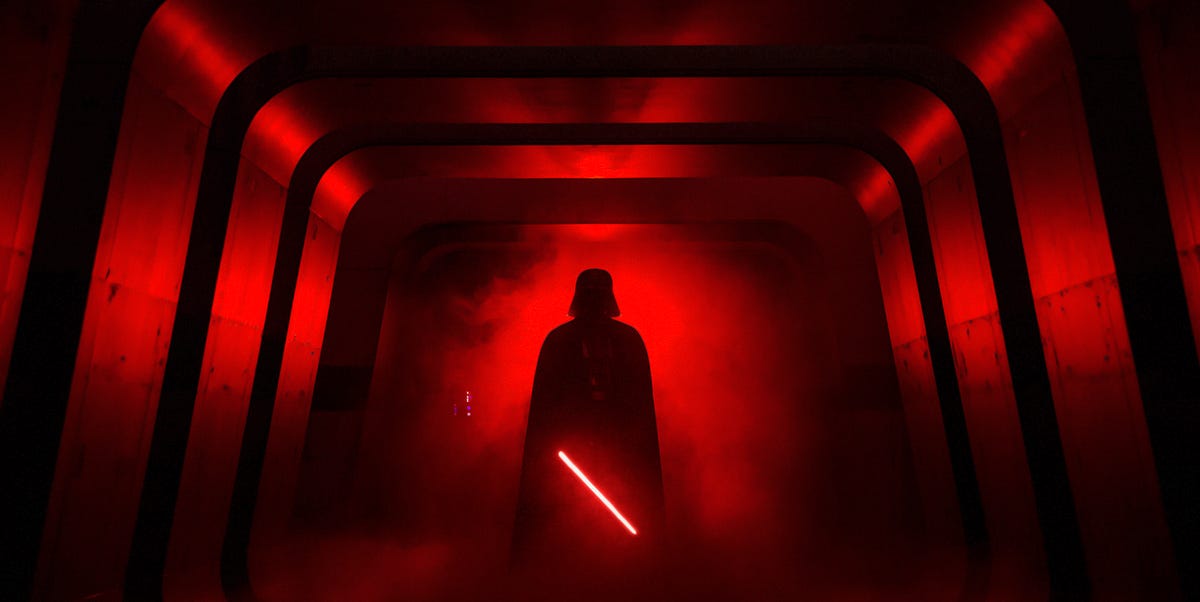
Obi-Wan Kenobi comes next. Set between the prequels and the original trilogy, the series focuses on Obi-Wan’s exile, Leia’s childhood, and the lingering trauma of Anakin’s fall. It also adds more emotional texture to the relationship between Obi-Wan and Darth Vader before their meeting in A New Hope.
6. Move Toward the Rebellion
After the early Empire stories, watch Andor and Star Wars Rebels. These two shows overlap in the broader timeline and show different sides of the growing rebellion. Andor is grounded, tense, and political. It follows Cassian Andor as he becomes part of the resistance against Imperial rule. Rebels is more adventurous and mystical, focusing on a found family aboard the Ghost.
Both series lead naturally into Rogue One: A Star Wars Story. This film ends moments before A New Hope begins, making it one of the smoothest transitions in the entire chronological watch order. Watch Rogue One, then immediately watch A New Hope. The handoff is so clean that it feels like the galaxy planned your movie night.
7. Watch the Original Trilogy
The original trilogy is the heart of Star Wars. In chronological order, it comes after all the prequel and rebellion-era material, but it still works beautifully. A New Hope introduces Luke Skywalker, Princess Leia, Han Solo, Chewbacca, R2-D2, C-3PO, and Darth Vader as the Rebel Alliance fights the Empire.
Continue with The Empire Strikes Back, which deepens the story with Yoda, Lando Calrissian, and one of cinema’s most famous family revelations. Then watch Return of the Jedi, where Luke confronts Vader and Palpatine, the second Death Star falls, and the Empire suffers a defeat that launches the galaxy into the New Republic era.
8. Enter the New Republic Era
After Return of the Jedi, watch The Mandalorian. This series follows Din Djarin, a bounty hunter whose life changes when he meets Grogu. Yes, Grogu is often called “Baby Yoda” by the internet, but the internet also calls everything iconic after three memes, so let us be precise.
Watch The Book of Boba Fett after the first two seasons of The Mandalorian, because it connects directly to Din and Grogu’s story. Then continue with Ahsoka, which builds on threads from Rebels and brings Grand Admiral Thrawn into the live-action New Republic era. Skeleton Crew also belongs in this post-Empire period, offering a more adventurous view of the galaxy through younger characters.
Star Wars: The Mandalorian and Grogu belongs after the New Republic shows once it is available. Since the franchise continues to grow, this part of the timeline may keep expanding. In other words, your watchlist is alive, possibly Force-sensitive, and definitely not finished.
9. Finish With the Sequel Trilogy
Before the sequel trilogy, watch Star Wars Resistance. The animated series begins before The Force Awakens and eventually overlaps with the sequel-era conflict. It is not as essential as The Clone Wars or Rebels, but it helps explain the political tension around the First Order.
Then watch The Force Awakens, The Last Jedi, and The Rise of Skywalker. These films follow Rey, Finn, Poe Dameron, Kylo Ren, Leia Organa, and the final confrontation with Emperor Palpatine’s legacy. Chronologically, this is the end of the current main Skywalker Saga on screen.
Movies-Only Star Wars Chronological Order
If you do not want to commit to every show, here is the streamlined movies-only order:
- Episode I – The Phantom Menace
- Episode II – Attack of the Clones
- Episode III – Revenge of the Sith
- Solo: A Star Wars Story
- Rogue One: A Star Wars Story
- Episode IV – A New Hope
- Episode V – The Empire Strikes Back
- Episode VI – Return of the Jedi
- Episode VII – The Force Awakens
- Episode VIII – The Last Jedi
- Episode IX – The Rise of Skywalker
This version is faster and easier, but it skips major character development for Ahsoka, Mandalore, the clones, the early rebellion, and the New Republic. It is a good starter path, but the full version is richer.
Is Chronological Order Best for First-Time Viewers?
Chronological order is excellent for understanding the history of the galaxy. You see the Republic fall, the Empire rise, the Rebellion fight back, and the New Republic struggle with the consequences. It turns Star Wars into one long political, mythological, and family drama with better capes.
However, release order has one advantage: it preserves the original surprises. If someone has never heard the big Darth Vader reveal, release order may be more dramatic. But for most modern viewers, the major twists are already part of pop culture. Chronological order gives the saga emotional momentum, especially if you want to understand Anakin, Obi-Wan, Ahsoka, Luke, Leia, Din Djarin, Grogu, and Rey as parts of one connected story.
Tips for Watching Star Wars Without Burning Out
Break the Saga Into Eras
Do not try to watch everything in one weekend unless you have snacks, hydration, and a couch with medical-grade support. Break the franchise into eras: High Republic, prequels, Clone Wars, Empire, Rebellion, original trilogy, New Republic, and sequels.
Use the Shows Strategically
If time is limited, prioritize The Clone Wars, Rebels, Andor, and The Mandalorian. These series add the most context to the larger story. Then add The Bad Batch, Obi-Wan Kenobi, Ahsoka, and the anthology shows when you want more depth.
Do Not Worry About Being Perfect
The best Star Wars watch order is the one that keeps you excited. Chronological order is a fantastic map, but you are allowed to take detours. The galaxy is big. Even the Jedi needed star maps, and they still lost an entire planet from the archives.
Experience Section: What It Feels Like to Watch Star Wars Chronologically
Watching Star Wars in chronological order feels less like watching a film series and more like reading a giant family history where every generation inherits someone else’s lightsaber-shaped problem. The biggest benefit is emotional clarity. Instead of meeting Darth Vader as a mysterious villain first, you watch Anakin Skywalker grow from a hopeful child into a gifted Jedi, then slowly collapse under fear, pride, manipulation, and terrible decision-making. By the time he becomes Vader, the tragedy feels personal.
The experience also makes Obi-Wan Kenobi’s story more powerful. In release order, Obi-Wan is a wise old mentor. In chronological order, he becomes a man who trained his best friend, lost him to the dark side, survived the destruction of his order, and still found the strength to protect Luke. Suddenly, every quiet look in the original trilogy feels heavier.
Ahsoka’s journey is another major reason chronological order works so well. If you watch only the movies, you miss one of the richest arcs in the franchise. Through The Clone Wars, Rebels, and Ahsoka, she evolves from a spirited Padawan into a thoughtful survivor who carries the scars of the Jedi Order’s failure. Her story makes the fall of the Republic feel less like background history and more like a wound that affects the entire galaxy.
Chronological viewing also improves the transition into Rogue One and A New Hope. After spending time with the early rebellion in Andor and Rebels, the Death Star plans are no longer just a plot device. They become the result of sacrifice, espionage, fear, courage, and people who kept fighting even when the Empire seemed unbeatable. Watching Rogue One right before A New Hope is especially satisfying because the ending and beginning connect almost seamlessly.
The New Republic era feels different after chronological viewing too. The Mandalorian, The Book of Boba Fett, Ahsoka, and Skeleton Crew show that defeating the Empire did not magically fix the galaxy. There are still Imperial remnants, criminal networks, political weaknesses, and ordinary people trying to survive. That makes the rise of the First Order in the sequel trilogy easier to understand.
The only challenge is pacing. Star Wars is huge, and some parts are more essential than others. A good experience is to watch in “era blocks” instead of forcing yourself through everything at once. Finish the prequel era, take a break, then start the rebellion era. Treat it like a galactic road trip. You would not fly from Tatooine to Coruscant without checking the hyperdrive, and you should not watch ten seasons of television without stretching your legs.
Overall, chronological order is rewarding because it turns Star Wars into one continuous story about power, family, failure, hope, and redemption. It makes the galaxy feel lived-in. It also gives you the pleasure of spotting connections across decades of storytelling, which is exactly the kind of nerdy joy this franchise was built for.
Conclusion
Learning how to watch Star Wars in chronological order is the best way to experience the saga as one long, connected timeline. Start with the High Republic era, move through the fall of the Jedi, watch the Empire rise, follow the Rebellion, continue into the New Republic, and finish with the sequel trilogy. The full order takes time, but it rewards patient viewers with deeper character arcs, clearer politics, and a much stronger understanding of how every generation shapes the next.
Editorial note: This guide focuses on the main canon movies and major television series. LEGO specials, documentaries, shorts, and non-canon projects are not included in the primary viewing order because they are better treated as bonus content.