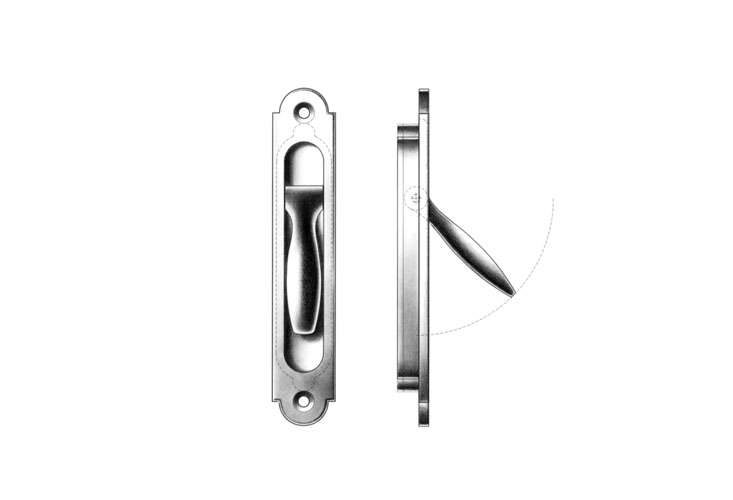
A French Drop Edge Pull is one of those tiny pieces of door hardware that does a surprisingly big job. It does not shout. It does not sparkle like a chandelier. It does not demand a dramatic slow-motion reveal. Instead, it sits neatly in the leading edge of a sliding door, pocket door, or pocketing screen, waiting for the exact moment your fingers need a discreet grip. In the world of architectural hardware, that is basically superhero behavior in a brass suit.
For homeowners, designers, builders, and detail-obsessed renovation fans, the French Drop Edge Pull offers a clean solution for doors that disappear into the wall. When a pocket door slides fully open, the face of the door may vanish inside the pocket, leaving only the narrow edge exposed. Without an edge pull, pulling the door back out can become an awkward little finger exercise. With a properly installed French Drop Edge Pull, the door glides back into service smoothly, elegantly, and without anyone needing to perform a rescue mission with a butter knife.
What Is a French Drop Edge Pull?
A French Drop Edge Pull is a recessed door pull designed to be mortised into the edge of a sliding or pocket door. The term “edge pull” explains its placement: it is installed on the narrow leading edge of the door rather than on the door face. The “drop” element refers to the pull feature that can be accessed when needed, giving your fingers a small but effective grip to draw the door out of its pocket.
Unlike a large door handle or surface-mounted pull, this hardware is made to remain low-profile. When installed correctly, it sits nearly flush with the edge of the door. That flush installation matters because pocket doors need to slide into a wall cavity without snagging, scraping, or announcing themselves with the charming sound of metal chewing on trim.
The French Drop Edge Pull is often associated with premium architectural hardware. High-quality versions are commonly made from solid machined brass and offered in standard, custom-plated, or patinated finishes. That gives designers freedom to coordinate the pull with nearby door hardware, cabinet hardware, light fixtures, plumbing finishes, or the overall personality of the room.
Why This Small Piece of Hardware Matters
Pocket doors are loved because they save space. A standard swinging door needs clearance to open and close. That swing area can interrupt furniture placement, block a hallway, or make a small bathroom feel like a game of spatial chess. A pocket door, by contrast, slides neatly into the wall. It opens the room without stealing floor space.
But every clever design has one practical question hiding behind the wallpaper: how do you operate it comfortably every day? That is where edge pulls and flush pulls come in. Flush pulls are installed on the face of the door so you can slide the door when it is mostly visible. Edge pulls are installed on the leading edge so you can retrieve the door after it has disappeared into the pocket. In many polished installations, both are used together.
A French Drop Edge Pull solves the “where did my door go?” problem. It gives users a refined way to pull the door out without adding bulky hardware. This is especially valuable in powder rooms, closets, pantries, laundry rooms, home offices, ensuite bathrooms, and connecting spaces where design needs to stay neat but function cannot be optional.
Best Uses for a French Drop Edge Pull
Pocket Doors
The most common use for a French Drop Edge Pull is on a pocket door. When the door slides completely into the wall, the edge pull provides a finger grip for drawing it back out. This makes it ideal for rooms where a clean, minimal look is important but the door still needs to work effortlessly.
Sliding Interior Doors
Not every sliding door disappears fully into a wall. Some slide along an opening or into a concealed recess. An edge pull can still be useful when the design calls for minimal face hardware or when the door edge is the most natural point of contact.
Pocketing Screens
Some premium hardware descriptions also mention pocketing screens. These are screens that retract or slide into a hidden pocket. A flush-mounted edge pull keeps the screen easy to operate without interfering with movement.
Historic and Traditional Interiors
The word “French” gives this hardware a refined, traditional feeling, though it can work in more than one design style. In historic renovations, brownstones, classic apartments, and old-house restorations, a French Drop Edge Pull can look much more appropriate than a generic modern latch. It has the quiet confidence of something that knows crown molding by first name.
Modern Minimalist Rooms
Surprisingly, this hardware also works beautifully in minimalist interiors. Because it sits flush and avoids visual clutter, it supports clean door slabs, concealed transitions, and uninterrupted wall planes. Choose satin brass, polished nickel, matte black, oil-rubbed bronze, or another coordinated finish and it can blend into modern spaces without looking overly decorative.
French Drop Edge Pull vs. Flush Pull
These two pieces of hardware are related, but they are not the same. A flush pull is usually installed on the face of a sliding door. It gives you a recessed area to push or pull the visible door panel. An edge pull is installed on the narrow edge of the door. It is used when the door is inside the wall pocket or nearly hidden.
Think of it this way: the flush pull handles the door while the door is out in the open. The edge pull handles the door after it has dramatically exited the scene. For a complete pocket door setup, especially in a high-quality residential or commercial project, using both is often the smartest choice.
A French Drop Edge Pull may also coordinate with a matching French flush cup pull. That pairing gives the door a consistent design language from face to edge. In luxury millwork, these details matter. A mismatched pull can feel like wearing sneakers with a tuxedo. Comfortable? Maybe. Ideal? Not quite.
Materials and Finishes
The best French Drop Edge Pulls are commonly made from solid brass or solid machined brass. Brass is valued in door hardware because it is strong, workable, attractive, and suitable for a wide range of finishes. It also has a reassuring weight that makes small hardware feel substantial rather than flimsy.
Popular finish options may include polished brass, satin brass, unlacquered brass, antique brass, polished nickel, satin nickel, oil-rubbed bronze, dark bronze, chrome, and custom patinated finishes. The right finish depends on the room’s larger hardware story. If the hinges, door pulls, cabinet knobs, and plumbing fixtures are all warm brass, a brass edge pull will feel intentional. If the home leans cooler with nickel or chrome, a silver-toned finish may be more natural.
Unlacquered brass deserves a special mention. It changes over time, developing a living patina from touch, air, and use. Some people adore this aged look. Others want their hardware to stay shiny and predictable forever, like a freshly washed car in a commercial. Neither preference is wrong. Just choose the finish with your future self in mind.
Square End or Radius End?
French Drop Edge Pulls may be available in square-end or radius-end profiles. The difference is visual and practical. A square-end pull has crisp corners and tends to suit traditional, transitional, or more tailored modern doors. A radius-end pull has rounded ends and may feel slightly softer or easier to integrate into certain routed mortises.
From an installation perspective, the end shape affects the mortise cut. Square corners may require careful chiseling for a clean fit. Radius ends may pair well with router bits that naturally create rounded ends. Either style can look excellent when installed by someone who measures carefully and does not treat the door edge like a practice board from shop class.
Installation Considerations
A French Drop Edge Pull is usually mortised into the leading edge of the door. That means a shallow recess is cut into the door so the hardware can sit flush. Precision is important. If the mortise is too shallow, the pull may protrude and interfere with the pocket. If it is too deep, the hardware may sit awkwardly or feel loose. If it is crooked, well, congratulations: your door now has a permanent smirk.
Before installation, confirm the door thickness, pull dimensions, screw size, and manufacturer template. Many premium pulls are supplied with matching screws, often flat-head wood screws, and should be fastened securely without overdriving. Over-tightening screws can damage the door edge or distort the hardware.
Placement height should coordinate with the other pulls and door hardware in the home. A common interior handle height is around 36 inches from the finished floor, but real projects vary. The most important rule is consistency. If every door pull in a hallway is at one height and the pocket door pull is randomly installed several inches off, people will notice even if they cannot explain why the room feels “a little weird.”
Where Designers Like to Use It
Designers often choose refined edge pulls in spaces where function must be present but visually quiet. A pantry door beside custom cabinetry, for example, benefits from hardware that does not compete with cabinet knobs or appliance pulls. A powder room off a formal hallway may need a pocket door to save space, but the hardware still needs to feel elegant enough for guests. A French Drop Edge Pull fits both situations neatly.
In primary suites, pocket doors are often used between bedrooms, closets, and bathrooms. The right edge pull makes these doors feel intentional rather than like a compromise. In home offices, pocket doors allow privacy during work hours and openness afterward. In laundry rooms, they prevent door swing from colliding with baskets, appliances, or the mysterious sock that somehow escapes every load.
How to Choose the Right French Drop Edge Pull
Match the Door Type
Make sure the pull is designed for sliding doors, pocket doors, or pocketing screens. Cabinet edge pulls and door edge pulls may look similar in photos, but they are not always built for the same scale or function.
Check Dimensions Carefully
Review the height, width, depth, and required mortise size. A beautiful pull that does not fit your door is not hardware; it is a tiny expensive paperweight.
Coordinate with Face Pulls
If the door also uses flush pulls, select pieces that coordinate in finish, shape, and style. Matching does not always mean identical, but the hardware should look like it belongs in the same conversation.
Think About Finish Durability
High-touch areas may show wear faster, especially with living finishes. For busy households, satin or brushed finishes can be forgiving. For formal spaces, polished or custom patinated finishes can add character and depth.
Use Quality Hardware
Pocket doors depend heavily on good hardware. A cheap pull can feel flimsy, rattle over time, or lose its finish. Since an edge pull is a small percentage of the total door project, upgrading to a better one is often worth it.
Maintenance and Care
Maintenance is usually simple. Wipe the pull with a soft cloth to remove fingerprints and dust. Avoid harsh abrasives unless the manufacturer specifically allows them. For brass and patinated finishes, aggressive cleaners can strip or damage the surface. If the pull has a moving drop element, check occasionally that it moves freely and that screws remain snug.
If the door begins to drag, scrape, or resist movement, do not blame the edge pull immediately. Pocket door performance also depends on the track, rollers, frame, and door alignment. Hardware should work as a system. The edge pull is the handshake; the track and rollers are the legs doing the walking.
Common Mistakes to Avoid
One common mistake is installing the pull too proud of the door edge. Pocket doors need clearance, and even a small projection can cause rubbing. Another mistake is choosing a finish without considering the rest of the room. A random shiny chrome pull in a room full of aged brass can look accidental.
DIY installers sometimes skip the template or rush the mortise. This is risky. The edge of a door is narrow, and small errors are more visible than expected. If the door is expensive, custom, veneered, or historic, professional installation is usually the safer path.
Finally, do not forget the user experience. The pull should be easy to find, easy to operate, and comfortable enough for daily use. Beautiful hardware that annoys everyone is just decoration with a grudge.
Real-World Experiences With a French Drop Edge Pull
In real homes, the value of a French Drop Edge Pull becomes obvious after a few weeks of use. At first, people notice the look. It is small, elegant, and neatly tucked into the door edge. But later, they appreciate the rhythm it creates. Slide the pocket door open, let it disappear, reach for the edge pull, and bring it back without fuss. That smooth little sequence can make a room feel more thoughtfully designed.
One practical experience comes from small bathrooms. A hinged door can make a compact bathroom feel crowded before anyone even steps inside. Replace it with a pocket door and the room instantly feels more usable. Add a good edge pull, and the door becomes easy to retrieve even when fully recessed. Guests do not have to guess where to grab. They do not poke at the door edge like they are trying to open a secret bookshelf. The hardware tells them what to do without needing a label.
Another useful example is a kitchen pantry. Pantries are often placed in busy zones where cabinet doors, appliance doors, and people all compete for space. A pocket pantry door with a French Drop Edge Pull keeps the walkway open. When your hands are full of grocery bags, cereal boxes, or the emotional burden of realizing you bought a third jar of paprika, the door can still be pulled out smoothly and closed with control.
In older homes, a French Drop Edge Pull can also help preserve character. Many historic interiors have trim profiles, tall baseboards, paneled doors, and traditional hardware finishes. A generic modern pull may function, but it can feel visually thin. A solid brass French-style edge pull feels more permanent. It looks like it belongs to the door rather than being added as an afterthought.
For designers, the experience is often about detail coordination. When the edge pull matches the flush cup pull, hinges, and nearby cabinet hardware, the whole room feels calmer. Visitors may not say, “What a beautifully coordinated mortised edge pull.” Most normal people do not talk like a hardware catalog at dinner. But they may say the room feels expensive, finished, or well designed. That reaction often comes from small decisions layered together.
Installers tend to appreciate clear dimensions and solid material. A quality pull cuts cleaner, fastens more securely, and feels better after installation. The mortise still needs care, especially on painted doors or veneered slabs, but good hardware is less likely to flex or disappoint. As with many building details, the best result comes from measuring twice, cutting once, and resisting the dangerous belief that “close enough” is a measurement.
Homeowners also learn that edge pulls are not just for looks. They reduce finger marks on painted door edges, make operation more intuitive, and help prevent people from pulling on delicate trim. Over time, that can protect both the door and the surrounding casing. In a busy household, small conveniences matter. A good edge pull quietly prevents daily annoyance, which is one of the highest compliments any piece of hardware can earn.
The French Drop Edge Pull is not the largest detail in a renovation, but it is the kind of detail that separates “nice” from “finished.” It supports the clean magic of a pocket door while adding a touch of craftsmanship. It is subtle, useful, and stylish without being loud. In other words, it does exactly what great architectural hardware should do: make the home work better while looking like it was always meant to be there.
Conclusion
A French Drop Edge Pull is a smart choice for pocket doors, sliding doors, and pocketing screens that need discreet, reliable operation. It sits flush in the leading edge, helps retrieve a recessed door, and pairs beautifully with matching flush pulls. Whether used in a historic renovation, a modern minimalist home, a compact bathroom, or a custom pantry, this small piece of hardware can make the entire door system feel more refined.
Choose the right material, finish, size, and end style. Install it with care. Coordinate it with the rest of the room. Do those things, and the French Drop Edge Pull will reward you every day with quiet function and polished design. Not bad for a little piece of brass hiding on the edge of a door.