If cats could fill out dating profiles, many of them would describe themselves as “mysterious, independent, and not at all interested in your opinions about portion sizes.” Unfortunately, your cat’s waistline does not share that privacy setting. Weight matters. It affects comfort, mobility, grooming, long-term health, and how likely your feline roommate is to keep acting like the ruler of the sofa kingdom.
The tricky part is that assessing a cat’s weight is not as simple as reading a number on a scale. A fluffy long-haired cat can look larger than she is. A naturally stocky breed can seem “fine” while quietly carrying extra body fat. A senior cat can lose weight without looking dramatically smaller at first. That is why veterinarians do not rely on pounds alone. They use body condition, muscle condition, and trend tracking together to decide whether a cat is underweight, ideal, overweight, or obese.
In this guide, you will learn three practical ways to assess your cat’s weight at home, plus the common mistakes owners make when judging feline size with their eyeballs and optimism. By the end, you will know how to check ribs, waist, belly shape, scale weight, and overall body composition without turning your living room into a tiny cat boot camp.
Why “Healthy Cat Weight” Is Not One Magic Number
Before diving into the three methods, let’s clear up one common myth: there is no single perfect number that fits every cat. While many adult house cats may fall into a broad average weight range, your cat’s ideal weight depends on frame size, breed, age, muscle mass, and body shape. A petite cat and a broad-chested cat can both be healthy while weighing very different amounts.
That is why the smartest question is not, “Is my cat 10 pounds?” but rather, “Does my cat have the body shape and condition that match a healthy weight for that specific cat?” Once you think that way, everything gets easier. Less guessing. Fewer dramatic family arguments that begin with, “He’s not fat, he’s just fluffy.”
Breed, age, and individual build affect ideal weight:
1. Use a Body Condition Score at Home
The first and most useful way to assess your cat’s weight is with a Body Condition Score, usually called a BCS. This is the veterinary gold standard for quick, practical weight assessment. Most modern feline BCS charts use a 9-point scale. On that scale, a score around 5 out of 9 is considered ideal, while higher numbers indicate increasing excess body fat and very low numbers indicate a cat who is too thin.
Think of the BCS as a body-shape report card. You are not just looking at size. You are looking at how easily you can feel the ribs, whether the waist is visible from above, and whether there is a belly tuck or a hanging abdominal fat pad.
Check the Ribs With Your Hands, Not Your Hopes
Place your thumbs along your cat’s spine and gently spread your fingers over the rib cage. In a healthy-weight cat, you should be able to feel the ribs under a thin layer of fat. They should not feel buried under padding, and they also should not feel sharp or bony like your cat has been secretly auditioning for a skeleton documentary.
A simple rule of thumb is this: if you have to press hard to find the ribs, your cat may be carrying too much fat. If the ribs, spine, and hip bones feel very prominent with almost no cushioning, your cat may be underweight.
Look for a Waist From Above
Stand over your cat when they are standing naturally. A cat at an ideal weight usually has a visible waist behind the ribs. It does not need to be dramatic. You are not looking for a runway model silhouette. You are looking for a gentle inward shape rather than a straight-sided or barrel-like outline.
If your cat looks wide through the middle with little definition, that can suggest overweight status. If the waist is extremely narrow and the bones are very obvious, that can point in the opposite direction.
Look at the Side View Too
Now crouch down and view your cat from the side. An ideal-weight cat usually has a slight abdominal tuck. Many cats also have a small primordial pouch, that loose flap of skin and fat near the lower belly. That pouch alone does not mean your cat is overweight. The important question is whether the overall abdomen is tucked and balanced, or whether the belly looks round, heavy, and lacking definition.
What the Score Generally Means
On a 9-point system, a cat around 4 to 5 is generally considered ideal. A cat scoring above roughly 6.5 to 7 is typically considered overweight, and a score of 8 or 9 signals obesity. The exact interpretation can vary slightly depending on the chart used, but the basic idea stays the same: higher score, more excess body fat.
BCS ideal and overweight ranges:
The beauty of BCS is that it works better than eyeballing weight alone. It also helps prevent one of the most common cat-owner mistakes: deciding that a cat is healthy simply because they have always looked “about that size.” Cats can gain weight gradually, and because you see them every day, slow change is surprisingly easy to miss.
2. Weigh Your Cat and Track the Trend
The second way to assess your cat’s weight is wonderfully low-tech: weigh the cat, write it down, and compare it over time. This sounds obvious, but many owners only notice weight change after it becomes visually dramatic. By then, your cat may have been gaining or losing steadily for months.
How to Weigh a Cat at Home
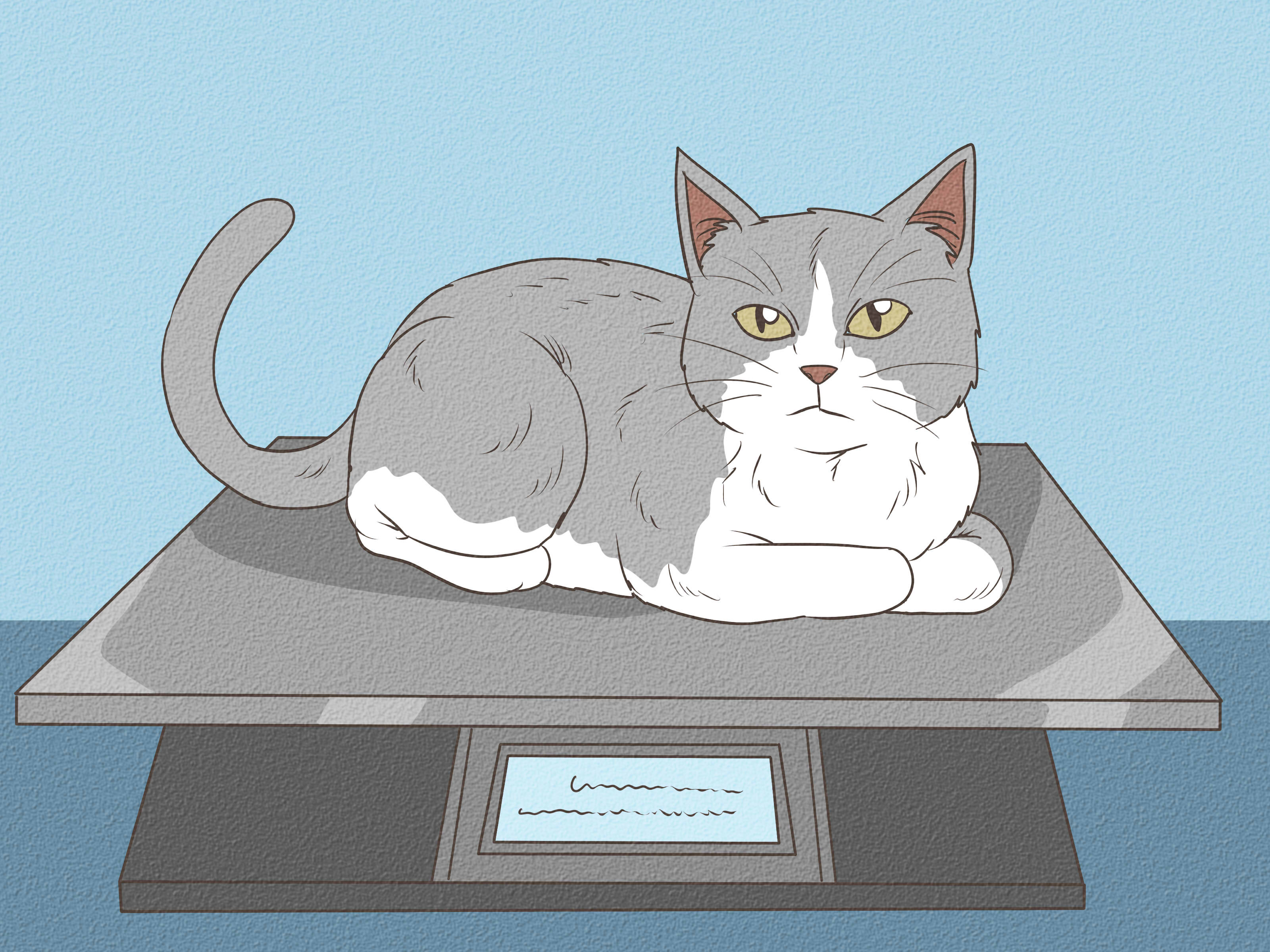
The easiest method is to weigh yourself on a digital scale, then weigh yourself again while holding your cat. Subtract the first number from the second. Congratulations: you are now both a pet owner and a temporary math department.
For the best results, weigh your cat under similar conditions each time, such as at the same time of day and on the same scale. Monthly checks work well for most adult cats. If your cat is on a weight-loss plan or has a health issue, your veterinarian may want more frequent monitoring.
At-home periodic body condition and weight monitoring:
Do Not Worship the Number
The scale matters, but context matters more. If your cat weighs 11 pounds, that could be ideal, slightly heavy, or too thin depending on the cat’s frame and breed. Pounds alone cannot tell you body fat percentage, muscle condition, or where the weight is distributed.
This is why the best use of scale weight is not “compare my cat to random cats on the internet.” The best use is to compare your cat to their own ideal target and to watch for trends. Slow, steady upward creep often signals overfeeding, too many calorie-dense treats, or reduced activity. Unplanned weight loss can be just as important and sometimes more urgent.
Know the Overweight Threshold
In veterinary medicine, cats are generally considered overweight when they are about 10% to 20% above ideal body weight, and obese when they are more than 20% above ideal. That is one reason “just a little chunky” is not always a harmless description. Even moderate excess weight can still count medically.
Overweight and obesity thresholds:
Watch for Weight Loss Too
Owners often worry about a cat gaining weight, but unexplained weight loss deserves attention as well. In older cats especially, weight loss can be associated with medical problems such as hyperthyroidism, kidney disease, and other conditions that need veterinary evaluation. If your cat is losing weight without a planned diet change, call your vet instead of congratulating the cat on a suspiciously effective wellness journey.
Weight loss in older cats can signal disease:
Why the Trend Matters for Health
Extra weight in cats is not just a cosmetic issue. It is associated with higher risk for problems such as diabetes, arthritis, reduced mobility, and other health complications. On the flip side, unintended weight loss can be an early clue that something is wrong internally before obvious symptoms appear. The trend line on your scale can reveal what your eyes miss.
Health risks linked to excess weight:
3. Look at Body Proportions, Muscle, and Daily Function
The third way to assess your cat’s weight is the one many people skip: evaluate overall body composition, not just fat. This means looking at your cat’s shape, muscle tone, movement, grooming ability, and how their body seems to be functioning in daily life.
Why does this matter? Because not all weight is the same. Two cats can weigh the same amount and still have very different health pictures. One may have a healthy amount of muscle and a good waistline. The other may have more fat and less muscle, especially if they are older or less active.
Long Hair Can Be a Liar
Some cats, especially long-haired breeds or extra-fluffy mixed breeds, look much larger than they really are. Others hide weight gain under a plush coat so effectively that owners do not notice a problem until the cat is significantly overweight. This is exactly why hands-on assessment beats visual guessing. Fur is fashion. It is not data.
Check Muscle Condition Along With Fat
Veterinary guidelines recommend assessing Muscle Condition Score, or MCS, alongside body condition. Body condition tells you about fat stores. Muscle condition tells you whether the cat is maintaining lean tissue, especially over the spine, shoulders, and hips. This is particularly important in senior cats or cats with chronic illness, because a cat can appear “normal enough” while quietly losing muscle.
Importance of muscle condition scoring with body condition scoring:
If your cat’s spine, shoulder blades, or hip bones are becoming more obvious even while the belly seems round, that is not a sign to shrug and say, “Weird body type.” It is a sign to ask your veterinarian for a fuller assessment.
Observe Everyday Function
Daily habits can also offer clues. Is your cat less willing to jump? Is grooming harder, especially around the back or belly? Do they seem to tire quickly or move stiffly? While these signs are not diagnostic on their own, they can go hand in hand with unhealthy body condition. Likewise, a cat who becomes ravenous while losing weight may need a medical workup rather than a bigger bowl.
Use Your Vet as the Final Reality Check
Home assessment is useful, but your veterinarian can help you turn observations into a real plan. A vet can assign an official body condition score, assess muscle condition, estimate ideal body weight, and determine whether a change in weight points to diet, lifestyle, or an underlying medical issue. In other words, your cat may be the boss of the house, but your vet is still the boss of the spreadsheet.
Common Mistakes People Make When Assessing a Cat’s Weight
- Assuming all adult cats should weigh the same amount.
- Judging size by fluff instead of touching the rib cage and waist.
- Using only pounds and ignoring body condition score.
- Ignoring slow monthly weight creep because the cat still “looks normal.”
- Missing muscle loss in a senior cat because the belly still looks full.
- Celebrating unexplained weight loss instead of asking why it happened.
- Comparing a cat to social media cats, who are adorable but not a medical reference chart.
A Simple Monthly Routine You Can Actually Stick To
If you want a practical system, try this once a month:
- Run your hands over your cat’s ribs and spine.
- Look at the waist from above and the belly from the side.
- Weigh your cat on the same scale.
- Write down the number in your phone or notebook.
- Take one quick photo from above every few months for comparison.
- Note changes in appetite, energy, grooming, or mobility.
This takes only a few minutes, and it is far more useful than periodically asking your cat, “Are you getting chubby?” while they continue licking gravy off their whiskers in silence.
Experiences Cat Owners Commonly Have When Assessing Weight
One of the most relatable experiences among cat owners is realizing that weight gain almost never announces itself with fireworks. It sneaks in. A cat still jumps on the bed, still demands breakfast at 5:12 a.m., and still looks perfectly normal because you see that cat every day. Then one day you pick them up and think, “Wow, you feel more like a weighted blanket than a small predator.”
Another common experience is being fooled by fur. Owners of long-haired cats often swear their cat is huge, only to discover under all that fluff is a fairly normal frame. Meanwhile, some short-haired cats look sleek from a distance but reveal a very different story the moment you try the rib test. This is often the turning point when people realize that touching and checking body condition is much more accurate than visual guesswork.
Many owners also go through the “but he has always been this shape” phase. That is understandable. When change happens slowly, your brain updates its picture little by little. A cat who has gained a pound over many months may still look like the same cat to you, just a little sturdier, a little rounder, a little more committed to the art of napping. But when you compare current photos to older ones, the difference can suddenly become obvious.
There is also the experience of mixed messages from family members. One person says the cat is overweight. Another says the cat is “big-boned.” Someone else insists the cat is just “winter-sized,” despite the fact that the cat lives indoors and has not personally experienced winter hardship. This is where the body condition score helps. It replaces opinion with a more objective system and keeps weight discussions from becoming a strange household debate club.
Owners of senior cats often describe a different kind of worry. Instead of gradual gain, they notice subtle weight loss, less muscle over the back, or changes in appetite and grooming. These cases can feel confusing because the cat may still look fluffy or rounded in some areas. That is why muscle and body condition should be assessed together. The scale number alone may not tell the whole story, especially in older cats.
Perhaps the most useful experience people report is how empowering it feels once they start tracking weight consistently. Instead of guessing, they have numbers. Instead of vague concern, they have a timeline. Instead of thinking, “Maybe the cat is heavier?” they know whether the cat gained half a pound in two months or stayed stable. That makes veterinary visits more productive and home care more confident.
Over time, assessing a cat’s weight becomes less intimidating and more like routine maintenance, similar to trimming nails or checking the litter box. You are not trying to create a perfect cat. You are simply paying attention. And in the cat world, paying attention early is often what prevents bigger problems later.
Final Thoughts
The best way to assess your cat’s weight is to combine three things: a body condition score, regular scale checks, and a broader look at body shape and muscle condition. That combination gives you a much clearer picture than any single number ever could.
So the next time you wonder whether your cat is healthy, skip the guesswork. Feel the ribs. Look for the waist. Check the number. Watch the trend. And when something seems off, ask your veterinarian before your cat turns a minor issue into a major one with the confidence of a creature who has never paid a medical bill.