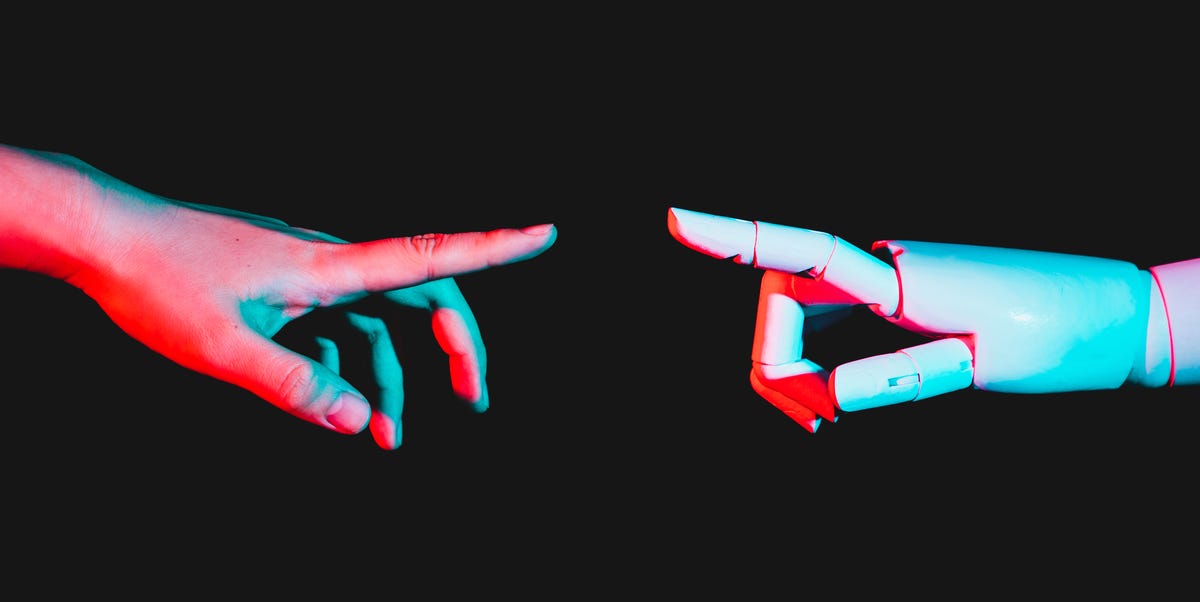
Robots have become astonishingly good at doing things that make humans look mildly underqualified. They can weld cars, sort packages, map Mars, and defeat chess champions without breaking a digital sweat. But ask a robot to pick up a strawberry, twist a small screwdriver, or hold a slippery glass without turning the moment into a tiny disaster movie, and suddenly the machine that looked like the future starts acting like a toaster with elbows.
The missing ingredient is touch. Human hands do not rely on sight alone. When you reach into a bag for your keys, button a shirt, or rescue a potato chip from the bottom of the bowl without crushing it into snack dust, your fingertips are constantly measuring pressure, texture, shape, slip, vibration, and edges. That rich stream of information is why your hand can adjust its grip in milliseconds. A robot, by comparison, often has to guess.
That is what makes the 3D-printed tactile fingertip developed by researchers at the University of Bristol so fascinating. Known as part of the TacTip family of sensors, this artificial fingertip is designed to mimic important structures inside human skin. It does not simply detect that something touched it. It produces signal patterns that resemble the way human tactile nerves respond when they encounter ridges, edges, and textured surfaces. In plain English: it gives robots a much better shot at feeling the world instead of just bumping into it politely.
Why Robot Touch Is So Hard to Build
At first glance, giving a robot a sense of touch sounds easy. Add a pressure sensor, run a few wires, sprinkle in some artificial intelligence, and congratulations: your robot can now feel. Unfortunately, real touch is not a single number on a screen. It is a layered, dynamic sense that combines pressure, movement, temperature, texture, vibration, and body position.
Human fingertips are especially impressive because they are soft, sensitive, and mechanically complicated. Beneath the skin are tiny biological structures that help translate physical contact into nerve signals. These signals tell the brain whether an object is smooth or rough, firm or squishy, stable or sliding away like a bar of soap with escape plans.
Robots traditionally struggle with this because many grippers are built around strength and repeatability, not sensitivity. Industrial robots can pick up identical parts all day long because the task is controlled and predictable. But everyday objects are not so obedient. A ripe tomato, a ceramic mug, a wrinkled T-shirt, and a USB plug each require a different kind of touch. Vision can help a robot find the object, but once the fingers close around it, cameras may be blocked. That is when tactile sensing becomes the hero that walks in wearing a lab coat.
Meet the 3D-Printed Fingertip That Mimics Human Skin
The Bristol 3D-printed fingertip uses a soft, compliant outer surface and an internal structure inspired by the human fingertip. Under the artificial skin is a mesh of tiny pin-like features that mimic dermal papillae, the small structures located between layers of real human skin. When the fingertip touches an object, the surface deforms, and those internal pins move in response.
That movement can be observed and converted into data. Instead of treating touch as a simple on-or-off event, the sensor captures a pattern of deformation. That pattern can reveal where contact happened, how the surface changed, and what kind of shape or texture the fingertip encountered. The result is a more biologically inspired approach to robotic tactile sensing.
This is where 3D printing becomes more than a convenient manufacturing trick. Advanced multi-material 3D printing allows researchers to combine soft and rigid materials in complex shapes that would be difficult to make using traditional methods. Human skin is not a flat sheet of rubber, and robotic fingertips should not be either. By printing tiny internal structures, engineers can create artificial skin with mechanical behavior that begins to resemble biology.
How the Fingertip “Feels” Ridges, Edges, and Texture
One of the most important parts of the Bristol research is that the artificial fingertip was tested against classic studies of human touch. Decades ago, scientists recorded how tactile nerve fibers in humans responded to ridged shapes. These studies helped explain how our fingers detect spatial patterns, edges, and fine surface details.
The Bristol team tested the 3D-printed fingertip on similar ridged shapes and compared its artificial signals with human nerve recordings. The match was surprisingly close in important ways. The artificial fingertip produced complex patterns of peaks and dips as it moved over edges and grooves, much like biological tactile neurons do.
That does not mean the sensor is a perfect replacement for human skin. Real fingertips remain more sensitive to extremely fine detail. Human skin is thinner, packed with specialized receptors, and connected to a nervous system that has been training since before you learned the dangerous joy of touching a hot cookie sheet. Still, the comparison matters because it shows that a carefully designed robotic sensor can reproduce some of the signal patterns that make human touch so powerful.
The Science Behind Artificial Touch
Mechanoreceptors: Nature’s Tiny Touch Translators
Human touch depends on mechanoreceptors, specialized nerve endings that respond to mechanical changes in the skin. Some react to steady pressure. Others respond quickly to motion, vibration, or changes in contact. Together, they help the brain build a detailed tactile picture of the world.
When you slide your finger over a corduroy jacket, your skin does not send a simple message that says, “This is corduroy.” It sends waves of information about spacing, friction, vibration, direction, and pressure. Your brain turns that signal storm into a clean impression: ribbed fabric, probably a jacket, possibly owned by an art teacher.
Researchers are trying to give robots similar layers of tactile information. Artificial tactile channels can be designed to behave like slowly adapting and rapidly adapting nerve fibers. Slowly adapting signals help with shape and sustained pressure. Rapidly adapting signals help with motion, texture, and changes during contact. Some systems also use vibration sensing to detect roughness or slip.
Why Shape Matters as Much as Electronics
Many people imagine sensors as purely electronic devices, but the physical structure is just as important. The shape, softness, thickness, and internal architecture of a tactile sensor affect what kind of information it can collect. A badly designed fingertip can hide useful details before the electronics ever get a chance to measure them.
The Bristol fingertip is important because it treats the sensor body itself as part of the intelligence. The soft skin, the pin-like papillae, the way those pins move, and the algorithms that interpret them all work together. In that sense, the fingertip is not just a sensor attached to a robot. It is a small mechanical model of how touch begins in the body.
Why This Matters for Robots
Robots that can feel objects more like humans could become far more useful outside highly controlled factory settings. Today, many robots are excellent when the environment is predictable. But homes, hospitals, warehouses, kitchens, and farms are full of surprises. Objects move, deform, slip, and vary from one moment to the next.
A tactile fingertip could help a robot know when it has gripped an object securely, when the object is starting to slide, and whether it should use more or less force. That is critical for delicate tasks. Picking up a metal wrench is not the same as lifting a raspberry. One can tolerate a firm grip. The other will file a complaint in the form of juice.
With better robotic touch, machines could handle groceries without crushing fruit, assist in elder care with gentler physical interaction, sort recyclable materials more accurately, assemble small electronics, or work in laboratories where fragile tools and samples need careful manipulation. Touch could also help robots operate when vision is unreliable, such as in cluttered spaces, low light, or situations where the gripper itself blocks the camera’s view.
What It Could Mean for Prosthetic Hands
The same technology could also improve prosthetic hands. Modern prosthetics can be mechanically impressive, but many still provide limited sensory feedback. Without touch, a user may need to watch the prosthetic hand constantly to judge grip strength and object position. That creates effort, slows movement, and can make everyday tasks feel less natural.
A tactile fingertip that detects pressure, shape, texture, and slip could eventually help prosthetic systems provide more useful feedback. The goal is not merely to build a hand that closes around objects. It is to build a hand that helps the user understand the object being held. Is the cup slipping? Is the fabric folded? Is the grip too strong? Is the object soft enough to deform?
There is still a long road between laboratory sensors and widely available prosthetic devices that restore natural-feeling touch. The system must be durable, compact, affordable, low-power, and able to communicate with the user in a meaningful way. But research like this gives the field a stronger foundation because it starts with a deep question: how does human touch actually work, and how can we recreate its most useful features?
How This Fits Into the Bigger Tactile Robotics Race
The 3D-printed Bristol fingertip is part of a much larger movement in robotics: giving machines richer physical awareness. Researchers and companies are exploring several approaches to artificial touch, and each has strengths.
Camera-based tactile sensors, such as GelSight-style systems, use soft surfaces and internal imaging to create detailed maps of contact geometry. These sensors can help robots judge hardness, detect tiny surface features, and manipulate small tools. Other fingertip-shaped sensors, including newer systems like Digit 360, aim to combine multiple sensing features in compact robotic fingers with extremely fine spatial detail.
Electronic skin research is another major path. Flexible e-skin systems can be designed to detect pressure, strain, temperature, and other stimuli across larger surfaces. Some experimental e-skin platforms even generate nerve-like pulses, pointing toward future prosthetics and wearable devices that communicate more naturally with biological systems.
Then there are low-cost, customizable ideas such as 3D-printable tactile materials with embedded magnets and magnetometers. These systems could make tactile sensing more accessible to smaller labs, startups, students, and hobby robotics projects. That matters because a field grows faster when more people can build, test, break, fix, and improve the tools.
The Big Limitation: Human Skin Is Still Ridiculously Good
For all the excitement, human skin remains a tough act to follow. It is soft but durable, sensitive but self-repairing, flexible but information-rich. It contains many types of receptors, works across a huge range of forces, and connects to a brain that understands context. Your fingertip can feel a hair, detect a rough patch on a table, adjust grip while carrying a mug, and tell the difference between silk and sandpaper. It also heals after minor cuts, which is more than can be said for most lab prototypes.
The Bristol research found that the artificial fingertip was not as sensitive to the finest details as human skin. One likely reason is that the printed artificial skin is thicker than real skin. Making smaller, more precise internal structures could improve resolution. Future versions may need microscopic 3D-printed features, better materials, faster data processing, and more advanced learning algorithms.
Durability is another challenge. A robotic fingertip used in a real warehouse, kitchen, or hospital would need to survive thousands of contacts with objects that are sharp, wet, dusty, sticky, hot, cold, or simply rude. Sensors must also be affordable enough to replace and simple enough to integrate into robotic hands. A brilliant sensor that only works under perfect laboratory conditions is still useful science, but it is not yet ready to help your future home robot fold laundry without creating a cotton-based crime scene.
Why 3D Printing Gives This Technology an Edge
3D printing is especially promising because tactile sensors often need complex shapes. A fingertip is not a circuit board. It is curved, layered, squishy, and full of tiny structures. Traditional manufacturing can make soft parts, but producing intricate internal geometries with multiple materials can be slow and expensive.
With 3D printing, researchers can rapidly test different designs. They can change the spacing of internal pins, adjust material stiffness, modify surface thickness, or create new fingertip shapes for different robot hands. That speeds up experimentation and opens the door to customization. A warehouse robot, surgical assistant, prosthetic hand, and agricultural picker may not need the same fingertip. One may need durability, another needs precision, and another needs gentle contact with soft objects.
In the long run, 3D printing could help tactile sensors move from rare laboratory components to practical robot parts. If designs become easier to print, repair, and customize, more teams can experiment with robot touch. That could accelerate progress in the same way affordable cameras helped computer vision explode.
Real-World Examples: Where a Feeling Robot Finger Would Shine
Handling Food Without Turning It Into Soup
Food is a nightmare for robots because it varies so much. A green apple, a ripe peach, a tomato, and a loaf of bread all behave differently under pressure. Tactile fingertips could help robots adapt grip force in real time, making them more useful in food packing, grocery fulfillment, and kitchen automation.
Assembling Tiny Electronics
Plugging in connectors, placing small screws, routing flexible cables, and aligning delicate parts require more than visual accuracy. A robot needs to feel contact, resistance, and alignment. Tactile feedback can help prevent bent pins, broken parts, and the special kind of frustration usually reserved for assembling furniture with one missing screw.
Supporting Healthcare and Rehabilitation
Robots used in healthcare must be safe around people. Touch-sensitive hands could help assistive robots hold objects, support patients, or interact with medical tools more gently. Prosthetic hands could also benefit from tactile fingertips that help users control grip and understand contact without relying only on sight.
Improving Warehouse Automation
Warehouses contain products of different shapes, weights, textures, and packaging. Better touch could help robots pick items from bins, detect slipping packages, and handle deformable objects like bags or clothing. Vision tells the robot what it sees. Touch tells it what is actually happening once the object is in hand.
Experience Notes: What This Technology Feels Like From a Practical Perspective
Anyone who has worked around robots, 3D printers, or small electronics knows that the glamorous demo video is only half the story. The other half involves calibration, cables, test objects, slightly mysterious errors, and someone saying, “It worked yesterday,” with the haunted expression of a person who has angered the firmware gods.
The idea of a 3D-printed fingertip that helps robots feel objects is exciting because it solves a problem you can understand the moment you try to build even a simple gripper. At first, gripping seems easy. Close the fingers until the object is held. Done. But then the object slips. So you increase force. Then the object dents. So you reduce force. Then it falls. Suddenly, you realize your human hand has been quietly performing miracles your entire life while asking for very little praise.
In hands-on robotics projects, touch becomes important almost immediately. A small robot arm can locate an object with a camera, move toward it, and still fail because the object shifts by a few millimeters. A gripper may close around the wrong part of a tool. A smooth plastic item may slide even when the robot thinks it has a solid hold. Foam, fabric, fruit, cables, and bags are even worse because they deform. Without tactile feedback, the robot is working with a delayed and incomplete picture of reality.
A sensor like the 3D-printed tactile fingertip changes the design mindset. Instead of treating the gripper as a clamp, you begin to treat it as an information-gathering surface. The robot does not simply grab; it explores. It can press lightly, read the contact pattern, adjust position, detect an edge, notice slip, and respond before the object falls. This is much closer to how people use their hands. When you pick up a mug, you do not calculate the perfect grip force in advance. You touch, sense, adjust, and continue.
The 3D-printing angle also feels practical. In a lab, classroom, or startup workshop, iteration speed matters. Being able to print a revised fingertip design, test a different internal structure, or adapt the sensor to a new gripper shape can save enormous time. It also lowers the psychological barrier to experimentation. If a part can be printed again, people are more willing to try bold designs. Sometimes the weird prototype on the corner of the desk becomes the breakthrough. Sometimes it becomes a flexible paperweight. Both outcomes are educational.
The most interesting experience, though, is watching how tactile data changes robot behavior. A robot with no touch seems stiff and uncertain. A robot with tactile sensing can appear more careful, almost curious. It slows down when contact happens. It changes grip when slipping begins. It treats the object less like a coordinate in space and more like a physical thing with weight, texture, and attitude. That is when robotics starts to feel less like programming a machine and more like teaching a body.
For students, makers, and engineers, this is a powerful reminder: intelligence is not only in the processor. Some intelligence is in the body. The shape of the fingertip, the softness of the material, the arrangement of internal pins, and the way the sensor deforms all help create useful information. A better robot hand may not come from software alone. It may come from building a fingertip that understands the world before the code even starts reading the data.
Conclusion
The 3D-printed fingertip that helps robots “feel” like humans is more than a clever sensor. It is a glimpse into the next stage of robotics, where machines do not just see and calculate but physically understand the objects they handle. By mimicking structures inside human skin and producing signals that resemble tactile nerve activity, the Bristol TacTip research shows how biology can guide better engineering.
The technology is not perfect yet. Human fingertips are still more sensitive, more adaptable, and significantly better at surviving everyday life. But the direction is clear. Robots need touch to become truly useful in messy human environments, and 3D-printed tactile skin could help make that possible. From prosthetic hands to warehouse robots, healthcare assistants, food-handling systems, and future home helpers, artificial touch may be the difference between a robot that merely grabs and a robot that handles with care.
Note: This article is written as an original educational and SEO-focused synthesis based on publicly available robotics research, tactile sensing studies, and current developments in 3D-printed artificial skin, prosthetics, and robot manipulation.