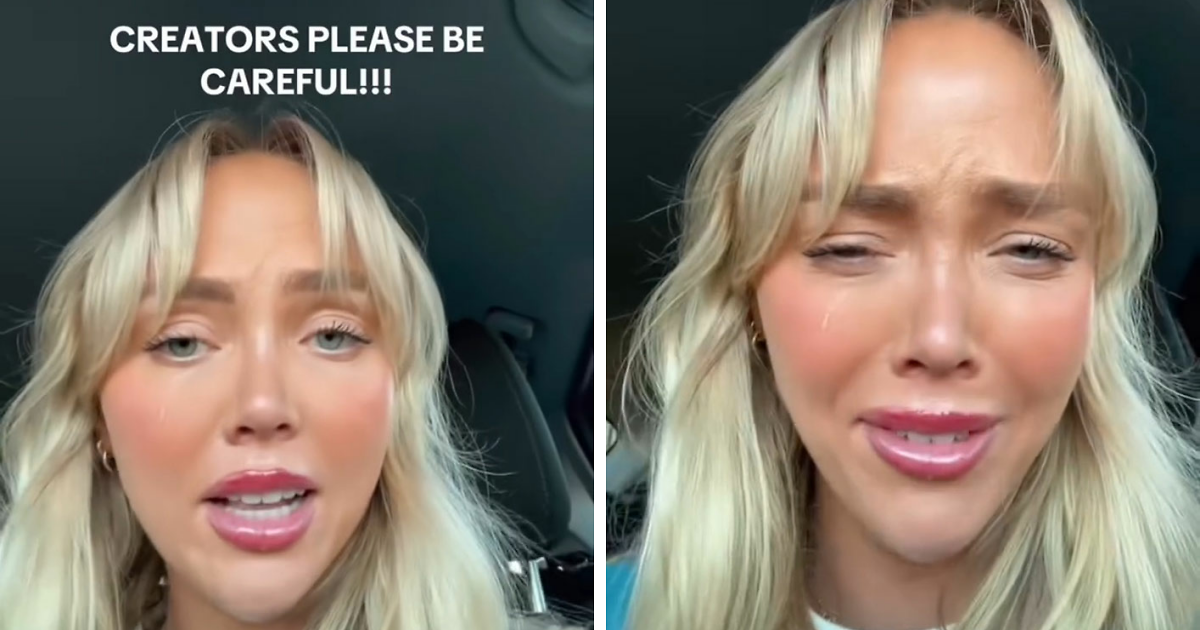
Some headlines arrive like a fire alarm: loud, messy, impossible to ignore. This one did exactly that. Annie Knight, the Australian creator who had already gone viral for a high-profile sex stunt involving 583 men in six hours, returned to the news cycle for a far more serious reason. She said she was assaulted by a male co-star during a filming collaboration after she had clearly stated her boundaries in advance.
That shift matters. A lot. Because once the initial shock value burns off, what remains is a much bigger story about consent, creator safety, and the internet’s not-so-cute habit of turning real harm into clickable spectacle. The most important question is not how many people were involved in Knight’s earlier viral challenge. It is much simpler than that: what happens when someone says no, pushes back, or tries to stop an interaction, and the other person does not listen?
This is where the conversation needs to grow up fast. The modern creator economy loves chaos, controversy, and extreme headlines. But the rules around bodily autonomy do not disappear because a camera is rolling, because someone works in adult content, or because the internet has decided a person’s public image is somehow a substitute for consent. It is not. Never was. Never will be.
What Annie Knight Alleged, and Why the Story Hit So Hard
According to Knight’s public account, the alleged assault happened while she was filming with a recently verified creator. She said she had already laid out her boundaries before anything started. Then, once filming began, she said those boundaries were ignored. In her emotional retelling, she described repeatedly trying to stop the situation and said a nearby security guard stepped in after she screamed.
That description instantly changed the frame of the story. What some corners of the internet tried to package as just another scandalous creator headline became something else entirely: a case study in how quickly a “professional collaboration” can become a safety failure when one person assumes access instead of respecting limits.
Knight’s visibility made the disclosure travel at lightning speed. She was already internationally known because of the stunt that had pushed her name into tabloid territory. But there is a strange double standard in how the public reacts to stories like this. On one hand, fame makes people listen. On the other, fame invites cruel skepticism. Suddenly, strangers who would never pass a law exam or a human decency test begin acting as if a public persona cancels out a private boundary.
That logic is nonsense. Someone can be famous, sexual, provocative, outspoken, and still be harmed. Someone can work in adult entertainment and still be assaulted. Someone can agree to one activity and refuse another. None of this is legally or morally complicated, even if the internet insists on behaving like it misplaced the instruction manual.
Consent Is Not a Blank Check
Let’s put the core issue in giant blinking letters: consent is specific, ongoing, and reversible. It is not a season pass. It is not a lifetime membership. It is not a magical force field created by prior behavior, previous jobs, past relationships, or viral fame.
That principle gets lost whenever the public treats adult creators as if their work eliminates their right to say no. In reality, consent applies with even greater urgency in environments where physical boundaries, performance expectations, and power dynamics are constantly in play. A person can agree to film and still refuse certain acts. A person can begin a scene and then want it to stop. A person can change their mind midway through. That is not confusion. That is autonomy.
Unfortunately, public discussions often collapse into lazy binaries. Some people assume that because sex is part of someone’s brand, they must be available for anything. Others react with voyeuristic fascination instead of basic empathy. Both responses miss the point. Consent is not about whether the audience is shocked, titillated, judgmental, or oddly invested. It is about whether each participant clearly agrees, moment by moment, to what is happening.
That is why this story resonated far beyond gossip blogs. It highlighted a truth advocates, educators, and trauma specialists have repeated for years: the problem is not sexuality. The problem is ignoring boundaries.
Why the Creator Economy Can Be a Safety Minefield
The internet has built an entire business model around escalation. Bigger reveals. Wilder stunts. More extreme claims. Louder thumbnails. Less sleep. More engagement. Somewhere in the middle of that circus tent, actual human safety can end up treated like a backstage detail.
Knight’s earlier viral stunt was already being discussed as part of a wider trend in shock-driven adult creator culture, where spectacle functions as marketing. That matters here because the same ecosystem that rewards attention can also pressure performers to move fast, trust unfamiliar collaborators, and work without the protections more established productions might use.
Traditional film and television, for all their flaws, have increasingly adopted formal standards for intimate scenes. Closed sets, pre-scene communication, and intimacy coordinators exist for a reason. They are not ornamental extras designed to make a call sheet look progressive. They are practical safeguards meant to reduce confusion, protect performers, and create a shared language around boundaries.
Independent creator spaces do not always have those structures. Sometimes it is just two people, a room, a camera, and the optimistic belief that everyone will behave. Optimism is lovely for brunch plans. It is not a safety protocol.
When creators collaborate without clear documentation, on-site support, or neutral oversight, the risks climb. Add fame, money, platform pressure, and the expectation to keep producing content, and you have a setup where “just trust me” can become a dangerous phrase.
What Better Protection Could Look Like
For creators, especially those working independently, safety should be treated as part of production rather than as an awkward afterthought. That means discussing boundaries in detail before filming, using clear stop signals, verifying identities, keeping security nearby when needed, and refusing to normalize improvisation in situations involving physical vulnerability.
It also means understanding that professionalism is not the same as safety. A verified account, a polished page, or a confident demeanor does not guarantee respect. The internet is full of people who know how to look legitimate right up until the moment they prove otherwise.
The Media’s Role: Less Spectacle, More Accuracy
Another reason this story matters is how easily it could have been mishandled. When a public figure with a sexualized brand discloses harm, some coverage leans into gawking language, softens the seriousness of the allegation, or packages the entire event as if it were merely another bizarre celebrity anecdote. That kind of framing does real damage.
Trauma-informed reporting asks for something better. It asks journalists and commentators to be precise with language, avoid euphemisms, and focus on the allegation itself rather than treating the survivor’s job, clothing, public persona, or previous choices as if those things are evidence against them. In plain English: a sensational biography is not a defense for ignoring a person’s boundaries.
Knight’s story also shows how quickly audiences look for a reason to rank survivors. Some people seem comfortable extending empathy only to those who fit a narrow template of innocence. If a person is messy, famous, sexual, controversial, or internet-branded, sympathy suddenly becomes conditional. That is a cultural failure, not a credibility test.
Responsible coverage should ask sharper questions. What safeguards were in place? Were boundaries communicated clearly? Did someone ignore them? How should platforms, agents, collaborators, and audiences respond when a creator says a line was crossed? Those questions are not only better journalism. They are also better humanity.
The Public Reaction Problem
Public reaction to stories like this tends to fall into several predictable camps. There is the empathy crowd, the victim-blaming crowd, the conspiracy crowd, and the weirdly entertained crowd that treats everything online like it is one long reality show with no real-world consequences. None of this helps.
What does help is remembering that trauma does not arrive in one tidy package. Some people cry immediately. Some laugh nervously. Some go numb. Some tell their story right away. Some wait. Some sound calm. Some sound furious. The human nervous system is not a screenwriter; it does not produce one neat, audience-friendly reaction on command.
That is why dismissive comments are so harmful. They rely on imaginary rules about how a “real” victim should look or speak. In reality, people respond to fear and violation in highly individual ways. There is no gold-medal performance for being believable enough for the internet.
What This Story Reveals About Power
At its core, this story is about power disguised as permission. That distinction matters. Sexual violence is often misunderstood as being primarily about desire, when in many cases it is about control, entitlement, and the refusal to respect another person’s limits.
That is why Knight’s account landed so heavily with people who work around issues of consent. The facts she described fit a pattern that advocates have long warned about: one person states boundaries, the other treats them as negotiable, and the situation escalates because the offending party assumes access rather than seeking ongoing agreement.
This is also why workplace-style protections matter, even in industries that outsiders may treat as informal, edgy, or taboo. Adult content is still work. Collaboration is still work. Filming is still work. And any workplace that involves physical exposure without strong protections is inviting preventable harm.
From Viral Headline to Real Lesson
The easiest way to read this story is the laziest one: another shocking internet tale involving a controversial figure. The more useful reading is harder, and therefore more important. It asks what happens when digital fame collides with weak safety systems. It asks why audiences still struggle to understand consent when the person harmed does not fit a comfortable stereotype. And it asks whether platforms that profit from creators are willing to invest in the boring, unglamorous parts of safety.
Those unglamorous parts matter. Protocols matter. Clear communication matters. Security matters. Documentation matters. Neutral oversight matters. Culture matters. If that sounds less exciting than a viral headline, good. Safety is supposed to be boring. Boring is how people stay protected.
Knight’s disclosure should not be reduced to a tabloid footnote appended to a sensational biography. It should be understood as a reminder that no amount of fame, sexuality, or internet notoriety strips a person of the right to set boundaries and expect them to be honored. That principle is not radical. It is the bare minimum.
Related Experiences: What Similar Stories Teach Us About Consent, Silence, and Survival
Stories like Annie Knight’s often spark a wave of recognition from people whose lives look very different on the surface. A creator filming content, an actor on a set, a musician backstage, a college student at a party, a person on a date, or someone in a long-term relationship may all describe the same chilling moment in different words: “I said no,” “I froze,” “I tried to move away,” “I told them to stop,” or “I knew something was wrong, but I couldn’t make it stop fast enough.” The details may vary, but the emotional core is hauntingly familiar.
One common experience is disbelief from outsiders. People who disclose unwanted behavior are often asked why they stayed, why they did not yell sooner, why they did not leave immediately, or why they had agreed to anything at all in the first place. These questions sound practical, but they often hide a cruel assumption that perfect victims make perfect decisions in terrifying moments. Real life is not that tidy. Fear can scramble reaction time. Shock can delay speech. A person can be highly experienced, publicly confident, and still feel trapped when a boundary is ignored.
Another common experience is self-blame. Survivors may replay the event in their heads like a terrible movie they never wanted tickets for. They wonder whether they were too trusting, too polite, too late, too unclear, too this, too that. But responsibility belongs with the person who crossed the line, not the person who expected basic respect. That distinction is easy to write and often hard to feel, which is why supportive responses matter so much.
There is also the strange loneliness of being publicly known but privately unsafe. Influencers, performers, and online personalities sometimes seem powerful because their names trend and their images circulate. Yet visibility can create new forms of vulnerability. The audience sees a brand. The individual still has a body, a nervous system, and limits. When the public confuses persona with permission, empathy gets replaced by commentary. That is a brutal trade.
Many related stories also reveal how much safer environments become when clear systems are in place. In workplaces with strong protocols, people know how to signal discomfort, who can intervene, and what happens next. In unstructured settings, everything depends on individual judgment, and that is where avoidable harm often thrives. Good systems do not eliminate risk entirely, but they make it much harder for boundary-pushing behavior to hide behind confusion.
Perhaps the most universal lesson is this: being sexual is not the same as being available, and being visible is not the same as being protected. That lesson applies far beyond celebrity culture or adult entertainment. It applies wherever people interact, negotiate intimacy, and test one another’s boundaries. The healthiest culture is not the one that shouts the loudest about empowerment while quietly ignoring safety. It is the one that treats consent as active, mutual, and ongoing, and that responds seriously when someone says a line was crossed.
Conclusion
The loudest part of this story was always going to be the headline. The most important part is what came after it. Annie Knight’s account pushed a serious issue back into public view: consent does not vanish in adult content, creator collaborations, or internet fame. If anything, those spaces demand stronger guardrails, clearer communication, and more disciplined reporting.
The lesson is not that the internet needs fewer headlines. Good luck with that. The lesson is that audiences, platforms, and media outlets need better instincts when harm is disclosed. Less gawking. Less moral theater. Less victim sorting. More clarity. More accountability. More respect for boundaries. That is not only a smarter way to cover stories like this. It is also a far more decent way to live around them.