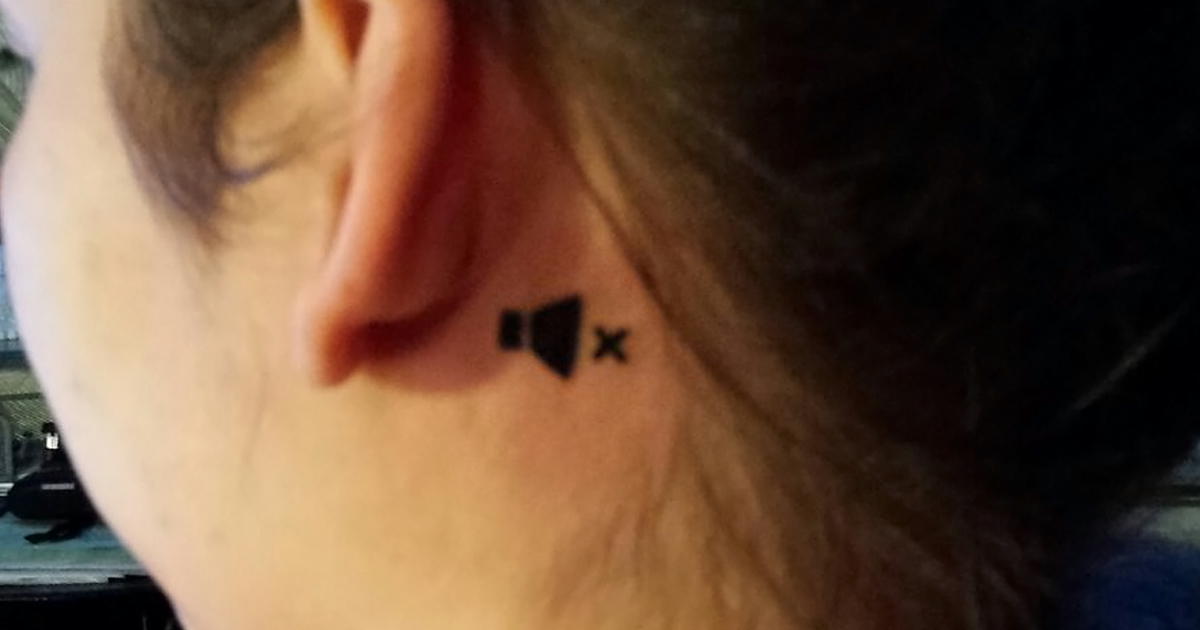
Some tattoos whisper. Some tattoos roar. And then there are tattoos that politely tap the world on the shoulder and say, “Please don’t talk into this ear.” That is exactly why a young woman who is deaf in one ear became a viral internet favorite after getting a tiny, clever tattoo behind her left ear: a muted speaker icon.
The story caught attention because it was simple, practical, and oddly charming. Instead of constantly explaining that she could not hear well on one side, she turned a frustrating daily challenge into a tiny piece of body art. The tattoo was not a dramatic sleeve, a giant quote, or a mysterious symbol that requires a 40-minute backstory over coffee. It was a small visual cue with a big message: this ear does not work, so please speak to the other side.
At first glance, the idea sounds cute. Look a little deeper, and it becomes a thoughtful conversation about hearing loss, invisible disabilities, accessibility, social awkwardness, and the surprising ways people design solutions for everyday life. The tattoo is funny, yes. But it is also useful. And sometimes, useful is beautiful.
The Viral Tattoo That Said Everything Without Saying A Word
The woman behind the viral tattoo was widely identified as Elisa Menzel, a young woman from Berlin who had been deaf in her left ear since childhood. After years of awkward conversations, missed words, confused faces, and people assuming she simply was not paying attention, she decided to make the situation easier for everyone.
Her solution was wonderfully direct: a tiny muted speaker symbol tattooed behind her deaf ear. The meaning was instantly understandable. A speaker icon with an “X” is the universal digital language for “no sound.” Place it behind one ear, and the message becomes clear enough for strangers, friends, coworkers, servers, classmates, and even forgetful loved ones.
The tattoo went viral because it hit that rare internet sweet spot: practical, personal, minimalist, and relatable. People loved that it was not only decorative but functional. It did not ask for pity. It did not overexplain. It simply helped others understand how to communicate better.
Why Being Deaf In One Ear Can Be More Complicated Than People Think
Single-sided deafness, also called unilateral hearing loss, means a person has little or no hearing in one ear while the other ear may hear normally or near normally. To people without hearing loss, this can sound like a small inconvenience. After all, one ear still works, right? Not exactly.
Hearing with two ears helps the brain locate where sounds are coming from. It also makes it easier to understand speech in noisy places. When one ear cannot hear, the brain loses part of that sound map. A person may hear that someone is talking but struggle to figure out who said it, where the voice came from, or what was said when there is background noise.
Everyday Situations Can Become Surprisingly Awkward
Imagine standing at a checkout counter while the cashier speaks from your deaf side. You smile, nod, and then realize you accidentally agreed to a store credit card, a donation, and possibly adopting a goat. Or picture being at a restaurant where music, dishes, laughter, and side conversations all blend into one audio smoothie. Someone says something from the wrong side, and suddenly you are playing a guessing game with real social consequences.
People who are deaf in one ear may also be accused of ignoring others. They may turn the “wrong” way when called. They may need to choose seats carefully, walk on a certain side of friends, or ask people to repeat themselves more often than they would like. None of these moments are catastrophic by themselves, but when they happen over and over, they can become exhausting.
A Functional Tattoo: When Body Art Becomes A Communication Tool
Most tattoos carry meaning. Some honor family members. Some mark personal growth. Some are chosen because a dragon with sunglasses simply felt right at the time. But a functional tattoo adds another layer: it helps the wearer navigate the world.
In Elisa’s case, the muted speaker tattoo worked almost like a visual accessibility sign. It gave people a quick clue before the awkward part happened. Instead of explaining, “I’m deaf in this ear,” again and again, she could let the tattoo do the first round of communication.
That does not mean every person with hearing loss needs or wants a tattoo. Many people prefer hearing aids, cochlear implants, phone notes, sign language, personal explanations, medical ID jewelry, or nothing visible at all. The point is choice. For one person, a tattoo may feel empowering. For another, privacy may matter more. Both are valid.
Why The Tattoo Resonated With So Many People
The internet loves clever design, but this tattoo resonated for a deeper reason. It made an invisible disability visible without turning it into a public announcement. Hearing loss often cannot be seen. If someone uses a wheelchair, cane, or visible assistive device, strangers may understand that accommodation is needed. But if someone is deaf in one ear, people may not know unless they are told.
That invisibility can create unfair assumptions. A person may seem rude when they are actually trying to hear. They may seem distracted when they are simply processing sound from one side. They may laugh at the wrong time because they caught half the sentence and guessed the rest. The tattoo gently interrupts those assumptions.
It Turns Frustration Into Humor
One of the best things about the muted-speaker tattoo is its tone. It is not angry. It is not begging for attention. It has a wink built into it. The design says, “Technology already has a symbol for this, so let’s use it.” That tiny bit of humor makes the message easier for strangers to receive.
Humor can be powerful when dealing with disability, as long as it comes from the person living the experience. In this case, the tattoo allowed Elisa to frame her own story. She was not the punchline. The awkwardness was.
What Strangers Should Learn From The Tattoo
The biggest lesson is simple: communication is a two-person job. If someone tells you they are deaf in one ear or hard of hearing, the kind response is not to panic, shout, or speak like you are announcing a monster truck rally. The better response is to adjust respectfully.
Face the person when speaking. Get their attention before starting a sentence. Move to the side where they hear better. Speak clearly at a normal pace. Reduce background noise when possible. If they miss something, repeat or rephrase without acting annoyed. Congratulations: you have now unlocked the advanced human skill known as basic courtesy.
Do Not Shout Into Someone’s Ear
Shouting rarely helps. In fact, it can distort speech and make understanding harder. It can also be uncomfortable and embarrassing. Clear speech is better than loud speech. Think “friendly conversation,” not “airport runway worker guiding a plane.”
It is also helpful to avoid covering your mouth, chewing while talking, or speaking from another room. Many people with hearing loss rely partly on lip movement, facial expression, and context. If you shout from the kitchen while opening a bag of chips, you are not communicating; you are creating a mystery podcast.
Invisible Disabilities Deserve Visible Respect
The muted-speaker tattoo became popular partly because it represents a bigger truth: not every disability is obvious. Hearing loss, chronic pain, neurological conditions, autoimmune disorders, anxiety, vision differences, and many other experiences can be hidden. A person may look “fine” and still need support.
This is why patience matters. If someone asks you to repeat something, repeat it kindly. If someone says they cannot hear from one side, believe them. If someone needs a seat, a caption, a written instruction, or a quieter space, do not turn it into a courtroom trial. Accessibility works best when it is treated as normal, not as a special favor.
Could A Tattoo Be A Good Idea For Hearing Loss Awareness?
For some people, yes. A small tattoo near the ear can be a simple way to communicate a hearing difference. Other designs might include a sound-wave symbol, a tiny ear icon, a “speak on this side” arrow, a muted microphone, or a minimalist line drawing. The best design is one that the person actually likes and understands.
However, a tattoo is permanent, so it deserves real thought. A design that feels funny today should still feel comfortable years from now. Placement matters too. Behind-the-ear tattoos can be discreet, but they may also be visible with certain hairstyles. For someone who wants privacy at work, school, or formal events, that may be worth considering.
Safety Comes Before Style
Anyone considering a tattoo should choose a licensed professional, ask about sterile equipment, follow local laws, and pay attention to aftercare. A tattoo breaks the skin, so cleanliness matters. Redness, swelling, itching, and mild soreness can be part of normal healing, but worsening pain, pus, fever, spreading redness, or unusual reactions should be checked by a healthcare professional.
People with skin conditions, immune system concerns, diabetes, allergies, or a history of keloids should be extra careful and may want medical advice before getting tattooed. A functional tattoo is still a tattoo. It should be meaningful, safe, and done by someone who knows what they are doing.
Alternatives To A Deaf-In-One-Ear Tattoo
A tattoo is clever, but it is not the only option. Some people prefer wearable buttons or pins that say “Please speak to my right side.” Others use phone lock-screen notes, medical ID bracelets, hearing-aid charms, or small cards they can show in noisy environments. In classrooms and workplaces, written instructions, captions, assistive listening devices, and thoughtful seating can make a major difference.
For digital life, captions are a gift from the accessibility gods. Video calls with live captions, text messages instead of voice notes, and meeting summaries can help people with hearing differences stay included. The goal is not to make every conversation formal. The goal is to make communication less tiring.
What The Tattoo Teaches About Self-Advocacy
Self-advocacy means communicating your needs clearly and confidently. It does not mean apologizing for existing. Elisa’s tattoo is a memorable example because it turns self-advocacy into design. It says, “This is how I hear best,” without requiring a speech every time.
That matters because many people with disabilities spend a lot of energy managing other people’s reactions. They explain, reassure, correct, and repeat. A simple visual cue can reduce that burden. It can also give others permission to ask respectful questions and make better choices.
The tattoo may be tiny, but the message is large: accessibility does not always have to be complicated. Sometimes it can be as small as a symbol behind an ear.
The Social Power Of A Small Symbol
Symbols work because humans are visual creatures. We recognize stop signs, Wi-Fi icons, battery warnings, bathroom signs, and mute buttons almost instantly. A muted speaker tattoo borrows from that familiar visual language. It turns a private hearing difference into a public instruction without needing a long explanation.
That is why the design spread so widely. People saw it and immediately understood. Some laughed. Some related. Some shared it with friends who have hearing loss. Some probably thought, “Wait, I need that.” The tattoo became more than a picture; it became a tiny accessibility idea moving through the internet.
Experiences Related To The Topic: Living With A “Please Use The Other Side” Life
Anyone who is deaf in one ear can probably describe a collection of small, oddly specific experiences that hearing people rarely notice. The first is the seating strategy. In a restaurant, the best seat is not always the one with the nicest view. It is the seat that puts everyone on the hearing side. A corner booth can feel like luxury real estate if it keeps the noisy room on the deaf side and the conversation on the good side.
Then there is the sidewalk shuffle. Friends may naturally walk on the wrong side, and the person with hearing loss has to switch positions without making it look like a strange little dance. Sometimes they explain, “Can you walk on my right?” Other times they simply orbit the group like a polite moon until the arrangement works. It is not dramatic, but it is constant.
Classrooms, offices, and group gatherings bring their own challenges. A person may hear the teacher or speaker perfectly until someone behind them asks a question from the deaf side. Everyone else turns casually; the person with single-sided deafness may catch only the last three words and then try to reconstruct the missing sentence like a detective. In meetings, side comments can disappear completely. In cars, the seating arrangement can determine whether a conversation happens at all.
There is also the emotional side. Being asked, “Are you deaf?” can sting when it is said sarcastically. For someone who actually is deaf in one ear, the answer may be “yes,” but the moment can become uncomfortable. That is why a tattoo like this can feel freeing. It removes some of the surprise. It gives the person control over the explanation before anyone turns it into a joke.
At the same time, a visible symbol can invite curiosity. Some strangers may ask kindly, “Does that mean you can’t hear on that side?” That can lead to a quick, friendly exchange. Others may not notice the tattoo at all, which is also fine. The goal is not to force every person into perfect awareness. The goal is to make everyday interactions a little smoother.
For friends and family, the tattoo can become a helpful reminder. Even loved ones forget. They may call from the wrong side, whisper in the deaf ear, or choose the worst possible seat at a loud cafe. A tiny muted speaker behind the ear becomes a visual nudge: wrong channel, please switch. It can reduce frustration without turning every reminder into a lecture.
The most meaningful experience, though, may be the sense of ownership. Hearing loss can feel like something that interrupts life without permission. A tattoo is chosen. It transforms an inconvenience into a statement. It says, “This is part of how I move through the world, and I have found my own way to make it easier.” That is why the story continues to resonate years after it first went viral. It is not just about ink. It is about being understood.
Conclusion: A Tiny Tattoo With A Loud Message
The story of a girl who is deaf in one ear getting a tattoo to inform strangers is memorable because it turns a daily communication challenge into something simple, stylish, and surprisingly universal. A tiny muted speaker symbol behind the ear does more than decorate the skin. It tells people where to speak, reminds them that hearing loss is not always visible, and invites a kinder kind of communication.
The tattoo works because it is practical without being heavy. It uses humor without dismissing the reality of hearing loss. It shows that accessibility can be creative, personal, and even charming. Most importantly, it reminds us that small adjustments can make a big difference. Stand on the better-hearing side. Face the person. Speak clearly. Be patient. No giant speech required.
Note: This article is intended for storytelling, accessibility awareness, and general educational purposes. Anyone considering a tattoo should follow local laws, choose a licensed professional, and seek medical guidance if they have health or skin concerns.