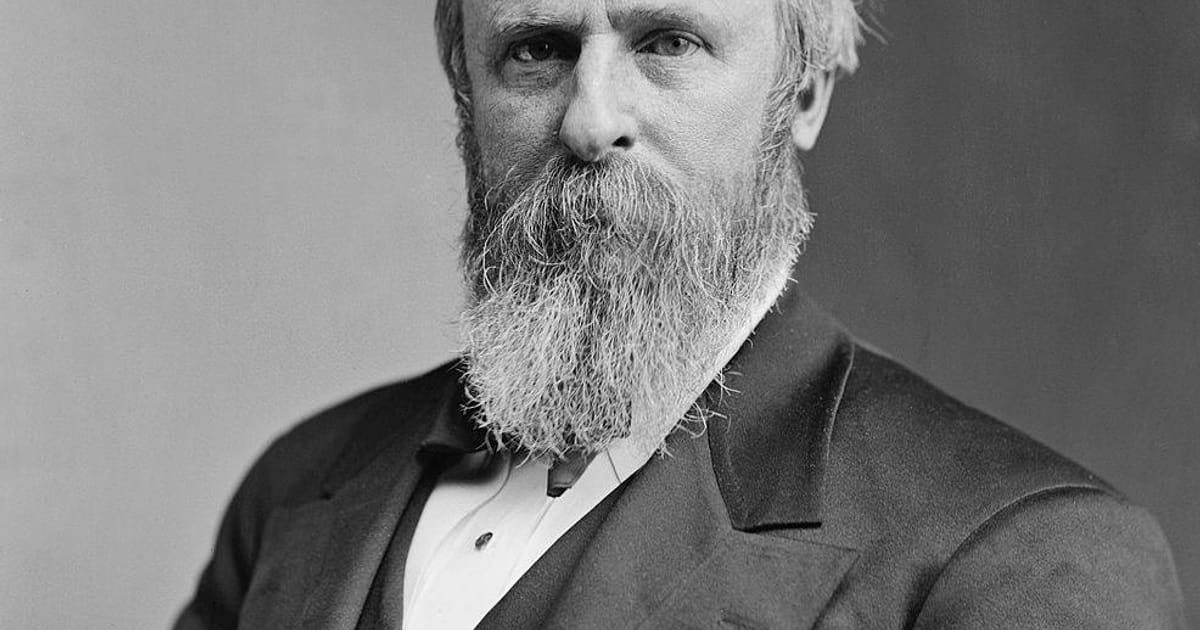
Rutherford B. Hayes is one of those presidents you vaguely remember existslike the “middle child” of U.S. history
who shows up between the drama and the fireworks, straightens the picture frames, and then politely leaves before
anyone starts a conga line. Yet when you look at modern presidential rankings and the opinions behind them, Hayes
becomes a surprisingly useful case study: a reputation for personal integrity, a presidency shaped by a legitimacy
crisis, and policy choices that still spark arguments more than a century later.
This article breaks down how historians and surveys tend to rank Hayes, why his scores land where they do, and what
people praise (or blame) him forespecially the end of Reconstruction, early civil service reform efforts, and how
he handled economic and labor turbulence. Then, at the end, you’ll get a hands-on “experience section” to help you
form your own ranking and opinion without needing a powdered wig or a time machine.
Why Hayes Rankings Are Usually “Middle-of-the-Pack”
Most modern presidential rankings aren’t popularity contests (at least, they try not to be). They measure leadership
traits and outcomes: crisis management, moral authority, economic stewardship, relations with Congress, and whether
a president pursued equal justice, among other criteria. Hayes tends to land in the lower-middle range because his
term produced fewer headline-grabbing landmark laws than some peersand because one of his biggest “defining moves”
remains controversial.
Hayes in the C-SPAN Presidential Historians Survey
In C-SPAN’s 2021 Survey of Presidential Leadership (a widely cited historian survey), Rutherford B. Hayes places
around the low-to-mid 30s overall. His category ranks are generally clustered in that same neighborhood, suggesting
a consistent judgment: competent, not transformational; steady, not seismic.
What does that mean in plain English? If presidents were ranked like streaming shows, Hayes is rarely “Top 10 of All
Time,” but also not the kind you warn your friends to avoid. He’s the “solid limited series” you respectthen forget
to recommend because you got distracted by flashier titles.
The Context That Shapes Opinions: A President Chosen in a National Argument
Hayes’s presidency can’t be separated from how he got the job. The 1876 election between Hayes and Samuel J. Tilden
was bitterly disputed, with contested results in multiple states and an eventual resolution that delivered Hayes the
presidency by a razor-thin electoral margin. Even people who admire Hayes’s character often admit the political
environment made his mandate… let’s call it “fragile.”
The “Compromise of 1877” and the Legitimacy Cloud
The post-election settlement is commonly described as the “Compromise of 1877,” though historians debate how formal
or explicit any bargain actually was. What’s broadly agreed is that the resolution of the dispute coincided with the
withdrawal of federal troops from the last Reconstruction-era strongholds, which effectively ended Reconstruction in
the South.
That background matters because rankings often reward presidents who build durable coalitions and achieve major policy
winswhile punishing those who inherit chaos they can’t cleanly resolve. Hayes inherited chaos, resolved it, and then
paid a reputational price for what the resolution meant in practice.
What Hayes Gets Credit For in Rankings
1) A Reputation for Integrity (Even When the System Looked Ugly)
One reason Hayes remains “respectably ranked” is the recurring portrayal of him as personally honest and reform-minded,
especially by historians who emphasize the Gilded Age’s corruption and patronage. Rankings that weigh moral authority
and administrative ethics often give Hayes some benefit of the doubt: he wasn’t a charismatic legend, but he wasn’t
running a political vending machine either.
2) Civil Service Reform: Small Steps, Big Signal
Hayes pushed for civil service reform at a time when the spoils system still treated federal jobs like party souvenirs.
He issued orders aimed at reducing political coercion and patronage behavior among federal employees and took on major
party power brokers, including battles involving the New York Custom Housethen one of the most politically important
federal offices in the country.
This didn’t instantly convert Washington into a meritocracy with gold stars and perfect attendance. But historians
often view Hayes as laying groundwork and setting precedents that helped make later, broader reforms possible. In
ranking terms: he rarely gets a championship ring for civil service reform, but he gets credit for helping build the
stadium.
3) Economic Management and the Return to the Gold Standard
Hayes’s term overlapped with intense debates about currency, inflation, and the long shadow of the Panic of 1873.
His administration supported the resumption of specie payments (the move toward redeeming paper currency in gold),
and by early 1879 the U.S. returned to a gold-based footing. Historians differ on how much credit Hayes personally
deserves versus broader economic cycles, but many rankings note that he pursued a coherent policy lineand that the
transition occurred without the kind of meltdown critics predicted.
4) A Careful Approach to Labor Unrest (Great Railroad Strike of 1877)
The Great Railroad Strike of 1877 was one of the most significant labor upheavals in U.S. history. Hayes’s response
is often described as reluctant and order-focused: federal troops were used in certain contexts, but typically when
state officials requested help and when violence or disruption threatened public safety.
Ranking systems that value “crisis leadership” may not score him as heroic or visionary herebut they often note he
avoided turning the presidency into a blunt instrument for one side’s benefit, at least in his stated intent. Of
course, critics argue that any deployment of federal force during labor conflict helped set future precedents.
What Hayes Gets Criticized For (and Why It Hits Rankings Hard)
1) Ending Reconstruction: A Defining Decision With Real Human Costs
Hayes’s withdrawal of federal troops from remaining Reconstruction-era statehouses is widely treated as the symbolic
(and practical) end of Reconstruction. This shift cleared the path for “home rule” in the South, but it also coincided
with broken promises to protect Black civil rights and voting access, followed by systematic disfranchisement and
racial violence across the following decades.
Even historians who defend Hayes as constrained by political reality often concede that the consequences were severe.
Ranking criteria that include “pursued equal justice for all” can push Hayes downward because, regardless of his stated
hopes or protests, federal protection receded and the results were disastrous for Black political rights.
2) Limited “Big Legacy” Legislation
Hayes had reforms and decisions, but he didn’t leave behind a single signature law that dominates textbooks the way
some presidents did. That’s not entirely his fault: the era’s party divisions, economic pressures, and the post-1876
legitimacy crisis created constraints. Still, ranking systems often reward sweeping achievementsand Hayes, by design
and circumstance, mostly governed in careful, incremental strokes.
3) The “Promise Problem”: Intentions vs. Outcomes
Hayes is frequently portrayed as wanting reconciliation, lawful governance, and fair treatment in the South. But the
practical outcome of troop withdrawal and the political collapse of Reconstruction governments was the opposite of
“equal protection” in many places. That gapbetween intention and outcometends to generate mixed opinions: sympathetic
interpretations alongside blunt condemnation.
A Practical Way to Understand Hayes: Ranking Him by “Impact Types”
If you want to build your own Rutherford B. Hayes ranking and opinion, it helps to decide what kind of “impact” you
value. Here are four lenses people commonly useoften without realizing it.
Lens A: The “Character Counts” Ranking
If you prioritize integrity, reform-mindedness, and administrative honesty, Hayes rises. He looks like a steady,
ethical executive trying to keep a messy system from eating itself alive.
Lens B: The “Civil Rights First” Ranking
If you prioritize the protection of civil rights outcomes, Hayes tends to fall. Ending Reconstruction and the
subsequent political reality in the South weighs heavily against him, even if you accept he faced political limits.
Lens C: The “Economic Stability” Ranking
If you prioritize monetary stability and institutional normalcy after years of turmoil, Hayes looks more favorable.
He’s often framed as competent in managing policy direction during a complicated economic era.
Lens D: The “Big Vision” Ranking
If you prioritize bold agenda-setting, sweeping reforms passed through Congress, or major national persuasion, Hayes
lands lower. He wasn’t a “movement president.” He was a “keep-the-lights-on-and-stop-the-building-from-swaying” president.
Specific Examples That Show Why Opinions Split
Example 1: Civil Service Reform vs. Party Warfare
Reformers often praise Hayes for challenging patronage networks and insisting federal offices operate on businesslike
principles rather than pure partisan advantage. Party loyalists at the time saw this as political sabotage. That tension
creates a classic ranking paradox: reformers credit him for courage, while critics argue he weakened his own party’s
effectiveness and failed to institutionalize reforms quickly.
Example 2: The Great Railroad Strike and the “Order” Question
During the Great Railroad Strike of 1877, the public and officials faced riots, property destruction, and real fear
of broader instability. Hayes’s approach is often described as maintaining order rather than choosing a side. But
“order” is not a neutral word in history: labor historians and critics may interpret troop deployments as aligning the
federal government with capital, even if the stated rationale was public safety.
Example 3: Immigration Restriction and Treaty Obligations
Hayes vetoed legislation aimed at restricting Chinese immigration, arguing it conflicted with U.S. treaty obligations.
That doesn’t automatically make him a modern-day immigration hero in the way today’s debates frame the issuehe operated
within the politics of his era. Still, historians often highlight the veto as an example of Hayes choosing legal and
diplomatic consistency over political pressure.
So Where Should Hayes “Rank,” Really?
The honest answer is: it depends on the scoreboard you bring to the game. If “presidential greatness” is defined as
passing transformative legislation and reshaping national identity, Hayes probably stays in the lower-middle tier.
If “presidential quality” includes steady reform efforts, institutional integrity, and avoiding reckless escalation
in crises, Hayes looks better than his pop-culture invisibility suggests.
And if your ranking emphasizes civil rights outcomes above all else, you may judge that Hayes’s defining actthe end
of federal enforcement of Reconstruction-era protectionsshould carry heavy negative weight. That is the center of the
modern Hayes debate: a decent man, governing in a harsh political reality, making choices with consequences that were
anything but decent for many Americans.
Experience Section: of “Do-It-Yourself Hayes” (To Form Your Own Rankings and Opinions)
You don’t need to be a professional historian to build a smart Rutherford B. Hayes ranking. You just need a few
purposeful experiencesmini “field trips” through evidence and perspectivethat help you decide what matters most.
Here are seven experiences (the kind you can actually do) that make Hayes feel less like a trivia answer and more
like a complicated leader you can evaluate.
1) Experience the Rankings Like a Judge, Not a Fan
Pick one modern ranking framework (like historian survey categories) and pretend you’re on the judging panel. Don’t
ask, “Do I like Hayes?” Ask, “What evidence supports a score in crisis leadership, moral authority, or equal justice?”
The moment you change the question, you stop ranking presidents like a meme and start ranking like a researcher.
2) Read One Primary Source With a Skeptical Eye
Find a presidential message or veto explanation and read it slowly. Don’t just absorb the wordsnotice the logic.
Hayes’s veto reasoning on immigration restriction is a good example of a president grounding a decision in treaty
obligations rather than crowd noise. Then ask yourself: is this principled leadership, political calculation, or both?
The best opinions usually allow for “both.”
3) Walk Through the 1876–1877 Timeline Like It’s a Thriller
Instead of treating the contested election and its aftermath as one “Compromise” paragraph, experience it as a chain
of stressful deadlines and political brinkmanship. When you do, you’ll better understand why Hayes entered office with
a shaky mandateand why some of his choices look like emergency stabilization, not long-term idealism.
4) Do a Reconstruction Reality Check
Spend 20 minutes reading about what changed for Black voting rights after federal protection receded. This experience
is uncomfortable on purpose. It forces your ranking to confront outcomes, not just intentions. If you’re the type who
ranks presidents based on consequences, this is the experience that will likely move Hayes down your list.
5) Compare Two Interpretations and Notice the “Value Clash”
Read one interpretation that emphasizes Hayes’s integrity and reform impulse, then another that emphasizes the harm
tied to Reconstruction’s collapse. The point isn’t to pick a team. It’s to notice the value clash: stability vs. justice,
feasibility vs. duty, institution-building vs. rights protection. Your final opinion of Hayes is basically a decision
about which values you rank higher.
6) Experience the Labor Crisis Through One City
Choose one city impacted by the Great Railroad Strike of 1877 and read the local story: fear, anger, militia action,
property destruction, casualties, public outrage. Then revisit Hayes’s response with that emotional context. Suddenly,
“sending troops” isn’t an abstract policyit’s a choice that reshapes lives. Whether you view it as necessary order or
anti-worker precedent will shape your ranking.
7) Build Your Own Hayes Scorecard (Yes, Literally)
Create a simple 10-category scorecard: integrity, crisis response, economic policy, civil rights outcomes, reform,
Congress relations, communication, foreign policy, long-term impact, and “performance within constraints.” Score him
1–10 on each and write one sentence of evidence per category. You’ll end up with something more valuable than a hot take:
a reasoned ranking you can defend without yelling.
After these experiences, most people end up with a more nuanced Hayes: not a forgotten nothing, not a hidden genius,
but a capable president whose most famous turning point is inseparable from a moral and political tragedy. In other words,
the exact kind of figure rankings are supposed to help us think aboutrather than simply sort and move on.
Conclusion
Rutherford B. Hayes rankings and opinions usually settle into a consistent pattern: lower-middle overall, with pockets
of respect for integrity, civil service reform efforts, and steady economic policycounterbalanced by intense criticism
over the end of Reconstruction and the grim civil-rights fallout that followed. If you’re building your own ranking,
be honest about what you’re measuring. Hayes rises under a “clean government and stability” lens and sinks under an
“equal justice outcomes” lens.
Either way, Hayes is worth revisiting precisely because he forces a serious question: should presidents be ranked by
what they wanted, what they achieved, or what happened after they acted? Your answer to that question is your real
“ranking system”and Hayes is the test case that reveals it.