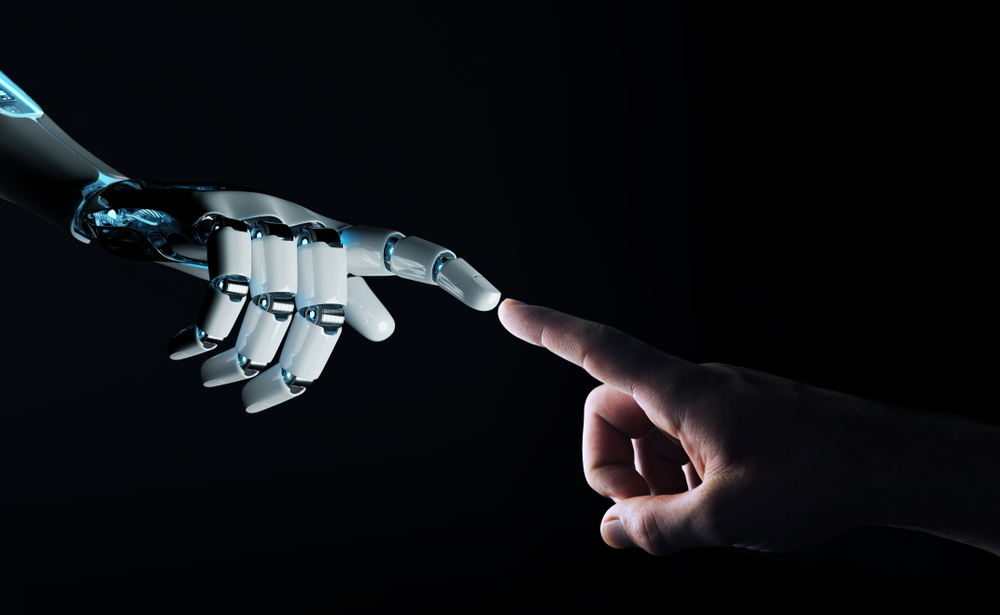
Imagine telling your laptop to open an email without touching a keyboard, or feeling the rim of a coffee cup through a prosthetic hand. Not long ago, that sounded like a deleted scene from a science-fiction movie where the lab coats were too clean and everyone spoke in dramatic whispers. Today, neural engineering systems are turning those ideas into real clinical research, practical devices, and a new vision of independence for people living with paralysis, limb loss, stroke, ALS, and other neurological conditions.
At the center of this transformation is a powerful idea: the nervous system already speaks in electrical and chemical signals. Neural engineering tries to listen to those signals, interpret them with hardware and artificial intelligence, and sometimes send information back to the brain or nerves. In plain English, it builds translators between biology and machines. These translators can help restore communication, control robotic limbs, improve prosthetic sensation, and reconnect people with the digital and physical world.
The field is moving fast because several technologies have matured at once: high-resolution electrodes, machine learning, soft robotics, wireless implants, advanced sensors, and safer device design. The result is not one miracle gadget, but an ecosystem of brain-computer interfaces, neuroprosthetics, sensory-feedback systems, and rehabilitation tools. Together, they are changing what “assistive technology” can mean.
What are neural engineering systems?
Neural engineering systems combine neuroscience, biomedical engineering, computer science, materials science, robotics, and clinical medicine. Their job is to understand, record, decode, stimulate, or replace parts of the nervous system’s communication network. A brain-computer interface, often called a BCI, is one of the best-known examples. It records brain activity and translates that activity into commands for a computer, speech device, wheelchair, robotic arm, or prosthetic limb.
Some BCIs are invasive, meaning electrodes are implanted in or near the brain. Others are minimally invasive, such as devices placed through blood vessels, and some are noninvasive, using sensors outside the head. Each approach has trade-offs. Implanted systems can capture clearer signals, but they require surgery and strict safety testing. Noninvasive systems avoid brain surgery, but their signals are usually less precise. Neural engineering is, in many ways, a balancing act between performance, safety, comfort, durability, and real-life usefulness.
Restoring communication: when thought becomes text, speech, and expression
One of the most emotionally powerful areas of neural engineering is communication restoration. For people with severe paralysis or locked-in syndrome, the mind may remain active while speech and movement become extremely limited. Traditional assistive tools such as eye trackers and switch-based typing can help, but they may be slow, tiring, or impossible for some users.
Modern speech BCIs aim to decode attempted speech directly from brain activity. Instead of asking a person to move a cursor letter by letter, the system tries to interpret the neural patterns involved when the person attempts to say words. Researchers have demonstrated systems that convert attempted speech into text at speeds far beyond earlier BCI communication methods. In one major speech neuroprosthesis study, a participant with ALS used implanted microelectrode arrays while attempting speech, allowing the system to decode sentences from a large vocabulary. The speed approached conversational usefulness, which is a huge step beyond the painfully slow “one letter at a time” era.
Other research has pushed beyond text into synthesized speech and facial animation. At UCSF, researchers have worked on systems that translate brain signals into text, spoken audio, and a digital avatar capable of facial expressions. This matters because communication is not only about words. A raised eyebrow, a smile, a pause, or a sarcastic tone can carry half the message. Without expression, “Great job” can sound like encouragement or like someone just watched you put pineapple on a printer. Neural engineering is beginning to restore not only speech, but personality.
Why AI matters in speech neuroprosthetics
Artificial intelligence is the engine that helps neural interfaces make sense of noisy biological signals. Brain activity is not a neat spreadsheet. It shifts from day to day, changes with fatigue, and varies across individuals. Machine learning models can identify patterns in neural recordings and improve their decoding over time. The better the model, the more natural the communication can become.
However, AI also introduces serious design responsibilities. Communication devices must be accurate, secure, and user-controlled. A speech BCI should not guess wildly or put embarrassing words into a user’s mouth. It should also protect private neural data. The goal is not to read minds like a comic-book villain with a bad cape. The goal is to restore intentional communication for people who want and need it.
Enhancing prosthetics: from robotic tools to body-like partners
Prosthetic limbs have improved dramatically, but many still feel like tools attached to the body rather than natural extensions of it. A major reason is the missing sense of touch. Human hands do more than grab. They feel pressure, texture, temperature, vibration, shape, and position. That sensory information lets us hold a paper cup without crushing it, button a shirt without staring at every movement, and find keys in a bag without conducting a full archaeological dig.
Neural engineering is tackling this challenge with bidirectional systems. “Bidirectional” means information flows both ways: the user’s nervous system controls the prosthetic limb, and sensors in the prosthetic limb send feedback back to the nervous system. Researchers at institutions such as the University of Chicago, the University of Pittsburgh, Northwestern University, Case Western Reserve University, and others have explored ways to stimulate sensory regions of the brain so a person can experience touch through a robotic hand.
This is a major leap. Earlier systems could sometimes create a simple on-off sensation, like “contact happened somewhere.” Newer work is moving toward more nuanced feedback: location, pressure, edges, movement, and texture-like experiences. That nuance is crucial for daily life. A prosthetic hand that only says “touch” is useful. A prosthetic hand that helps distinguish “soft sponge,” “metal bottle,” and “please do not crush this cookie” is much more human-friendly.
Smarter hands, softer robotics, better control
Another promising direction is the design of prosthetic hands that physically behave more like human hands. Johns Hopkins engineers, for example, have developed bionic hand research using tactile sensors, soft materials, and machine learning to improve grip and object handling. Hybrid designs that combine soft outer materials with structured internal support can help prosthetic fingers conform to objects more naturally. That means fewer dropped items, fewer crushed objects, and less frustration during everyday tasks.
The best future prosthetics may combine several layers of intelligence: muscle or nerve control from the user, robotic mechanics that adapt to objects, tactile sensors that detect contact, and neural feedback that restores some sense of feeling. In other words, the prosthetic does not simply obey commands. It collaborates with the user.
BrainGate, clinical trials, and the move toward independence
The BrainGate research program has played an important role in showing that neural signals related to movement intention can be decoded and used to operate external devices. Participants in early clinical research have used brain signals to control computer cursors, robotic arms, communication systems, and assistive devices. These studies are important because they move the field from “could this work?” to “how can this become reliable, safe, and useful at home?”
That home-use question is critical. A device that works beautifully in a laboratory for one afternoon is impressive. A device that works every morning, after a bad night of sleep, when the Wi-Fi acts like it is auditioning for a haunted house, is life-changing. Neural engineering systems must handle real-world messiness: changing signal quality, software updates, user fatigue, device maintenance, training time, and cost.
Regulation and safety: the unglamorous heroes
Behind every exciting neural interface headline is a less flashy but essential topic: regulation. The U.S. Food and Drug Administration has issued guidance for implanted brain-computer interface devices for people with paralysis or amputation. This guidance addresses nonclinical testing, clinical study design, feasibility studies, pivotal studies, and the path from research toward possible market access.
That may not sound as thrilling as “person controls computer with thought,” but it is the safety net that protects patients. Implanted devices must be evaluated for biocompatibility, long-term stability, infection risk, surgical safety, electrical safety, durability, cybersecurity, and meaningful clinical benefit. Neural engineering is not just about building a clever machine. It is about building a medical technology that can earn trust.
DARPA, high-resolution interfaces, and the future of neural bandwidth
DARPA’s Neural Engineering System Design program has emphasized the need for advanced neural interfaces with high signal resolution, speed, and data transfer between the brain and electronics. The program’s vision is to create technologies that can translate between the electrochemical language of neurons and the digital language of machines at a much larger scale than older neurotechnology allowed.
That phrase “larger scale” matters. The brain contains vast networks of neurons working together. Reading from only a tiny number of channels limits what a device can understand. Writing information back into the nervous system is even more complex. Future systems may need to record from many more neural signals, stimulate with greater precision, and do both in real time. This is like upgrading from a walkie-talkie to fiber internet, except the cable is biology and the customer service line is your motor cortex.
DARPA has also supported work on nonsurgical neurotechnology. Noninvasive or minimally invasive systems could one day make neural interfaces accessible to more people. The challenge is physics: skull, skin, and tissue distort signals. Engineers must find ways to capture or deliver neural information without sacrificing precision. If successful, these systems could expand neural engineering beyond specialized surgical settings.
Real examples of breakthroughs changing the field
1. Speech BCIs that decode attempted speech
Speech neuroprostheses are showing that brain signals linked to attempted speech can be decoded into text or audio. These systems are especially promising for people with ALS, brainstem stroke, or severe paralysis who cannot speak naturally. Speed, accuracy, vocabulary size, and calibration time are improving, making restored communication feel less like a slow command interface and more like conversation.
2. Digital avatars that restore expressiveness
Text is useful, but human communication includes emotion and identity. Digital avatar research aims to restore facial expressions and personalized speech. For users who have lost their natural voice, voice synthesis and avatar animation can make communication feel less mechanical and more personal.
3. Prosthetic touch through brain stimulation
Sensory-feedback prosthetics are moving from basic contact detection toward richer touch. By stimulating brain areas associated with hand sensation, researchers are exploring how users can feel location, pressure, edges, and motion through robotic limbs.
4. Bionic hands with tactile sensors
Advanced prosthetic hands are using sensor arrays, soft materials, and machine learning to detect objects and adjust grip. These systems can help prosthetics handle fragile, soft, or irregular objects more naturally.
5. Minimally invasive neural interfaces
Endovascular approaches, such as devices placed through blood vessels near the motor cortex, are being developed to reduce the need for open brain surgery. These systems may offer a middle ground between high-performance implanted electrodes and lower-resolution external sensors.
Ethical questions: privacy, access, identity, and consent
Neural engineering systems raise important ethical questions. Who owns neural data? How should it be stored? Could a device be hacked? How much control should companies have over software updates for implanted medical devices? What happens if a user depends on a neural interface and the company shuts down support?
Access is another concern. Breakthroughs are only truly revolutionary if they reach the people who need them. If advanced BCIs and neuroprosthetics remain extremely expensive, available only in elite research centers, or limited by insurance barriers, their social impact will be smaller than their scientific achievement. The field must plan for affordability, training, repair, long-term care, and inclusive design.
There is also the question of identity. A prosthetic limb that feels more natural may become part of a user’s body image. A synthetic voice may restore a sense of self. These are not minor features. They affect confidence, relationships, work, education, and dignity. The best neural engineering systems will be designed with users, not merely for them.
Challenges that still need solving
Despite rapid progress, neural engineering is not magic. Current systems can require surgery, training, calibration, and careful monitoring. Electrodes may shift. Signals may change. Algorithms may need updating. Batteries, wireless connections, and hardware durability matter. So do infection risks, scar tissue, and the long-term stability of implanted materials.
Another challenge is personalization. Brains are not identical. A model that works well for one participant may need major adjustment for another. Conditions such as ALS can also change over time, affecting the neural signals available for decoding. Successful products will need adaptive software, reliable hardware, and clinical teams that understand both technology and human care.
Experiences and practical reflections related to neural engineering systems
When people talk about neural engineering, they often focus on the spectacular moment: a cursor moves by thought, a robotic hand closes, or a digital voice speaks a sentence. Those moments deserve attention. But the deeper experience is usually quieter and more human. It is the relief of sending a message without waiting for someone else to interpret eye movements. It is the confidence of picking up an object without staring at every finger. It is the ability to participate in a conversation at something closer to the speed of thought.
For a person living with severe motor impairment, communication can become a full-time negotiation with time. A simple sentence may require patience, equipment, assistance, and energy. Neural communication systems can change that emotional equation. Even when a device is not perfect, faster communication can restore spontaneity. Jokes land better when they arrive before the conversation has moved to a different planet. Questions can be answered in the moment. Preferences can be expressed without turning every choice into a group project.
In prosthetics, the experience is equally personal. Many users can learn to operate advanced limbs, but without sensory feedback, control often demands constant visual attention. That can be exhausting. Imagine trying to carry groceries while watching your hand every second to make sure you are not dropping eggs, crushing bread, or accidentally giving a tomato a tragic ending. Sensory feedback can reduce cognitive load. It lets the body do what bodies are good at: adjusting automatically.
There is also a psychological dimension. A prosthetic that feels responsive may be easier to trust. A device that provides touch-like feedback may feel less like a tool and more like part of the user’s body. This matters for daily routines, social interactions, and emotional comfort. Holding a loved one’s hand, petting a dog, or feeling the shape of a cup are not just mechanical tasks. They are experiences tied to memory, affection, and identity.
Families and caregivers may also feel the impact. Better communication can reduce guessing and frustration. More independent device control can give users more privacy and autonomy. A person who can operate a computer, phone, smart home system, or communication app with less assistance gains more than convenience. They gain control over ordinary life, and ordinary life is where independence actually lives.
Still, expectations need to stay realistic. Neural engineering systems require training, maintenance, clinical oversight, and patience. Early users are often pioneers, not customers opening a polished gadget on launch day. Their feedback is essential. They help engineers understand what matters outside the lab: comfort, reliability, speed, repairability, privacy, and whether the device works when life is messy.
The most valuable experience-based lesson is this: the future of neural engineering should not be measured only by technical performance. Words per minute, electrode counts, and decoding accuracy matter, but so do dignity, ease of use, emotional connection, and long-term support. The best system is not simply the one with the most impressive demo. It is the one that helps a person live more fully on a normal Tuesday.
Conclusion: a new era of human-centered neurotechnology
Neural engineering systems are revolutionizing communication and enhancing prosthetics by translating between the nervous system and machines. Speech BCIs are helping researchers restore communication for people who cannot speak. Sensory-feedback prosthetics are moving robotic limbs closer to natural touch. BrainGate, UCSF, Stanford, DARPA-supported projects, University of Chicago research, Johns Hopkins engineering, and other efforts show that the field is no longer theoretical. It is experimental, clinical, and increasingly practical.
The road ahead will require safety, ethics, affordability, and long-term reliability. But the direction is clear. Neural engineering is not about turning humans into robots. It is about giving people more ways to communicate, move, feel, and participate in life. That is not science fiction. That is engineering with a pulse.
Editorial note: This article is for educational and editorial purposes. It summarizes publicly available developments in neural engineering, brain-computer interfaces, speech neuroprosthetics, and advanced prosthetic systems. It is not medical advice.