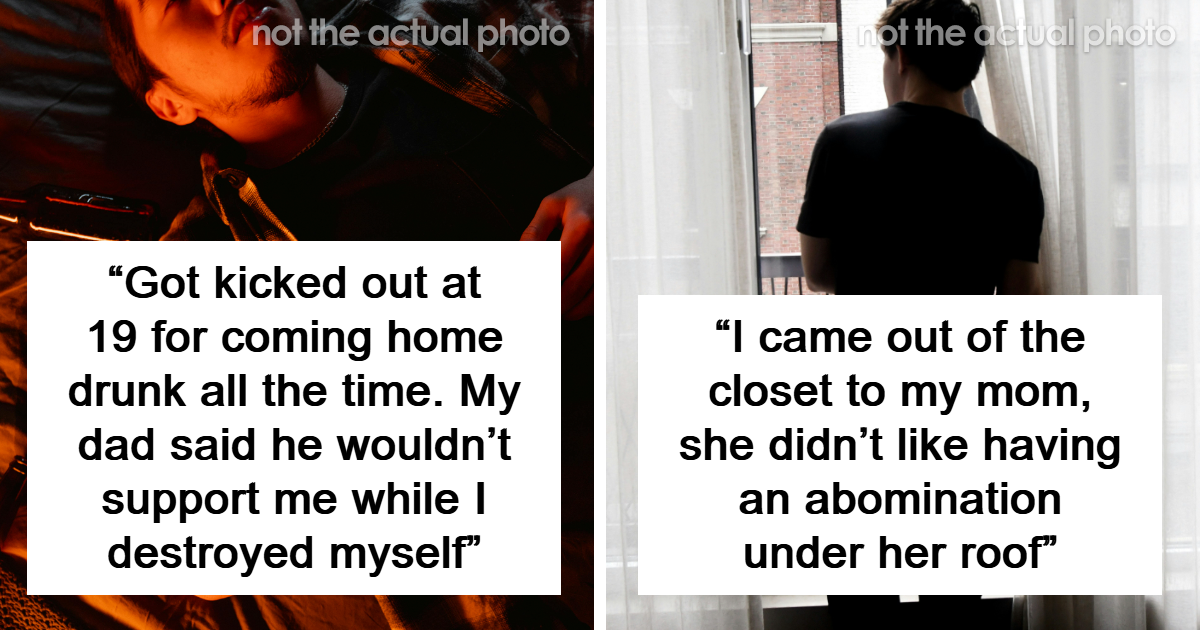
Family drama is one thing. Every family has slammed a door, staged a lecture, or delivered a speech that deserved its own dramatic soundtrack. But getting kicked out is not just “a rough patch” with extra yelling. It is a life-changing rupture. Once a parent turns home into a place a child cannot safely return to, the story stops being a private argument and starts becoming a housing crisis, an identity crisis, and often a trust crisis all at once.
That is the ugly truth hiding behind viral headlines about parents who tossed their kids out for being gay, getting pregnant, dating the “wrong” person, failing college, disobeying a stepfather, or simply not becoming the exact human their family ordered from the catalog of impossible expectations. The internet loves these stories because they are shocking, messy, and, frankly, impossible to scroll past. But beneath the clicky chaos lies a very real pattern: family conflict, rejection, and control are among the biggest reasons young people leave home or are forced out.
Some cases involve minors. Some involve young adults. Some happen in a single explosive moment. Others are slow-burn expulsions, where a kid is emotionally frozen out long before anyone actually says, “Pack your stuff.” Either way, the message is the same: You belong here only if you meet our conditions. And that is where the damage begins.
What These 30 Stories Really Reveal
Experts often separate ordinary rebellion from what pediatricians call “thrownaway” youth: young people who are told to leave, told to stay away, or prevented from returning home. That phrase sounds clinical, but the reality is painfully simple. Someone who should have been protected gets treated like a problem to be removed. Not exactly Hallmark material.
In real life, these situations tend to cluster into familiar categories: identity-based rejection, panic over sex and relationships, money fights, scapegoating in blended families, and households where untreated conflict or instability turns every disagreement into a five-alarm fire. So instead of treating these stories like random internet chaos, it makes more sense to read them as repeated patterns in American family life.
30 Times Parents Kicked Their Kids Out And What Each One Actually Means
Identity, Belonging, and Conditional Love
1. Kicked out for coming out. This is one of the most widely documented patterns in reporting and research. A child shares who they are, and instead of getting support, they get a sermon, a suitcase, or the front door. The message is not subtle: love is available, but only under false pretenses.
2. Kicked out for being transgender or nonbinary. These stories often come wrapped in language about “confusion,” “embarrassment,” or “house rules,” but the real issue is refusal to recognize a child’s identity. When home becomes a place where even your name is a battleground, leaving or being pushed out can become almost inevitable.
3. Kicked out because religion was used as a weapon. Plenty of families practice faith without cruelty. But in some homes, religion gets drafted into the role of bouncer. Suddenly, doctrine is less about spiritual guidance and more about who gets denied a bed.
4. Kicked out for “making the family look bad.” This is reputation panic in its purest form. The child is treated like a PR crisis rather than a person. Public image wins; private compassion loses by a mile.
5. Kicked out for not being “normal enough.” Maybe the issue is appearance, gender expression, or simply refusing to perform a version of masculinity or femininity that makes the adults comfortable. In these stories, conformity becomes rent.
6. Kicked out after years of emotional rejection finally turned physical. Some young people are not expelled in one cinematic blowup. They are iced out first, then ignored, then threatened, then told to leave. The eviction is just the final scene in a much longer production.
Sex, Dating, Pregnancy, and Moral Panic
7. Kicked out for dating the “wrong” person. Different race, different religion, different class, same family meltdown. These cases are rarely about “concern.” They are usually about control dressed up in respectable clothing.
8. Kicked out for having sex. Parents discover a relationship, panic, and respond as if grounding were too boring. The result is a punishment wildly disconnected from the alleged offense. Whatever lesson they wanted to teach gets buried under betrayal.
9. Kicked out for getting pregnant. Pregnancy should trigger planning, support, and medical care. In some families, it triggers banishment instead. The irony is brutal: a young person facing one of the most vulnerable moments of life is told to become independent immediately.
10. Kicked out for refusing purity culture rules. In these stories, sexuality is monitored like airport security. The second a child deviates from a narrow code, they are labeled immoral and treated as disposable.
11. Kicked out after a parent found messages, photos, or a secret relationship. The phone becomes evidence, and privacy becomes a crime scene. The punishment is less about safety and more about humiliation and control.
12. Kicked out for choosing a partner over family demands. This tends to happen with young adults whose parents cannot handle the idea that they are forming a separate life. Love becomes a loyalty test, and the parent decides there can be only one winner.
Money, Adulthood, and the “Failure to Launch” Wars
13. Kicked out for not earning enough fast enough. In a rough economy, plenty of young adults move back home. But some parents treat financial struggle as moral collapse. Instead of support, their child gets a lecture on bootstraps and a deadline.
14. Kicked out after becoming the family’s unofficial disappointment project. One AP-reported case in New York involved parents who went to court to remove their 30-year-old son after repeated letters and offers of money to leave. That story became national spectacle, but it also showed how quickly private family breakdown can turn into a legal battle when resentment replaces communication.
15. Kicked out for dropping out, failing classes, or changing career plans. Not every kid grows into the exact résumé their parents imagined. In high-control households, academic disappointment gets treated like a character defect.
16. Kicked out for unemployment during a period of instability. Losing a job is hard enough without your housing evaporating too. Yet some families translate “You need a plan” into “You need to leave by Friday.” Helpful? Not exactly.
17. Kicked out for not following a parent’s timetable for adulthood. Some parents believe adulthood begins the moment they get annoyed. No grace period, no guidance, no transition, just a dramatic announcement that childhood benefits have been canceled.
18. Kicked out after financial help was turned into leverage. Tuition, a car, rent-free living, even groceries can become tools of emotional blackmail. The child is not being supported; they are being managed. When they resist, the support vanishes.
Blended Families, Favoritism, and Scapegoats
19. Kicked out because a stepparent wanted them gone. These stories often sound eerily similar: conflict with a stepfather or stepmother escalates, the biological parent refuses to intervene, and the child becomes the easiest person to remove. The family chooses convenience over fairness.
20. Kicked out as the designated scapegoat. Every dysfunctional system likes a villain. In some homes, one child gets cast in that role permanently. They are blamed more, believed less, and punished faster than everyone else.
21. Kicked out while siblings were allowed to stay. Few things cut deeper than unequal treatment under the same roof. When one child gets support and another gets expelled, the message is not just rejection. It is ranked rejection.
22. Kicked out after exposing family secrets. Abuse, addiction, debt, infidelity, or violence often survive by silence. The child who speaks up gets framed as disloyal, dramatic, or “trying to ruin the family.” Translation: truth is not welcome here.
23. Kicked out because they would not play peacemaker anymore. Some kids are expected to soothe the adults, absorb the tension, and keep the household emotionally functioning. Once they stop doing unpaid therapy work, the family decides they are the problem.
24. Kicked out after years of favoritism finally exploded. These stories usually begin long before the eviction itself. One child gets grace, another gets scrutiny. Eventually, one bad argument becomes the excuse to formalize what the family has been signaling all along.
Homes in Crisis
25. Kicked out because addiction had hollowed out the household. When a parent is consumed by substance use, the home often becomes chaotic, unsafe, and unpredictable. Sometimes the child leaves to survive. Sometimes the parent pushes them out in the middle of the turmoil.
26. Kicked out because untreated mental health issues were turned into blame. A struggling teen or young adult may need evaluation, boundaries, and support. In some households, their symptoms are read only as disrespect. The answer becomes exile instead of care.
27. Kicked out after conflict turned violent or threatening. These are complicated cases because safety matters for everyone in the home. But even when separation is necessary, dumping a young person into chaos without a plan is not a strategy. It is a transfer of danger.
28. Kicked out after foster care, system involvement, or placement instability. For some youth, home was never sturdy to begin with. By the time they are “asked to leave,” the exit is really part of a longer chain of displacement involving institutions as much as family.
29. Kicked out because the adults gave up on communication. National Runaway Safeline guidance sounds almost embarrassingly simple: listen, validate, collaborate, keep the relationship bigger than the disagreement. Yet many families do the opposite, then act shocked when the crisis grows legs.
30. Kicked out because cruelty had become normalized. This is the story beneath the story. Maybe the stated reason was grades, attitude, curfew, or a boyfriend. But underneath it all, the household had learned to solve pain with humiliation. The expulsion was not an exception. It was the house style.
Why This Keeps Happening in American Families
There is no single explanation, but a few repeat offenders show up again and again. First, many parents confuse authority with ownership. They believe love gives them total control over identity, beliefs, relationships, and future plans. When a child resists, the parent experiences it as rebellion against the entire family order.
Second, shame is a powerful and deeply underrated force. Some parents are less concerned with what their child is experiencing than with what the neighbors, church members, relatives, or Facebook acquaintances might think. A child becomes a symbol. And symbols, unlike children, are easy to sacrifice.
Third, many households are already under stress from poverty, unstable housing, addiction, untreated mental health issues, or long-running conflict. In those homes, a revelation or argument does not create the crack in the foundation. It just finally makes the floor cave in.
And fourth, some parents truly mistake rejection for discipline. They think severe punishment will “teach a lesson,” restore authority, or force maturity. Research and frontline service providers suggest something much grimmer: being pushed out often increases housing instability, school disruption, exploitation risk, and long-term family estrangement. So no, this is not character-building. It is bridge-burning with extra paperwork.
The Damage Does Not Stop at the Front Door
Getting kicked out is rarely just a housing story. It is also a story about what happens to a person’s sense of safety, loyalty, and identity when home becomes conditional. Many people who go through this do not simply lose a room. They lose the idea that family is the place you can fall apart without being discarded.
That is why these stories echo for years. Adults who were thrown out as teens often remember tiny details with brutal clarity: the trash bags, the silence from siblings, the text that was never answered, the parent who watched and said nothing. Estrangement does not always begin with one catastrophic event, but it often hardens around one unforgettable one.
There are exceptions, of course. Some families reconcile. Some parents grow. Some children come back on firmer terms. But many never forget that the first lesson adulthood taught them was how to survive being unwanted by the people who were supposed to want them most.
500 Extra Words: The Real-Life Experiences Behind Stories Like These
What stands out in experience after experience is how ordinary the day often looks before everything changes. It is not always a dramatic movie scene with thunder outside and a perfectly timed lamp thrown across the room. Sometimes it is a Tuesday. Someone makes dinner. Someone asks a question. Someone finds a text, overhears a phone call, notices a haircut, reads a journal, opens a closet, or says the wrong thing at exactly the wrong time. Then the emotional temperature in the room changes so fast it feels like the oxygen got replaced.
People who have lived through being kicked out often describe the same split-screen feeling. On one side, there is panic: Where do I sleep? Who do I call? What do I take? How do I get through tomorrow? On the other side, there is disbelief so intense it almost feels silly. Surely this cannot actually be happening over this. Over a girlfriend. Over a boyfriend. Over being gay. Over missing curfew. Over not going to church. Over not wanting the career Dad picked in 2009. Over existing incorrectly in a house that claimed to be built on love.
Another common thread is how quickly family roles crystallize in the moment. One parent becomes the enforcer. One becomes the silent witness. A sibling disappears upstairs. An aunt texts later and says, “You know how they are.” That sentence may be one of the grimmest in the English language, right up there with “We need to talk.” Because “you know how they are” usually means the family already knew the behavior was possible. It was just your turn to be hit by it.
Then comes the strange afterlife of the event. Some parents rewrite history almost immediately. They insist the child “chose to leave.” They say nobody was really kicked out; there were merely “consequences.” They clean up the language to protect their conscience. Meanwhile, the child is sleeping on a couch, in a car, at a friend’s house, or in a shelter, learning that family storytelling and reality are often not on speaking terms.
But here is the part that matters most: many people who survive this kind of rejection build lives that are bigger, steadier, and kinder than the homes that pushed them out. They find chosen family. They learn boundaries. They become the kind of adults who do not confuse love with control. The damage is real, but so is the possibility of a future not ruled by that front door moment.
That may be the deepest lesson in all these stories. Being kicked out can alter the course of a life, but it does not get to define the full meaning of it. The cruelty belongs to the person who chose rejection. The survival belongs to the person who kept going.
Conclusion
The headline may sound outrageous, but the deeper pattern is painfully familiar. Across reported cases, research, and firsthand accounts, parents kick kids out for a surprisingly predictable set of reasons: identity, control, shame, money, family instability, and the refusal to separate “I disagree with you” from “you no longer belong here.” Once you see the pattern, the stories stop looking like isolated scandals and start looking like a serious social problem.
If there is one lesson experts keep repeating, it is this: the relationship has to matter more than the conflict. A family does not need to agree on everything to keep a child safe. But the moment safety becomes conditional, home stops being home. And that is when a family argument becomes something much harder to undo.