Some artists need a studio, a lighting rig, a grant, and three cups of courage before breakfast. Others need a sheet of paper, a pair of scissors, and the ability to look at a random sidewalk crack and think, “That could definitely be the beginning of a superhero landing.” That is the joyful magic behind 47 brilliant paper cutouts that perfectly interact with real lifea collection of clever visual scenes where flat paper characters, shapes, and silhouettes seem to jump straight into the physical world.
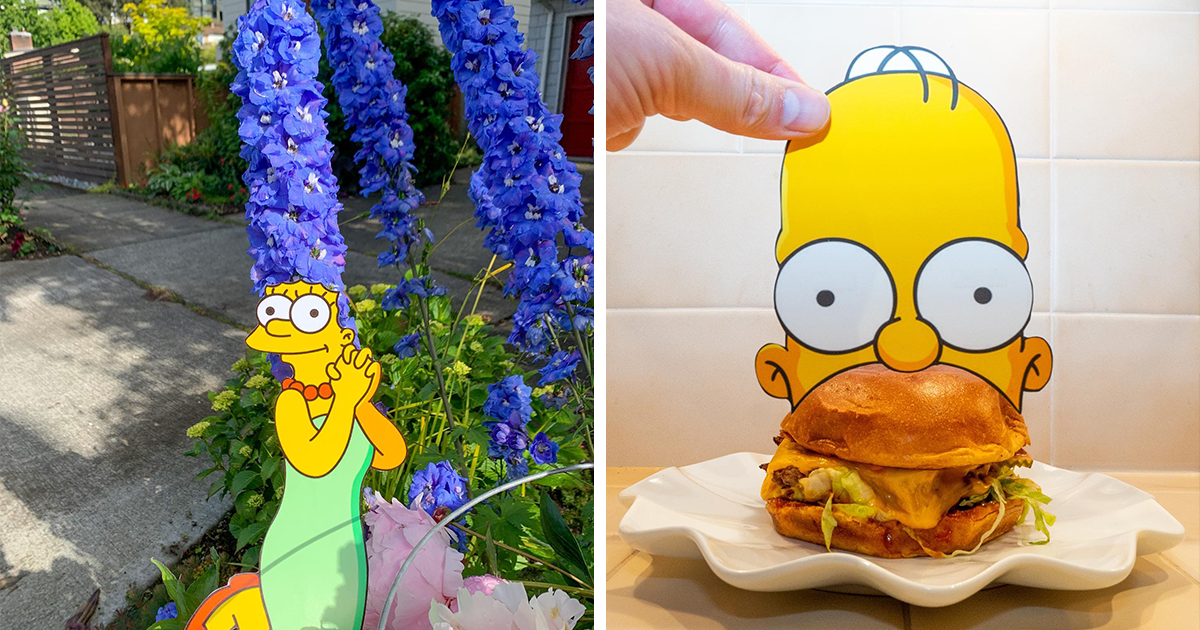
At the center of this playful style is Rudy Willingham, a Seattle-based visual artist and creator known for transforming everyday environments into tiny stages. His paper cutouts do not simply sit in front of a background; they complete it. A flower becomes hair. Steam becomes Santa’s beard. A cracked surface becomes the aftermath of a comic-book punch. A ferry, waterfall, lamp, berry branch, or street sign suddenly has a starring role. The result is part photography, part collage, part street art, and part “how did he even see that?”
What makes these creative paper cutouts so addictive is their simplicity. They remind us that imagination does not always require expensive tools. Sometimes the best special effect is a carefully cut silhouette held at the right angle while real life does the rest of the acting.
What Makes These Paper Cutouts So Brilliant?
The brilliance comes from the conversation between paper and place. A regular drawing on paper can be charming, but a cutout aligned with a real object becomes a visual joke, a tiny story, and an optical illusion all at once. These works succeed because the viewer understands both layers instantly: the paper is fake, the environment is real, and together they create a third thing that feels strangely believable.
This is why paper cutout art works so well online. It delivers the “aha!” moment fast. In one second, your brain sees a flower. In the next, it becomes a cartoon hairstyle. A school crossing sign becomes a turtle shell. A waterfall becomes a giant drink. The punchline arrives before you even realize you were reading a joke.
The Power of Forced Perspective
Many of these images rely on forced perspective, a photography technique that changes how size, distance, and position appear in a picture. When a small paper figure is placed close to the camera and carefully aligned with a larger background object, the two can look like they belong together. The artist is not just cutting paper; he is cutting into the viewer’s sense of scale.
In paper cutout photography, even a tiny shift matters. Move the paper half an inch, and the joke falls apart. Tilt the phone slightly, and the cartoon character no longer appears to grab the tree branch or ride the wave. That precision gives the work its handmade charm. It feels spontaneous, but it is secretly engineered.
Rudy Willingham’s Low-Fi Style in a High-Speed World
Rudy Willingham’s work stands out because it has a deliberately low-fi personality. Instead of hiding the handmade process, his cutouts celebrate it. The edges, the paper texture, the hand holding the design, and the real-world imperfections are part of the appeal. In an age when digital art can be polished until it looks like it was approved by twelve robots in a conference room, these paper scenes feel human.
That human quality is important. A viewer can imagine making something similar at home, even if the actual execution is much harder than it looks. The work feels accessible: paper, scissors, street, camera. But the concept is sharp. Willingham’s background in advertising and social media storytelling shows in the way each piece communicates quickly. Every cutout has a hook, a visual payoff, and a reason to pause the scroll.
His subjects often pull from pop culture, sports, movies, cartoons, music, and everyday life. That gives the art a built-in familiarity. When a beloved cartoon figure or recognizable character enters the scene, the audience brings its own memories to the image. The paper cutout becomes a bridge between personal nostalgia and the real world right in front of us.
Real Life as the Background Character
The most delightful part of these brilliant paper cutouts is that the world itself becomes a collaborator. The artist does not need to build an elaborate set. A garden, a wall, a market, a bathroom mirror, a car window, or a city sidewalk can become the scene. The trick is noticing what an ordinary object is secretly “trying” to be.
Blue flowers can become a dramatic hairstyle. A sunflower can become a lion’s mane. Steam rising from a cup or street vent can become a fluffy beard. A ceiling lamp can turn into a stage prop. A waterfall can become the perfect stream for a paper character to drink from. These examples work because the background is not random decoration; it is the engine of the joke.
This is where the art becomes more than a clever craft project. It trains the eye. After seeing enough of these cutouts, you may start looking at your own surroundings differently. A traffic cone could be a wizard hat. A puddle could be a portal. A refrigerator handle could be a tiny diving board. Congratulations: your imagination has been infected, and there is no known cure except making something.
Why Paper Cutout Art Feels So Refreshing
Paper cutout art feels refreshing because it is both simple and surprising. It does not ask the viewer to decode a complicated theory before enjoying it. You do not need a museum audio guide whispering, “The sandwich represents late capitalism.” You just see the image and smile.
At the same time, the simplicity hides smart visual thinking. The artist must understand shape, negative space, timing, color, scale, and composition. A successful cutout needs the right silhouette. If the shape is too detailed, it becomes confusing. If it is too plain, it loses personality. If the background is too busy, the paper disappears. If the background is too empty, the interaction feels weak.
The best paper cutouts strike a balance between clarity and surprise. They give the viewer just enough information to understand the scene while leaving room for delight. That is why a paper figure interacting with a real flower or sign can feel more memorable than a heavily edited digital image. The charm comes from the visible risk: one gust of wind, and the masterpiece may attempt to relocate to another zip code.
Examples of Creative Interactions That Make the Style Work
Although every piece in a collection of 47 cutouts has its own personality, the strongest examples tend to fall into a few creative categories. Some turn plants into costumes or body parts, such as flowers becoming hair, pom-poms, or animal features. Others use architecture and street objects as props, making signs, windows, cracks, poles, and walls behave like parts of a cartoon scene.
Another popular approach is pop-culture remixing. A familiar character can be placed into a real environment in a way that creates a new punchline. A superhero might appear to smash through a cracked surface. A musician might interact with a clock or market stall. A sports figure might be framed against a real-world object that completes the action. These scenes work because they combine recognition with reinvention.
There is also a wonderful category of “accidental nature theater.” Waterfalls, trees, clouds, steam, shadows, and plants are unpredictable, which makes them perfect partners. When a paper cutout lines up with a natural element, the final image feels alive. The background is not static; it has movement, texture, and mood.
The SEO-Friendly Lesson: Creativity Loves Constraints
For artists, content creators, photographers, and even marketers, Rudy Willingham’s paper cutout style offers a valuable lesson: constraints can make ideas stronger. Limited materials force creative decisions. A black paper silhouette must communicate instantly. A single background object must carry the concept. A short video or photo must deliver the story before the viewer scrolls away.
This is why the format works so well for social media. It is visual, fast, funny, and easy to understand without sound. It also feels personal. The viewer senses a real person walking around, noticing odd possibilities, cutting shapes by hand, and testing angles in public while strangers probably wonder whether performance art has finally reached the parking lot.
Great paper cutout photography proves that originality often comes from seeing familiar things in unfamiliar ways. The materials are ordinary. The result is not. That gap between simple ingredients and surprising outcome is exactly what makes the work shareable.
How to Try Paper Cutout Photography Yourself
You do not need to be a professional artist to experiment with paper cutouts that interact with real life. Start with a simple idea. Choose one object in your environmenta flower, mug, window, street sign, tree, lamp, or shadowand ask what it could become. Could it be hair? A hat? A monster mouth? A musical instrument? A movie scene?
Step 1: Choose a Strong Silhouette
Paper cutouts work best when the shape is recognizable. Think in outlines. A character profile, an animal head, a hand, a hat, a cape, or a simple object can read clearly against a background. Avoid tiny details unless the camera will be close enough to capture them.
Step 2: Use the Background as Part of the Story
Do not treat the real-world setting like wallpaper. Let it complete the joke. A cutout of a surfer needs a wave-like shape. A cutout of a singer might need a streetlight as a microphone. A paper chef could flip a real leaf like a pancake. The environment should feel essential, not accidental.
Step 3: Test Angles Like a Detective
Move around. Crouch. Raise the paper. Lower the paper. Rotate it. Your best shot may be hiding two steps to the left, where a branch suddenly becomes a dragon tail. This is the fun and mildly suspicious-looking part of the process.
Step 4: Keep the Editing Light
The handmade feel is part of the charm. Basic adjustments to brightness, contrast, and cropping are fine, but heavy editing can remove the magic. The viewer should feel that the interaction happened in-camera, even if it took a small army of patience to capture.
Why These 47 Paper Cutouts Connect With Viewers
The collection connects because it gives people permission to play. Adults are often trained to move through the world efficiently: answer emails, buy groceries, avoid stepping on suspicious sidewalk liquids. Paper cutout art interrupts that routine. It says, “Look again. The ordinary thing beside you might be ridiculous in the best possible way.”
That message has broad appeal. Kids enjoy the cartoon energy. Designers appreciate the composition. Photographers notice the perspective. Social media users love the quick payoff. Pop-culture fans enjoy the references. Even people who claim they are “not into art” can enjoy a paper character using a real-world object as a prop. It is art without a velvet rope.
Experience: What This Topic Teaches About Seeing the World Differently
Spending time with paper cutouts that interact with real life changes the way you look at ordinary places. At first, you may simply admire the cleverness. Then something odd happens: your brain starts searching for possibilities. A crack in the sidewalk is no longer just damaged concrete; it could be lightning from a wizard’s hand. A grocery store potato could become a desert monster. A row of flowers could become a chorus line. A hanging plant could become hair for a paper face. The world begins offering little invitations.
That is the real experience behind this style of art. It is not only about finished images; it is about practicing attention. When you try to make a paper cutout scene yourself, you quickly discover that the first idea is not always the best one. You may cut a tiny character, hold it in front of a wall, and realize the scale is wrong. You may find the perfect background, only for the wind to slap your paper figure into retirement. You may line up a brilliant shot, then a parked car, passing dog, or curious neighbor enters the frame like an unpaid actor. The process is funny, imperfect, and surprisingly satisfying.
It also teaches patience. The most effortless-looking cutout photos often require repeated attempts. Your hand has to stay steady. The camera must focus on the right layer. The background must remain visible. The lighting has to cooperate. The paper needs enough contrast to stand out. If the idea depends on a moving object, such as water, steam, traffic, or people, timing becomes everything. You are not just taking a picture; you are waiting for real life to hit its mark.
For creators, this is a valuable reminder that inspiration does not always arrive as a grand thunderbolt. Sometimes it appears as a weird shadow on a wall. Sometimes it is a flower that looks like hair. Sometimes it is a public sign begging to be turned into a cartoon turtle. The more you practice noticing, the more ideas you find. Creativity becomes less about forcing originality and more about staying awake to what is already around you.
There is also a social joy in this kind of work. A paper cutout scene can make strangers smile because it is easy to understand and hard to dislike. It does not demand a long explanation. It offers a small surprise. In a digital culture often filled with polished perfection, paper cutouts feel refreshingly approachable. They say, “You can make something wonderful with almost nothing.” That is a powerful message, especially for anyone who believes art requires expensive tools or formal permission.
The best takeaway from these 47 brilliant paper cutouts is simple: imagination is a habit. The more you use it, the more it shows up. Whether you are an artist, photographer, parent, teacher, blogger, designer, or simply a person with scissors and five spare minutes, this style invites you to turn the everyday world into a playground. You may not create a viral masterpiece on your first try, and yes, your first paper figure might look like it lost a fight with a printer. That is fine. The point is to look again, laugh a little, and let ordinary life become part of the artwork.
Conclusion
47 brilliant paper cutouts that perfectly interact with real life is more than a fun visual collection. It is a reminder that creativity can be light, clever, accessible, and deeply human. Rudy Willingham’s work shows how paper and real-world backgrounds can combine to create scenes that feel playful, surprising, and instantly memorable. With the right angle, a simple cutout can turn a flower into a hairstyle, a waterfall into a prop, or a street sign into a punchline.
In a world crowded with polished digital images, these handmade paper cutouts stand out because they preserve the joy of discovery. They invite viewers to slow down, notice the odd little possibilities around them, and maybe pick up a pair of scissors. After all, the next brilliant interaction might be hiding in your kitchen, your garden, or the suspiciously dramatic shadow under your coffee mug.