Note: This article discusses disturbing scenes from non-horror films for critical and analytical purposes only. It avoids graphic instructional detail while examining how filmmakers use torture scenes to create tension, reveal character, and challenge viewers.
Some movies wear their nightmares on the label. Horror films practically shake your hand at the door and say, “Welcome, we’ll be ruining your sleep tonight.” But non-horror movies? They can be sneakier. You sit down expecting a political thriller, a crime drama, a spy adventure, or an Oscar-winning historical epicand suddenly the film drops a torture scene so brutal your popcorn loses its will to live.
That is what makes messed-up torture scenes in non-horror movies so unforgettable. They do not arrive with haunted houses, masked killers, or creaky violins announcing, “Brace yourself.” Instead, they appear inside stories about spies, soldiers, gamblers, fathers, revolutionaries, and morally compromised people doing desperate things. The shock comes from contrast. A movie that is not technically horror can still make audiences grip the armrest like it owes them money.
Below, we explore some of the most disturbing torture scenes in non-horror films, why they work, why they bother us, and how they turn ordinary genre expectations into something far more uncomfortable.
Why Torture Scenes Hit Harder Outside Horror
In horror, viewers expect pain, fear, and survival. The genre gives permission for dread. Non-horror films often do the opposite: they build worlds that feel political, realistic, stylish, or emotionally grounded. When torture enters that world, it can feel less like entertainment and more like a moral alarm bell.
A spy movie torture scene asks whether loyalty has limits. A crime movie torture scene shows how power operates when nobody is watching. A historical drama uses bodily suffering to expose systems of oppression. A thriller may use torture to test how far “good” people will go when fear takes the steering wheel and ethics are stuffed in the trunk.
The most effective scenes are not merely about pain. They are about helplessness, performance, silence, complicity, and control. The camera may cut away or linger. The victim may scream or refuse. The torturer may act coldly professional, casually amused, or terrifyingly convinced that what they are doing is necessary. That is where the scene becomes disturbing: not only because something awful happens, but because the movie forces us to ask why we are still watching.
Reservoir Dogs: The Ear Scene That Danced Into Movie Infamy
Why It Is So Disturbing
Quentin Tarantino’s Reservoir Dogs is a crime thriller, not a horror movie, but try telling that to anyone who first saw Mr. Blonde alone with Officer Marvin Nash. The infamous warehouse scene, set to the upbeat sound of “Stuck in the Middle with You,” is a masterclass in tonal whiplash. It is cheerful, cruel, stylish, and deeply uncomfortable all at once.
What makes the scene so messed up is not just the violence. It is the casualness. Mr. Blonde does not behave like a man losing control. He behaves like someone entertaining himself during a slow afternoon. That disconnect between the jaunty music and the brutality creates a sickening sense of absurdity. The audience is not simply afraid of what happens next; we are unnerved by how little the torturer seems to care.
The scene also became legendary because Tarantino understands the power of suggestion. The camera famously does not need to show every detail for the audience to feel it. In fact, the imagination is often a far worse projectionist than any filmmaker. Thanks, brain. Very helpful.
Marathon Man: “Is It Safe?” And the Dentist Chair From Hell
Dental Anxiety, Weaponized
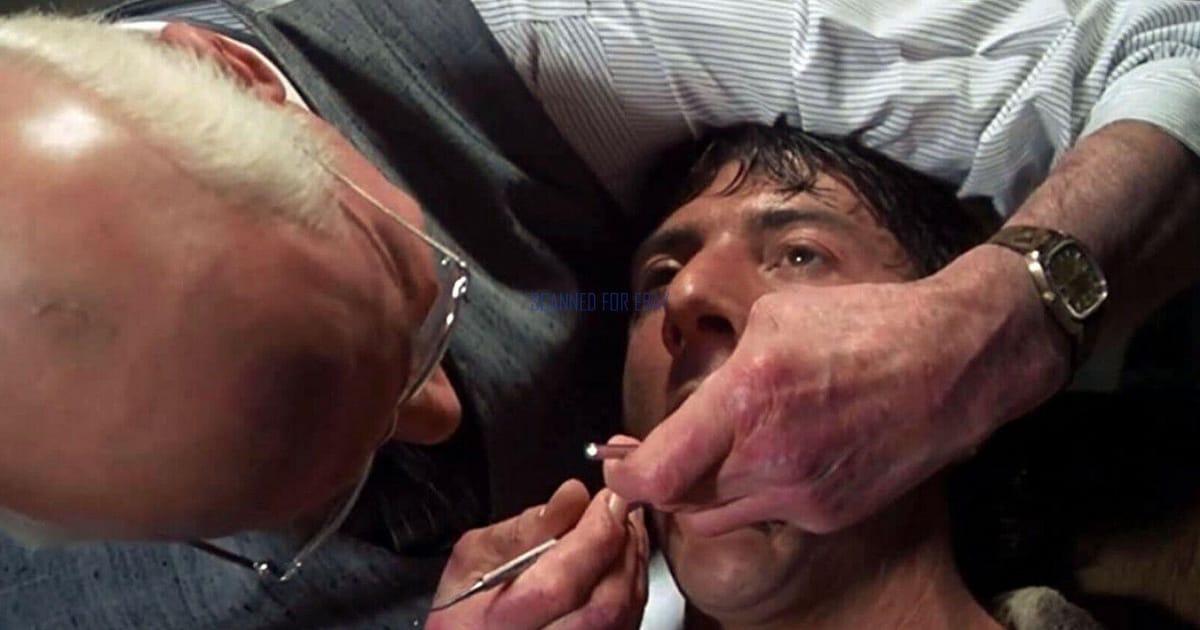
If a movie can make a simple dental checkup feel like a life-or-death negotiation, it has done something diabolically effective. John Schlesinger’s Marathon Man gave cinema one of its most infamous interrogation scenes when Nazi war criminal Dr. Christian Szell questions Babe Levy with the repeated line, “Is it safe?”
The scene is terrifying because it uses something ordinary. A dentist’s tools are not exotic weapons. They are familiar, clinical, and usually associated with mild dread, awkward small talk, and pretending you floss more than you do. Marathon Man turns that everyday discomfort into pure suspense.
Laurence Olivier’s performance as Szell is chilling because he does not need to rage. His calm precision makes the scene worse. Dustin Hoffman’s Babe has no idea what answer is expected of him, which adds a layer of psychological torture to the physical threat. He cannot save himself because he does not even understand the question. That is nightmare logic in a political thriller’s clothing.
Casino Royale: James Bond Finally Looks Vulnerable
When 007 Stops Being Untouchable
James Bond movies are famous for gadgets, tuxedos, luxury cars, and villains with suspiciously expensive interior design budgets. Casino Royale changed the tone by making Daniel Craig’s Bond raw, bruised, and genuinely breakable. The torture scene with Le Chiffre is one of the most unsettling moments in the entire franchise.
The setup is brutally simple: Bond is captured after winning the poker game, and Le Chiffre needs the password to recover the money. Instead of a giant laser, shark tank, or overly dramatic volcano lair, the scene is intimate, ugly, and stripped down. There is nowhere for Bond’s cool persona to hide.
What makes the scene memorable is Bond’s defiance. He jokes because humor is the only armor left. The moment does not make him look invincible; it makes him look stubbornly human. That was the point of Craig’s Bond. He bleeds, breaks, heals badly, and keeps moving. The scene is messed up because it drags a fantasy icon into a space where charm cannot save him.
Zero Dark Thirty: Torture as Political Shockwave
Not Just a Scene, But a National Argument
Kathryn Bigelow’s Zero Dark Thirty is a war and intelligence thriller about the hunt for Osama bin Laden, but its interrogation scenes sparked one of the most heated film debates of the 2010s. The movie depicts waterboarding, confinement, humiliation, and other brutal treatment as part of the CIA’s post-9/11 pursuit of information.
The controversy came from how viewers interpreted the film’s cause-and-effect structure. Did it merely portray torture as part of the historical landscape? Or did it imply that torture helped produce vital intelligence? That question turned a movie scene into a public ethics seminar, except with worse lighting and far more shouting.
The scenes are disturbing because they feel procedural. They are not presented as a villain’s private hobby or a gangster’s tantrum. They happen inside a system, under pressure, with people using professional language around inhumane acts. That bureaucratic chill is what makes Zero Dark Thirty so uncomfortable. The horror is not a monster. It is paperwork, policy, and people telling themselves they are doing what must be done.
Syriana: George Clooney’s Brutal Wake-Up Call
A Political Thriller With One Scene You Cannot Shake
Syriana is a dense geopolitical thriller about oil, intelligence, corporate interests, and the machinery of global power. Then comes the torture scene involving George Clooney’s CIA operative Bob Barnes, and the movie stops feeling like a complicated chessboard and starts feeling like a concrete room with no exit.
The scene is hard to watch because it strips away the abstractions. Up to that point, the film deals in meetings, alliances, money, and influence. Torture makes the consequences physical. Clooney’s character, who has operated inside morally murky systems, suddenly becomes the body on which those systems write their message.
It is a classic non-horror shock: the film is not designed to scare you in the traditional sense, but the scene makes the political personal. It says, “All those shadowy decisions? They eventually land on someone’s skin.” Not exactly the slogan you put on a travel mug, but painfully effective.
Casino: The Head-in-a-Vise Scene
Scorsese Shows Mob Power Without Romance
Martin Scorsese’s Casino is a sprawling crime drama about Las Vegas, organized crime, greed, glamour, and rot. It also contains a torture scene involving a vise that has lived rent-free in viewers’ memories for decades.
The scene is disturbing because it attacks the myth of the “cool gangster.” Scorsese’s mobsters may wear sharp suits and speak in quotable bursts, but their power is built on terror. The vise scene is not graceful. It is not romantic. It is not the cinematic equivalent of a fedora and a smooth jazz soundtrack. It is blunt, ugly, and designed to show that organized crime is not charming when the bill comes due.
That is why it matters in the film. Casino is full of glittering surfaces: neon lights, money rooms, casino floors, jewelry, cars, and carefully managed appearances. The torture scene reveals what holds the glitter in place. Under the shine is fear.
Three Kings: A War Satire Turns the Tables
From Heist Comedy to Moral Reckoning
David O. Russell’s Three Kings begins with a strange, satirical energy. It is a Gulf War movie that mixes action, absurd comedy, political critique, and heist-film momentum. Then Troy Barlow, played by Mark Wahlberg, is captured and interrogated, and the movie shifts into something much darker.
The torture scene stands out because it does not simply present the Iraqi interrogator as a cartoon villain. Instead, the scene complicates the moral field. The torturer speaks from grief, rage, and trauma. He forces Troy to confront the human consequences of American foreign policy, turning a standard “captured soldier” scene into a bitter exchange about power, loss, and hypocrisy.
That does not make the torture acceptable. It makes the scene more disturbing because it refuses easy emotional sorting. The audience cannot file everyone into neat boxes labeled “hero,” “villain,” and “guy who should have stayed home.” In Three Kings, even pain comes with politics attached.
Slumdog Millionaire: A Fairy Tale That Opens With Torture
The Brightest Movie With One of the Darkest Starts
Slumdog Millionaire is often remembered as an energetic, romantic, destiny-driven crowd-pleaser. It won major awards, made audiences cry happy tears, and ended with a dance number. Yet the movie opens with Jamal Malik being tortured by police who believe he cheated on a game show.
That opening is jarring because it clashes with the film’s later fairy-tale rhythm. Jamal is not a spy, soldier, or criminal mastermind. He is a young man whose knowledge comes from hardship, memory, and survival. The police torture him because they cannot believe someone from his background could know the answers honestly.
The scene is messed up because it exposes class prejudice as violence. The authorities do not merely suspect Jamal; they refuse to imagine his intelligence. His body becomes the place where their disbelief is enforced. For a movie so full of color, movement, music, and romance, that opening remains a dark reminder of the cruelty beneath the spectacle.
Prisoners: When a Desperate Father Becomes the Monster
The Most Uncomfortable Kind of Vigilante Thriller
Denis Villeneuve’s Prisoners is not horror, though its atmosphere is damp, gray, and heavy enough to make your living room feel like it needs a dehumidifier. The film follows Keller Dover, played by Hugh Jackman, after his daughter and another child go missing. When Keller believes a suspect knows more than he admits, he abducts and tortures him.
The scene is agonizing because Keller is not introduced as a villain. He is a terrified father. The film makes us understand his panic without giving us permission to endorse what he does. That moral trap is what makes Prisoners so effective. Viewers may feel anger, grief, and desperation alongside Keller, but the torture forces a terrible question: at what point does love become brutality?
Unlike revenge fantasies that pump the brakes only after the audience has cheered, Prisoners makes the act feel spiritually poisonous. Keller’s violence does not cleanse him. It corrodes him. The movie understands that desperation can be sympathetic and horrifying at the same time.
12 Years a Slave: Historical Torture Without Escape
When the Camera Refuses Comfort
Steve McQueen’s 12 Years a Slave is a historical drama, not a horror film, but some of its scenes are more devastating than anything in conventional horror because they are rooted in real human cruelty. The whipping of Patsey is one of the most painful sequences in modern cinema.
The scene is not built for thrills. It is built to deny comfort. McQueen’s direction often forces the viewer to sit with the duration of suffering rather than escape through fast cutting. The result is not entertainment in any easy sense. It is confrontation.
What makes this scene so important, and so difficult, is that the violence is not random. It is part of a system. Torture here is not a villain’s eccentric hobby; it is a method of domination within slavery. The film understands that physical violence was inseparable from psychological control, economic exploitation, and the deliberate destruction of personhood.
This is where non-horror cinema can become more disturbing than horror. Monsters in horror are often imaginary. The violence in 12 Years a Slave points toward history. There is no comforting distance.
Braveheart: The Execution That Became Myth
Heroic Defiance Under Extreme Pain
Mel Gibson’s Braveheart is a historical epic loaded with battles, speeches, betrayals, and enough blue face paint to make a cosmetics aisle nervous. Its final torture and execution scene, however, shifts the film from battlefield spectacle to martyrdom.
William Wallace’s public suffering is staged as both punishment and political theater. The authorities want him to beg, submit, and serve as an example. Instead, his refusal transforms the scene into a symbol of resistance. Whether one debates the film’s historical accuracy or its Hollywood-sized liberties, the emotional structure of the scene is clear: torture is used to break a body, but the story insists it cannot break the idea attached to that body.
The scene is messed up because it mixes agony with inspiration. That combination can be powerful, but also uncomfortable. Viewers are moved by Wallace’s defiance while also being asked to watch his suffering become legend. The film turns pain into a national myth, and that is both stirring and uneasy.
What These Scenes Have in Common
They Are About Control, Not Just Pain
The most memorable torture scenes in non-horror movies are rarely just about physical harm. They are about control. Someone wants information, obedience, confession, revenge, humiliation, or ideological victory. Torture becomes a language used by people who have run out of moral language.
In Marathon Man, the question matters less than the power behind it. In Reservoir Dogs, Mr. Blonde’s cruelty reveals the terrifying emptiness of sadism. In Prisoners, torture becomes a desperate father’s attempt to impose order on chaos. In Zero Dark Thirty, the scenes force viewers to consider how institutions normalize brutality. In 12 Years a Slave, torture is inseparable from an entire system of human ownership.
These scenes also remind us that non-horror movies can disturb us precisely because they do not offer the release valves of horror. There may be no monster to defeat, no final girl, no sunrise after the nightmare. Sometimes the person causing pain is a government agent, a parent, a soldier, a mobster, a hero, or a man in a nice suit. That is a different kind of frightening.
Why Filmmakers Use Torture Scenes
Torture scenes are risky. Used carelessly, they can become cheap shock value or emotional manipulation. Used thoughtfully, they can reveal character, expose systems, and challenge the audience’s assumptions. The difference lies in purpose.
A strong scene asks more than “How much can we show?” It asks, “What does this reveal?” Does it change the victim? Does it expose the torturer? Does it challenge the audience’s loyalty? Does it deepen the film’s moral argument? If the answer is no, then the scene may be little more than grim decorationand nobody needs throw pillows made of trauma.
The best non-horror torture scenes are disturbing because they matter to the story. They alter the emotional temperature of the film. They reveal what characters believe when social rules disappear. They make viewers uncomfortable not only with violence, but with the logic used to justify it.
Viewer Experience: Why These Scenes Stay With Us
Watching messed-up torture scenes in non-horror movies is a strange experience because they often arrive when your defenses are down. You might be invested in a spy plot, a historical struggle, a crime empire, or a missing-child mystery. Then suddenly the film narrows into a room, a chair, a question, a scream, or a silence. The big story becomes painfully intimate.
One reason these scenes linger is that they make us aware of our own spectatorship. During an action scene, audiences often know how to respond: cheer, gasp, enjoy the choreography, admire the stunt work. During a torture scene, the response is murkier. Are we supposed to look away? Are we supposed to judge? Are we being implicated in the desire for answers? The discomfort comes partly from not knowing where to place ourselves.
Another reason they hit hard is the collapse of genre comfort. In Casino Royale, Bond is supposed to be the coolest person in the room. When he is tortured, the fantasy cracks. In Prisoners, Keller Dover is a grieving parent, and the film makes his pain understandable before showing how monstrous his choices become. In Slumdog Millionaire, the bright promise of destiny is introduced through police brutality. These scenes stay with us because they contaminate the tone around them. Afterward, the movie cannot feel exactly the same.
There is also the issue of realism. Horror violence can be extreme, but it often comes with supernatural or stylized distance. Non-horror torture scenes frequently feel closer to institutions and histories we recognize: war, policing, organized crime, slavery, espionage, imprisonment, political punishment. That proximity makes them harder to compartmentalize. A ghost can be dismissed when the lights come on. A scene about state power, racial violence, or moral panic follows you into the parking lot.
For many viewers, these scenes become personal memory markers. People remember where they were when they first saw the dental scene in Marathon Man. They remember the awful silence around the warehouse in Reservoir Dogs. They remember the ethical nausea of Zero Dark Thirty or the unbearable duration of 12 Years a Slave. These are not scenes most people casually rewatch while folding laundry. They are scenes people discuss, debate, avoid, or warn friends about with the seriousness of someone describing a dangerous hiking trail.
The experience also depends on trust. Viewers can endure difficult material when they believe the filmmaker has a reason for showing it. Steve McQueen’s unflinching approach in 12 Years a Slave feels connected to historical witness. Villeneuve’s torture scenes in Prisoners feel tied to the corrosion of grief and vigilante certainty. But when a movie seems to use torture merely to prove how “edgy” it is, audiences can sense the emptiness. Nobody wants to be emotionally mugged by a screenplay wearing sunglasses indoors.
That is why the best analysis of these scenes asks not only whether they are disturbing, but whether they are responsible. Do they humanize the victim? Do they question the torturer’s logic? Do they reveal something ugly about power? Do they leave space for moral reflection? Or do they simply turn suffering into spectacle?
Ultimately, messed-up torture scenes in non-horror movies remain powerful because they break the contract we thought we signed. We did not come for horror, yet we encountered something horrifying. And sometimes that is the point. These scenes remind us that horror is not limited to monsters, curses, or masked killers. Sometimes horror is a man with a badge, a gangster with a tool, a father with a locked room, or a system that has convinced itself cruelty is practical.
Conclusion: The Scariest Scenes Are Not Always in Horror Movies
The most messed-up torture scenes in non-horror movies prove that genre labels only tell part of the story. A crime drama can horrify. A spy thriller can make audiences wince. A historical epic can force viewers to confront suffering with no supernatural filter. A political film can turn a single interrogation into a national argument.
What separates the unforgettable scenes from the merely exploitative ones is meaning. Violence alone fades. But violence tied to character, power, history, or moral contradiction sticks. That is why viewers still talk about Reservoir Dogs, Marathon Man, Casino Royale, Zero Dark Thirty, Prisoners, 12 Years a Slave, and other non-horror films that dared to disturb us without calling themselves horror.
These scenes are difficult, sometimes controversial, and often impossible to forget. They are not pleasant viewing, but they can be powerful storytelling when handled with purpose. Just maybe do not schedule a dentist appointment immediately after Marathon Man. That is not film criticism. That is self-preservation.