Buying fewer products sounds like a punishment invented by someone who alphabetizes their spice rack for fun. No extra throw pillows? One coffee maker instead of a coffee maker, espresso machine, milk frother, cold-brew tower, and countertop device that communicates exclusively through blinking red lights? How bleak.
Yet living with less space often produces an unexpected result: shopping becomes easier, faster, and strangely more enjoyable. Instead of buying five acceptable objects, you can focus on finding one genuinely useful item. Instead of decorating a room by slowly filling every available surface, you can let the room breathe. Your house stops behaving like an underfunded warehouse, and your possessions are finally required to earn their keep.
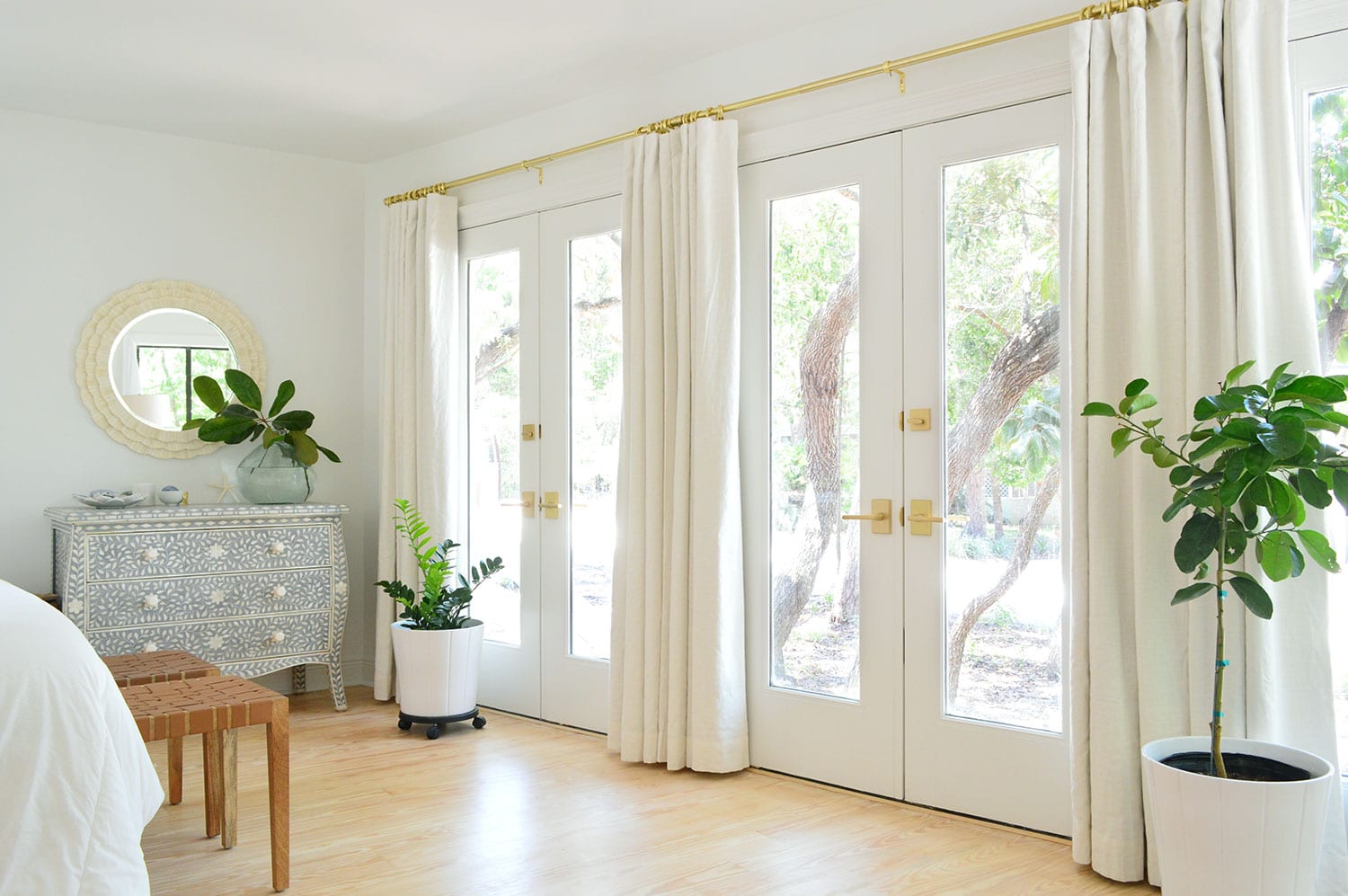
The title “A Funny Byproduct Of Having To Buy Fewer Products” originated with a Young House Love podcast episode about downsizing. While shopping for curtains and blinds, the hosts realized that a smaller home did not merely require fewer window treatments. It also removed much of the cost, comparison, repetition, and decision-making that had accompanied decorating larger houses. The practical limitation created an unexpected sense of freedom.
The Joke Hidden Inside the Limitation
At first, “you need fewer things” does not sound like good news. It sounds like the polite version of “there is nowhere to put that.” But a space limitation can function like a helpful editor. It cuts repetition, removes weak choices, and prevents your home from becoming a three-dimensional version of an overstuffed email inbox.
Imagine furnishing a house with twelve windows. You may need curtain rods, brackets, rings, panels, shades, and blackout liners for nearly every opening. Before long, you are comparing forty-seven shades of off-white and wondering whether “natural flax” is meaningfully different from “relaxed oatmeal.”
Now imagine furnishing a smaller home with five windows. You still need privacy and light control, but the project is less intimidating. A higher-quality curtain that once seemed expensive may suddenly fit the budget because you need four panels instead of fourteen. Installation takes an afternoon rather than becoming a family legend passed down through generations.
The funny byproduct is not simply that you spend less. It is that spending becomes more deliberate. Quantity stops being the main problem, allowing quality, usefulness, and personal taste to receive more attention.
Why a Smaller Home Changes the Way You Shop
Downsizing does more than reduce square footage. It changes the rules of ownership. Every new purchase must answer a few uncomfortable questions: Where will it live? What will it replace? How often will it be used? Is it worth cleaning, storing, moving, repairing, and eventually disposing of?
Those questions sound strict, but they can prevent a surprising amount of accidental consumption.
Every Purchase Must Audition for a Role
In a large home, an unnecessary product can disappear into a closet and avoid accountability for several years. In a small home, the same product will be sitting on the kitchen counter, blocking the outlet and silently judging you by Tuesday.
Limited storage makes vague purchases less attractive. A single-purpose avocado slicer may struggle to justify its existence when a regular knife already performs the job without demanding its own drawer. A decorative basket is less charming when you realize you are buying it mainly to hide several previous purchases.
This does not mean every object must be a joyless survival tool. Art, books, plants, and sentimental items can deserve space because they make a home feel personal. The point is that ownership becomes intentional rather than automatic.
You Stop Buying Duplicates “Just in Case”
Extra space encourages backup culture. People buy backup towels, backup lamps, backup serving trays, and occasionally a backup chair for guests who have not visited since the first season of a television show nobody remembers.
In a smaller home, duplicates become visible. You discover that three sheet sets are plenty, one basic tool kit handles most repairs, and twelve coffee mugs may be ambitious for a household containing two adults and a dog with no interest in beverages.
Reducing duplicates also reveals what you actually use. The preferred frying pan gets selected every morning, while the other four remain stacked underneath it like kitchen interns who have never been assigned a project.
You Can Spend More Carefully on Fewer Items
Buying less does not always meanewer Items
Buying less does not buying the cheapest option. It can mean concentrating your budget on fewer, better-performing products.
Suppose you have $600 available for window treatments. Covering fifteen windows may force you toward the lowest-cost panels and hardware. Covering five windows gives you more room to consider durable fabric, effective blackout lining, smooth hardware, or custom sizing where it genuinely matters.
This “better, not bigger” preference also appears in the housing market. U.S. home buyers have increasingly shown interest in smaller, more personalized homes, and downsizing can reduce spending on utilrch2turn816538search5turn816538search20
The Mental Benefit of Owning Less
A home full of objects creates more than physical clutter. It creates visual information. Every box, cable, bottle, stack, and unfinished project competes for attention. You may consciously ignore the pile near the door, but your brain has already noticed it, categorized it, and filed a tiny complaint.
Psychologists have linked cluttered home environments with stress, anxiety, and difficulty concentrating. Research involving home descriptions and daily cortisol patterns has also suggested that people who experience their homes as stressful or unfinished may receive less restorative benefit from being there. Princeton attention research further explains that visual clutter competes with relevant infarch2turn822649search3turn822649search7
Fewer purchases help at the beginning of the clutter cycle. Decluttering is useful, but not bringing an unnecessary object home is even easier. You do not have to organize, donate, recycle, sell, or emotionally negotiate with something you never bought.
Fewer Objects Mean Fewer Open Loops
Possessions often arrive with invisible tasks attached. Clothing must be washed. Appliances require cleaning. Furniture needs dusting. Electronics need charging and updating. Decorative objects must be moved every time you wipe the surface beneath them.
Each task may be tiny, but dozens of tiny tasks gather into a background hum of maintenance. Buying fewer products reduces the number of things asking for attention. Your Saturday can then contain something more exciting than locating the instruction manual for a waffle maker you used once.
Fewer Choices Can Make Decisions Easier
The relationship between choice and happiness is complicated. Some research suggests consumers enjoy broad selections, while other studies find that large assortments can increase search costs, indecision, or choice deferral under certain conditions. In daily life, the practical lesson is not that choice is bad. It is that comparing endless near-identical products can consume time withourch2turn830510search6turn830510search25
When your goal changes from “find enough items to fill the room” to “find one item that solves the problem,” shopping becomes more focused. You can establish three or four criteria, select the best match, and leave the store before becoming emotionally invested in the difference between brushed brass and champagne bronze.
The Financial Freedom of Buying Fewer Products
The obvious financial benefit is lower spending. The less obvious benefit is that buying less improves the usefulness of your budget.
Money that once disappeared into small household purchases can be redirected toward emergency savings, debt repayment, travel, hobbies, education, home repairs, or higher-quality essentials. A $25 impulse purchase may seem harmless, but four such purchases each week add up to $5,200 per year.
A spending plan does not have to eliminate every pleasure. It simply gives your money a job before advertising gives it one. The Consumer Financial Protection Bureau recommends reviewing spending habits, identifying impulse-shopping patterns, setting achievable goals, and creating prch3turn816538search10turn816538search16
Buying fewer products also reduces replacement mistakes. When you pause before purchasing, you are more likely to check dimensions, read warranty terms, compare materials, and confirm that the item works with what you already own. One researched purchase is usually cheaper than buying the wrong product, returning it late, and eventually purchasing the correct one anyway.
The Environmental Side Effect
Every product has a life before and after it reaches your home. Raw materials must be extracted, processed, manufactured, packaged, transported, and eventually discarded or recycled. Buying fewer products reduces demand across that chain.
The Environmental Protection Agency places source reduction and reuse above recycling in its waste-management hierarchy. In plain English, avoiding unnecessary waste is generally more effective than trying to recycle it after it exists. The EPA also recommends maintaining products, repairing them, buying used, choosing reusable goods, and borrowingh12turn822649search20turn822649search32
This is useful because “eco-friendly shopping” can become another excuse to shop. A reusable bottle is beneficial when it replaces disposable bottles. A collection of seventeen reusable bottles is simply a plastic hydra wearing inspirational slogans.
The greenest product is often the one you already own, followed closely by the one you borrow, repair, or buy secondhand.
How to Buy Fewer Products Without Becoming Miserable
Buying less should make life easier, not turn every trip to the store into a moral courtroom drama. The goal is not deprivation. The goal is to eliminate purchases that create more work than value.
1. Create a Space Budget
Give categories a physical limit. Books must fit on one bookcase. Shoes must fit on one rack. Kitchen appliances must fit inside the assigned cabinet or on a defined section of the counter.
When the space is full, adding something requires removing something. This transforms storage from an abstract future problem into a visible present decision.
2. Use a Replacement Rule
Before buying a new item, decide whether it replaces an existing one. A new jacket can replace a worn jacket. A better blender can replace the blender that smells faintly electrical whenever it encounters frozen fruit.
This rule prevents categories from quietly multiplying.
3. Add a Waiting Period
Wait 24 hours for small nonessential purchases and several days for larger ones. Save the product instead of immediately checking out.
Many impulses disappear once the initial excitement fades. The product you urgently needed at 11:48 p.m. may look suspiciously like clutter by breakfast.
4. Identify the Exact Problem
Do not begin with the product. Begin with the problem.
Instead of saying, “I need storage bins,” say, “The children’s art supplies are difficult to access and put away.” The solution might be bins, but it might also be removing dried markers, combining materials, or repurposing a drawer.
Buying a container without reducing the contents is not organizing. It is giving clutter a tiny apartment.
5. Favor Flexible Products
Items that perform several functions are especially valuable in small homes. A dining table can serve as a desk. An ottoman can provide seating and storage. A bench can work in an entryway today and at the end of a bed later.
Flexible products adapt when your needs change, reducing the likelihood that you will replace them during every minor life transition.
6. Borrow Before You Buy
Some objects are necessary for only a few hours: carpet cleaners, specialty tools, folding tables, camping equipment, or oversized serving dishes. Borrowing or renting allows you to use the item without storing it for the other 364 days of the year.
7. Spend on Experiences Deliberately
Reducing material purchases can create room for experiences. Research from Cornell has repeatedly found that experiential purchases often provide more lasting satisfaction than material purchases, partly because experiences become connected to identitych7turn830510search11turn830510search23
That does not mean every spare dollar must fund a dramatic vacation. A cooking class, concert, museum visit, picnic, camping weekend, or dinner with friends can deliver enjoyment without permanently occupying a shelf.
What Buying Less Does Not Mean
Buying fewer products is not the same as refusing to buy anything. A low-quality object that constantly frustrates you is not automatically virtuous because it is old. Keeping broken furniture, uncomfortable shoes, or a vacuum that merely redistributes dust does not prove commitment to simplicity.
It also does not mean that everyone needs the same number of possessions. A home baker may use several specialized pans every week. A musician may reasonably own multiple instruments. A large family needs more dishes, towels, and seating than a person living alone.
The useful question is not, “Do I own too many things compared with someone on the internet?” It is, “Do my possessions support the way I actually live?”
Experience Notes: What Buying Fewer Products Feels Like in Real Life
The first stage of buying less is often less glamorous than social media suggests. There is no cinematic moment in which sunlight enters the room while you peacefully thank an old extension cord for its service. Mostly, you stand in a closet holding a mysterious cable and wondering whether throwing it away will cause the entire house to stop working.
The process becomes more interesting when you apply it to new purchases. Consider a typical attempt to improve a bedroom. The old approach begins with inspiration photos and quickly produces a shopping list: curtains, rods, new bedding, matching lamps, decorative pillows, a bench, framed prints, baskets, candles, and perhaps a large plant that will spend its final days beside a window it does not enjoy.
The buy-fewer approach begins with observation. What is actually wrong with the room? Perhaps morning light interrupts sleep, clothing collects on a chair, and the overhead bulb feels like an interrogation lamp.
Those problems suggest three targeted changes: effective blackout curtains, hooks or a hamper for clothing, and a warmer light source. Suddenly, the project is smaller. Because the list is shorter, each decision receives more attention. You measure the windows twice. You choose curtain panels long enough to hang properly. You select a lamp that works with the furniture already in the room.
The surprising reward arrives after the purchases. The room feels finished even though you bought less. In fact, it may feel finished because you bought less. There are fewer colors competing for attention, fewer surfaces to style, and fewer objects that seem to demand a coordinating friend.
The same effect appears in the kitchen. Imagine deciding not to buy another appliance until you have used every existing appliance several times. You rediscover the slow cooker behind the mixing bowls. You learn that the toaster oven can reheat leftovers, toast bread, roast vegetables, and prevent the main oven from turning the kitchen into a tropical destination in July.
You may also notice which products deserve replacement. The cutting board that slides across the counter is not a charming example of frugality; it is a low-budget action sequence waiting to happen. Buying fewer things gives you permission to replace genuinely poor tools with better ones because your budget is no longer being nibbled to death by novelty gadgets.
There is an emotional adjustment too. Shopping often provides anticipation, entertainment, and the feeling of progress. When you reduce it, an empty space may appear in your routine. You might reach for your phone during a dull evening and realize you have opened a shopping app without needing anything.
Replacing that habit matters. Make a wish list instead of a purchase. Take a walk. Repair something. Rearrange a shelf using objects already in the house. Invite someone over. Cook a recipe from the neglected cookbook that has spent three years serving as decorative architecture.
After several weeks, the definition of a successful shopping trip begins to change. Success is no longer leaving with several bags. It may mean buying one item that fits perfectly, finding the needed product secondhand, borrowing a tool, or leaving without purchasing anything because nothing met the requirements.
That last outcome can feel oddly satisfying. You did not fail to find something. You successfully avoided bringing home a mediocre object that would have required storage, maintenance, and an eventual awkward breakup.
The funny byproduct of buying fewer products is that you often become less interested in products altogether. You notice the room, not the decorations. You enjoy the meal, not the number of kitchen gadgets involved. You remember the gathering, not whether every napkin matched.
Eventually, less stops feeling like an absence. It begins to feel like available space: space in the cabinet, space in the budget, space on the calendar, and space in your attention.
Conclusion: Fewer Products, More Breathing Room
Having to buy fewer products may begin as a practical consequence of downsizing, budgeting, or limited storage. The deeper benefit is freedom from unnecessary decisions and obligations.
Fewer purchases can mean fewer duplicates, fewer returns, fewer repairs, fewer surfaces to clean, and fewer objects waiting to be organized. They can also make room for better-quality essentials, meaningful experiences, financial goals, and a home that reflects your life instead of your shopping history.
The goal is not to own the smallest possible number of things. It is to own an appropriate number of useful, enjoyable things without allowing consumption to become a permanent home-improvement project.
After all, the best funny byproduct of buying less is discovering that the missing product was rarely the missing ingredient.
Note: This original article synthesizes established research and practical guidance on downsizing, consumer decision-making, household clutter, personal finance, experiential spending, and waste reduction.
{

  "meta_title": "#179: Buy Fewer Products, Gain More Freedom",

  "meta_description": "Discover the surprising freedom of buying fewer products, from easier decorating and lower costs to less clutter, stress, and decision fatigue.",

  "sapo": "What happens when a smaller home forces you to buy fewer products? Surprisingly, life may become easier. Inspired by a memorable downsizing realization involving curtains and blinds, this article explores how limited space can improve purchasing decisions, reduce clutter, lower household costs, and free up time. Learn why fewer possessions can mean better-quality choices, less maintenance, a calmer home, and more money for meaningful experiences. You will also find practical strategies for avoiding duplicates, slowing impulse purchases, setting storage limits, borrowing rarely used items, and choosing flexible products that earn their place.",

  "keywords": [

    "buy fewer products",

    "downsizing benefits",

    "intentional shopping",

    "minimalist home",

    "reduce household clutter",

    "mindful spending",

    "simple living"

  ]

}/pre>