There is a peculiar economic ritual that takes place whenever the data begins to improve. Inflation slows, wages rise, unemployment remains manageable, consumers keep spendingand everyone announces that the economy is a flaming shopping cart rolling downhill.
This does not necessarily mean the public is uninformed, ungrateful, or addicted to misery. It means economic life is experienced through grocery receipts, rent payments, mortgage rates, insurance renewals, workplace rumors, and the suspiciously expensive sandwich at the airport. Nobody stands at the checkout counter and whispers, “At least the quarterly gross domestic product report was encouraging.”
The idea behind animal spirits helps explain this disconnect. Economics may be measured with numbers, but markets and consumer behavior are powered by confidence, fear, stories, expectations, and occasionally the financial equivalent of a toddler refusing to wear shoes.
What Are Animal Spirits in Economics?
The phrase “animal spirits” is commonly associated with economist John Maynard Keynes. It describes the emotional and psychological forces that influence financial decisions when the future cannot be calculated with certainty.
People do not always invest, spend, hire, save, or vote after calmly examining a spreadsheet. They often act because they feel optimistic, threatened, excluded, confident, jealous, relieved, or convinced that everybody else knows something they do not.
The November 2023 Animal Spirits episode titled “People Love to Complain” explored this tension through subjects including inflation, real wages, consumer technology, the labor market, housing prices, retirement spending, and withdrawals from workplace retirement accounts. The topics shared a common theme: objective improvement can coexist with genuine dissatisfaction.
That is why complaining should not be dismissed as meaningless noise. Complaints contain information. The challenge is that the information arrives wrapped in exaggeration, selective memory, political identity, and whatever happened at the gas station that morning.
Why People Complain When Economic Data Improves
Slower Inflation Does Not Mean Lower Prices
One of the largest sources of economic frustration is the difference between the inflation rate and the price level.
When inflation falls, prices are generally rising more slowly. They are not automatically returning to their old levels. A household that watched a familiar basket of groceries jump from $100 to $120 will not celebrate because the next increase is smaller. The family still has to find $120or morein the monthly budget.
Economists call a slowing rate of price growth disinflation. Consumers often want deflation, meaning actual price declines. In reporting that helped frame the original discussion, the central problem was summarized clearly: Americans wanted lower prices, not merely a slower increase in prices.
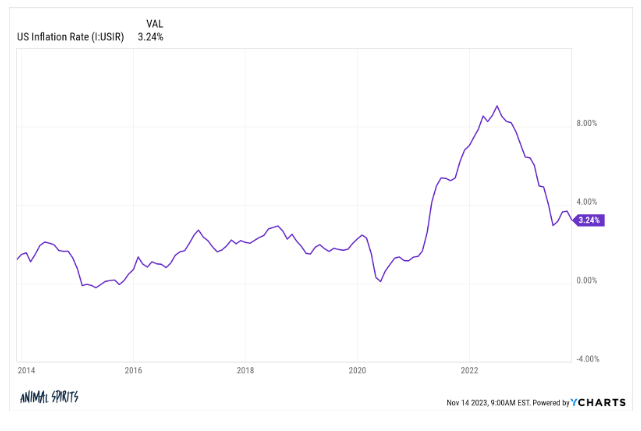
This is not stupidity. It is arithmetic with a memory. People compare today’s bill with the price they remember paying, especially when the increase happened quickly. An annual inflation chart may show improvement, while the receipt in someone’s hand still looks like it was printed by a luxury boutique.
The Personal Economy Always Wins
National indicators describe averages. Households live individual stories.
A person with a stable job, affordable mortgage, rising retirement balance, and modest medical costs may reasonably believe the economy is doing well. A renter facing another increase, a parent paying for child care, or a worker whose health insurance premium consumed a raise may reach the opposite conclusion.
Federal Reserve household research found that 72% of adults reported doing at least okay financially near the end of 2023. At the same time, inflation remained the leading financial concern. Those findings are not contradictory. A household can be surviving adequately while feeling that its margin for error has become dangerously thin.
This helps explain why people who have received raises, built savings, or expanded businesses may still describe the economy as unstable. Financial well-being is not simply a question of current income. It also includes the fear that one layoff, medical emergency, rent increase, or major repair could undo years of progress.
Average Wage Growth Is Not Your Wage Growth
Headlines frequently announce that real wages are rising. The statement may be accurate and still feel irrelevant to millions of people.
Real wage calculations combine compensation data from a huge workforce and adjust it using an economy-wide measure of inflation. The answer can change depending on the wage series, price index, time period, industry mix, and group of workers being measured.
Research on real wages around the period of the episode found that average hourly compensation had outpaced cumulative inflation since the end of 2019. However, the result varied across methods and groups. Workers changing industries, lower-paid employees being laid off or rehired, and differences between wages and total compensation could all affect the averages.
Official data also showed periods of positive inflation-adjusted hourly earnings even when weekly earnings moved less impressively because working hours changed. That is a useful reminder: an average hourly gain does not guarantee a larger weekly paycheck, and a larger paycheck does not guarantee that housing, food, insurance, and debt payments feel affordable.
Housing Creates Impossible Expectations
Housing is where economic complaints become delightfully contradictory.
Existing homeowners want property values to rise. First-time buyers want prices to fall. Sellers want multiple offers. Buyers want negotiating power. Borrowers want low interest rates, but savers often enjoy higher yields. Everyone wants more housing built, provided it does not add traffic, block a view, change the neighborhood, or appear within several miles of their own kitchen window.
A homeowner can feel wealthier because the value of a house increased while also feeling trapped because moving would require accepting a much higher mortgage rate. A renter may hear that household wealth is rising and reasonably ask, “Whose household?”
These conflicts are not evidence that people are irrational in every respect. They show that economic policies create winners, losers, and people who somehow feel like both before lunch.
Complaining Is Also a Social Behavior
Bad News Is Mentally Sticky
Humans generally give more attention to negative information than equally meaningful positive information. Psychologists refer to this tendency as the negativity bias. Threats, losses, criticism, and unpleasant surprises are often remembered more vividly because recognizing danger has obvious survival value.
This creates an uneven emotional scoreboard. A 10% increase in a necessary expense may generate months of anger. A similar improvement in a retirement account may produce satisfaction for approximately eleven minutes before the investor wonders why somebody else earned more.
Complaints also serve social purposes. They start conversations, communicate shared values, identify unfairness, and allow people to seek reassurance. Two strangers can become temporary allies by discussing delayed flights, hidden fees, bad traffic, or the price of eggs. Nothing unites humanity like discovering that everyone dislikes the same customer-service chatbot.
Media and Social Platforms Reward Strong Reactions
Economic progress is frequently gradual. Negative developments are sudden, visual, and easy to package into a headline.
“Household Balance Sheets Improved Modestly Over Several Quarters” is important information. It is not likely to interrupt anyone’s lunch. “Prices Explode” will receive more attention even when the underlying data requires substantial qualification.
Brookings researchers examining the gap between economic fundamentals and sentiment identified several possible influences, including the lingering effects of inflation, political bias, negative news coverage, social media, and broader dissatisfaction being projected onto the economy. They also found that consumer behavior often looked more optimistic than consumer survey responses.
Social media adds another layer. Users encounter emotional reactions before context, corrections, or methodology. Pew Research Center has found that inaccuracy is a major concern among Americans who receive news through social platforms. An inaccurate claim does not need to survive for weeks to shape opinion; it only needs to reach the group chat before someone checks it.
Political Identity Changes Economic Perception
Economic sentiment increasingly reflects political allegiance. Supporters of the party controlling the White House often become more optimistic, while opponents become more pessimisticeven though neither group receives a new grocery store, employer, or mortgage simply because an election occurred.
This does not mean financial concerns are imaginary. It means the same evidence can be interpreted through different narratives. One person sees resilient consumer spending. Another sees reckless borrowing. One sees strong employment. Another sees insecure, low-quality jobs. One sees falling inflation. Another sees permanently higher prices.
Animal spirits thrive on stories, and politics supplies stories in industrial quantities.
What Consumer Behavior Reveals
Surveys measure what people say. Spending, saving, job switching, business formation, and investment activity show what people do.
Historically, consumer sentiment and spending have often moved together. TD Economics reported that before the pandemic, the correlation between the University of Michigan sentiment index and growth in total personal consumption expenditures exceeded 70%. After the pandemic, however, the relationship became less dependable as gloomy consumers continued spending.
Brookings similarly found that real consumption grew at a healthy pace after January 2021 despite unusually negative attitudes. Meanwhile, Federal Reserve data continued to show that inflation placed real pressure on household choices, including switching to cheaper products and reducing savings. People were not inventing the strain, but they were not consistently behaving as though economic collapse was imminent either.
This is the animal-spirits puzzle in miniature: people can feel defensive while continuing to spend, complain about prices while buying upgraded phones, predict recession while booking vacations, and call the stock market a casino while checking their brokerage accounts six times before breakfast.
When Economic Complaints Are Useful
It is tempting to respond to public pessimism by pointing at a chart and declaring the argument over. That approach usually fails because averages cannot erase lived hardship.
Useful complaints identify a specific problem:
- Housing costs are rising faster than a household’s income.
- Medical or insurance expenses are consuming wage gains.
- A region has jobs, but not enough jobs paying sustainable wages.
- Retirement savers are withdrawing money to cover current expenses.
- Hidden fees make advertised prices misleading.
- Child-care expenses prevent parents from working additional hours.
These complaints can guide better financial decisions, business strategies, and public policy. They become less useful when every inconvenience is treated as evidence of national collapse or when a viral anecdote is presented as a complete economic census.
The goal is not to stop complaining. The goal is to upgrade the complaint from “Everything is terrible” to “This cost rose 14%, my income rose 4%, and here is the decision I had to change.” The second version may not become a popular meme, but it is much more valuable.
Lessons for Investors
Sentiment Is Not a Reliable Market Timer
Markets can rise while people feel miserable, and they can fall while confidence remains high. By the time a story feels emotionally obvious, asset prices may already reflect it.
An investor who sells whenever economic complaints become loud may repeatedly exit after bad news has been priced in. An investor who buys solely because consumers sound cheerful may arrive just as optimism becomes expensive.
Separate Affordability From Value
A product can become cheaper relative to its features while still costing more dollars. A stock can decline and remain overvalued. A house can be a valuable asset for the owner and unaffordable for the next buyer.
Using precise language prevents bad decisions. “Too expensive for my budget” is different from “objectively overpriced.” Both may be valid, but they answer different questions.
Build a Plan That Survives Bad Moods
Investing plans should not require permanent optimism. Recessions, inflation scares, market corrections, political conflict, and unpleasant headlines are normal features of financial life.
Emergency savings, diversification, manageable debt, automatic contributions, and realistic time horizons reduce the need to make major decisions during moments of maximum anxiety. The investor cannot control animal spirits, but the investor can avoid handing them the car keys.
How to Complain More Intelligently
Before announcing that the economy, market, or entire modern civilization is broken, ask four questions:
- What changed? Identify the specific price, income, rate, fee, or financial condition.
- Compared with when? Last month, last year, and the pre-pandemic period can produce very different conclusions.
- Is this personal or national? A personal setback matters, but it may not represent the average household.
- What action follows? A useful diagnosis should influence budgeting, saving, investing, business decisions, or policy.
Complaining without measurement creates heat. Complaining with context creates information. Occasionally, it may even create a refund.
Conclusion: Complaints Are Part of the Economy
“People love to complain” is funny because it is true, but it should not become an excuse to ignore legitimate financial pressure.
People complain because they remember lower prices, compare themselves with others, fear losing what they have, and experience the economy through personal expenses rather than national averages. They also complain because negative information attracts attention and because dissatisfaction is one of humanity’s favorite group activities.
Animal spirits explain why economic outcomes are shaped by more than earnings reports, inflation releases, and employment statistics. Confidence, fear, fairness, memory, and narrative influence what households do next. Those emotions can exaggerate reality, but they can also reveal problems hidden inside an average.
The smartest response is neither blind optimism nor permanent doom. It is to respect lived experience, examine the evidence, and remember that the loudest complaint is not always the most representative one.
Experience Notes: What Complaint Culture Looks Like in Real Life
The following scenes are illustrative composites based on common financial experiences rather than accounts of specific individuals.
The Grocery Receipt Argument
Imagine a worker receiving a 5% raise after a strong performance review. On paper, the news is excellent. The worker is earning more, contributing regularly to a retirement plan, and carrying no credit-card balance.
Then comes the weekly grocery trip. Several routine items remain noticeably more expensive than they were a few years earlier. The total reaches $146 for a cart that once felt like a $110 purchase. The worker leaves the store irritated and tells a friend, “My raise disappeared before I even got it.”
Technically, the raise did not disappear. It improved the household’s position. Emotionally, however, it failed to restore the purchasing experience the worker remembered. The gain appears on a pay statement twice a month; the higher prices appear on dozens of smaller transactions. Repetition gives the negative experience more psychological weight.
The House That Must Rise and Fall
At a family dinner, one homeowner celebrates a higher estimated property value. A younger relative complains that buying a first home has become nearly impossible. Both are correct from their own positions.
The homeowner wants the house to retain its value because it represents years of saving and mortgage payments. The buyer wants prices to fall because the required down payment keeps moving farther away. Five minutes later, the homeowner complains that downsizing would mean accepting a less attractive mortgage rate, while the buyer argues that interest rates should fall immediately.
No single market outcome can satisfy everyone at the table. Rising prices reward owners and punish new buyers. Falling prices improve entry-level affordability but reduce existing household wealth. Lower rates help borrowers but can encourage more competition for limited homes. The conversation sounds inconsistent because the participants are discussing different risks.
The Group-Chat Recession
A dramatic headline appears in a group chat predicting an imminent recession. Within minutes, one person announces that the economy has already collapsed. Another says the stock market is manipulated. A third posts a photograph from a crowded restaurant and argues that everyone is secretly rich.
None of these observations provides enough evidence. The headline may focus on one weak indicator. The crowded restaurant may reflect affluent customers, a special event, or one busy neighborhood. The pessimistic friend may have recently lost a job, while the optimistic friend works in a growing industry.
Still, the conversation affects behavior. Someone delays an investment. Someone else increases emergency savings. Another person decides to buy stocks because “everyone is too negative.” The story begins producing financial consequences before anyone verifies the original claim.
The Useful Complaint
The most productive experience begins when a vague complaint becomes measurable. A household reviews its spending and discovers that insurance, utilities, and foodnot entertainmentare responsible for most of the budget pressure. Instead of concluding that personal finance is hopeless, the family shops for new insurance, renegotiates a service contract, adjusts meal planning, and temporarily redirects part of a travel budget into emergency savings.
The household still complains. It simply complains with receipts, percentages, and a plan.
That is the practical lesson of animal spirits. Feelings matter because they influence action, but feelings become more useful when tested against evidence. Complain when something is wrong. Laugh when the contradiction is obvious. Then measure the problem before allowing it to manage you.
Note: This independent article synthesizes economic research, official household and labor data, consumer-sentiment analysis, financial reporting, and behavioral research from A Wealth of Common Sense, the University of Michigan, The Conference Board, the Federal Reserve, the Bureau of Labor Statistics, the Bureau of Economic Analysis and FRED, Brookings, The Washington Post, The Wall Street Journal, TD Economics, Apricitas Economics, Pew Research Center, Morningstar, HousingWire, and peer-reviewed research indexed by the National Library of Medicine.