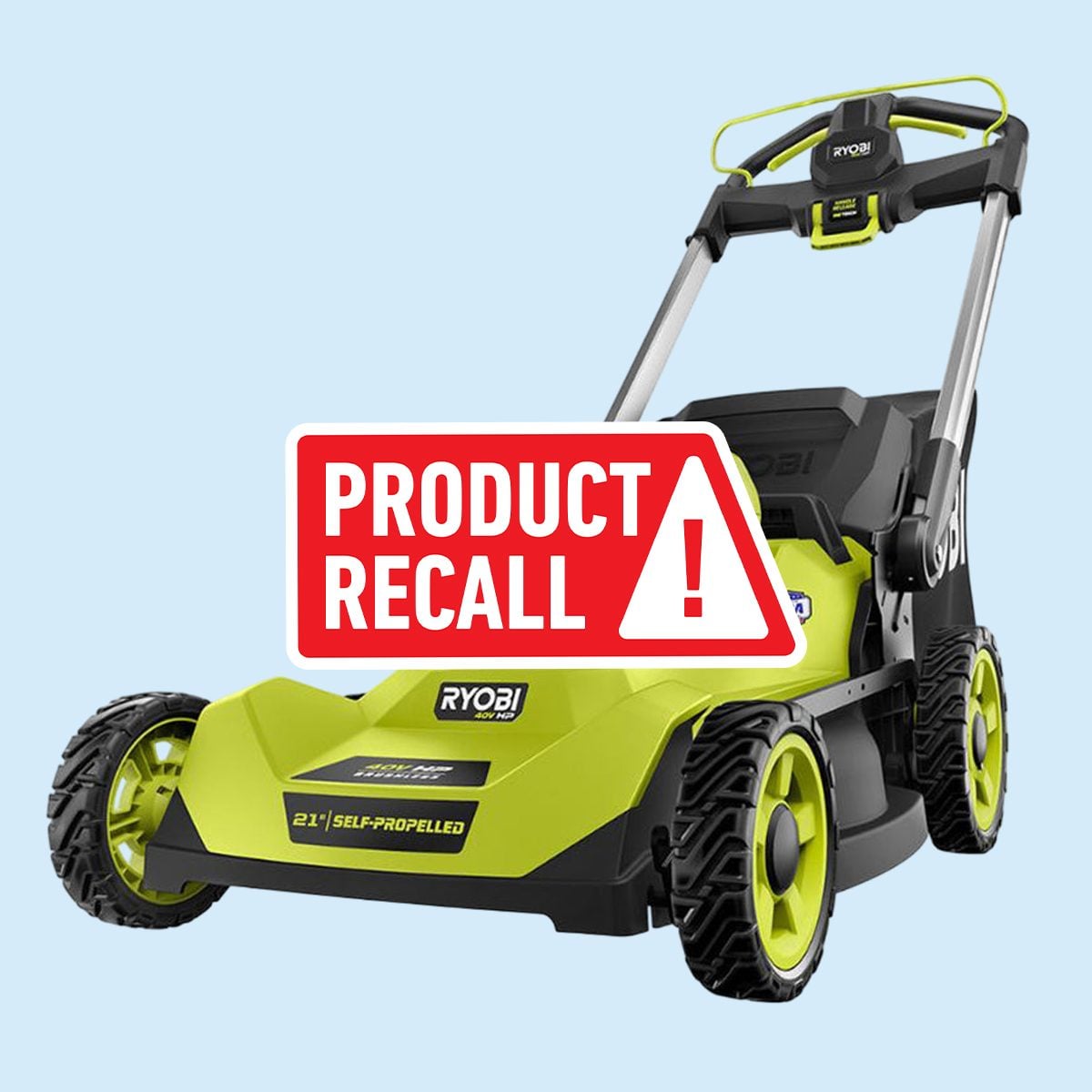
Editor’s note: This article is based on official recall notices and safety guidance from U.S. consumer safety authorities, RYOBI/TTI recall information, Canadian recall data, and recognized battery-safety organizations.
If your Saturday morning routine includes coffee, sunscreen, and a proud little lap around the yard with your battery-powered mower, this is one of those “pause before you pull the trigger” moments. More than 200,000 RYOBI battery-powered lawn mowers have been recalled because of a potential fire hazard. And no, this is not the kind of backyard heat homeowners want next to the hydrangeas.
The recall involves certain RYOBI 40-Volt Brushless 21-inch Cordless Walk-Behind Mowers, specifically self-propelled, multi-blade push mower models sold in the United States and Canada. The concern centers on a push-on connector inside the powerhead that can overheat while the mower is in use. In plain English: a hidden electrical connection can get too hot, and that can create a fire risk.
According to the official recall details, about 217,500 units were sold in the United States, with tens of thousands more sold in Canada. The company received dozens of reports of overheating, including reports of fires and minor burn injuries. That does not mean every RYOBI mower is dangerous, but it does mean owners should check their model and serial number before mowing again.
What Happened With the RYOBI Mower Recall?
The recall was announced on February 6, 2025, by TTI Outdoor Power Equipment, the company associated with RYOBI outdoor power tools in the United States. The affected products are RYOBI 40V HP Brushless 21-inch cordless walk-behind mowers with a black cutting deck, gray top housing, and a black grass bag marked “RYOBI.”
The problem is not the blade, the wheels, or your neighbor’s suspiciously perfect lawn. The issue is electrical. A push-on connector inside the mower’s powerhead may overheat during operation. If the connector gets hot enough, it can pose a fire hazard. The most concerning part is that the overheating reportedly occurred while the mower was being used, not just while sitting in storage or charging.
That detail matters. Many homeowners assume battery-powered lawn equipment is safer than gas-powered equipment because there is no gasoline can in the garage and no dramatic pull-cord workout before breakfast. Battery-powered tools can be cleaner, quieter, and easier to maintain, but they still contain high-energy electrical systems. When a component fails, the risk can be serious.
Which RYOBI Mower Models Are Recalled?
The U.S. recall covers certain RYOBI Brushless 21-inch Cordless Walk-Behind Self-Propelled Multi-Blade Push Mowers. The affected U.S. model numbers include:
- RY401014BTLUS
- RY401014US
- RY401140US
- RY401015BTLUS
- RY401015US
- RY401150US
- RY401140US-Y
- RY401150US-Y
- RY401020
- RY401200
The recall applies to mowers within the serial number range:
KC21032D010001 through KC21327N999999
RYOBI’s recall information may also list additional regional or related model variants, so owners should not rely on memory, box color, or “I think mine is fine because it still cuts like a tiny green beast.” The safest approach is to check the model and serial number directly on the mower and use RYOBI’s official recall checker or customer service channel.
Where to Find the Model and Serial Number
The model and serial numbers are located inside the green mower housing. You may need to clean off dust, grass clippings, or the evidence of last August’s “I’ll mow later” phase to read the label clearly. Use a flashlight if needed, and take a photo with your phone so you can zoom in without bending like a garden gnome.
Do not guess. Many RYOBI mowers look similar, and model names in retail listings can be confusing. A mower may be described online as “40V,” “HP,” “brushless,” “21-inch,” or “self-propelled,” but the recall depends on the exact model and serial number combination.
Where Were the Recalled Mowers Sold?
The recalled RYOBI mowers were sold at Home Depot and Direct Tools Factory Outlet stores nationwide, as well as through their online stores. The sales period ran from approximately February 2021 through January 2025, and the mowers were priced around $500 to $700.
That wide sales window is important. If you bought your mower years ago and have been using it without issue, you may still be affected. Recalls are not limited to brand-new products. In fact, older purchases can be easier to miss because the receipt is long gone, the box has become a garage shelf, and the owner’s manual is living its best life somewhere behind the water heater.
How Serious Is the Fire Hazard?
The recall is serious enough that consumers are instructed to stop using the mower immediately. Reported incidents included overheating while the mower was in operation, several fires, and minor burn injuries. While the number of incidents is small compared with the total number of mowers sold, fire-related recalls deserve prompt attention because consequences can escalate quickly.
A mower fire is not just a mower problem. It can become a dry-grass problem, a garage problem, a shed problem, or a “why is the fence smoking?” problem. That is especially true during hot weather, drought conditions, or in yards with dry leaves, mulch, pine needles, or other easy-to-ignite materials.
It is also worth noting that the issue appears tied to a connector inside the mower’s powerhead, not to careless charging alone. Good battery habits are still important, but careful owners are not automatically protected from an internal component defect.
What Should Owners Do Right Now?
If you own one of the recalled mowers, the recommended action is straightforward:
- Stop using the mower immediately.
- Remove the battery before inspecting or storing the mower.
- Check the model and serial number.
- Contact TTI/Ryobi customer service for recall instructions.
- Follow the official process to disable the recalled mower and receive a free replacement 21-inch walk-behind mower.
TTI’s recall instructions direct consumers to contact customer service by phone or through RYOBI’s official recall information page. Do not keep using the mower “just one more time” because the front yard is starting to look like a wildlife preserve. One more mow is not worth the risk.
Should You Return It to the Store?
Do not assume that walking into Home Depot with the mower will solve the issue immediately. Recall remedies are usually handled through the manufacturer’s recall process, not a standard store return. The official remedy for this recall is a free replacement mower, and owners may need to follow specific steps to verify the mower and disable it safely.
Keep the mower, battery, charger, photos, purchase information if available, and any communication records organized until the replacement process is complete. Even if you do not have the original receipt, the model and serial number are still essential.
Can You Sell or Give Away a Recalled RYOBI Mower?
No. Recalled products should not be resold, donated, or passed along to a friend, relative, neighbor, or that one person on Facebook Marketplace who always replies “Is this still available?” Recalled consumer products are subject to safety restrictions, and selling or redistributing them can put someone else at risk.
If your mower is included in the recall, follow the official remedy process. Do not list it as “works great, minor fire vibes.” That is not a feature.
Why Battery-Powered Lawn Equipment Still Needs Safety Checks
Battery-powered lawn equipment has become extremely popular because it is quieter, easier to start, and generally simpler to maintain than gas equipment. No oil changes. No gasoline smell. No pull cord that makes you question your upper-body strength. For many homeowners, electric mowers are a practical upgrade.
But battery-powered does not mean risk-free. Lithium-ion battery systems store a lot of energy in compact packs. Modern outdoor power equipment also includes control boards, connectors, terminals, wiring, sensors, chargers, and high-current electrical pathways. If those components are damaged, poorly connected, overheated, or exposed to harsh conditions, safety issues can develop.
The RYOBI mower recall is a good reminder that homeowners should treat battery-powered tools with the same respect they give gas-powered tools. Different risks, same need for caution.
Battery and Mower Safety Tips for Homeowners
Even if your mower is not part of the recall, basic safety habits can reduce risk and extend the life of your equipment.
1. Use the Correct Battery and Charger
Use batteries and chargers recommended by the manufacturer. Avoid mystery batteries, questionable adapters, and bargain-bin replacements with names that look like someone spilled alphabet soup on a label. Battery systems are designed to communicate with the tool and charger. Mixing incompatible parts can increase the risk of overheating or failure.
2. Inspect Before You Mow
Before mowing, look for melted plastic, unusual smells, damaged wires, cracked housings, loose parts, or signs of overheating. If something looks scorched, swollen, warped, or sticky, stop using the tool and contact the manufacturer.
3. Store Batteries Properly
Store lithium-ion batteries in a cool, dry place away from direct sunlight, flammable materials, and extreme temperatures. A hot garage in July is already auditioning for the role of toaster oven. Avoid leaving batteries in a vehicle or near windows where heat can build up quickly.
4. Do Not Leave Batteries on Chargers Indefinitely
Many modern chargers have safety features, but it is still a smart practice to remove batteries after charging is complete and unplug chargers when not in use. Treat chargers like kitchen appliances: useful, but not something you need humming along forever in the corner.
5. Keep Terminals Away From Metal Objects
Do not toss loose batteries into a drawer with nails, screws, keys, coins, or random garage treasures. Metal objects can bridge battery terminals and create a short circuit. Store batteries in their case or in a protected area where terminals cannot contact conductive materials.
6. Never Use a Damaged Battery
If a battery has been dropped hard, punctured, crushed, swollen, leaking, or exposed to water, do not use it. Do not try to “revive” a battery that refuses to charge. Battery packs can fail in unpredictable ways, and DIY battery surgery is not the heroic weekend project anyone needs.
How This Recall Fits Into the Bigger Product Safety Picture
This RYOBI mower recall is part of a broader reality: as more homeowners shift toward battery-powered tools, recall awareness becomes more important. Electric outdoor equipment is no longer niche. Millions of Americans now use battery-powered mowers, trimmers, blowers, chainsaws, pressure washers, and snow blowers.
That growth is mostly good news. Battery tools can reduce fumes, noise, and maintenance headaches. However, widespread use also means that a defect in a popular product can affect hundreds of thousands of households. A recall notice is not just paperwork. It is the safety system working after a problem has been identified.
Homeowners should build recall checks into routine ownership. Register new products when possible, keep digital photos of model and serial labels, and check official recall databases a few times a year. It takes less time than edging the driveway, and unlike edging, it might actually prevent a fire.
Common Questions About the RYOBI Mower Recall
Are all RYOBI mowers recalled?
No. The recall applies only to specific 40-Volt Brushless 21-inch cordless walk-behind mower models within the affected serial number range. Other RYOBI mowers may not be included.
Is the battery itself the recalled part?
The official hazard description focuses on a push-on connector inside the mower’s powerhead that can overheat. Owners should follow the recall instructions for the mower rather than assuming replacing the battery alone solves the issue.
Can I keep using the mower if it has never overheated?
No. If your mower is part of the recall, stop using it immediately. A product can be affected by a recall even if it has not yet shown symptoms.
Will I receive a refund?
The official remedy is a free replacement 21-inch walk-behind mower. Recall remedies vary by product, but for this recall, replacement is the stated solution.
What if I bought the mower secondhand?
You should still check the model and serial number and contact RYOBI/TTI through the official recall process. Do not continue using a recalled mower simply because you are not the original purchaser.
Real-World Experiences: What This Recall Teaches Everyday Homeowners
For many homeowners, the RYOBI mower recall feels personal because a lawn mower is not some forgotten gadget in a junk drawer. It is a regular-use machine. It lives in the garage, shed, or basement. It comes out during warm months like clockwork, usually right when the grass decides to grow three inches overnight out of spite.
The first lesson is simple: do not ignore product labels. Most people learn the model number of their phone, car, or laptop, but not their mower. Yet that tiny sticker inside the mower housing can determine whether your machine is safe to use. A good homeowner habit is to photograph every major tool’s model and serial number on the day you buy it. Create a folder on your phone called “Home Equipment.” It sounds overly organized until a recall happens, and then you will feel like the CEO of your garage.
The second lesson is that recalls do not always reach everyone. Some owners receive emails. Others see news stories. Many hear nothing at all. If you moved, bought the mower used, skipped product registration, or used an old email address, the recall notice may never find you. That means owners need to be proactive. A quick seasonal recall check before spring mowing is a smart habit, just like sharpening blades, clearing the deck, and pretending this is finally the year you will fix the patchy corner near the mailbox.
The third experience-based takeaway is to watch for warning signs during use. If a mower smells hot, loses power strangely, smokes, shuts down unexpectedly, or feels unusually warm around the motor housing, stop immediately. Do not troubleshoot while the battery is installed. Do not keep mowing because “there are only two rows left.” Tools do not award bravery points. They just break more dramatically.
Storage habits matter too. Many owners keep batteries on chargers all season because it feels convenient. A better routine is to charge the battery, remove it once charged, and store it away from flammable clutter. Garages are often packed with cardboard boxes, paint supplies, gasoline cans, fertilizers, rags, and holiday decorations. In other words, they are not exactly fire-resistant laboratories. Keeping batteries and chargers on a clear, stable, non-flammable surface is a small change that can make a big difference.
Another practical lesson is to separate the recalled mower from normal tools immediately. Add a large note or tag that says “DO NOT USE RECALL.” This helps prevent another family member from grabbing it in a rush. In households where multiple people mow, clear communication is safety equipment. It may not look as impressive as goggles or gloves, but it works.
Finally, this recall is a reminder that modern lawn care is increasingly electric, connected, and component-driven. The old mower problems were mostly stale gas, dull blades, and engines that made noises like a raccoon in a blender. Newer battery mowers bring different concerns: connectors, battery packs, chargers, software controls, and thermal protection. That does not make them bad. It means owners need updated habits.
If your RYOBI mower is recalled, treat the process seriously, follow the manufacturer’s instructions, and get the replacement. If your mower is not recalled, use this as a nudge to improve your battery safety routine. Either way, the goal is the same: a clean-cut lawn, a safe garage, and a weekend that does not involve explaining smoke to the fire department.
Conclusion: Check Before You Mow
The RYOBI mower recall is not a reason to panic, but it is absolutely a reason to pause. More than 200,000 battery-powered mowers were recalled because a connector inside the powerhead can overheat and create a fire hazard. Affected models were sold from 2021 through January 2025 at major retailers including Home Depot and Direct Tools Factory Outlet.
If you own a RYOBI 40-Volt Brushless 21-inch cordless walk-behind mower, check the model and serial number before using it again. If it is included in the recall, stop using it, remove the battery, follow the official recall instructions, and request the free replacement mower.
A mower should trim grass, not test your emergency preparedness. Take five minutes to check your equipment now. Your lawn can wait. Fire safety cannot.