Getting a piercing can feel like the perfect mix of self-expression, rebellion, and “I deserve a tiny piece of shiny metal as a treat.” And honestly, that instinct is not wrong. Piercings can be meaningful, stylish, cultural, sentimental, or simply fun. But before you stroll into a studio and volunteer your skin for a dramatic little hole, there is a bigger question worth asking: Should you get one right now?
That is the part people skip. The decision is usually framed as where to get pierced or what jewelry looks best. The smarter question is whether this is the right time, the right placement, the right studio, and the right responsibility level for you. Because a piercing is not just an accessory. At first, it is a wound with jewelry in it. A cute wound, yes. Still a wound.
If you are thinking about an ear, nose, lip, navel, or cartilage piercing, the best approach is part style choice, part health decision, and part lifestyle audit. In other words: do not let one viral photo talk you into months of aftercare you are not prepared for.
Start With the Big Question: Why Do You Want One?
This may sound annoyingly wise, but motive matters. If you want a piercing because you have wanted it for months, researched it, picked the placement carefully, and understand the aftercare, that is usually a good sign. If you want one because your best friend got one yesterday and you are running on pure group chat energy, that is less ideal.
A piercing tends to go better when the decision is calm, not impulsive. That does not mean you need to turn it into a graduate thesis. It just means you should be able to answer a few basic questions honestly:
Can you commit to cleaning it and leaving it alone while it heals? Can you afford a reputable studio and quality starter jewelry? Are you picking a placement that works with your job, sports, skin tendencies, and daily routine? If your answer is “maybe, probably, kind of,” consider that a yellow light, not a green one.
When a Piercing Might Make Sense
You are probably in a good place to get pierced if you have done your homework, chosen a reputable professional, and understand that healing takes longer than social media makes it look. Earlobes may heal fairly quickly, but cartilage piercings can drag on for months. Oral piercings bring their own drama. A navel piercing is cute until your waistband declares war on it.
A piercing is more likely to be worth it when:
You can handle the aftercare
Healing is not glamorous. You may need to sleep differently, avoid certain products, keep your hands off the area, skip swimming for a while, and resist the deeply human urge to poke it every 11 minutes just to “check how it is doing.” If you can be patient, your odds improve a lot.
You are choosing a lower-risk placement
Earlobes are usually easier and less risky than upper-ear cartilage. Cartilage piercings can be more temperamental, slower to heal, and more prone to serious infection. Oral piercings may look bold, but they come with extra concerns involving teeth, gums, swelling, and irritation.
You have access to a good studio
A safe piercing starts long before the needle. The right studio should be clean, organized, transparent, and willing to answer questions without acting offended by your existence. A reputable piercer should discuss jewelry quality, anatomy, healing expectations, and aftercare. If the place feels sketchy, rushed, or weirdly secretive, trust your instincts and leave.
When You Should Probably Wait
Sometimes the best piercing decision is “not this month.” That is not boring. That is strategy.
You are about to travel, swim, or live in a pool
Fresh piercings and lakes, pools, oceans, and hot tubs are not an adorable duo. If you have a beach vacation coming up or you swim regularly, getting pierced right before that trip is usually bad timing. The same goes for spa days, hot tubs, and any activity where soaking the area is unavoidable.
You are in sports season or wear tight gear
If your helmet, earbuds, chin strap, waistband, or uniform constantly rubs the area you want pierced, healing can become a long-running comedy of irritation. Friction, pressure, and repeated trauma are not your friends.
You know you are inconsistent with routines
If houseplants fear you, laundry hides from you, and your phone battery is emotionally unsupported by your charging habits, pause before committing to piercing aftercare. You do not need to be perfect. But you do need to be reliable for a while.
You are under pressure from someone else
A piercing should not be a dare, a loyalty test, or a “come on, don’t be lame” situation. If someone is pushing you into it, wait. Body decisions should feel like yours.
You are prone to keloids or problematic scarring
If you or close family members tend to develop keloids, a piercing deserves extra caution. Raised scar tissue can develop after even minor skin injury, and ear piercings are a common trigger. That does not automatically mean never, but it does mean you should think twice and, if needed, get medical advice before going ahead.
Placement Matters More Than People Think
Earlobe piercings
These are often the most straightforward entry point into the piercing world. They usually heal faster than cartilage and tend to be easier to manage. If this is your first piercing beyond the standard basics, the lobe is the diplomatic option. Low drama. Generally forgiving. Not trying to ruin your week.
Cartilage piercings
These look great, but they are less forgiving. Cartilage has a poorer blood supply than the earlobe, which is one reason healing may take much longer. If the upper ear becomes painful, red, swollen, or warm, do not play hero. Get it checked. Cartilage infections can escalate and are worth taking seriously.
Nose piercings
Nostril piercings are popular for a reason: they are versatile and stylish. But they can get irritated by makeup, skincare, tissues, glasses, and frequent touching. They also require you to stop absentminded face-touching, which is apparently one of humanity’s favorite hobbies.
Oral piercings
This is where the “looks cool” to “dentist has concerns” pipeline speeds up. Oral piercings can increase the risk of chipped teeth, gum recession, soft tissue irritation, swelling, and infection. If you habitually click jewelry against your teeth, congratulations, you have turned your mouth into a tiny demolition site. Oral piercings are not impossible, but they deserve much more caution than people often give them.
Navel piercings
These can be adorable, but only if your lifestyle works with them. Tight waistbands, high-friction clothing, and constant bending can make healing more annoying than expected. If every pair of jeans you own sits exactly on that spot, your piercing may file a complaint.
How to Choose a Safer Piercer
This part matters more than the jewelry style, the studio playlist, or whether the person at the front desk has intimidatingly good eyeliner.
Look for a professional who uses a fresh, sterile, disposable needle, not a piercing gun. This is especially important beyond basic earlobe piercings. Many piercing guns cannot be fully sterilized, and reputable professionals generally avoid them even for lobes.
You should also look for:
A clean, professional environment
The studio should look sanitary, organized, and licensed where applicable. Instruments and jewelry should be sterilized properly, and the piercer should be happy to explain the process.
Quality starter jewelry
Cheap mystery metal is not a bargain if it leaves your skin furious. Good starter jewelry should be smooth, well-finished, and made from biocompatible materials. If you are sensitive to nickel, choose nickel-free or hypoallergenic options. Implant-grade titanium is a common favorite for a reason. Some higher-quality gold and other inert materials can also work well for initial piercings.
Clear aftercare instructions
If the studio’s aftercare advice sounds like an alchemy project involving rubbing alcohol, hydrogen peroxide, and ten random ointments from a bathroom drawer, back away slowly. Good advice is usually simple, consistent, and focused on gentle care.
The Aftercare Reality Check
A lot of people are prepared for the piercing itself and wildly underprepared for the healing phase. The actual procedure is often fast. The aftercare is the long game.
In general, successful healing means:
Leave the jewelry in place
Do not remove starter jewelry too early. That can irritate the piercing or cause the hole to close. Healing timelines vary a lot by placement, so impatience is not a medical plan.
Keep your hands off it
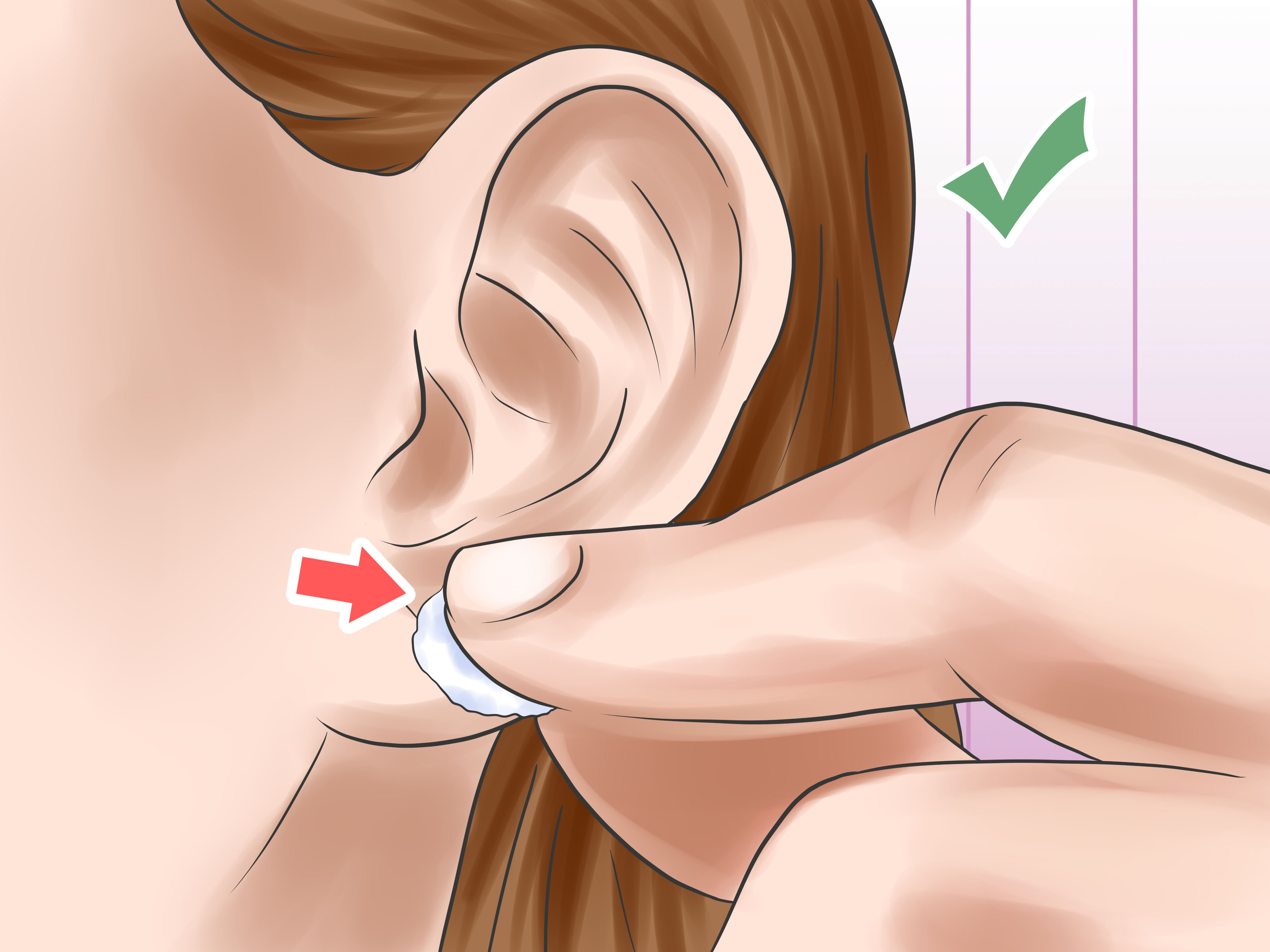
Touching, twisting, and spinning the jewelry is one of the most common ways people irritate a fresh piercing. Admire it with your eyes. Your fingers have done enough.
Clean gently, not aggressively
Use the aftercare routine recommended by your piercer and follow any clinician guidance if problems develop. Harsh products can damage healing skin. Over-cleaning can also backfire. Your goal is gentle care, not chemical warfare.
Avoid friction and soaking
Sleeping on it, rubbing it with clothing, snagging it on towels, and soaking it in questionable water can delay healing. Fresh piercings are surprisingly good at getting angry over small daily habits.
Red Flags You Should Not Ignore
Some soreness, swelling, and tenderness can be normal at first. Ongoing trouble is different. Pay attention if you notice:
Increasing redness, heat, throbbing pain, swelling that worsens instead of improves, pus, fever, a bad smell, or skin that starts to thicken and rise around the piercing. Those signs may point to infection, irritation, allergy, or abnormal scarring. If symptoms do not improve quickly or seem severe, get medical advice. Do not crowdsource a serious cartilage infection from strangers online with usernames like PiercingWizard420.
So, Should You Get One?
Maybe. But only if the answer holds up after five practical questions:
1. Do you want it for yourself?
If yes, good start.
2. Can you afford quality, not just the cheapest option?
A suspiciously cheap piercing is often expensive later.
3. Can you commit to weeks or months of responsible aftercare?
If not, wait until you can.
4. Is the placement a good match for your body and routine?
Some placements are simply easier to heal than others.
5. Do you have any history of keloids, metal allergy, or skin trouble that deserves extra caution?
If yes, slow down and make an informed choice before you book anything.
If you can answer those honestly and still feel good about it, a piercing can be a great choice. If not, waiting is not failure. It is just proof that you understand that style and common sense can, in rare and beautiful moments, get along.
Experience-Based Lessons People Often Learn the Hard Way
One of the most common experiences people describe is that the piercing itself was easier than expected, but the healing was much more annoying. Someone gets a helix piercing, walks out feeling fearless, takes two selfies, and then spends the next three months discovering that every hoodie, pillow, headphone, and hairbrush on Earth has apparently formed a union against their ear. The lesson is simple: pain during the appointment is only a tiny part of the story.
Another frequent experience is underestimating how much placement affects daily life. A nostril piercing may seem low-maintenance until allergy season arrives and every tissue becomes an extreme sport. A navel piercing can seem easy until someone realizes all their favorite pants hit exactly that spot. A lip or tongue piercing may feel exciting until chewing, talking, and smiling suddenly come with a learning curve. Real-life experience tends to humble people quickly.
Many people also report that the quality of the piercer makes a huge difference. Those who go to a respected professional often describe a calm consultation, clear instructions, good jewelry options, and realistic expectations. People who choose a shop based only on price are more likely to talk about confusion, irritation, mystery metals, and advice that sounded like it came from a haunted medicine cabinet. In body piercing, bargain hunting can be a terrible hobby.
There is also the emotional side. For some, a piercing ends up being surprisingly meaningful. It can mark a new chapter, a confidence boost, or a personal milestone. For others, the experience is more like, “I enjoyed the idea of this more than the reality of sleeping on one side for weeks.” Both reactions are valid. Not every piercing becomes a soulmate accessory. Some become a short-lived adventure and a funny story.
Then there are the people who are glad they waited. They often say the delay helped them choose a better placement, a better studio, or a better time in life. Instead of getting pierced right before a vacation, sports season, or chaotic stretch of work, they waited until they could actually care for it properly. The result was usually smoother healing and much less regret.
The biggest experience-based takeaway is this: people are happiest with a piercing when they treat it like a decision, not an impulse. The jewelry is the fun part, but the preparation is what makes the fun last. A good piercing story usually starts with patience, research, and a solid piercer. A bad piercing story usually starts with the sentence, “So we were at the mall and figured, why not?”
Conclusion
Getting a piercing is not automatically a brilliant idea or a terrible one. It depends on your health history, your chosen placement, your pain tolerance, your routine, your budget, and your willingness to care for it after the adrenaline wears off. If you choose thoughtfully, go to a reputable professional, use quality jewelry, and respect the healing process, a piercing can be a stylish and satisfying form of self-expression. If you cannot commit to the care, or the timing is bad, waiting may be the smarter move.
The best piercing decision is not the trendiest one. It is the one your future self will not be annoyed at while trying to sleep, shower, work, eat, or explain to a doctor. Glamour is nice. Healing well is nicer.