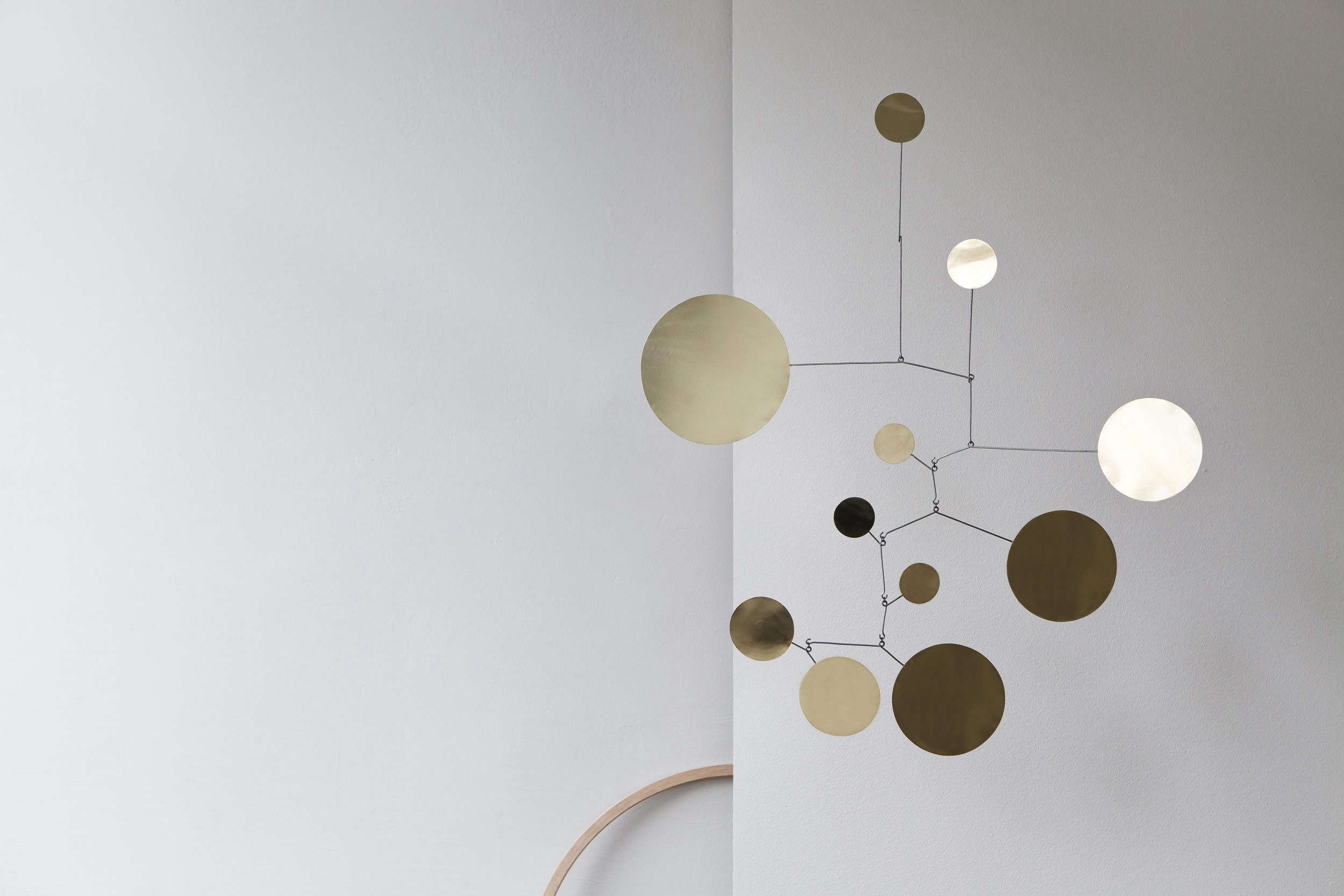
The Lappalainen Mobile Brass Dots is what happens when sculpture decides it has spent enough time standing still. Handmade from brass and iron, this suspended artwork replaces the usual framed rectangle with glowing metal discs, slender balancing arms, shifting shadows, and movement that changes whenever the air in a room does.
Created by the German-based Lappalainen studio, the design belongs to the modern tradition of kinetic sculpture. It is elegant without becoming precious, playful without looking childish, and minimalist without resembling something left unfinished at the hardware store. In the right setting, it can make an ordinary corner feel like a tiny private gallery.
This guide explores the mobile’s background, materials, craftsmanship, visual character, installation requirements, decorating potential, maintenance needs, and the practical experience of living with a piece of art that refuses to hold still.
What Is the Lappalainen Mobile Brass Dots?
The Lappalainen Mobile Brass Dots is a handmade hanging sculpture composed of circular brass elements connected to a delicately balanced iron framework. An archived product listing describes it as approximately 85 centimeters high and 70 centimeters wide, or about 33.5 by 27.5 inches. It was made to order in Germany and designed to respond naturally to subtle air currents.
Unlike an electric rotating decoration, the mobile does not need a motor, batteries, an app, or a password containing one uppercase letter and a hieroglyph. Its movement comes from balance, gravity, and the air already circulating through the room.
The term “dots” is especially appropriate because the brass discs appear almost graphic when viewed from across the room. From one angle, they look like points in a drawing. From another, they overlap and become miniature golden eclipses. As the structure turns, the composition continuously redraws itself.
The Story Behind Lappalainen
Lappalainen was founded by Rivka Baake and Wilfrid Kreutz, who work near Frankfurt am Main, Germany. Baake studied art history, while Kreutz trained as a classical silversmith. That combination explains much of the studio’s character: the designs understand both the artistic history of mobiles and the practical demands of working with metal.
The studio reportedly grew from a mobile Kreutz made for the couple’s own living room. Friends admired it and began requesting similar pieces. One order became several, and the original metalsmithing workshop gradually developed into a studio known for mobiles, candleholders, lamps, and other handcrafted metal objects.
Their process is refreshingly physical. Shapes are drawn and cut, edges are sanded, wires are straightened and bent, joints are soldered, and surfaces are polished. Each mobile is then suspended in the workshop so its balance can be adjusted before packaging. In other words, somebody actually watches the sculpture move before declaring it finished. That is reassuring when the product’s entire job description is “hang gracefully and do not list dramatically to the left.”
Alexander Calder and the Modern Mobile Tradition
Lappalainen openly acknowledges the influence of Alexander Calder, the American artist who transformed modern sculpture by introducing real motion into it. During the early 1930s, Calder began creating abstract constructions with independently balanced elements that moved mechanically or responded to air currents.
Calder had studied mechanical engineering before becoming an artist, and that background helped him understand counterweight, balance, suspension, and motion. His mobiles turned empty space into an active part of a sculpture. The artwork was no longer just an object occupying a room; it was an arrangement that continuously negotiated with the room around it.
The Lappalainen Mobile Brass Dots follows that tradition without pretending to be a Calder original. Its family resemblance comes from the branching framework, abstract shapes, counterbalanced construction, and responsiveness to air. Its distinct personality comes from its warm brass surfaces, restrained palette, European workshop craftsmanship, and domestic scale.
Why Mobile Art Still Feels Modern
A traditional sculpture can be viewed from several sides, but a mobile changes those sides on its own. Every rotation creates a different relationship between the discs, rods, shadows, walls, windows, and surrounding furniture.
This makes kinetic art unusually compatible with contemporary interiors. Modern rooms often rely on open layouts, clean lines, natural light, and carefully edited objects. A mobile introduces movement without introducing clutter. It occupies visual space rather than valuable floor space, which is particularly useful in smaller homes where every square foot already has three jobs.
Design Details That Make Brass Dots Special
Warm Metal in a Lightweight Composition
Brass usually appears in solid-looking objects such as lamps, hardware, mirrors, candlesticks, and plumbing fixtures. Here, it is used in a composition that feels almost weightless. That contrast is a large part of the mobile’s appeal.
The golden tone adds warmth, while the thin iron structure keeps the piece visually light. It can complement wood, stone, plaster, linen, leather, and painted surfaces without requiring the rest of the room to become a metallic theme park.
Circular Forms That Change Constantly
Circles are simple, but they become surprisingly expressive when suspended at different heights. The brass dots may resemble planets, coins, bubbles, punctuation marks, or distant lights. When several discs overlap, the mobile creates temporary shapes that disappear as quickly as they arrive.
This repeated circular geometry also softens interiors dominated by rectangular architecture. Doors, windows, rugs, cabinets, books, televisions, and framed prints are usually boxes. The mobile enters this rectangular convention and politely says, “Have we considered a curve?”
Light and Shadow as Extra Materials
The physical sculpture is only part of the experience. Natural and artificial light can make the brass brighten, darken, or flash briefly as the discs turn. Shadows may stretch across a wall in the morning and shrink into softer patterns by evening.
For this reason, the mobile can appear more dramatic near a window or directional lamp than in a uniformly lit room. It does not need intense illumination, but it benefits from light arriving from an angle rather than flooding every surface equally.
Where to Display a Lappalainen Brass Mobile
Above a Dining Table
A hanging mobile can visually anchor a dining area, particularly in an open-plan home. It creates a focal point above the table without taking up serving space or blocking conversation like an oversized centerpiece.
Install it high enough that seated and standing guests have comfortable clearance. It should move freely without colliding with a pendant lamp, wall, cabinet, enthusiastic dinner guest, or someone demonstrating how large the fish supposedly was.
In a Living Room Corner
An underused corner near a window is often ideal. The mobile fills vertical space, catches natural light, and adds movement without requiring another piece of furniture. A simple chair, small table, or floor lamp beneath it can complete the arrangement.
Neutral walls allow the silhouette to remain clear, but deeper colors such as navy, forest green, charcoal, clay red, or muted plum can make the brass stand out dramatically.
Above a Stairwell or Landing
Stairwells offer height, multiple viewing angles, and natural air movement. A suspended sculpture can be appreciated from below, from the side, and from an upper landing. This location may require professional installation, especially when access is difficult or the ceiling structure is uncertain.
In a Bedroom
The slow motion of a mobile can feel calming in a bedroom. Position it in a visible corner, near a reading chair, or above a low dresser rather than directly over the bed. This keeps the sculpture easy to enjoy while avoiding the mildly unsettling experience of waking at 3 a.m. beneath moving metal shapes.
In an Office or Creative Studio
A mobile can provide a gentle visual break from screens. Watching a balanced structure move for a few moments is more restful than opening another tab, checking another notification, and somehow ending up reading reviews of a toaster you do not need.
Interior Styles That Work With Brass Dots
The Lappalainen Mobile Brass Dots is strongly associated with midcentury modern design, but it does not need to live in a room filled with tapered legs and vintage teak. Its limited materials and abstract form allow it to work across several decorating styles.
Midcentury Modern
Pair the mobile with warm woods, simple upholstery, sculptural lighting, wool rugs, and restrained color accents. Brass naturally complements walnut, oak, rust, olive, mustard, cream, and black.
Scandinavian Minimalism
Against white or pale gray walls, the mobile becomes a warm focal point. Linen curtains, light wood, matte ceramics, and uncluttered furniture help the brass feel intentional rather than flashy.
Industrial Interiors
The iron framework connects naturally with steel windows, exposed brick, concrete, and factory-style architecture. The brass adds refinement, preventing the room from feeling like everyone left for lunch during a warehouse renovation.
Eclectic and Collected Rooms
In a more colorful home, the mobile can act as visual breathing room between paintings, textiles, books, and collected objects. Because its form is open, it adds interest without creating a dense block of color.
Wabi-Sabi and Organic Modern Spaces
Brass develops character as it ages. A softly changing surface can work beautifully with weathered wood, handmade pottery, natural stone, limewash, and other materials valued for their imperfections and patina.
How to Install the Mobile Safely
A mobile may look light, but it should still be attached to a secure ceiling point. The correct hardware depends on the ceiling material and the sculpture’s weight. A hook driven into solid wood framing is different from an anchor installed in drywall, plaster, masonry, or concrete.
Before drilling, confirm the total hanging height and full movement radius. Temporarily marking the intended position with painter’s tape can help you judge the scale from different parts of the room.
Allow generous clearance on every side. A mobile that repeatedly taps a wall will not produce an enchanting gallery atmosphere. It will produce a tiny metallic complaint every time the heating system turns on.
Avoid positions directly beside ceiling fans, powerful vents, frequently opened exterior doors, or busy walking paths. Gentle air is desirable; turbulence is not. The goal is a slow dance, not weather coverage.
Use the hanging method provided or approved by the maker. Do not shorten, bend, or rearrange balancing arms casually, because a small change in weight or length can affect the entire composition. When the ceiling structure is unclear, consult an experienced installer.
Caring for Brass and Iron
Routine care should be gentle. Dust can usually be removed with a clean, soft cloth, a delicate duster, or a soft brush used without pressing on the balanced elements. Support the piece carefully and avoid pulling on individual discs or arms.
Clean hands or gloves are useful when handling polished brass because fingerprints contain oils and salts that may leave visible marks. Touch the mobile as little as necessary and handle it near structural connection points rather than by a decorative disc.
Before applying metal polish, determine whether the brass is raw, lacquered, waxed, or intentionally patinated. An abrasive cleaner may remove a protective coating or create uneven bright areas. Unless the maker specifically recommends polishing, a dry and minimally invasive approach is safer.
Some owners enjoy the darker, softer patina that brass develops over time. Others prefer a brighter finish. Neither preference is automatically correct; the important thing is not to attack a handcrafted sculpture with mystery chemicals because an online cleaning video involved half a lemon and tremendous confidence.
Is the Lappalainen Mobile Brass Dots Worth Buying?
The answer depends on what you expect from home decor. This is not a practical object in the conventional sense. It will not store blankets, charge a phone, or hide an internet router. Its function is visual and atmospheric.
What it offers is craftsmanship, movement, changing light, and a focal point that looks different throughout the day. Compared with mass-produced wall decor, a handmade mobile also carries evidence of the maker’s process. The cut shapes, bent wires, soldered joints, polished surfaces, and final balancing adjustments are all part of the value.
The exact Brass Dots design has appeared in archived listings, while Lappalainen’s current collection may vary. Buyers should confirm present availability, dimensions, finish, production time, hanging hardware, shipping terms, and care instructions directly with the studio or authorized seller.
Practical Experience: What Living With Brass Dots May Feel Like
Because this article does not claim personal ownership of the sculpture, the following section presents an experience-based scenario drawn from its documented dimensions, materials, construction, installation needs, and the common realities of displaying kinetic art at home.
The First Impression Is Larger Than Expected
An 85-by-70-centimeter mobile can sound modest on a product page. Once suspended, however, its visual footprint includes both the physical structure and the empty space required for movement. It may feel significantly larger than a framed artwork with similar measurements.
This is usually a pleasant surprise in a sparse room. The mobile can fill an awkward area without making it feel heavy. In a crowded room, though, insufficient clearance can make the piece look trapped. Measuring the motion zone before installation is therefore more useful than measuring only the metal.
The Room Becomes Part of the Artwork
After installation, owners are likely to notice airflow they previously ignored. A door opens and the discs shift. The heat turns on and one branch rotates. Someone walks quickly through the room and the entire arrangement responds a few seconds later.
That delayed reaction gives the mobile a subtle sense of personality. It is not alive, obviously, but it behaves less like a static possession and more like a quiet participant in the room.
Lighting Changes Everything
During the day, the brass may appear pale and softly reflective. Late-afternoon sunlight can turn it dramatically golden. At night, a nearby lamp may produce a completely different composition on the wall through overlapping shadows.
Owners may find themselves adjusting a floor lamp or opening a curtain simply to see what the mobile does. This is one of the pleasures of kinetic sculpture: the piece rewards observation without demanding constant attention.
Balance Encourages Respectful Handling
The mobile’s delicacy may make new owners nervous at first. That caution is healthy. The sculpture should not be treated like a wind chime, spun for entertainment, or handed to a curious guest for “just a quick look.” Its movement is most appealing when allowed to develop naturally.
After a few weeks, the owner generally learns which household activities affect it and which do not. Normal walking may cause only a slight response, while an open window or strong vent can create excessive motion. Small adjustments to airflow are often more effective than repeatedly relocating the sculpture.
It Can Change How the Rest of the Room Is Decorated
A successful statement piece often makes unnecessary accessories easier to remove. Once Brass Dots occupies the upper portion of a room, several small decorative objects may begin to feel redundant.
This can improve the overall interior. Rather than adding more items to make the mobile “fit,” owners may get better results by simplifying nearby shelves, reducing competing metallic finishes, or leaving part of the surrounding wall empty.
The Patina Becomes a Personal Decision
Over time, the brass may lose some of its initial brightness. Some owners will view this as mellow, natural aging. Others will immediately begin searching for polishing instructions.
The more satisfying approach is to decide deliberately whether a changing patina suits the room. If the mobile is meant to look crisp and glamorous, maker-approved maintenance may be appropriate. If the space celebrates aged materials and handmade surfaces, allowing the brass to soften can add character.
The Lasting Appeal Comes From Change
Many decorative purchases become visually invisible after a few months. A mobile resists that fate because it never presents exactly the same arrangement twice. Its rotation, reflections, overlap, and shadows continue to create small variations.
That does not mean the sculpture constantly demands attention. Most of the time, it remains a calm background presence. Then a brief flash of brass or an unexpected shadow catches the eye and reminds the viewer why it was chosen. The best description may be “quietly eventful”a phrase rarely used for home decor and almost never used for throw pillows.
Conclusion
The Lappalainen Mobile Brass Dots brings together skilled metalwork, modern sculpture, warm material, and natural movement. Its brass discs and iron framework create a composition that changes with light, air, and viewpoint, allowing the surrounding room to participate in the artwork.
It is particularly well suited to interiors that need a focal point without visual bulk. Whether displayed above a dining table, near a window, in a stairwell, or within a quiet bedroom corner, the mobile adds depth and personality while leaving the floor wonderfully unoccupied.
Its appeal ultimately lies in balance: brass and iron, weight and air, precision and unpredictability, art history and domestic life. It is a sophisticated object with a playful habit of moving when nobody asked it toand that is precisely the point.
Note: Product availability, pricing, measurements, finishes, shipping policies, and included installation hardware may change. Confirm current specifications and care recommendations with Lappalainen or an authorized seller before purchasing or installing the mobile.