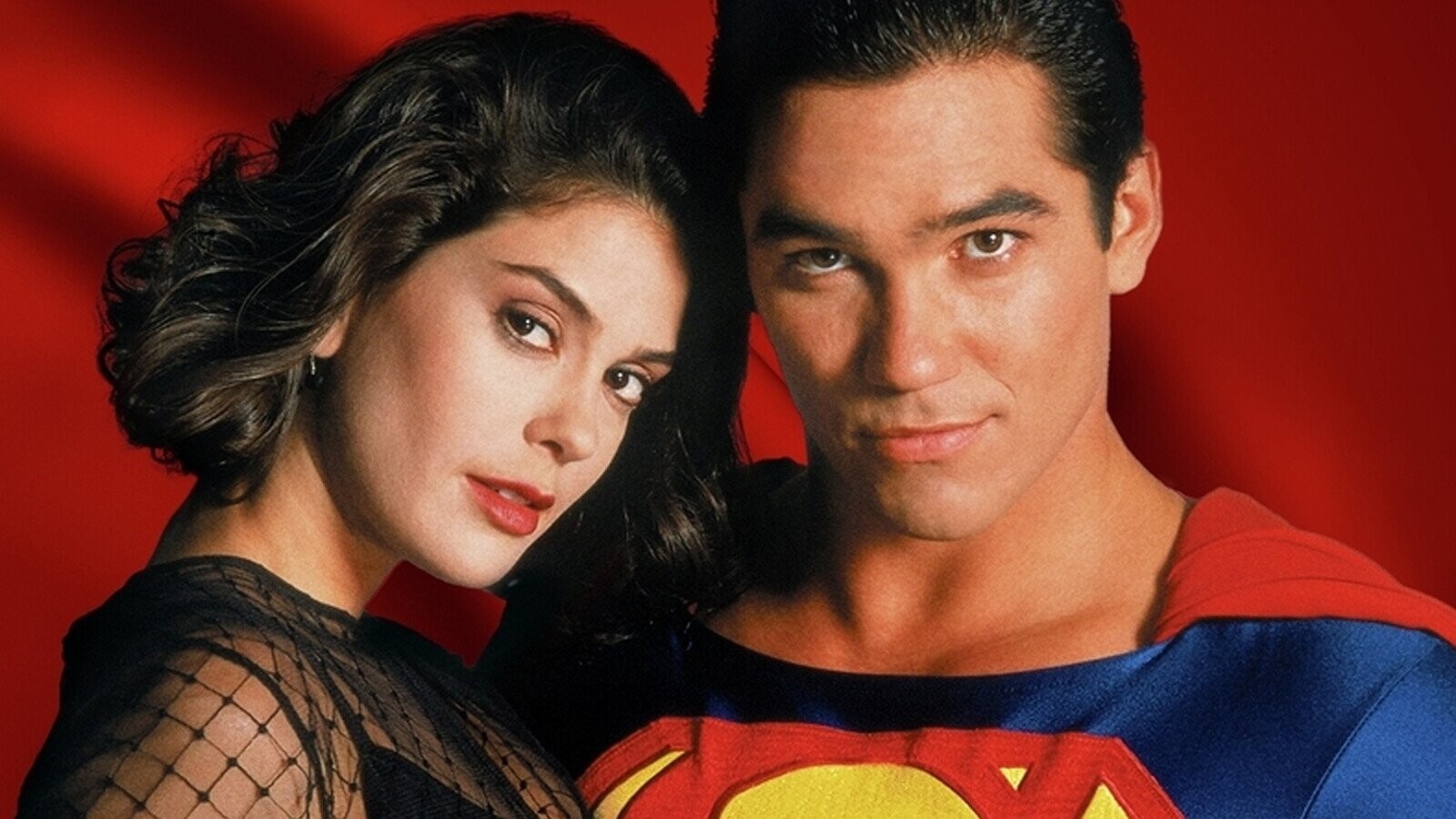
Every few years, America gathers around its most sacred cultural campfire: arguing about Superman as if a man from the planet Krypton personally reviewed our tax returns. The latest round came when Dean Cain, best known for playing Clark Kent in the 1990s series Lois & Clark: The New Adventures of Superman, criticized James Gunn’s Superman for leaning into the idea that the Man of Steel is, among other things, an immigrant. Cain’s objection was not exactly subtle. He worried that Hollywood was making the character too “woke,” and he suggested that calling Superman an immigrant could hurt the movie’s box office.
That take was already wobbling like a Daily Planet intern carrying six coffees. Superman is not merely immigrant-coded; he is an infant refugee from a destroyed world who lands in Kansas, is raised by American parents, takes a human name, and spends his life trying to help his adopted home. If that is not an immigrant story, then neither is Paddington, and nobody wants to live in that kind of joyless world.
Then the internet did what the internet does best: it found receipts. A clip from Cain’s own show resurfaced, featuring the late comic legend Fred Willard as President Garner in a Lois & Clark storyline involving politics, immigration enforcement, and Superman’s alien status. In the scene fans highlighted, Superman is treated as an alien who may need to show a green card. Suddenly, Cain’s complaint looked less like a bold cultural critique and more like a man getting fact-checked by his own cape.
Why Dean Cain’s Superman Criticism Sparked Such a Backlash
Cain’s argument centered on James Gunn describing Superman as part of America’s immigrant story and as a symbol of basic human kindness. Cain acknowledged that Superman is technically an immigrantbecause, yes, “he’s a freaking alien”but objected to making that idea a political talking point. He also invoked the classic phrase “truth, justice and the American way,” suggesting that Superman should remain attached to clear traditional values rather than modern cultural messaging.
The problem is that Superman’s traditional values have never been as apolitical as critics pretend. From the beginning, the character has been about power restrained by morality, belonging after displacement, and choosing compassion when domination would be easier. The official DC character description frames Superman as the last survivor of Krypton, raised in Smallville, and defined by heroism, compassion, responsibility, truth, justice, and hope. That is not a spreadsheet of neutral traits. It is a moral worldview wearing boots.
James Gunn did not invent the immigrant reading of Superman. He simply said the quiet part while cameras were rolling. Superman’s origin has always invited that interpretation: Kal-El is sent away by desperate parents, arrives in a new land, receives a new identity, and grows up balancing two heritages. He is Clark Kent and Kal-El, Kansas farm boy and Kryptonian survivor. The tension between those identities is not a modern update. It is the engine.
The Fred Willard Clip Makes the Criticism Look Hilariously Self-Defeating
The resurfaced Lois & Clark moment is so funny because it does not require elaborate media analysis. Nobody needs a dissertation titled “Kryptonian Migration and Late-1990s Network Television.” The joke is right there on screen. Superman is confronted through the language of immigration status, and the scene plays with the literal absurdity of applying Earth bureaucracy to an extraterrestrial hero.
Fred Willard’s presence makes the whole thing even better. Willard was one of American comedy’s great dryly ridiculous performers, the kind of actor who could make a bland official statement sound like it had been dipped in mayonnaise and left under fluorescent lighting. In the Lois & Clark two-part storyline, he appears as President Garner, while the villain Tempus manipulates political power in a plot involving a rigged election, time travel, and authoritarian pressure. Subtle? Not exactly. Network TV in the 1990s sometimes delivered political satire with the delicacy of a piano falling down stairs. But it worked.
The relevant gag is simple: Superman is an alien, so the government treats him like an alien. The show literalizes the metaphor. It asks what happens when the world’s most beloved hero is suddenly reduced to paperwork, suspicion, and administrative control. That is not just “politics” being stapled onto Superman. That is Superman’s premise turning around and looking the audience directly in the eye.
Superman Has Always Been an Immigrant Story
Superman debuted in Action Comics #1 in 1938, created by Jerry Siegel and Joe Shuster. The basic origin has become modern mythology: baby Kal-El escapes Krypton before its destruction, lands on Earth, and is raised by Jonathan and Martha Kent in Smallville. He grows into Clark Kent, becomes a reporter in Metropolis, and uses his extraordinary powers to protect others.
That story has survived because it is flexible without becoming empty. Superman can be read as science fiction, fantasy, religious allegory, American myth, immigrant fable, refugee story, adoption narrative, or workplace comedy if your favorite Daily Planet scenes involve Perry White shouting. The immigrant reading is not the only reading, but it is one of the most obvious. The man literally comes from another planet and builds a life in America.
Even the “American way” phrase has evolved over time. Superman’s motto has changed across radio, television, comics, and film, reflecting the eras that used him. The character has supported wartime patriotism, Cold War ideals, global humanitarianism, and broader ideas of “a better tomorrow.” That evolution is part of the brand, not a betrayal of it. Superman is not a museum statue. He is a living symbol, which means each generation argues over him, polishes him, dents him, and occasionally yells at him on cable news.
Why “Woke Superman” Is a Weak Complaint
The phrase “woke Superman” sounds dramatic until you ask what is supposedly new. Kindness? Protecting vulnerable people? Being an outsider who chooses to help the world that adopted him? These are not radical additions. They are load-bearing walls in the Fortress of Solitude.
The complaint also collapses because Superman is not Batman. Batman can brood in a gargoyle’s shadow and call it character development. Superman cannot. His core appeal is not that he is the strongest person in the room; it is that the strongest person in the room still asks whether everyone is okay. If Superman becomes nothing more than a flying national logo, he stops being Superman and starts being a parade balloon with abs.
Cain’s concern that Gunn’s comments could hurt the box office also aged poorly. The 2025 Superman opened strongly, leading the U.S. and Canadian box office and launching with a major global debut. Its final theatrical total later passed $600 million worldwide. That does not mean every viewer loved it, or that every criticism was invalid. But it does suggest that “people will flee from immigrant Superman” was not exactly a Lex Luthor-level prediction.
The Irony of Dean Cain Forgetting His Own Superman Era
Lois & Clark was never a grim, politics-free zone. It was a romantic workplace superhero series with comedy, fantasy, media satire, family values, and plenty of topical goofiness. It leaned into Clark’s humanity while still finding jokes in the absurd logistics of being Superman. That is why the Fred Willard clip lands so hard. Cain’s own version of the character did not exist in a vacuum. His show openly played with immigration language, political manipulation, and the vulnerability of being “othered” by institutions.
The scene does not prove that Cain is forbidden from having a political opinion. Actors are not required to agree with every episode they appeared in. But it does make his criticism feel historically thin. If you played Superman in a series where the character was literally challenged over alien status, complaining that the immigrant angle is some new Hollywood infection is like starring in Jaws and later announcing that shark content has gone too far.
Fred Willard’s Comedy Accidentally Became the Perfect Rebuttal
Fred Willard had a gift for making foolish authority figures feel painfully real. His comedy often came from people who sounded official while saying nonsense with total confidence. That is exactly why his Lois & Clark appearance feels so useful in this debate. The clip does not scream. It smirks. It lets bureaucracy expose itself.
In the context of the Cain controversy, Willard’s presence adds a final comic flourish. A beloved deadpan actor from a 1997 superhero episode has somehow become the internet’s courtroom exhibit against a 2025 culture-war complaint. It is strange, silly, and deeply fitting. Superman discourse has always been a little ridiculous, but this round comes with archival footage and a punchline.
What James Gunn Actually Got Right About Superman
Gunn’s framing of Superman as an immigrant story about kindness is not a rejection of the character’s American identity. It is one explanation for why that identity matters. Superman’s Americanness is not based on bloodline, birthplace, or paperwork from Krypton’s Department of Exploding Planets. It is based on adoption, values, service, and choice.
That is why Clark Kent is such an important part of the myth. He is not a disguise in the shallow sense. He is the life Superman was given and the life he chooses to honor. Smallville shapes him. The Kents shape him. Journalism shapes him. His alien heritage gives him power, but his human upbringing gives that power direction. Without the immigrant tension, the story loses emotional depth.
Gunn’s version may not be everyone’s favorite Superman. No version ever is. Some fans prefer Christopher Reeve’s warmth, some admire Henry Cavill’s burdened intensity, some love Brandon Routh’s melancholy, and some still have a soft spot for Dean Cain’s charming television Clark. But saying Superman is an immigrant is not a wild reinvention. It is reading the label on the rocket ship.
Why the Debate Matters Beyond One Actor’s Comment
The argument over Superman reveals a larger habit in pop culture: people often claim to defend “the original” version of a character while remembering a simplified version that never fully existed. Superman has been a crusader against corruption, a wartime patriot, a family man, a cosmic figure, a journalist, a farm kid, a savior figure, a refugee, and sometimes a guy who has to explain why glasses count as a disguise. He contains multitudes. Also, apparently, prescription frames with military-grade identity protection.
When fans say Superman should not be political, they often mean he should not be political in a way they notice. But Superman saving people, refusing cruelty, defending strangers, and believing in a better tomorrow are all value statements. They become controversial only when the surrounding culture decides kindness itself is suspicious.
Experience Section: Watching the Clip After the Controversy Changes Everything
There is a specific kind of joy in watching an old television clip suddenly become relevant again. You click expecting a quick nostalgia hit, maybe a bad tie, maybe a set that looks like it was built from office furniture and optimism. Then, within seconds, the past reaches through the screen and taps the present on the forehead. That is what happens with the Fred Willard Lois & Clark clip.
The experience is funny at first because the scene is so direct. Superman, the most famous alien in pop culture, is asked to deal with immigration-style scrutiny. There is no need to decode hidden symbolism. The show puts the metaphor in a suit, gives it a clipboard, and lets it block the Man of Steel. It feels like a joke written by someone who knew exactly how absurd the premise was and trusted viewers to enjoy the collision between myth and paperwork.
But after the first laugh, the clip becomes more interesting. It reminds you that superhero stories are often at their best when they make the impossible painfully ordinary. Flying is fun, laser eyes are cool, but the question “Where do you belong?” is what gives Superman weight. The character can lift a building, yet the world can still make him answer for where he came from. That contradiction is the story.
Watching the clip after Cain’s comments also creates an odd feeling of cultural whiplash. The 1990s are often remembered as a simpler television era, full of glossy lighting, saxophone-heavy romance, and villains with names like Tempus. Yet here is that same era openly joking about Superman’s alien status through immigration language. The past was not as politically empty as nostalgia claims. It was just wearing shoulder pads.
Fred Willard makes the scene especially memorable because he never had to push too hard. His comic authority style works because he looks like he belongs in the room and sounds like he may have wandered into the wrong meeting. That energy is perfect for a Superman story about politics and bureaucracy. He makes institutional absurdity feel both harmless and dangerous, which is a tricky balance. You laugh, then realize the joke has teeth.
For longtime Superman fans, the clip also offers a useful reminder: loving the character means accepting that he has always been bigger than one slogan, actor, costume, or era. The red cape can carry different meanings at different times. Sometimes it represents national confidence. Sometimes it represents refugee survival. Sometimes it represents basic decency when everyone else is busy monetizing cynicism. The best Superman stories usually understand that all of those meanings can coexist.
That is why Cain’s criticism feels so flimsy in hindsight. The clip does not merely contradict him; it does so with comic timing. It shows that even his own Superman lived inside stories about alien identity, political pressure, and public suspicion. The debate did not begin with James Gunn. It was already there, waiting in reruns, wearing a cape and asking whether anyone had seen its green card.
Conclusion: Superman Was Never the Problem
Dean Cain’s criticism of James Gunn’s immigrant-themed Superman might have been intended as a defense of tradition, but the Fred Willard clip from Lois & Clark exposes the central flaw: the tradition already includes the thing Cain is criticizing. Superman has always been a stranger who becomes family, an outsider who chooses service, and an immigrant figure whose American identity comes from values rather than origin.
The resurfaced clip is not just an internet dunk, although it is definitely that, and a pretty good one. It is also a reminder that Superman’s story has never been fragile. It can handle politics, comedy, romance, satire, reinvention, and even arguments from former Supermen. The character survives because the core idea remains powerful: someone with every reason to feel alienated chooses kindness anyway.
So yes, Superman is an immigrant. He is also a farm boy, a reporter, a hero, a symbol, a son, a survivor, and occasionally a bureaucratic nightmare. If that makes him “woke,” then the character has been awake since 1938.