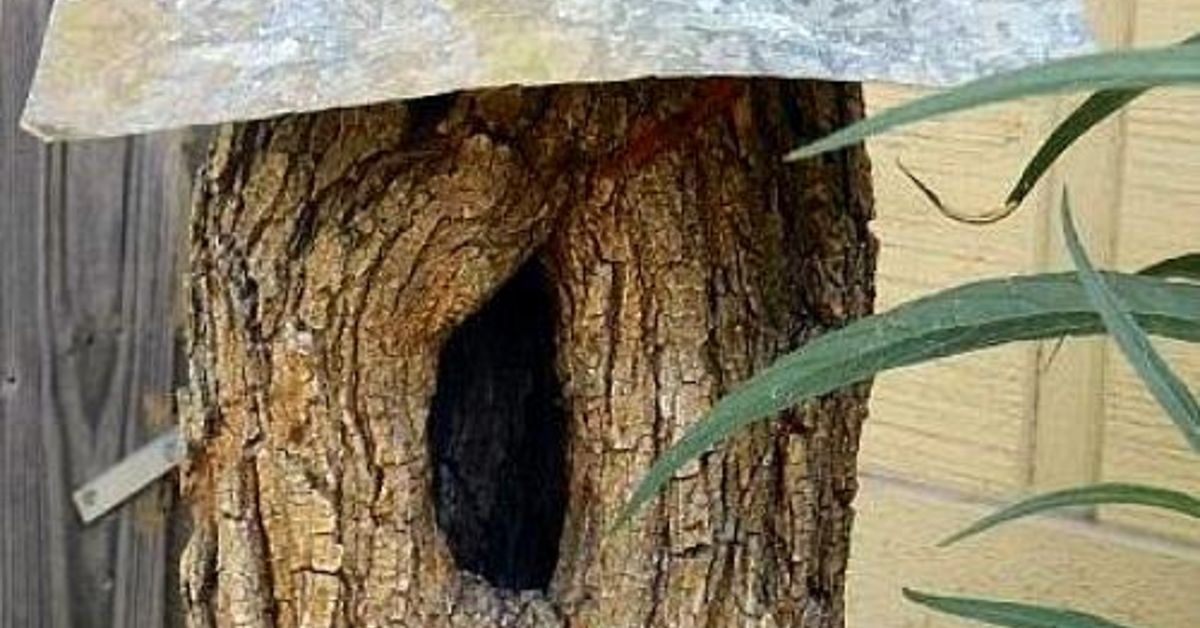
A tree trunk birdhouse has the charming appearance of a woodland apartment designed by Mother Natureif Mother Nature owned a drill, exterior screws, and a tape measure. Made from a hollow log or sturdy branch section, this rustic birdhouse blends naturally into a garden while providing cavity-nesting birds with a sheltered place to raise their young.
Good looks, however, are only half the project. Birds care far more about correct dimensions, ventilation, drainage, temperature, and predator protection than they do about rustic curb appeal. A decorative log with an enormous doorway and no drainage may impress human visitors, but to a chickadee it resembles a damp studio apartment with terrible security.
This guide explains how to build a functional DIY tree trunk birdhouse, choose an appropriate entrance hole, install it safely, and maintain it without disturbing its occupants.
What Is a Tree Trunk Birdhouse?
A tree trunk birdhouse is a nest box made from a section of natural wood rather than flat boards. The center is hollowed out to imitate a cavity created by woodpeckers, decay, or a broken branch. A fitted floor, weather-resistant roof, entrance hole, drainage openings, and removable access panel turn the log into usable nesting habitat.
These birdhouses are particularly attractive to secondary cavity nesters. Unlike woodpeckers, these species generally cannot excavate an entire nesting chamber by themselves. Chickadees, wrens, nuthatches, bluebirds, and Tree Swallows may therefore investigate correctly designed nest boxes when natural cavities are scarce.
A birdhouse is not the same as a feeder or winter roost. It normally contains no seed, decorative furniture, or tiny welcome mat. The interior should be simple, dry, rough enough for young birds to climb, and sized for a particular species.
Plan for Birds Before Picking Up the Drill
Choose a target species
The entrance diameter determines which birds can enter, while the internal floor area and cavity depth affect whether they can nest comfortably. Before cutting the log, identify common cavity-nesting birds in your region and select one species to accommodate.
| Target bird | Typical round entrance | Suggested internal floor | Typical habitat |
|---|---|---|---|
| House Wren | 1 1/8 inches | About 4 by 4 inches | Shrubby yards and woodland edges |
| Chickadee | 1 1/8 inches | About 4 by 4 inches | Wooded yards and forest edges |
| Tree Swallow | 1 3/8 inches | About 5 by 5 inches | Open land near water |
| Eastern Bluebird | 1 1/2 inches | About 5 by 5 inches | Open lawns, fields, and orchards |
These are general starting dimensions rather than universal rules. Species requirements can vary by region, so compare your design with a current species-specific nest-box plan before drilling the entrance. Making the hole “generously large” is not generous at all; it may admit larger competitors and give predators easier access.
Select a responsible log
Use a sound section from a legally obtained fallen limb, storm-damaged branch, or pruning project on private property. Do not cut a living tree merely to make a birdhouse. Avoid removing standing dead trees, known as snags, because they already supply natural cavities, insects, perches, and shelter for wildlife. Collection rules on public land vary and may require a permit.
A log approximately 6 to 9 inches in outside diameter and 10 to 14 inches long works for many small songbird designs. Naturally hollow wood saves labor, but it must retain solid walls. Cedar, cypress, pine, and other workable woods can be used when they are dry, structurally sound, and untreated.
Reject wood that is punky, heavily infested, coated with mold, or split from end to end. Retained bark produces the most natural appearance, although loose bark should be removed because it eventually becomes a very rustic object on the ground.
Tools and Materials
- A dry, sound log or thick branch section
- Untreated exterior-grade wood for the floor and roof
- Exterior-rated or galvanized screws
- Drill, entrance-size hole saw, and small drill bits
- Saw, chisel, mallet, rasp, and coarse sandpaper
- Measuring tape, square, and pencil
- Clamps and a stable V-shaped cradle for the log
- Eye protection, hearing protection, and a dust mask
- Metal mounting pole and predator baffle, when possible
Never try to restrain a round log with one hand while drilling with the other. Round stock can roll or catch suddenly. Secure it in a cradle with clamps, keep hands outside the cutting path, and use tools only according to their manufacturers’ instructions.
How to Build a Tree Trunk Birdhouse
1. Cut and stabilize the log
Trim both ends so the body is roughly 10 to 14 inches tall. The exact height depends on the intended bird, but the nest floor should generally sit several inches below the bottom of the entrance. A deeper chamber makes it harder for a raccoon or cat to reach the nest through the doorway.
Place the log in a V-shaped support and clamp it firmly. Mark the front, back, top, and bottom before hollowing anything. This small step prevents the surprisingly common woodworking maneuver known as “drilling the perfect hole on the wrong side.”
2. Create the nesting cavity
If the log is naturally hollow, remove loose decayed material with a chisel and stiff brush until the remaining walls are solid. Maintain walls at least 3/4 inch thick for insulation and strength.
For a solid log, one controllable method is to split or saw it lengthwise, carve a cavity in both halves, and fasten the sections back together with exterior screws. Another option is to remove the center using overlapping holes and chisels while the log is securely clamped. Leave a reasonably level shelf for the floor and avoid making the inside polished-smooth.
A cavity around 4 by 4 or 5 by 5 inches is suitable for many small species. Minor irregularities are welcome; this is a bird nursery, not a precision-machined engine part.
3. Install a removable floor
Cut an untreated wooden disk or polygon to fit the bottom. Secure it with screws instead of permanent glue so it can be removed for cleaning. Drill at least four drainage holes approximately 1/4 to 3/8 inch wide. Alternatively, leave narrow drainage gaps where the floor meets the wall.
The floor must remain stable under a nest, but water must have a way out. A watertight birdhouse sounds impressive until the first storm turns it into a wooden bathtub.
4. Drill the entrance hole
Mark the entrance so its bottom sits at the appropriate height above the flooroften 6 to 8 inches for a small songbird box. Drill the correct round hole for your target species and smooth only the sharp exterior edge.
Do not add a perch. Native cavity-nesting birds can land directly at the entrance, while a perch may help larger competitors or predators linger near the nest. For extra durability, install a metal entrance-hole guard that cannot snag feathers.
5. Add ventilation and an interior climbing surface
Drill ventilation holes near the top on opposite sides. A practical design uses two 5/8-inch openings on each side, protected beneath the roof overhang. Ventilation releases hot air and moisture, which is especially important when bark and thick wood slow heat transfer.
Score shallow horizontal grooves into the interior wall below the entrance. These grooves give fledglings something to grip when they are ready to climb out. Keep the cuts shallow so claws can catch without creating dangerous crevices.
6. Make an overhanging roof
Cut a roof from a weather-resistant board or broad wood slab. Slope it slightly and extend it beyond every wall, with the largest overhang at the front. A substantial front overhang sheds rain and makes it more difficult for climbing predators to reach into the entrance from above.
Attach the roof with screws or a simple hinge-and-latch arrangement. At least one componentthe roof, floor, or sidemust open for inspection and cleaning. Seal exterior roof joints if necessary, but do not coat the interior with paint, stain, or preservative.
7. Finish only the exterior
A naturally weathered log generally requires no finish. If protection is desired, apply a low-toxicity, water-based exterior finish only to the outside and allow it to cure fully before installation. Light, natural colors absorb less heat than black, dark brown, or other dramatic shades.
Never apply finish inside the cavity. Avoid pressure-treated lumber, creosote-treated wood, lead paint, insecticides, mothballs, and chemical fragrances. Birds requested a nursery, not a home-improvement aisle.
Where to Install the Birdhouse
Placement should match the target bird’s habitat. Bluebirds favor open grassy areas with scattered trees or fences for hunting perches. Chickadees and wrens are more comfortable near woodland edges, shrubs, and mature landscaping. Tree Swallows prefer open flight paths and are often found near water.
A metal pole with a properly fitted predator baffle is usually safer than mounting a nest box directly on a live tree. Tree-mounted boxes are easier for squirrels, snakes, raccoons, and cats to reach. If a tree must be used, avoid branches close to the entrance and use attachment hardware that accommodates growth without girdling or repeatedly injuring the trunk.
Many small-songbird boxes are installed roughly 4 to 10 feet above ground, although preferred height varies by species. Face the entrance away from prevailing storms and intense afternoon sun. The approach path should remain open, and the box should not hang where it swings wildly in the wind.
Install the birdhouse before local nesting begins. Some birds inspect cavities weeks before laying eggs. If the box remains vacant for an entire season, reconsider the hole size, surrounding habitat, height, overheating, predator exposure, and proximity to competing boxes.
Monitoring and Seasonal Maintenance
Watch activity from a respectful distance. If you monitor the interior, approach calmly, avoid early-morning checks, and keep visits brief. Do not inspect when nestlings are close to fledging because frightened young may leave before they can fly well.
Never move an occupied birdhouse unless immediate danger makes intervention unavoidable. Native migratory birds, their eggs, and active nests receive federal protection in the United States, and additional state rules may apply.
After the brood has fledged and the nesting season is over, remove old material and brush out loose debris. Wear gloves and a mask, work outdoors, and avoid breathing dust. Make sure drainage and ventilation holes remain open. Tighten hardware, replace a cracked roof, and check whether bark has loosened or rot has weakened the walls.
Do not place seed inside a nest box. Most cavity nesters build their own nests, although certain larger species require a layer of clean wood shavings. Follow a species-specific plan before adding anything.
Common Tree Trunk Birdhouse Mistakes
- Oversized entrance: It admits larger competitors and improves a predator’s reach.
- No access panel: A sealed log cannot be cleaned or properly inspected.
- No drainage: Rain and condensation collect beneath the nest.
- Decorative perch: It offers no benefit to nesting songbirds and may assist intruders.
- Dark exterior finish: It can increase solar heat gain during warm weather.
- Weak, rotten wood: A charmingly decayed log may fail during a storm.
- Tree-trunk mounting without protection: The trunk can become a convenient predator highway.
- Ignoring habitat: Correct dimensions cannot compensate for an unsuitable location.
Experiences From a Season With a Tree Trunk Birdhouse
The following field-style observations reflect experiences commonly reported by backyard builders and nest-box monitors. The first lesson usually arrives during construction: natural wood refuses to behave like a rectangular board. A log that looks straight from across the workshop may wobble like a determined potato when placed on a bench. Building a stable cradle and marking a centerline often consumes more time than drilling the entrance, but it also produces a safer and cleaner result.
Hollow logs also reveal surprises. One side may be perfectly solid while the opposite wall conceals a soft pocket created by insects or decay. Experienced builders stop frequently, measure wall thickness, and remove only as much material as necessary. The goal is not to create a flawless cylinder. Birds are accustomed to irregular cavities, and a slightly rough interior provides better traction than a polished one.
Installation brings another useful discovery: the prettiest location is not always the best one. A log birdhouse can look magnificent beneath a flower-covered arbor, yet dense vines may block the flight path and give predators cover. Moving the same house to a baffled pole beside open lawn can make it far more attractive to bluebirds or Tree Swallows. In nest-box work, real estate remains stubbornly important.
The first visitor may not be the intended tenant. A chickadee might inspect the entrance, a wren may carry in several twigs, and a squirrel may spend an afternoon attempting unauthorized renovations. This is why entrance size, mounting, and a predator guard matter. A metal hole protector can prevent chewing, while a stovepipe-style baffle below the box can make climbing animals reconsider their career choices.
Once a pair begins building, observation becomes more rewarding than decoration. Adults may arrive repeatedly with grass, moss, bark fibers, feathers, or other natural material. Their traffic patterns reveal why the entrance needs a clear approach. Watching from a window or distant chair is usually more informativeand far less disruptivethan opening the box every day.
Hot weather can expose design weaknesses quickly. A house placed in punishing afternoon sun may become dangerously warm, particularly when the log is dark or the ventilation holes are too small. Shade during the hottest part of the day, a light-colored roof, sufficient airflow, and a generous roof overhang help moderate conditions. Observers should treat prolonged adult distress, panting young, or excessive heat as warnings that future placement or design needs improvement.
The final lesson comes after fledging. An apparently tidy nest may conceal compacted material, droppings, parasites, or trapped moisture. Opening the removable floor or roof makes seasonal cleaning a five-minute job rather than an archaeological expedition. During that inspection, builders often find that bark has loosened and screws need tightening even though the nesting chamber remains sound.
A successful tree trunk birdhouse therefore becomes more than a weekend craft. It develops into a small cycle of planning, observing, adjusting, and maintaining. The reward is not simply seeing birds use something handmade. It is learning to judge the project from their perspective: Is it dry? Is it cool enough? Can young birds climb out? Can a raccoon reach in? That shift from decoration to habitat is what turns an attractive log into a genuinely useful home.
Conclusion
A tree trunk birdhouse combines rustic garden character with practical wildlife support, but only when its natural appearance is backed by sound nest-box design. Start with legally obtained, untreated wood; match the cavity and entrance to a local species; provide drainage, ventilation, a rough interior, and cleaning access; then install the house in appropriate habitat with predator protection.
The finished birdhouse does not need to look factory-perfect. Uneven bark and an irregular roof are part of its appeal. To nesting birds, the most beautiful feature will always be a secure, dry cavity in the right location.