The Celtic Trinity Knot is one of those rare symbols that can look ancient, elegant, spiritual, fashionable, and slightly mysterious all before your coffee gets cold. Also known as the Triquetra, this three-pointed knot has appeared in manuscript art, church decoration, jewelry, tattoos, wedding rings, and modern Irish-inspired design. Its charm is simple at first glance: three interwoven loops, often drawn as one unbroken line. But behind that graceful shape is a long cultural story involving Celtic art, Christian symbolism, medieval monks, Irish identity, and modern people searching for a beautiful way to say, “Everything important in life is connected.”
The main keyword here is Celtic Trinity Knot meaning, but the symbol itself refuses to sit quietly in one tidy definition. Depending on the setting, the Trinity Knot may represent the Holy Trinity, eternal love, the cycle of life, the three realms of earth, sea, and sky, or the relationship between past, present, and future. Like many powerful cultural symbols, it has gathered meanings over time rather than arriving with a label taped to its forehead.
What Is the Celtic Trinity Knot?
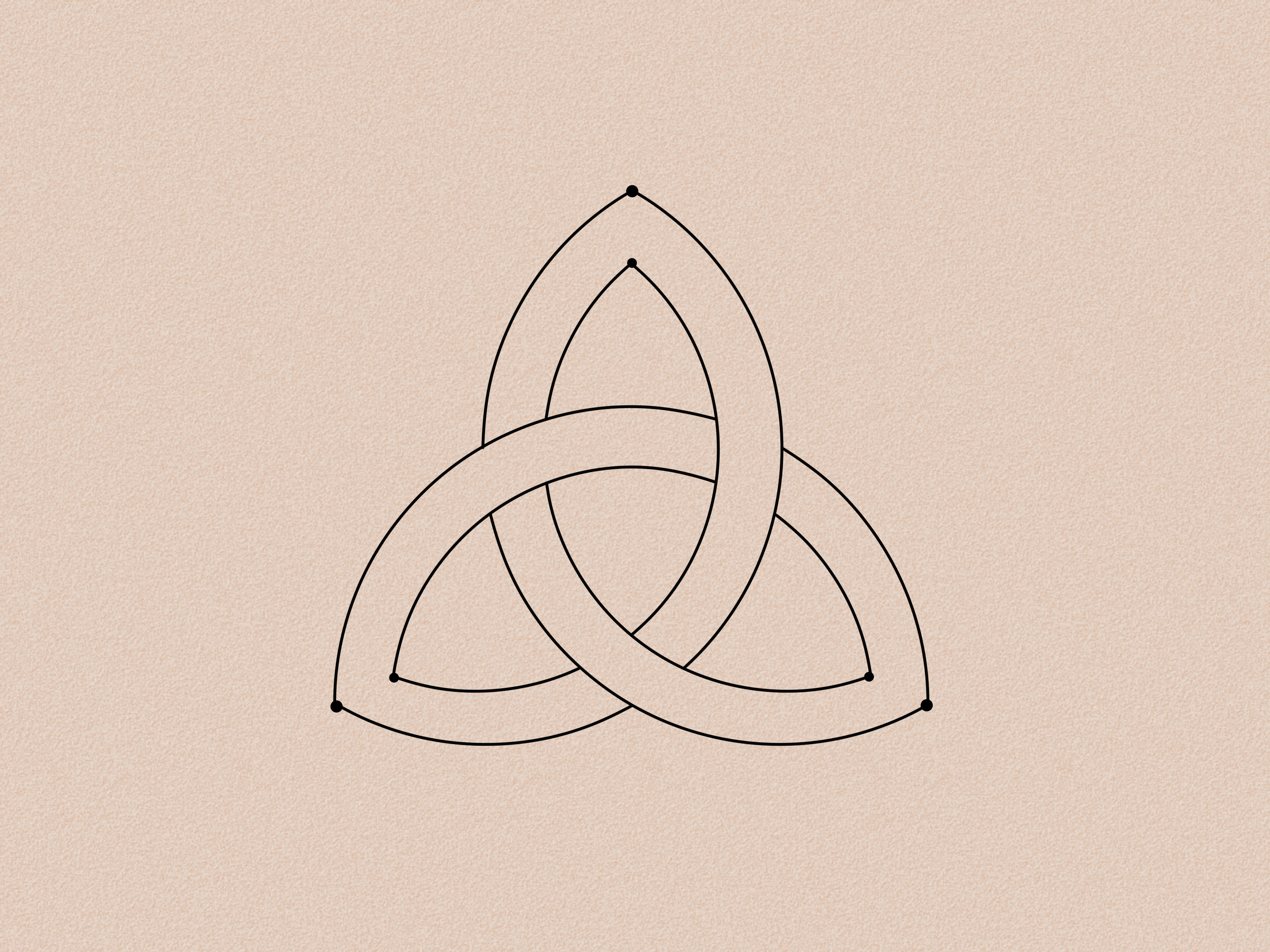
The Celtic Trinity Knot is commonly called the Triquetra, a word connected to the Latin idea of “three-cornered.” Visually, it is usually made from three interlaced arcs or leaf-like loops that meet in a triangular form. Many versions include a circle passing through or around the knot, emphasizing unity, eternity, and wholeness.
In Celtic-style design, the knot often appears as a continuous strand with no clear beginning or end. That feature matters. The endless line is one reason Celtic knotwork is so often associated with eternity, spiritual continuity, and the woven nature of human relationships. In other words, the knot is not just pretty decoration. It is visual philosophy with better curves.
The Core Meaning of the Trinity Knot
The most famous interpretation of the Trinity Knot is the Christian one: the three points represent the Holy TrinityFather, Son, and Holy Spirit. In this context, the single continuous line can symbolize one divine essence expressed in three persons. This made the Triquetra a fitting symbol in Christian art, especially in places where local artistic traditions blended with church teaching.
However, the Trinity Knot has also been interpreted through older and broader Celtic ideas of threeness. Celtic cultures often valued triads: three-part sayings, threefold deities, and symbolic groupings. Modern interpretations frequently connect the knot to:
- Past, present, and future
- Life, death, and rebirth
- Mind, body, and spirit
- Earth, sea, and sky
- Love, loyalty, and friendship
- Mother, maiden, and crone
Not every meaning can be proven as ancient. That is important. Some interpretations are medieval, some Christian, some rooted in folklore, and some are modern spiritual or artistic readings. The Trinity Knot has become meaningful because people keep using it meaningfully. Symbols are a bit like family recipes: the original may be old, but every generation adds its own seasoning.
Celtic Knotwork and the Power of Endless Lines
Celtic knotwork is famous for its over-and-under weaving patterns. These designs became especially visible in early medieval Insular art, a style associated with Ireland and Britain. Knotwork decorated manuscripts, stone crosses, metalwork, and sacred objects. The interlaced line created a sense of movement and complexity, as though the artwork were alive and quietly refusing to be simple.
The endless quality of Celtic knots is one reason they remain popular today. A line with no beginning and no end naturally suggests eternity. For weddings, it can symbolize lasting commitment. For families, it can represent generations linked together. For spiritual seekers, it can point to the invisible connections between the physical and sacred worlds.
The Trinity Knot in Medieval Christian Art
The Celtic Trinity Knot is strongly associated with early Christian art in Ireland and neighboring regions. Monks and artists created magnificent manuscripts filled with detailed lettering, animals, spirals, interlace patterns, and symbolic designs. The Book of Kells, preserved at Trinity College Dublin, is one of the most famous examples of this tradition. It contains the four Gospels in Latin and is celebrated for its rich ornamentation, elaborate knotwork, and extraordinary artistic detail.
The Book of Kells does not exist merely as an old book behind glass. It is a reminder that medieval religious art was not boring beige paperwork. It was color, devotion, geometry, imagination, and patience poured onto vellum. Knotwork in manuscripts like this helped frame sacred words with visual beauty. The designs invited contemplation, much like a quiet prayer drawn in ink.
In Christian settings, the Triquetra’s threefold shape made it a natural teaching image. It could help communicate a difficult theological idea: three distinct persons within one God. That does not mean every Triquetra in every old artwork was automatically a Trinity symbol, but the association became strong and lasting.
Did the Trinity Knot Come from Pagan Celtic Culture?
This is one of the most common questions about the Celtic Trinity Knot, and the honest answer is: it is complicated. Threefold symbols appear in many ancient cultures, and Celtic-speaking peoples did use meaningful triads in mythology, storytelling, and social memory. However, the specific knot form we now call the Trinity Knot is most clearly documented in early medieval art, especially Christian Insular art.
That does not make the symbol “only Christian” or “only pagan.” It means the symbol’s history is layered. Pre-Christian Celtic culture valued symbolic threes. Christian artists later adopted and developed threefold designs within manuscript and church art. Modern Celtic revival movements, jewelry makers, tattoo artists, and spiritual communities then expanded the symbol’s meanings even further.
So, when someone says the Trinity Knot is ancient pagan, Christian, Irish, Celtic, spiritual, romantic, or decorative, they may be partly rightbut rarely completely right. The knot has lived several lives. It is less like a single historical fact and more like a cultural bridge.
The Circle Around the Trinity Knot
Many modern Trinity Knot designs include a circle. The circle is often interpreted as eternity, divine unity, protection, or the unbroken cycle of life. When paired with the three-pointed knot, it strengthens the idea that the three parts belong to one whole.
In jewelry, the circle also gives the design balance. Without it, the knot can look open and airy. With it, the symbol feels complete, almost like a seal. This is why the circular Trinity Knot is especially popular in rings, pendants, and anniversary gifts. It quietly says, “This connection is whole,” without needing to rent a billboard.
The Trinity Knot and Irish Cultural Identity
Today, the Celtic Trinity Knot is often viewed as an Irish symbol, although Celtic culture historically included many regions beyond Ireland, including Scotland, Wales, Cornwall, Brittany, and parts of continental Europe. In modern use, however, the knot has become deeply tied to Irish heritage and Celtic pride.
During the Celtic Revival of the nineteenth and early twentieth centuries, artists, writers, scholars, and designers looked back to medieval Irish manuscripts, stone crosses, legends, and ornament. Celtic knotwork became a visual language of heritage. It appeared in books, architecture, jewelry, textiles, and national imagery. The Trinity Knot benefited from this revival because it was simple enough to recognize and rich enough to feel meaningful.
For people of Irish descent in the United States, the Trinity Knot often serves as a wearable link to ancestry. A pendant or tattoo may honor grandparents, family stories, faith, or a long-standing fascination with Irish culture. It is compact, elegant, and far easier to fit on a necklace than an entire family tree.
Modern Uses of the Celtic Trinity Knot
Jewelry and Wedding Rings
The Trinity Knot is extremely popular in Celtic jewelry. It appears on necklaces, earrings, bracelets, brooches, Claddagh rings, and wedding bands. Couples often choose it because the three points can represent two partners and their shared future, or love, loyalty, and friendship. In Christian weddings, it may represent God at the center of the marriage.
Tattoos and Personal Symbols
As a tattoo, the Celtic Trinity Knot is chosen for its beauty and flexibility. Some people use it to express faith. Others connect it to family, heritage, balance, protection, or personal transformation. Because the design is symmetrical and compact, it works well on the wrist, shoulder, ankle, back, or behind the ear. It also pairs well with circles, flowers, initials, crosses, or other Celtic knot patterns.
Home Decor and Art
The Trinity Knot appears in wall art, carved wood, stained glass, embroidery, and pottery. In a home, it can represent harmony, continuity, and welcome. It is especially common in Irish-themed decor, but it does not have to be limited to shamrocks and St. Patrick’s Day decorations. A well-designed Trinity Knot can look timeless in both traditional and modern spaces.
Common Misunderstandings About the Trinity Knot
One major misunderstanding is that every Celtic symbol has one fixed ancient meaning. In reality, many meanings were assigned later, especially during revival periods or through modern spiritual interpretation. Celtic cultures did not leave us a neat symbol dictionary titled “Knot Meanings for Future Bloggers.” Historians must work from art, archaeology, manuscripts, folklore, and later commentary.
Another misunderstanding is that the Trinity Knot belongs exclusively to one belief system. While it has a strong Christian association, it is also used in secular, cultural, and spiritual contexts. The best approach is to respect the symbol’s history and be clear about your own intended meaning when using it.
Why the Celtic Trinity Knot Still Matters
The Trinity Knot remains powerful because it speaks in a visual language almost anyone can understand. Three parts are connected. The line continues. Nothing is isolated. That message feels relevant whether you are thinking about faith, family, nature, ancestry, or personal growth.
In a world that often feels rushed and fragmented, the Trinity Knot offers a small reminder of continuity. It says that identity is woven from many strands: where we come from, what we believe, whom we love, and how we move through time. That is a lot of emotional mileage for a symbol small enough to fit on a ring.
How to Choose a Trinity Knot Design
If you are choosing a Trinity Knot for jewelry, a tattoo, or artwork, first decide what the symbol means to you. If your focus is Christian faith, a design paired with a cross or circle may feel appropriate. If your focus is Irish heritage, you may prefer a traditional interlace style inspired by manuscript art. If your focus is love or family, a ring, heart-shaped knot, or three-stone setting can carry that meaning beautifully.
Pay attention to craftsmanship. A good Trinity Knot should flow smoothly, with clean over-and-under movement. If the lines look tangled rather than woven, the design may lose some of its elegance. The best versions feel balanced, intentional, and calmlike geometry took a deep breath.
Experiences Connected to the Celtic Trinity Knot
One of the most memorable ways to understand the Celtic Trinity Knot is to encounter it in person rather than only as a digital image. Seeing Celtic knotwork in a museum, church, old manuscript reproduction, or artisan shop changes the experience. On a screen, the knot can look like a stylish logo. Up close, especially in carved stone or metalwork, it feels more patient and human. You begin to notice the discipline behind the curves, the careful crossings, and the way the line seems to travel without ever getting lost.
For many people, the first personal experience with the Trinity Knot comes through jewelry. A small pendant may be bought during a trip, received as a gift, or inherited from a family member. The object becomes more than decoration. It gathers memory. Someone may wear it to feel connected to Irish roots, a grandmother’s story, a wedding vow, or a personal belief in resilience. The knot becomes a quiet companion, the kind of symbol that does not shout but still says something every time it catches the light.
Travel can deepen that connection. Visitors to Ireland often meet Celtic designs everywhere: in gift shops, churches, old cemeteries, museum collections, and manuscript exhibits. The Trinity Knot may appear beside spirals, crosses, animals, and other forms of interlace. After a while, the eye starts to recognize a whole visual rhythm. Celtic art is not random decoration. It has movement, repetition, balance, and mystery. It feels as if the design is asking you to slow down long enough to follow the line.
Tattoos create another kind of experience. People who choose the Trinity Knot as body art often spend time shaping its meaning before committing. Some choose it for faith. Some choose it after grief, using the endless knot to symbolize a bond that death cannot cut. Others choose it after major life changes because the three points can represent who they were, who they are, and who they are becoming. The tattoo then becomes a personal milestone disguised as beautiful linework.
Even drawing the Trinity Knot by hand can be surprisingly meaningful. At first, it looks simple. Then you try to sketch it evenly and discover that the knot has standards. The curves must balance, the crossings must make sense, and the whole design depends on flow. That small creative challenge mirrors the symbol itself: connection requires attention. Whether worn, carved, drawn, gifted, or studied, the Celtic Trinity Knot invites people to think about what holds their lives together. And honestly, any symbol that can do that while still looking good on a silver pendant deserves its long cultural career.
Conclusion
The Celtic Trinity Knot, or Triquetra, is more than a beautiful looping design. It is a symbol shaped by history, faith, art, identity, and personal meaning. Its three points have been connected to the Holy Trinity, Celtic ideas of threeness, natural cycles, eternal love, and the unity of past, present, and future. Its endless line gives it lasting emotional power, while its appearance in medieval Insular art links it to one of the richest artistic traditions in European history.
Whether you see it in the Book of Kells, a wedding ring, a tattoo, or a handmade pendant, the Trinity Knot continues to do what great symbols do best: it says something deep without using many words. It reminds us that life is woven, not stacked. Our stories overlap. Our relationships shape us. Our past travels with us. And sometimes, the most meaningful truths are carried by a single unbroken line.