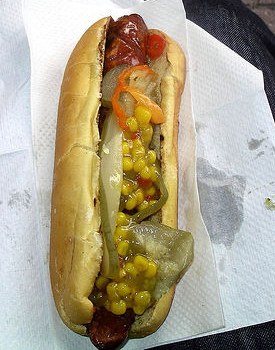
Some inventions change civilization: the wheel, electric light, indoor plumbing, and the tiny plastic table that keeps pizza cheese off the box lid. Other breakthroughs are quieter, such as realizing hot dog toppings do not have to balance precariously on top of the hot dog.
Put them inside the bun first. Mustard, relish, onions, sauerkraut, chili, or cheese goes into the empty groove, and the hot dog slides in last like a delicious cylindrical paperweight. That is the small pleasure celebrated by #978 Putting the toppings on a hot dog bun before the hot dog from 1000 Awesome Things. It is a better order of operations and proof that everyday happiness sometimes arrives holding a squeeze bottle.
A Tiny Revolution in Hot Dog Assembly
The usual routine is automatic: open bun, add hot dog, decorate the top. It works until the first bite sends onions onto your shirt, relish onto your wrist, and mustard toward a neighboring ZIP code.
The toppings-first method flips the script. Add a controlled stripe of sauce to the bun, tuck in loose ingredients, and place the hot dog over them. The sausage presses everything into place. Lunch stops behaving like a tray of loose groceries and starts acting like a well-packed suitcase.
The Hot Dog Becomes the Lid
Toppings stacked on a curved sausage are waiting for gravity to embarrass you. Toppings placed below it settle into the bun’s crease. The hot dog becomes a barrier that helps contain chopped onions, relish, jalapeños, shredded cheese, and sauerkraut.
Every Bite Gets a Better Flavor Mix
A top-loaded dog often has zones: one bite is mostly mustard, the next is plain meat, and the last contains every surviving onion. Spreading toppings through the bun gives each bite a better chance of delivering tang, sweetness, heat, crunch, and savory flavor together.
Why the Toppings-First Hot Dog Trick Works
It Reduces the Topping Avalanche
A frankfurter is a tiny edible hill, and chopped onions have no mountaineering equipment. Place loose toppings underneath, and they settle into a protected channel. This is especially helpful with diced pickles, peppers, slaw, bacon, and grated cheese.
It Keeps Sauces Away From Your Face
A stripe of ketchup or mustard on top is positioned perfectly to touch your nose. A stripe below the hot dog is partially shielded. You may still need a napkinthis is a cookout, not a formal diplomatic receptionbut the odds of wearing lunch decrease.
It Makes the Bun Part of the Flavor
Sauce applied directly to the bread seasons the bun. Mustard sharpens the soft crumb, chili juices soak into the sides, and warm cheese spreads through the interior. The bun stops acting like packaging and joins the meal.
Very wet ingredients can make soft bread soggy, so toast the bun, drain relish or sauerkraut, and use watery toppings with restraint. A layer of cheese, onions, or slaw can also help separate thinner sauces from the bread.
It Speeds Up a Cookout
Guests can prepare buns while the hot dogs finish grilling. When the meat is ready, it goes straight from heat to a waiting flavor nest. The line moves faster, and the grill cook briefly feels like an air-traffic controller who has prevented a mustard-related delay.
Hot Dog History Has Always Favored Convenience
The precise origin of the American hot dog comes with competing stories and plenty of folklore. European sausage traditions evolved into an especially American handheld meal, while Coney Island helped make hot dogs part of city streets, amusement parks, inexpensive lunches, and popular culture.
The bun was crucial because it made a hot sausage portable without a plate or fork. Putting toppings inside first continues that practical tradition. It asks a classic food question: can this be faster, neater, and easier to eat while standing up? The answer is yes, although sitting remains available for traditionalists.
Hot dogs later became fixtures at baseball games, backyard cookouts, beaches, roadside stands, and summer celebrations. They are affordable, customizable, and informal. Nobody has ever leaned across a picnic table and whispered, “I used the wrong oyster fork for my chili dog.”
Regional Hot Dogs Show Why Layering Matters
American hot dog styles range from minimalist to architecturally ambitious. The more toppings involved, the more useful careful layering becomes.
Chicago-Style Hot Dog
A Chicago-style dog may include yellow mustard, chopped onions, bright green relish, tomatoes, a pickle spear, sport peppers, and celery salt in a poppy seed bun. A toppings-first variation can place mustard, relish, and onions underneath, while tomato, pickle, peppers, and celery salt finish the top. The famous appearance remains, but loose ingredients have less roof space to fight over.
New York-Style Hot Dog
New York dogs often feature mustard, sauerkraut, or onion sauce. Drained sauerkraut is perfect beneath the sausage because the hot dog holds the slippery strands inside the bun. The result is tangy, compact, and more subway-platform friendly.
Chili Cheese Dog
Start with shredded cheese, add a modest spoonful of thick chili, and place the hot dog over it. Finish with more cheese. The lower layer softens from the heat and helps bind the chili. It will not become spotless health-spa food, but it may stay on the plate long enough to reach your mouth.
Sonoran, Seattle, and Creative Dogs
Sonoran-style hot dogs may combine a bacon-wrapped sausage with beans, tomatoes, onions, mustard, mayonnaise, and chile sauce in a soft roll. Seattle-style dogs are associated with cream cheese and grilled onions. Modern versions borrow from banh mi, elote, Korean barbecue, Buffalo wings, and Reuben sandwiches.
Creamy spreads naturally belong inside the bun. Beans, onions, and chopped vegetables can follow, then the hot dog. Crisp garnishes such as herbs, chips, or fried onions stay on top for texture.
How to Build the Perfect Toppings-First Hot Dog
Choose a Sturdy Bun
A good bun should be soft enough to bite but strong enough to hold moisture. Potato rolls add tenderness, poppy seed buns bring Chicago character, and split-top New England-style buns have flat sides that toast well. Avoid bread that tears before the sausage arrives. That is not a bun; that is a warning.
Toast or Steam With Purpose
Toasting adds flavor and creates a firmer interior that resists sogginess. Lightly butter the bun and toast it on a grill or skillet until golden while keeping the center soft. Steaming creates a flexible bun that hugs the sausage, but it works best with less watery fillings.
Layer From Thick to Thin
Begin with ingredients that form a stable base: cheese, thick chili, beans, or finely chopped onions. Add thinner sauces in controlled lines rather than enthusiastic puddles. Insert the hot dog, then finish with crisp garnishes.
Know When to Stop
The method works because the sausage holds toppings in place, but even a hot dog has limits. If the frank sits three inches above the bun like a parade float, edit the filling. Aim for flavor in every bite, not every ingredient in the refrigerator.
Keep It Safe
Commercial hot dogs are generally sold fully cooked, but they should be heated thoroughly. People at higher risk from foodborne illness should eat them steaming hot. Keep perishable toppings chilled until serving and avoid leaving them in hot weather for long periods. Clever assembly is good; safe assembly is better.
The Bigger Meaning Behind a Small Awesome Thing
The charm of #978 is not limited to condiment placement. It captures the joy of discovering a tiny improvement to an ordinary routine. A hot dog is so familiar that its assembly becomes invisible. Reverse two steps, and lunch becomes an experiment.
That is the spirit of 1000 Awesome Things: noticing practical, funny pleasures that need no special occasion. A perfectly timed green light, fresh sheets, the cool side of a pillow, or toppings that remain in the bun may not transform the planet. They can still improve the next five minutes, and five good minutes are not nothing.
Experiences With Putting Toppings in the Bun First
My first toppings-first hot dog began with impatience, not innovation. The dogs were still on the grill, the buns were ready, and the condiment table was temporarily empty. I added mustard, relish, and chopped onion to a bun before the meat arrived.
The bun looked unfinished, like a tiny sandwich waiting for management approval. Then I lowered in the hot dog. The toppings shifted neatly around it instead of launching over the sides. The first bite contained mustard, relish, onion, toasted bread, and smoky meat in balanced proportions. Nothing landed on my shirt. This was suspiciously successful.
The biggest surprise was consistency. A traditionally dressed dog often gives me one aggressive mustard bite, a bland patch, and a finale containing half the onions in North America. The toppings-first version spread flavor from end to end because the sausage pressed the condiment layer into a narrow channel.
I tried the method with drained sauerkraut next. Sauerkraut is slippery and determined to escape, yet most strands stayed beneath the hot dog. The chili cheese test was messier, as required by unwritten chili dog law, but cheese beneath the chili softened and helped hold everything together. I still needed napkins, just not an emergency roll of paper towels.
The method improved cookouts too. Guests prepared buns while the hot dogs cooked, using bowls of onions, relish, cheese, pickled peppers, sauerkraut, and sauces. When each batch left the grill, the dogs dropped into ready-made flavor nests. People became more thoughtful instead of squeezing three sauces over the top in a panic.
One family test produced the funniest result. I prepared two identical dogs, one conventionally topped and one built from the bun upward. The first looked more photogenic for about six seconds, then lost onions during the opening bite. The second looked modest but stayed together until the end. Even a skeptical relative admitted that the hidden layer tasted more balanced. Nobody abandoned personal condiment loyaltiesketchup diplomacy remains impossiblebut everyone agreed the construction was easier to eat. That is probably the highest honor a hot dog technique can receive: fewer speeches, fewer stains, and immediate requests for another round.
Not every experiment worked. Tomato cubes against an untoasted bun created a soggy patch. Too much mayonnaise made the sausage slide upward like it had received an evacuation order. A heroic spoonful of loose chili escaped from both ends. The lesson was simple: toppings-first is smart, but portion control is smarter.
My reliable sequence is now easy: lightly toast the bun, add a thin spread, place loose ingredients in the groove, insert the hot dog, and finish with one crisp garnish. The construction protects the bread, distributes flavor, and keeps the meal recognizable instead of becoming a condiment landslide with a sausage rumor underneath.
That small success is the real appeal of #978. It proves routine can be rearranged. Put the toppings in first, let the hot dog hold them down, and enjoy the balanced bite. Then quietly accept your promotion to assistant regional manager of backyard food engineering.
Conclusion: A Better Hot Dog in One Move
Putting toppings in the bun before the hot dog is a life hack requiring no app, subscription, or special equipment. It improves distribution, controls spills, and makes creative combinations easier to manage. More importantly, it turns an ordinary meal into a small discovery.
At your next cookout, resist autopilot. Add mustard, onions, relish, chili, cheese, or sauerkraut first. Slide in the hot dog and take a bite while everything is warm. The world may remain complicated, but for a few delicious minutes, your toppings will be exactly where they belong.