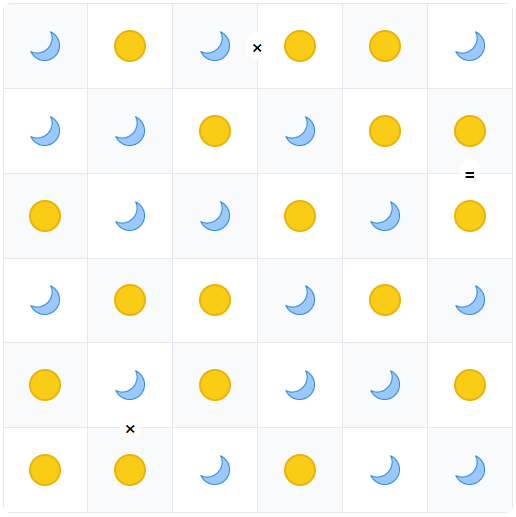
LinkedIn isn’t just for networking, job hunting, and celebrating work anniversaries anymore. Thanks to LinkedIn Games, professionals now have a daily excuse to exercise their brains before tackling spreadsheets, meetings, or another overflowing inbox. Among these games, Tango has quickly become a favorite because it rewards logic instead of luck.
If you’ve ever stared at a grid full of suns, moons, equals signs, and X symbols wondering whether your coffee has stopped working, you’re not alone. The good news? Every Tango puzzle has a logical solution. No guessing is required when you understand the patterns.
This guide explains exactly how to solve Tango on LinkedIn in five practical steps. Along the way, you’ll learn proven deduction techniques, common mistakes to avoid, and strategies that help beginners solve puzzles faster while giving experienced players a competitive edge.
What Is Tango on LinkedIn?
Tango is a daily logic puzzle available in LinkedIn Games. Players fill every empty square with either a Sun (☀️) or a Moon (🌙) while following several logical rules.
Although the puzzle looks simple, it’s actually inspired by the classic logic game known as Takuzu (also called Binairo). Instead of relying on mathematics, players use deduction to gradually eliminate possibilities until every square is correctly filled.
The beauty of Tango is that every move should be justified by logicnot random guessing.
The Four Rules You Must Know Before Solving
1. Balance Every Row and Column
Each completed row and column must contain an equal number of Suns and Moons.
For a standard 6×6 board, that means:
- 3 Suns
- 3 Moons
2. Never Make Three in a Row
You cannot place three identical symbols next to one another horizontally or vertically.
Examples:
- ☀️☀️☀️ ❌
- 🌙🌙🌙 ❌
- ☀️🌙☀️ ✅
3. “=” Means Same
If two neighboring cells are connected with an equals sign, they must contain identical symbols.
4. “×” Means Different
If two neighboring cells are connected with an X marker, they must contain opposite symbols.
Mastering these four rules is more important than memorizing advanced tricks.
How to Solve Tango on LinkedIn: 5 Steps
Step 1: Solve the Obvious Clues First
Start with the easiest deductions. Whenever you see an equals sign or an X between two cells, use that information immediately.
For example:
- If one side of “=” is a Sun, the other must also be a Sun.
- If one side of “×” is a Moon, the opposite cell must be a Sun.
These clues often trigger several additional deductions throughout nearby rows and columns.
Think of them as the first domino in a chain reaction.
Step 2: Watch for Three-in-a-Row Patterns
This is one of the strongest techniques in Tango.
Whenever you notice:
- ☀️ ☀️ _
- _ ☀️ ☀️
- ☀️ _ ☀️
The blank space must be a Moon.
The exact opposite works for Moons.
This “gap rule” eliminates many possibilities without requiring any counting.
Professional players constantly scan the board looking for these simple patterns because they appear throughout almost every puzzle.
Step 3: Count Every Row and Column
Now begin using balance.
If a row already contains:
- 3 Suns
Every remaining empty square must become a Moon.
Likewise, if a column already has three Moons, every remaining space becomes a Sun.
Many beginners forget to count frequently.
Experienced players count almost after every move because each new symbol changes the entire board.
Step 4: Combine Multiple Rules Together
This is where Tango becomes interesting.
Suppose you know:
- a row already contains two Suns,
- an equals sign forces another Sun,
- three consecutive Suns are illegal.
Only one logical arrangement remains.
Instead of thinking about one rule at a time, combine:
- balance,
- adjacency,
- equals clues,
- difference clues.
Each rule reinforces the others.
Eventually you’ll stop seeing individual clues and begin recognizing entire patterns automatically.
Step 5: Recheck the Entire Board
One new symbol affects:
- its row,
- its column,
- adjacent clues,
- future counting opportunities.
After every placement, scan the board again from top to bottom.
Many players get stuck because they keep staring at one difficult area.
Instead, move your eyes across every row and every column. New forced moves often appear somewhere completely different.
Tango rewards patience more than speed.
Helpful Strategies That Make Solving Faster
Think in Chains
Every deduction creates another deduction.
Instead of asking, “Where should I play next?” ask, “What does this move force?”
Don’t Guess
If you’re guessing, you’ve probably overlooked a clue.
Official Tango puzzles are designed to be solved logically.
Work Across the Entire Grid
A difficult corner often becomes easy after solving another section first.
Use Elimination
Sometimes the right answer isn’t obvious.
Instead, eliminate impossible choices until only one remains.
Common Mistakes Beginners Make
- Ignoring equals and X markers.
- Forgetting to count completed rows.
- Guessing too early.
- Focusing on one section for too long.
- Overlooking the “no three consecutive symbols” rule.
Avoiding these mistakes alone can dramatically improve your success rate.
Example Walkthrough
Imagine a row looks like this:
☀️ ☀️ _ 🌙 _ _
The third space cannot be another Sun because that would create three consecutive Suns.
So it must be a Moon.
The row now contains:
☀️ ☀️ 🌙 🌙 _ _
There are already two Suns and two Moons.
Since the completed row needs three of each symbol, the last two cells must be one Sun and one Moon.
If an equals sign connects one of those cells to a known Sun elsewhere, the remaining square is immediately determined.
This example illustrates how several simple rules combine into one logical solution.
Why Tango Is Great Brain Exercise
Unlike games that depend on vocabulary or trivia, Tango develops logical reasoning.
Regular players often notice improvements in:
- pattern recognition,
- attention to detail,
- analytical thinking,
- working memory,
- decision-making.
Better yet, a daily puzzle usually takes only a few minutes, making it an excellent mental warm-up before the workday.
Can You Solve Tango Faster?
Absolutely.
Like Sudoku, Chess tactics, or crossword puzzles, improvement comes through repetition.
After solving dozens of puzzles, your brain begins recognizing recurring structures instantly.
Patterns that once required careful analysis become nearly automatic.
Many experienced players finish daily Tango challenges in under three minutesnot because they memorize answers, but because they recognize familiar logical situations much faster.
Final Thoughts
Learning how to solve Tango on LinkedIn isn’t about finding secret shortcuts. It’s about developing a systematic approach that lets logic do the work.
Remember the five essential steps:
- Start with obvious clues.
- Use the three-in-a-row rule.
- Count every row and column.
- Combine multiple rules.
- Keep rescanning the board after every move.
Once these habits become second nature, even challenging puzzles become enjoyable instead of frustrating. Before long, you’ll spend less time wondering where to place the next Sun or Moon and more time appreciating the elegant logic behind every completed grid.
Player Experiences: Lessons Learned from Solving Tango Every Day
One of the most interesting aspects of Tango is how quickly players develop their own solving style. During the first week, many people focus on individual clues and often feel overwhelmed by the number of empty spaces. After a few days, however, the board begins to look different. Instead of isolated symbols, players start recognizing patterns that repeat from one puzzle to the next.
A common experience is realizing that rushing rarely helps. Many new players believe speed is the goal, so they immediately begin filling empty cells. After making one incorrect assumption, the entire puzzle becomes tangled. Eventually they discover that spending thirty seconds carefully scanning the board often saves several minutes of correcting mistakes later.
Another lesson many players share is the importance of moving around the grid. If one section seems impossible, they simply leave it alone for a while. Solving another row frequently creates enough information to unlock the difficult area naturally. This approach reduces frustration and keeps the solving process enjoyable.
Experienced Tango enthusiasts also recommend developing a routine. They often begin by checking every equals sign, then every X marker, followed by a scan for three-in-a-row opportunities. Only after those deductions do they start counting Suns and Moons in each row. Having a consistent order prevents missed clues and improves accuracy.
Some players compare Tango to a daily cup of coffee for the brain. Instead of scrolling through social media for five minutes before work, they solve the daily puzzle first. The habit helps them transition into a focused mindset, making it easier to tackle emails, meetings, and complex projects afterward.
There is also something surprisingly satisfying about finishing a difficult puzzle without making a single guess. Every completed grid reinforces confidence in logical reasoning. Even when a puzzle appears impossible at first glance, persistence usually reveals another hidden deduction waiting to be discovered.
Many longtime players mention that they have become better at spotting patterns outside the game as well. Whether organizing data, debugging code, reviewing spreadsheets, or solving workplace problems, the same careful observation skills often prove useful.
Perhaps the biggest takeaway is that improvement happens gradually. Nobody becomes an expert overnight. Each daily puzzle teaches a slightly different lesson, and over time those lessons combine into instinct. Eventually, situations that once seemed confusing become familiar, making the daily Tango challenge one of the most rewarding brain-training activities available on LinkedIn.