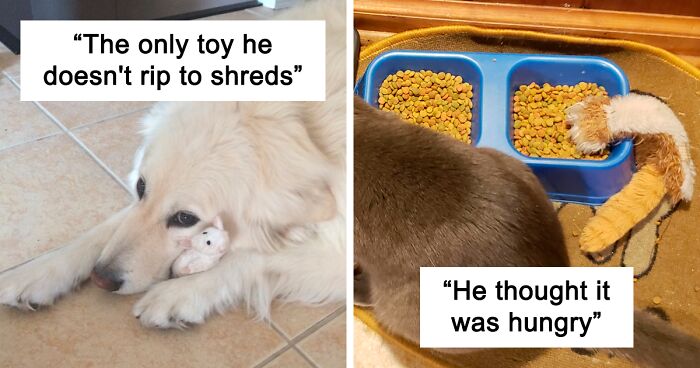
Every pet household has at least one object that should have been thrown away months ago. It may be a plush duck with one wing, a tennis ball that has retired from being round, or a mysterious strip of fabric that once had a face. To a human, it is clutter. To a pet, it is an heirloom, emotional-support coworker, bedtime assistant, and possibly the most important member of the family.
That is what makes pictures of pets refusing to part with their favorite toys so irresistible. The animals are not posing for a sentimental calendar. They are simply carrying, hugging, presenting, protecting, or sleeping beside the objects they love. The resulting images are funny because the toys often look tragic, and touching because the pets do not care. A missing eye is not a flaw. It is history.
This collection of 40 adorable pet pictures offers more than a quick burst of cuteness. It provides a charming look at play, comfort, routine, natural instincts, and the small rituals that help companion animals feel secure.
Why Favorite Pet Toys Become So Important
They Provide Comfort and Familiarity
A familiar toy can become part of a pet’s daily rhythm. Some dogs carry the same stuffed animal from room to room, place it beside their bed, or greet visitors with it in their mouth. Cats may return to one battered mouse even when an entire basket of newer alternatives is available. The object smells familiar and may be associated with rest, play, praise, or time spent with a trusted person.
That does not mean every pet treats a favorite toy exactly like a child treats a security blanket. Animal behavior should not be squeezed into a human costume just because the costume is adorable. Still, repeated positive experiences can make an object especially valuable. The toy becomes part of what feels normal, safe, and predictable.
Toys Give Natural Behavior Somewhere to Go
Dogs may chase, retrieve, tug, chew, shake, carry, or enthusiastically investigate the internal construction of their toys. Cats often prefer movement that resembles prey, such as a fluttering feather, a skittering ball, or something disappearing beneath a blanket. A favorite toy is frequently the one that allows an animal to perform a satisfying sequence of natural behaviors.
Preferences vary by species, age, size, experience, energy level, and personality. A retriever may want to carry a plush toy everywhere. A terrier may want to remove the squeaker with surgical precision. A cat may reject an expensive electronic gadget and move permanently into the cardboard box it arrived in.
Favorite Toys Can Become Social Tools
A dog who brings over a ball may be requesting a game, but the behavior can also be a way of initiating interaction. A pet who proudly presents a stuffed animal at the door may be performing a familiar greeting ritual. The toy matters partly because of what happens around it: laughter, praise, fetch, tug, training, cuddling, or the nightly search beneath the couch.
This may explain why replacing an old toy with an identical new one does not always work. To the shopper, the replacement is the same model. To the pet, it is a suspiciously clean stranger with no scent, no history, and no professional references.
What These 40 Pet Pictures Reveal
Some Pets Supervise Toy Surgery
Among the sweetest scenes are pets watching closely while a human repairs a torn plushie. The patient lies on the table with its stuffing exposed, while the pet waits nearby like a worried relative outside an operating room. There may be no understanding of thread, needles, or seam allowancesonly the urgent knowledge that Bear is currently unavailable.
The pet may trust its human to perform the repair, but that does not mean the work will go unsupervised. Its expression seems to say, “You may proceed, but I will be reviewing every stitch.”
New Toys Can Become Instant Family Members
Other pictures capture the moment a pet chooses a toy in a store or receives one from a kind stranger. One minute, the object is ordinary inventory. The next, it is being carried away like a championship trophy.
Memorable examples include a dog receiving a newly purchased toy from a stranger who noticed the animal waiting nearby and another pet arriving at a thrift store with its own toy, as though it had brought a plus-one. These small moments turn ordinary errands into stories about generosity, trust, and connection.
Old Toys Often Beat Glamorous Replacements
Pet owners know the routine. They buy a beautiful new toy, remove the tag, squeak it enthusiastically, and watch the pet walk past it to retrieve a gray object known only as “the remains.” The photos celebrate toys that are flattened, faded, patched, and no longer recognizable as the animals pictured on their original labels.
The damage is not necessarily evidence that the toy failed. It may be evidence that the toy had a long and distinguished career. Pets do not require their treasures to stay perfect. They love them after hundreds of games, naps, hiding places, repairs, and washing-machine negotiations.
Comfort Can Move Between Children and Pets
Some of the most touching images show children offering stuffed animals to elderly, tired, or recovering pets. In one widely shared example, a boy comforts an older dog with his plush sloth. The toy becomes a bridge between two family members who do not need words to understand gentleness.
These moments can also help children learn that affection is more than excitement. Replacing a toy beside a pet’s bed, reporting a torn seam, or selecting something soft for a senior animal turns kindness into an action the pet can experience.
Dogs Are Not the Only Toy Devotees
Dogs dominate many online photo collections because carrying objects is easy to photograph. However, cats, rabbits, birds, and other animals can develop strong preferences for particular enrichment items.
One especially delightful example features a seal cuddling a miniature plush version of itself and even carrying the little toy on its back. It is difficult to prepare emotionally for a seal giving its tiny twin a piggyback ride, and society has not yet developed adequate protective equipment.
Cute Attachment or Resource Guarding?
A pet sleeping with a toy, carrying it around, or inviting someone to play is usually enjoying an object it values. The situation is different when the animal becomes tense or threatening as someone approaches. Freezing, stiff posture, hard staring, growling, snapping, lunging, or aggressively blocking access can indicate resource guarding.
Resource guarding should not be addressed by repeatedly grabbing the toy to prove that the human is in charge. That can increase conflict and teach the animal that people approaching valuable objects are bad news. Safer approaches include creating positive associations, teaching cues such as “drop it,” and trading the toy for something equally appealing or better.
Serious guarding, particularly behavior involving bites or children, warrants guidance from a veterinarian or qualified animal-behavior professional.
There is also a difference between healthy enthusiasm and extreme fixation. Concern may be appropriate if a pet cannot disengage, ignores exhaustion, becomes severely distressed without the toy, or loses interest in food, rest, social contact, and other normal activities. The internet caption may say “obsessed,” but the animal’s overall behavior determines whether the attachment is harmless.
How to Keep a Favorite Pet Toy Safe
Choose the Right Size and Construction
A toy should suit the pet’s body size, mouth, jaw strength, and play style. An object small enough to become lodged in the throat is not improved by being adorable. Strong chewers may need tougher materials, while gentle carriers may do well with softer toys.
In homes with more than one dog, select toys with the largest animal in mind. A toy that is suitably sized for a small dog could become hazardous if a much larger housemate gains access to it.
Inspect the Beloved Relic Regularly
Favorite toys receive heavy use, which means seams, squeakers, plastic pieces, ropes, feathers, bells, and stuffing can eventually become hazards. Check toys frequently for damage, especially if the pet enjoys tearing or chewing them apart.
Loose strings and narrow, strand-like pieces can be particularly dangerous for cats if swallowed. A dog who removes a squeaker with impressive technical skill should not be left alone with the evidence.
Minor damage may be repairable when the materials remain safe. However, when a toy is breaking into swallowable pieces, retirement is kinder than an emergency. Contact a veterinarian promptly when there is reason to believe part of a toy has been swallowed.
Supervise New Toys and Intense Play
No pet toy is universally indestructible. Observe how an animal interacts with a new item before leaving it available without supervision. A stuffed toy may be a pillow for one dog and a timed demolition challenge for another.
Wand toys, strings, ribbons, and feathers can provide excellent interactive play for cats, but they should generally be stored safely when the play session ends.
Rotate the Supporting Cast
Rotating toys can renew interest and provide different textures, movements, and challenges. However, toy rotation does not require hiding the one object a pet uses for comfort. Keep a genuine favorite available when it remains safe, and rotate the supporting cast instead.
Variety supports enrichment, while familiarity supports routine. A thoughtful pet home can provide both.
Prepare for Washing Day
Cleaning a favorite toy can become a household-level negotiation. Follow washing instructions, use pet-safe products, rinse thoroughly, and allow the object to dry completely.
For intensely attached pets, wash the toy while another enjoyable activity is happening. Some households keep a duplicate in circulation, although many pets immediately recognize that the replacement lacks the correct smell and required years of professional experience.
Why These Pet Pictures Feel So Pure
The appeal is not only cuteness. These photographs show loyalty without status, price, or appearance. A pet does not care that its stuffed fox is missing a tail or that its blanket has become more hole than blanket. The object is loved because it is familiar.
Humans recognize that instinct. People also keep old sweaters, childhood books, chipped mugs, concert tickets, and other belongings whose financial value is approximately zero. Their importance comes from memory and repeated use.
When a dog carefully places a ruined stuffed animal on its bed, the gesture looks familiar because people also build emotional homes inside ordinary things.
The pictures are funny because pets are completely sincere. There is no attempt to appear fashionable while carrying a giant pink unicorn around the neighborhood. No cat has ever worried that its favorite fuzzy worm is “last season.” Their wholehearted commitment lets us laugh without cruelty and become sentimental without needing a dramatic violin soundtrack.
Real-Life Experiences of Living With a Toy-Devoted Pet
Anyone who shares a home with a pet devoted to one particular toy eventually learns that the object develops a schedule. It appears at breakfast, migrates into the hallway, spends the afternoon beneath a chair, and must be found before bedtime. The human may own the house, but the toy controls operations.
The Bedtime Search Party
One common experience is the nightly search. A dog stands beside the bed, unwilling to settle because its favorite plush toy is missing. The family checks the toy basket, laundry pile, yard, car, and every room the dog has visited.
At last, the toy is discovered underneath the couch, three inches beyond paw range. The dog receives it, circles twice, and falls asleep immediately. The humans remain awake, reflecting on their career choices.
The Washing-Machine Vigil
Eventually, the favorite toy reaches a condition that can no longer be described politely. The pet watches it enter the washing machine and sits nearby as though monitoring a hostage situation.
When the cycle ends, the owner may need to delay the reunion until the toy dries, a concept the pet considers unreasonable. Families sometimes reduce the disruption by offering a chew, a puzzle feeder, another favorite object, or extra attention during the cleaning process.
The Emergency Repair Department
Repairs create another familiar ritual. A seam opens, stuffing escapes, and the squeaker begins planning its departure. The owner gathers a needle and thread while the pet remains close enough to inspect the operation.
A careful repair may extend the toy’s life, but it also requires judgment. Sentiment does not make exposed plastic, loose fabric, or swallowable filling safe. Some owners eventually place a retired toy in a memory box after it can no longer be used responsibly.
Taking the Toy on a Trip
Travel can reveal how important familiar routines are. Packing a favorite toy for a road trip may help make a hotel room, boarding facility, or relative’s house feel less unfamiliar. Owners often place it beside the pet’s regular bed or blanket while keeping meals, walks, and rest periods as predictable as possible.
The toy does not magically remove anxiety, but familiar scents and routines can support a smoother transition.
Adapting Play for an Older Pet
Favorite toys can become particularly meaningful as animals age. An older dog may stop racing after a ball but continue sleeping beside it. A senior cat may prefer gentle batting or sniffing to full-speed pursuit.
Owners can adapt activities with softer surfaces, shorter sessions, easier puzzle toys, and games that do not require difficult jumping or twisting. The goal is not to force an older pet to perform like a puppy or kitten. It is to preserve choice, interest, comfort, and connection.
Teaching Children to Respect Pet Possessions
Children sometimes become the official toy-care department. They tuck the object beside a resting pet, report damage, help choose replacements, and learn that loving an animal includes paying attention to safety.
These responsibilities should come with clear boundaries. Children should not tease a pet, pull toys from its mouth, or approach when the animal appears stiff, frightened, or protective. An adult should handle any situation involving resource guarding.
When the Toy Becomes Part of the Family Story
Over time, a favorite toy becomes part of the household archive. Photographs document its transformation from bright and fluffy to faded, patched, and medically complicated. Stories accumulate around where it was purchased, how many times it was rescued from the yard, and why every attempted replacement failed inspection.
The most meaningful moments are often the simplest. A pet approaches with its favorite toy and places it beside a trusted person. It might be an invitation to play, a greeting, or a desire to rest with both important thingsthe person and the objectin the same place.
When owners share those pictures online, strangers recognize the pattern immediately. Different pet, different toy, same wholehearted loyalty.
Conclusion: Let Them Love the Ridiculous Little Thing
Pictures of pets refusing to part with their favorite toys offer more than a quick dose of cuteness. They capture the roles that play, familiarity, instinct, enrichment, and shared routines can have in an animal’s life.
Responsible pet care requires balance. Respect the attachment, provide varied activities, watch for resource guarding or extreme fixation, and retire damaged objects before nostalgia becomes a veterinary invoice.
Repair the plushie when it is safe. Schedule the washing-machine reunion. Pack the toy for the trip. Take the picture when your dignified dog enters the room carrying a stuffed cupcake twice the size of its head. These objects may look ridiculous to people, but to the pets who chose them, they are clearly serious businessand that sincerity is exactly what makes all 40 pictures too pure.
Note: This article synthesizes pet-enrichment, animal-behavior, training, and toy-safety information from Bored Panda’s original photo collection, the American Kennel Club, the ASPCA, American Humane, Humane World for Animals, VCA Animal Hospitals, the American Animal Hospital Association, Cornell University’s Feline Health Center, The Ohio State University’s Indoor Pet Initiative, the U.S. Food and Drug Administration, Royal Society Open Science, and peer-reviewed animal-behavior research.