Note: This article discusses unsafe-looking work setups for awareness and entertainment. Do not copy dangerous shortcuts. Real safety planning, proper equipment, training, and local regulations should always come first.
There are two kinds of people in the world: those who see a rickety ladder balanced on a stack of paint cans and immediately begin calculating the safest escape route, and those who say, “Yep, that’ll hold.”
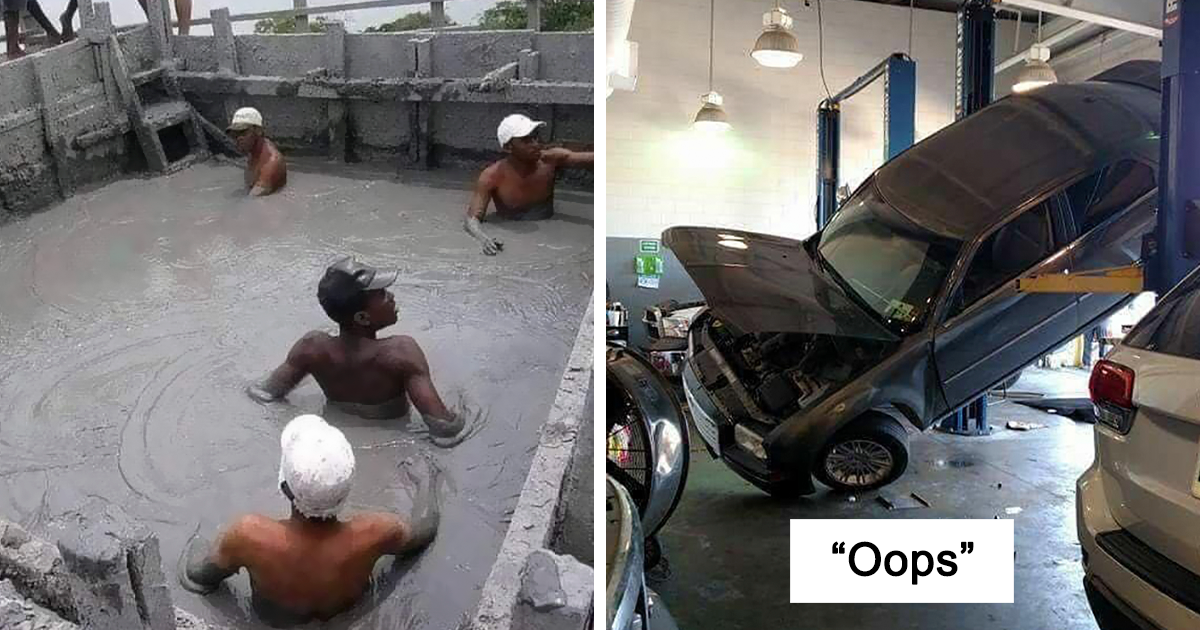
The internet has lovingly documented the second group for years. A Facebook community known for sharing questionable work setups has become a museum of improvised engineering, chaotic confidence, and decisions that make safety managers quietly close their laptops and stare out the window.
From ladders perched on trucks to workers treating forklifts like amusement-park rides, these photos are funny because they are so wildly unbelievable. But beneath every “hold my coffee” moment is a useful reminder: workplace safety regulations are not designed to ruin anyone’s day. They exist because gravity, electricity, heavy equipment, sharp tools, and unstable surfaces have absolutely no sense of humor.
These 50 examples of apparent OSHA-style safety violations show what happens when urgency, creativity, limited equipment, and overconfidence join forces. The result is often a masterpiece of problem-solving. It is also sometimes a masterpiece of terrible ideas.
Why These OSHA Safety Fails Are So Hard To Look Away From
Unsafe work photos have a strange power over the human brain. We know we should not laugh at somebody standing on a ladder that is balanced on a forklift pallet, yet we also cannot stop looking. It is the workplace equivalent of watching a toddler carry spaghetti through a white living room.
The appeal comes from the contrast between what should happen and what is happening. A normal worksite has guardrails, stable ladders, safety harnesses, warning signs, hard hats, equipment inspections, and enough space to move around without playing human Jenga. These viral pictures usually feature the exact opposite.
Instead of a proper scaffold, someone may use a ladder on top of a pickup truck. Instead of a secure work platform, there may be a plank stretched between two objects that were never meant to become friends. Instead of removing clutter from a walkway, someone may create an obstacle course that would make an action-movie stunt coordinator request a union break.
The photos are dramatic because the risks are instantly recognizable. You do not need a safety certification to know that a person welding near flammable materials, climbing a broken ladder, or riding in an elevated loader bucket is probably taking a gamble they should not be taking.
The Most Common Workplace Safety Shortcuts In These Photos
While every unsafe setup has its own special flavor of chaos, most of them fall into a few familiar categories. These are the repeat offenders in the world of workplace safety fails.
1. Ladder Decisions That Defy Physics
Ladders appear in an impressive number of unsafe work photos because they are easy to grab, easy to misuse, and apparently irresistible to anyone who needs to reach “just a little higher.”
One of the classic bad ideas is placing a ladder on an unstable surface. This may include a truck bed, a pile of lumber, a rolling cart, a chair, a stack of buckets, or another ladder. At that point, the ladder is no longer a tool. It is a vertical suggestion.
Proper ladder safety is not complicated in theory. The ladder should be on stable ground, secured when needed, used at the correct angle, inspected for damage, and tall enough for the task. The worker should avoid leaning sideways, overreaching, or carrying heavy objects while climbing. Yet the internet repeatedly proves that “in theory” is doing a lot of heavy lifting.
Some photos show workers stretching from ladders at angles that would make a geometry teacher nervous. Others reveal people standing on the top cap of a step ladder, which is essentially the workplace version of putting one foot on a banana peel and hoping for the best.
2. Makeshift Scaffolding And Homemade Platforms
Scaffolding is supposed to provide a stable surface for working at height. In questionable safety photos, however, the word “scaffolding” sometimes means “a board that looked sturdy from across the room.”
Improvised platforms often involve planks, ladders, pallets, sawhorses, vehicle roofs, or whatever happened to be nearby when someone said, “We only need it for five minutes.” Unfortunately, gravity does not care whether a setup is temporary. A fall can happen in five seconds.
Professional scaffolding requires attention to load capacity, stable footing, guardrails, proper access, secure planking, and inspection. A plank placed between two ladders may seem inventive, but it can shift, crack, or tip before anyone has time to say, “This seemed safer in the group chat.”
The funniest-looking DIY platform is often the one that has been normalized by everyone nearby. If four people watch a coworker climb onto an obviously unstable arrangement and nobody stops the job, that is not teamwork. That is a group project with a very bad ending.
3. Forklifts Used For Everything Except Forklifting
Forklifts are powerful pieces of industrial equipment. They are excellent for lifting properly secured loads. They are not personal elevators, mobile balconies, impromptu cranes, amusement rides, or magical flying workstations.
Yet many viral workplace images show people standing on forklift forks, riding on pallets, leaning out of raised baskets without visible protection, or lifting coworkers in ways that look more like a stunt rehearsal than a work task.
Forklift safety matters because elevated loads can shift, drop, tilt, or create crush hazards. A person working from an elevated platform needs the correct equipment, fall protection where required, trained operators, and a clear plan. A coworker yelling, “I got you!” from the driver’s seat is not a safety system.
There is a big difference between using approved lifting equipment and turning a forklift into a construction-themed carnival ride. The second option may be memorable, but it should not be memorable for the emergency report.
4. Electrical Work With Maximum Confidence And Minimum Protection
Electricity is invisible, fast, and extremely unforgiving. That makes electrical shortcuts especially alarming in safety fail photos. Exposed wires, overloaded extension cords, damaged plugs, improvised connections, wet work areas, and mystery cables hanging from ceilings all belong in the “please stop immediately” category.
One of the most unsettling things about electrical hazards is that they can look harmless until they are not. A frayed cord may still power a tool. A taped connection may still work. A panel may appear fine from a distance. But electrical shock, arc flashes, burns, and fires do not always send a warning text first.
Safe electrical work means using suitable equipment, keeping cords in good condition, avoiding overloaded circuits, protecting cables from damage, and ensuring only qualified people handle complex electrical systems. It also means understanding that duct tape is not an electrician.
A wire held in place by hope, tape, and a suspicious amount of zip ties may be creative. It is not a long-term maintenance strategy.
5. Heavy Loads That Are Technically “Secured”
Some of the most jaw-dropping examples involve overloaded vehicles, awkwardly stacked cargo, giant objects held down by a few straps, or loads that seem to be leaning entirely on optimism.
Ratchet straps are useful tools, but they are not magic spells. A load must be properly balanced, restrained, and suited to the vehicle carrying it. When a truck looks like it swallowed an entire hardware store, everyone on the road becomes part of the risk assessment.
Overloaded trailers, unsecured materials, and poorly balanced cargo can cause rollovers, falling-object injuries, collisions, and equipment damage. The person who says, “It is only going a few miles,” is often forgetting that danger does not need a long commute.
In many viral photos, the cargo may appear to be staying in place through pure determination. Unfortunately, physics has a long history of winning arguments with determination.
When “We Had To Do What We Had To Do” Becomes A Safety Problem
It is easy to label every unsafe worker as careless, but real life is usually more complicated. People take shortcuts for many reasons. They may be under pressure to finish quickly. They may lack proper equipment. They may be inexperienced. They may work in a culture where speaking up feels risky. Or they may have seen similar shortcuts so often that the danger no longer looks unusual.
This is where workplace safety culture matters. A safe workplace is not just one with posters on the wall and a dusty binder in the break room. It is a workplace where workers can stop a task, ask a question, request equipment, report a hazard, and refuse an unsafe setup without being mocked or punished.
When deadlines become more important than people, shortcuts multiply. A team may begin by skipping one small step, such as not securing a ladder because the task will take only a minute. Then they may skip another step. Over time, risky behavior starts to feel normal. That is when a near miss becomes an injury, and an injury becomes a life-changing event.
Safety regulations can feel annoying when you are in a hurry. So can seat belts, backup cameras, smoke alarms, and waiting for glue to dry. But inconvenience is usually cheaper than an ambulance ride.
50 Unsafe Work Photos, One Serious Message
The Facebook group behind these photos thrives because people instantly recognize the absurdity of unsafe work setups. The posts may feature a worker on a ladder, an overloaded vehicle, a precarious scaffold, a dangerous electrical arrangement, or a machine being used in a way that would make its instruction manual burst into flames.
But the collection also works because it turns safety into something visible. Instead of reading a dry warning about fall protection or machine guarding, viewers see a real-world setup that makes them instinctively think, “Nope.” That reaction is useful.
Humor can be an excellent teacher when it does not encourage imitation. A ridiculous work photo can spark a conversation about safer alternatives. It can remind people to inspect equipment before use. It can encourage supervisors to provide the right tools. It can make one worker pause before climbing onto a sketchy platform and ask, “Is there a better way?”
That pause may not look dramatic. It may involve getting a longer ladder, moving a vehicle, finding a harness, calling a trained operator, setting up a proper scaffold, or simply delaying the task until the correct equipment arrives. But those boring decisions are often the ones that allow people to go home safely.
How To Avoid Becoming The Next Viral OSHA Safety Fail
Most workplace safety disasters are not caused by one spectacularly bad decision. They are often built from small compromises that pile up. The good news is that small safer choices can also pile up.
Choose The Right Tool Instead Of The Closest Tool
A chair is not a ladder. A pallet is not a work platform. A forklift is not a passenger lift. A cardboard box is not a step stool, no matter how confidently it is taped together.
Using the correct equipment may take extra time, but it reduces the chance of falls, strains, crush injuries, and damage. The fastest shortcut is not always the quickest route to finishing the job. Sometimes it is the fastest route to stopping the job permanently.
Inspect Before You Climb, Lift, Cut, Or Drive
Before starting work, check ladders, cords, tools, platforms, harnesses, guards, straps, and powered equipment. Look for cracks, loose parts, worn connections, missing components, leaks, damaged guards, and anything else that makes you think, “That seems suspicious.”
That suspicious feeling is often your brain doing a free safety inspection. Listen to it.
Respect Height, Energy, Weight, And Motion
The most dangerous workplace hazards often involve four simple forces: height, energy, weight, and motion. Falls from height can be severe. Stored energy can release without warning. Heavy loads can crush. Moving equipment can catch, strike, or trap workers.
Whenever a task includes one of these forces, slow down and think through the setup. Whenever it includes all four, stop pretending it is a “quick little job.”
Make It Easy To Speak Up
Workers should never feel that asking for safer equipment makes them difficult, lazy, or slow. The safest teams are not the ones that never encounter hazards. They are the ones that notice hazards early and deal with them before someone gets hurt.
A simple question can prevent a serious incident: “Is this stable?” “Do we have the right platform?” “Who is trained to do this?” “What happens if that slips?” “Can we do this without putting someone underneath that load?”
Those questions may not sound exciting, but neither does spending six weeks recovering from a preventable injury.
Extra Experiences: What These OSHA-Style Safety Fails Teach Us About Real Workplaces
Anyone who has worked in construction, maintenance, warehousing, retail, manufacturing, landscaping, events, hospitality, or home renovation has probably seen at least one moment that felt like it belonged in an online safety fail collection.
Maybe it was the coworker who used a rolling office chair to reach a ceiling vent. Maybe it was a ladder placed in front of a door without anyone blocking the door. Maybe it was a delivery truck loaded so high that the cargo looked like it was applying for its own zip code. Maybe it was a storage room where every exit was technically visible but only after completing a side quest through boxes, cords, and holiday decorations from 2014.
These moments are often treated as normal because they happen during busy shifts. Someone says the repair has to be done before opening. Someone else says the customer is waiting. A manager says the replacement part will arrive tomorrow, but the job cannot wait until tomorrow. Suddenly, a temporary workaround becomes the plan.
This is how safety shortcuts gain momentum. Nobody begins the day hoping to create a hazardous situation. Most people are trying to solve a practical problem with the time, tools, and people available. The trouble is that urgent work can make bad options look reasonable.
Consider the worker who needs to change a light fixture high above a warehouse floor. A proper solution might involve an approved lift, a secured ladder, barricades below, and enough time to complete the work safely. A shortcut solution might involve climbing onto a pallet raised by a forklift because the lift is in use somewhere else. One option requires planning. The other requires luck.
Or think about a crew trying to move a bulky item through a narrow space. The safe approach may include a spotter, lifting equipment, clear communication, and removing obstacles. The unsafe approach may involve three people carrying too much weight while one person says, “Watch your fingers,” as if those four words have magical protective powers.
Many safety incidents begin with phrases that sound harmless: “It will only take a second.” “I have done this before.” “We do not need the whole setup.” “Just hold it there.” “It is probably fine.” These phrases should not automatically trigger panic, but they should trigger a pause.
The strongest lesson from these viral workplace photos is that safety does not have to be boring, expensive, or complicated. It often starts with noticing what is wrong before it becomes normal. It starts with refusing to balance a ladder on something ridiculous. It starts with asking for the right equipment. It starts with not using a machine in a way that would make everyone in the training video visibly uncomfortable.
Good safety culture is not about treating workers like children. It is about recognizing that everyone has blind spots, deadlines, bad days, and moments when they are tempted to take the easy route. The goal is to build a workplace where the safe route is also the practical route.
So enjoy the absurdity of the 50 photos. Laugh at the questionable engineering. Marvel at the confidence. But let each image serve as a reminder: the best workday is not the one where someone improvised a miracle. It is the one where everyone finished the job, packed up their tools, and went home with the same number of limbs, eyebrows, and good decisions they arrived with.
Conclusion
These OSHA-style safety fails may be funny at first glance, but they reveal a serious truth about workplace hazards. A ladder used incorrectly, a makeshift platform, an overloaded truck, exposed wiring, or an improperly used forklift can turn a routine task into a preventable emergency.
The 50 examples shared online are a reminder that safety is not about slowing work down for no reason. It is about making sure people can complete the work without gambling with their health. The right equipment, proper training, stable work surfaces, hazard reporting, and a culture that supports speaking up can prevent many of the situations that end up going viral for all the wrong reasons.
Laugh at the chaos, learn from the mistakes, and remember: if a setup looks like it needs a soundtrack from an action movie, it probably needs a safer plan.