At first glance, “equilateral bronze nails” sounds like something a geometry teacher would invent after spending too much time in a hardware aisle. But the phrase has a real design-world meaning: decorative bronze nails with triangular heads, often used as small wall accents for hanging jewelry, keepsakes, photos, lightweight objects, and other treasured odds and ends that deserve better than a sad plastic thumbtack.
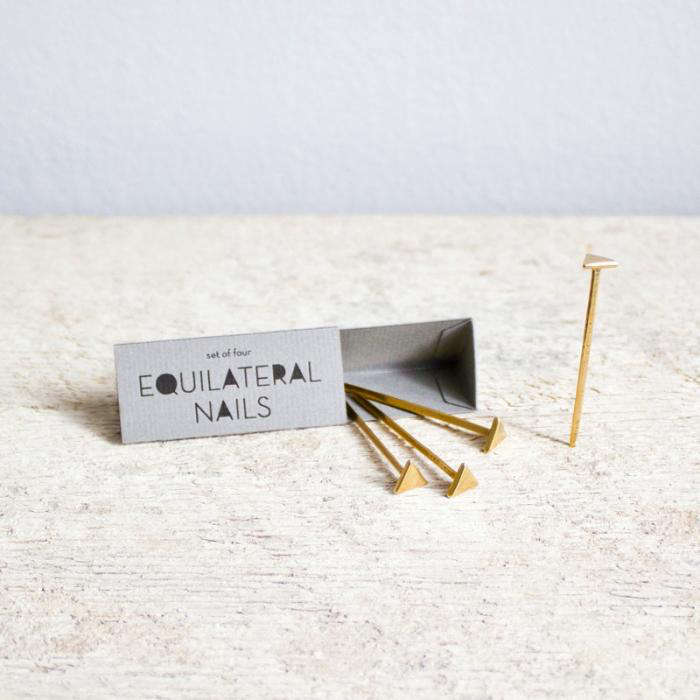
These nails became known through boutique design shops and interiors blogs as a charming alternative to ordinary wall hooks. The original product was described as solid bronze, hand-cast, made in the USA, and sold in small sets. The “equilateral” part refers to the triangular face: three equal sides, three clean angles, one tiny design flex. They are not the kind of nails you grab to frame a wall, build a deck, or repair a boat. They are decorative fastenerspart nail, part miniature sculpture, part “yes, even my wall hardware has taste.”
This guide explains what equilateral bronze nails are, why bronze is such an appealing material, how to use them safely, where they fit in home decor, and what to consider before installing them. We will also look at real-world experiences with decorative bronze nails, because tiny hardware can still create very big opinions.
What Are Equilateral Bronze Nails?
Equilateral bronze nails are decorative nails with a triangular head and a slender post or shank that goes into the wall, wood, or display surface. Unlike common nails, which are usually meant to disappear into lumber or hide behind a frame, these nails are made to be seen. Their triangular face becomes part of the display.
The concept sits somewhere between an upholstery tack, a small wall peg, a clavo, and a jewelry hook. Traditional decorative nails often have round, domed, square, hammered, or pyramid-style heads. Equilateral bronze nails stand apart because of their geometric shape. The triangle feels simple, architectural, and modern, but bronze gives it warmth and age. It is a tiny meeting between math class and an antique shop.
Why the Triangle Shape Matters
An equilateral triangle has visual balance because all three sides are the same length. In design, that symmetry makes the object feel intentional. A round nail can look classic. A square nail can look rustic or industrial. A triangular bronze nail looks a little more curated, like someone chose it rather than found it in the junk drawer under expired batteries.
The triangle also gives the nail a subtle directional quality. Rotate it with one point up and it feels sharp and architectural. Turn it flat-side-up and it becomes quieter and more grounded. Use several in a row and the wall starts to feel like a small gallery installation, even if the “gallery” is holding your keys and one necklace you swear you will untangle someday.
Why Bronze Works So Well for Decorative Nails
Bronze is an alloy based primarily on copper, traditionally mixed with tin and sometimes other elements depending on the specific formula. In decorative hardware, bronze is loved because it has a warm, rich color that can range from golden brown to reddish brown to dark chocolate tones. It looks less shiny than polished brass and more refined than painted steel.
Another reason bronze works beautifully in hardware is its ability to develop patina. Over time, bronze can darken, mellow, and gain character from handling, air, moisture, and normal use. For some people, that change is a feature, not a flaw. Bronze does not have to stay showroom-perfect to remain attractive. In fact, it often becomes better once it stops trying so hard.
Bronze vs. Brass vs. Steel
Bronze and brass are both copper alloys, but they are not identical twins. Brass is typically copper and zinc, while bronze is commonly copper and tin, though modern bronze formulas can vary. Brass often appears brighter and more yellow. Bronze usually feels deeper, warmer, and slightly moodier. Steel, meanwhile, is strong and practical but does not offer the same living finish unless it is specially treated or coated.
For decorative nails, the material choice changes the whole personality of the piece. Bright brass can feel polished and glamorous. Black iron can feel rustic or medieval. Bronze sits in the middle: refined, earthy, artistic, and comfortable in both old houses and minimalist apartments. It says, “I read design magazines,” but it does not shout it across the room.
Are Equilateral Bronze Nails Structural?
No. Equilateral bronze nails should be treated as decorative hardware, not structural fasteners. This is important. A decorative bronze nail may be excellent for jewelry, small art pieces, ornaments, light photo strings, handmade garlands, tiny bags, or keepsakes. It is not the right choice for heavy mirrors, shelving, large framed art, plant hangers, curtain rods, or anything that would ruin your day if it fell at 2:00 a.m.
Bronze can be durable, and certain bronze fastenersespecially silicon bronze nails and screwsare used in marine, woodworking, and exterior applications because of their corrosion resistance. But equilateral bronze nails are a different category. Their appeal is visual. Their job is to hold small things beautifully, not to prove themselves in a tug-of-war with gravity.
Best Uses for Equilateral Bronze Nails
The best use cases are lightweight and visible. Think necklaces, bracelets, keys, postcards, dried flowers, ribbon, small ornaments, tiny framed notes, children’s artwork, lightweight kitchen textiles, or decorative wall displays. They also work well on a wooden board, entryway panel, studio wall, vanity area, craft corner, or bedroom jewelry station.
One elegant idea is to install several nails in a loose triangular or staggered pattern and hang necklaces at different heights. Another is to use them as small photo holders with string or clips. In a kitchen, they can hold measuring spoons or a lightweight linen towel. In an office, they can display inspiration cards without making the wall look like a crime investigation board. Unless that is your aesthetic. No judgment.
How to Install Equilateral Bronze Nails
Installation is simple in theory but deserves patience in practice. Decorative nails with narrow shanks can bend if hammered too aggressively, especially into hard wood or dense plaster. Bronze also has a softer feel than many steel fasteners, so a gentle hand matters. This is one of those projects where confidence is good, but “I am Thor” energy is not.
Step 1: Choose the Right Surface
Wood is usually the easiest surface. A softwood display board, peg rail, or shelf edge gives the nail something to grip without excessive force. Drywall can work for very light items, but the hold may be limited unless the nail reaches a stud or backing board. Plaster, brick, concrete, tile, and masonry are not ideal unless you use proper anchors or mount the nails into a separate wood strip first.
Step 2: Mark the Layout
Because the nail head is decorative, placement matters. Use painter’s tape, a pencil, and a small level if you want a clean row. For a more organic gallery look, cut tiny paper triangles and tape them to the wall first. Step back. Squint. Pretend you are a museum curator. Move one triangle one-quarter inch. Feel powerful.
Step 3: Drill a Pilot Hole
A pilot hole is highly recommended. It reduces the chance of bending the nail and helps the shank enter the surface cleanly. Use a drill bit slightly smaller than the nail shank. If the nail set includes a separate pilot nail, use it only as intended: to start a hole, not as a substitute for careful installation.
Step 4: Tap Gently
Use a small hammer, tack hammer, rubber mallet, or a protective block of wood between the hammer and nail head. Tap lightly and keep the nail aligned. If it starts to bend, stop immediately. Pulling it back, correcting the pilot hole, and trying again is better than turning an expensive decorative nail into a tragic bronze noodle.
Design Ideas for Equilateral Bronze Nails
These nails shine when they are treated as a design detail rather than an afterthought. Their shape is small, but small details often carry the personality of a room. A plain white wall with one triangular bronze nail holding a favorite necklace can look intentional and poetic. A row of them in an entryway can become a minimalist key station. A cluster above a desk can hold notes, charms, fabric swatches, or reminders that are prettier than “buy paper towels.”
Jewelry Display
This is probably the most natural use. Bronze pairs beautifully with gold, silver, turquoise, leather, beads, and natural stones. Unlike a plastic hook, a bronze triangular nail looks good even when nothing is hanging from it. That matters because jewelry displays often spend half their life empty while the jewelry is on your body, in a purse, or mysteriously missing.
Photo and Keepsake Wall
Use the nails with twine, fine chain, or narrow ribbon to create a simple display line. Hang lightweight photos, postcards, pressed flowers, ticket stubs, or small notes. The triangular heads add a sculptural punctuation mark at each end of the display. It is a softer alternative to a metal grid and a more personal alternative to basic frames.
Entryway Organization
A few equilateral bronze nails mounted into a wood board can become an attractive spot for keys, dog leashes, sunglasses, or tiny pouches. For heavier items, use more substantial hooks or screws behind the scenes. Decorative nails can be the visible accent while stronger hardware does the heavy lifting. That is teamwork, and honestly, most houses could use more of it.
Care and Maintenance
Bronze does not need much pampering. Wipe it occasionally with a soft, dry cloth. Avoid harsh chemical cleaners, abrasive pads, and anything that promises to make metal “look brand new” unless you actually want to remove the aged character. The patina is part of the charm.
If you prefer a brighter bronze look, use a cleaner specifically suited to bronze or copper alloys and test gently first. But for most decorative nails, the best maintenance plan is simple: dust them, enjoy them, and let them age. Hardware with a living finish is supposed to collect a little story. That is the point.
Common Mistakes to Avoid
The first mistake is using decorative bronze nails for heavy objects. They are not wall anchors in costume. The second mistake is skipping the pilot hole. Even if the nail looks sturdy, hand-cast decorative pieces can bend or deform when forced into hard material. The third mistake is installing them randomly without checking spacing. Because the heads are geometric, crooked placement can be obvious.
Another common mistake is confusing bronze-colored hardware with real bronze. Many inexpensive decorative nails are steel or iron with a bronze finish. That can still look nice, but it will not age like solid bronze and may behave differently over time. If material matters to you, read product descriptions carefully and look for terms such as solid bronze, brass, plated steel, antique bronze finish, or bronze tone.
Buying Alternatives Today
The original equilateral bronze nails are difficult to find because the best-known listing was discontinued. However, the broader category of decorative metal nails is very much alive. Look for triangular tacks, bronze clavos, solid bronze wall pegs, hand-forged nails, decorative upholstery nails, brass picture nails, and artisan wall hooks. You may not always find the exact equilateral shape, but you can still capture the same spirit: visible hardware that makes a small object feel special.
If you want the closest match, search for solid bronze triangular nails, hand-cast bronze nails, geometric wall nails, or decorative triangle tacks. For a budget version, bronze-finished upholstery tacks can provide a similar warm look, though they may be smaller and less suitable for hanging objects. For a stronger version, choose bronze or brass hooks with triangular or faceted heads.
Why Small Hardware Has Big Design Power
Interior design is often discussed through large objects: sofas, rugs, cabinets, lighting, tile, and paint. But the tiny details can change how a room feels. A plastic hook says, “This will do.” A triangular bronze nail says, “I thought about this for at least seven minutes, and those seven minutes were worth it.”
Equilateral bronze nails are interesting because they turn a practical acthanging somethinginto a small design moment. They invite you to display objects with care. A necklace becomes wall decor. A postcard becomes a memory. A key station becomes less chaotic. The nail is not only holding the object; it is framing the object’s importance.
Experience Notes: Living With Equilateral Bronze Nails
Using equilateral bronze nails feels different from using ordinary hardware because they ask you to slow down. A basic nail is usually installed with three fast hammer taps and no emotional involvement. A decorative bronze nail feels more like placing a small piece of jewelry onto the wall. You measure. You adjust. You wonder if the triangle should point up or down. You briefly become the kind of person who has opinions about triangle orientation.
In a bedroom or dressing area, these nails are especially satisfying. A few installed above a vanity can hold daily jewelry without the clutter of a jewelry stand. Necklaces hang neatly instead of forming the legendary knot monster inside a drawer. Rings can sit in a dish below. Bracelets can hang from one nail like tiny metallic garlands. The bronze finish adds warmth, so even a simple white wall begins to feel softer and more personal.
The installation experience teaches patience. The most important lesson is to drill or start a pilot hole. Decorative nails can bend if you try to drive them straight into hard wood. Once you see a beautiful bronze nail start leaning like a tired sunflower, you understand why gentle installation matters. A small drill bit, steady angle, and light tapping make the job much cleaner. This is not a race. Nobody wins a trophy for fastest decorative nail installation, though maybe someone should.
Another useful experience is testing the weight before committing. Hang the object, step back, and watch. A lightweight necklace is perfect. A small photo line is usually fine. A heavy framed piece is asking too much. For anything valuable or breakable, use stronger hidden hardware and let the bronze nail remain decorative. The smartest design often combines beauty and backup support.
Equilateral bronze nails also change the feeling of a room over time. At first, they look like new objects. After weeks of use, they begin to blend into daily routines. You hang your keys. You remove a necklace. You notice the bronze darkening slightly where fingers touch it. That slow change makes the hardware feel less like a product and more like part of the home.
They are particularly charming in small spaces. In apartments, studios, tiny bathrooms, craft rooms, and narrow entryways, every visible object counts. A row of ordinary hooks can feel utilitarian. A row of triangular bronze nails can feel like a design decision. The difference is subtle, but subtlety is where good interiors often live.
The best experience comes when the nail is not overloaded with responsibility. Let it hold something light, meaningful, or beautiful. Let the triangle show. Let the bronze age naturally. In return, it gives you a small daily pleasurethe kind of detail most guests may not notice immediately, but the right guest will point at and say, “Wait, where did you get those?” That is when you know the tiny nail has done its job.
Conclusion
Equilateral bronze nails prove that even the smallest hardware can carry design weight. They are not structural fasteners, and they are not meant to replace anchors, screws, or serious hooks. Their value is more refined: they make everyday hanging feel intentional. With a triangular head, warm bronze finish, and sculptural presence, these decorative nails turn jewelry, photos, keepsakes, and lightweight objects into part of the room’s personality.
For best results, install them into wood or a prepared surface, use pilot holes, tap gently, and reserve them for light-duty display. Choose solid bronze if you want authentic patina and long-term character, or bronze-finished alternatives if you simply want the look on a smaller budget. Either way, the lesson is the same: details matter. Sometimes the smallest triangle on the wall is the thing that makes the whole corner feel finished.
Note: Equilateral bronze nails are best understood as decorative display hardware. Always use proper anchors, screws, or professional hanging systems for heavy, fragile, or valuable items.