Family drama has a way of turning ordinary household objects into emotional exhibits. A chair is not just a chair. A birthday cake is not just a cake. And in one widely discussed blended-family conflict, a child’s bedroom became the courtroom, the evidence table, and the tiny IKEA lamp of truth.
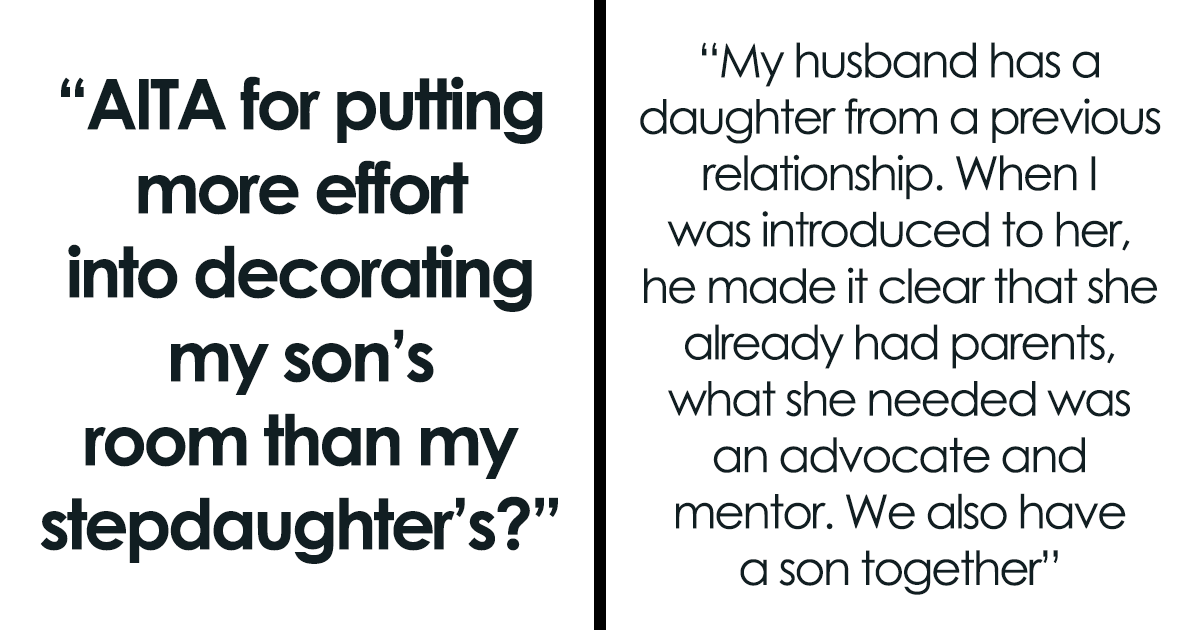
The situation centered on a stepmother who had a warm but carefully bounded relationship with her 13-year-old stepdaughter. She was not expected to replace the girl’s mother. Her husband had made that clear early on: his daughter already had parents, and what she needed from her stepmother was support, advocacy, and respect. So the stepmother tried to follow that script. She stayed involved without taking over.
Then came the family’s younger son, a 3-year-old boy who was also the stepmother’s first biological child. When the family created his bedroom, she poured imagination into every corner: nature-inspired colors, playful furniture, dreamy lighting, and a design that looked like a toddler had been handed a Pinterest board and a magic wand. The room was not just decorated; it was practically a tiny national park with bedtime privileges.
The stepdaughter’s room, by contrast, had been updated according to her own requests. She wanted a reading nook, cushions, a canopy, and wall colors she chose herself. The stepmother helped, but the bigger furniture stayed because her father thought it was still in good condition. When the teen saw the dramatic difference between the two rooms, she cried. To her, the message seemed obvious: more effort went into the little boy’s room because “he’s actually mine.”
Why a Bedroom Can Feel Like Proof of Love
Adults often think in terms of budgets, boundaries, and practical furniture decisions. Kids and teens often read the roomliterally. A bedroom is not only a place to sleep. It is a private world, a status symbol, a comfort zone, and sometimes the clearest visible sign of where a child believes they rank in the family.
That is especially true in blended families. According to family researchers and child-development experts, stepfamilies often carry emotional layers that first-time nuclear families may not experience in the same way. A stepchild may be happy their parent found love while also feeling loyalty to the other biological parent. They may like a stepparent but still resist needing them. They may want closeness and fear rejection at the exact same time. If that sounds complicated, welcome to family life: the only group project where everyone has different instructions and nobody can find the original file.
So when a teen sees a younger half-sibling receive a dazzling room makeover, she may not be calculating dollars. She may be asking a deeper question: “Do I belong here as much as he does?”
The Story: A Stepmom, a Teen, and One Very Impressive Toddler Room
The stepmother’s defense was not cold or cruel. She had reasons. Her husband had drawn a boundary early in the marriage: the stepdaughter did not need another mother. The stepmom respected that. When decorating the teen’s room, she asked what the girl wanted instead of imposing her own taste. The teen requested a cozy reading nook, favorite colors, cushions, and a canopy. Those choices were honored.
Meanwhile, the little boy’s room came from a long-held dream. The stepmother had imagined it in detail and paid for it herself. She created a themed space with ombre walls, a starry ceiling, playful lighting, a floor bed, a grassy rug, toy storage, and whimsical furniture. It was personal, yes, but also age-appropriate. A toddler’s room can be designed around fantasy. A teen’s room usually needs more self-expression and less “Mommy has a vision, please enjoy this woodland mushroom lamp.”
Still, the visual difference hurt. The stepdaughter did not simply see a toddler room. She saw emotional inequality. She saw proof that the biological child inspired more excitement. Whether that was the stepmother’s intention or not, the teen’s pain was real.
Was This Favoritismor a Boundary Problem?
The fairest answer is: it was probably both less malicious and more meaningful than either side first realized.
The stepmother was not necessarily favoring her son in a heartless way. She was following the family role she had been given. She did not want to overstep. She did not want to replace anyone. She let the teen make choices. Those are good instincts in a blended family.
But children do not always experience restraint as respect. Sometimes they experience it as distance. A teen may not think, “My stepmom is wisely honoring structural family boundaries.” She may think, “She did not care enough to dream about my space.” That emotional translation matters.
Intent Does Not Erase Impact
One of the biggest lessons from this conflict is that good intentions do not automatically prevent hurt feelings. A parent or stepparent can act carefully and still accidentally send the wrong message. In this case, the stepmother’s intention was: “I did not want to take control of your room.” The stepdaughter heard: “I did not feel inspired by you.”
That gap between intention and impact is where many family arguments live rent-free.
Equal Love Does Not Always Look Identical
It is also important to say that equal treatment does not mean identical treatment. A 3-year-old and a 13-year-old do not need the same bedroom, the same rules, or the same level of parental involvement. A toddler may need a playful sensory space. A teen may need privacy, control, and design choices that reflect her personality.
But equal love should feel equally visible. If one child gets a highly customized room and the other gets a modest refresh, the adults need to explain the difference and make sure the second child still feels valued.
Why the Stepdaughter’s Reaction Makes Sense
At 13, children are highly sensitive to fairness. They notice who gets attention, who gets praised, who gets defended, who gets the bigger celebration, and who gets the more exciting room. They may not always express it gracefullybecause they are 13, not tiny Supreme Court justicesbut the feeling underneath can be valid.
In a blended family, the arrival of a younger half-sibling can intensify insecurity. The baby or toddler belongs biologically to both adults in the home. The older child may worry that this new child represents the “real” family, while she is a guest, an add-on, or a weekend chapter in someone else’s book.
That fear can be painful even when the adults love her deeply. In fact, it can be painful because she loves them back. If she did not care about her stepmother’s affection, the room would not have hurt so much.
The Father’s Role Deserves Attention
Many online readers focused not only on the stepmother but also on the father. That makes sense. He helped define the stepmother’s role as mentor and advocate rather than parent. He also decided the teen’s furniture did not need replacing. Those choices may have been practical, but they shaped the emotional outcome.
In blended families, the biological parent has a crucial job: they must protect the child’s sense of belonging while also supporting the stepparent’s relationship with the child. That means not leaving the stepparent trapped between “Don’t overstep” and “Why didn’t you do more?” Those two expectations cannot peacefully share a bunk bed.
The father could have said, “Your room matters too. Let’s make a plan and budget together.” He could have helped his daughter understand that her stepmom was trying to respect her choices, not reject her. He could also have made sure the teen’s room received a comparable level of attention, even if the style and spending were different.
What the Stepmom Got Right
The stepmother did several things well. She respected boundaries. She asked the teen what she wanted. She did not force a fake mother-daughter dynamic. She acknowledged the girl’s feelings instead of dismissing them. Most importantly, she felt guilty not because she had been “caught,” but because she could see how the situation looked from the child’s perspective.
That kind of reflection matters. Many family problems become worse when adults rush to defend themselves. A better first response is often: “I understand why that hurt. I did not mean to send that message, but I can see how it landed that way.”
That sentence will not magically solve everything, but it is a much better repair tool than “You’re being dramatic.” For the record, “You’re being dramatic” has fixed approximately zero teen emotions in recorded history.
What the Family Could Do Next
The healthiest solution is not to strip the toddler’s room down to beige walls and emotional neutrality. The solution is to make the stepdaughter feel seen.
1. Have a Calm Conversation Without a Courtroom Tone
The adults should sit down with the teen and listen. Not lecture. Not cross-examine. Not present Exhibit A: The Cost of Cushions. Just listen. She needs space to say, “It felt like he mattered more,” without being corrected mid-sentence.
2. Name the Real Issue
The issue is not furniture. It is belonging. The adults should say clearly: “You are not less important. You are not a guest here. Your room should feel like you, and we want to help make that happen.”
3. Offer a New Design Plan
Instead of copying the toddler’s room, the teen should get a room plan that matches her age and personality. Maybe that means a mural, better lighting, a desk upgrade, framed art, a vanity, bookshelves, peel-and-stick wallpaper, a music corner, or a more grown-up reading lounge. The point is not to spend the exact same amount. The point is to invest visible care.
4. Give Her Creative Control With Adult Support
Teenagers usually want autonomy, but autonomy should not mean abandonment. A good approach is: “You lead the style. We will help with planning, money, labor, and making it special.” That tells her she is trusted and cherished.
5. Create Rituals Beyond the Room
A bedroom makeover can repair one visible wound, but lasting security comes from repeated signals. One-on-one lunches, shared errands, movie nights, inside jokes, and showing up for school events all say, “You matter here.” Love is not proven once. It is renewed in small, boring, dependable waysoften while driving someone to Target.
Blended Family Lessons Hidden in the Drama
This story went viral because it touched a nerve. Many people in blended families know the awkwardness of unequal roles. A stepparent may love a child but fear rejection. A stepchild may crave attention but reject it when offered. A biological parent may want peace so badly that they accidentally avoid hard conversations. Everyone is trying not to break the emotional furniture, and then someone trips over the ottoman anyway.
The lesson is not that stepparents must spend identical money on every child. The lesson is that children need emotional clarity. If there are different rules, explain them. If one child gets more attention because they are younger, reassure the older child. If a stepparent is holding back out of respect, say so directly. Silence creates stories, and kids are very good at writing painful ones.
Experiences Related to This Topic
Many families experience a version of this conflict, even if it does not involve a glow-in-the-dark ceiling. One common example happens during holidays. A toddler may receive a pile of toys because toddler gifts are large, bright, and often come in boxes the size of studio apartments. A teenager may receive one expensive gift, like headphones or a tablet. To adults, the spending may be equal. To the teen, the toddler’s mountain of presents looks like proof of favoritism. The fix is not necessarily more gifts. It is communication: “Your gift is smaller because it costs more, not because we care less.” Obvious to adults, not always obvious to kids.
Another related experience happens with family photos. A new baby enters the family, and suddenly the walls fill with newborn portraits, hospital pictures, milestone cards, and tiny socks preserved like museum artifacts. Meanwhile, the older stepchild may notice there are fewer photos of them in the home. Nobody meant harm. The baby simply arrived with a camera roll that could crash a cloud server. But the older child may feel erased. A simple repair is to add framed photos of every child, including stepchildren, in shared spaces. Belonging should be visible.
Bedrooms also become emotional territory after moves. A biological child may get the “better” room because they live in the home full-time, while a stepchild who visits part-time gets a smaller or more generic space. From an adult perspective, that can seem practical. From a child’s perspective, it can feel like being classified as temporary. Even if a child is there only on weekends, their space should not feel like a storage closet with a pillow. A few personal touchesfavorite colors, posters, bedding, books, a drawer that is only theirscan say, “You have a real place here.”
Grandparents can unintentionally create the same wound. They may shower the biological grandchild with handmade blankets, custom ornaments, or baby albums while giving the stepchild a polite gift card. Again, the issue is not always money. It is emotional symbolism. Adults in blended families often need to gently coach extended relatives: “Please include her as part of the family. She notices.” Children should not have to audition for belonging at Thanksgiving.
School events offer another example. A stepparent may avoid attending conferences, performances, or games because they do not want to overstep. But the child may interpret the absence as disinterest. The better move is to ask: “Would you like me to come?” That gives the child control while still offering care. Sometimes the answer will be no. Sometimes it will be yes. Either answer is useful because it replaces guessing with respect.
The deepest experience behind all these examples is the same: children measure love through patterns. They notice who gets effort, who gets patience, who gets defended, and who gets celebrated. In blended families, adults do not need to be perfect. They do need to be clear, consistent, and willing to repair. A sincere apology, a thoughtful room update, and a steady stream of everyday kindness can do more than any dramatic speech. The goal is not to prove that every relationship is identical. The goal is to make sure every child can look around the home and think, “There is space for me here, too.”
Conclusion
The stepdaughter’s tears were not really about a room. They were about fear: fear of being second place, fear of being less loved, fear that biology had quietly drawn a circle she stood outside of. The stepmother’s mistake was not loving her son. It was underestimating how loudly effort speaks in a blended family.
Fortunately, this is the kind of hurt that can be repaired. With honest conversation, a renewed design plan, and steady reassurance, the family can turn a painful comparison into a stronger bond. The best blended families are not built by pretending everything is equal all the time. They are built by noticing when someone feels left out and caring enough to pull up another chair.
Note: This article is an original, fully rewritten synthesis based on public family-discussion context, child-development guidance, blended-family research, and expert parenting recommendations.

