Note: This article is written in original American English and synthesized from publicly available U.S. entertainment databases, audience-review platforms, TV listings, and public-health information about teen pregnancy and young parenthood. No source links are inserted for publishing cleanliness.
Introduction: A Lifetime Movie That Still Starts Arguments
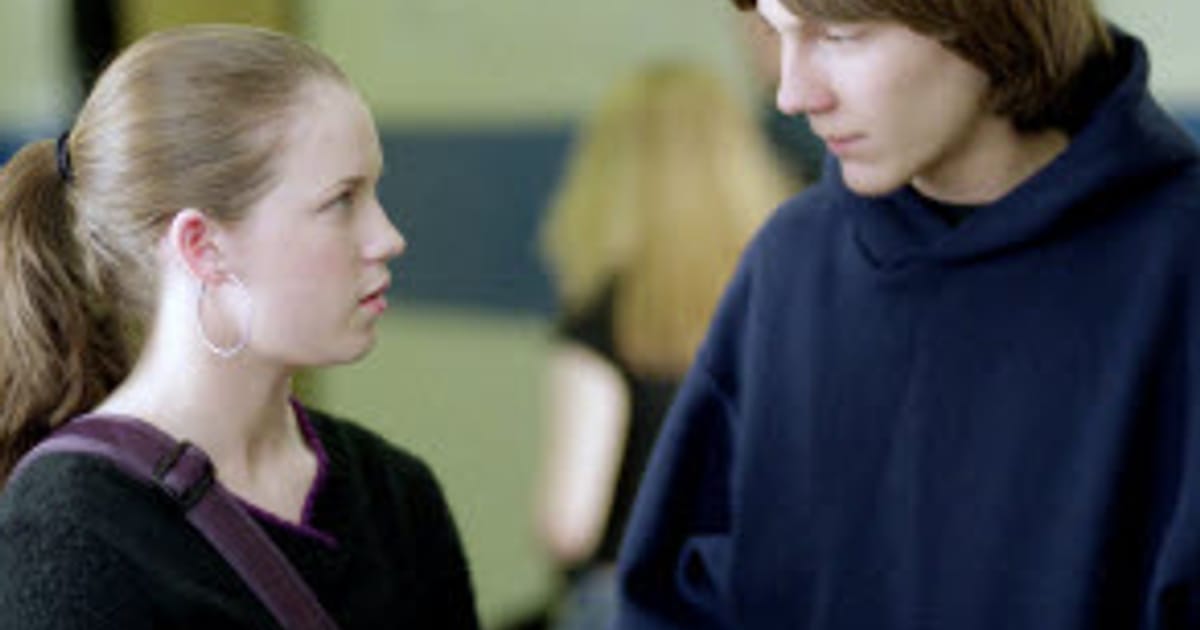
Too Young to Be a Dad is one of those early-2000s TV dramas that looks simple on the surface and then quietly sneaks into a much bigger conversation. Released in 2002 and commonly associated with Lifetime’s message-movie era, the film follows Matt Freeman, a 15-year-old honor student played by Paul Dano, after he learns that his classmate Francesca is pregnant. Suddenly, algebra homework has competition from adult-sized choices, and nobody in the room seems fully ready for the emotional bill.
The title sounds like a warning label, and honestly, that is part of its charm. Too Young to Be a Dad does not pretend teen parenthood is a quirky school project with diapers. It places the story from the young father’s point of view, which is unusual because many teen-pregnancy dramas focus mostly on the pregnant girl, her family, or social judgment. Here, the film asks a different question: What happens when a boy who is still being parented suddenly wants to become a parent?
This ranking and opinion guide looks at the movie’s strongest elements, weakest choices, emotional impact, performances, audience reception, and cultural relevance. The film is not perfect. It has the sentimental glow of a cable drama that knows exactly when to cue the serious piano. But it also brings up real issues: responsibility, family pressure, adoption, education, class differences, maturity, and the complicated way adults often talk over teenagers while claiming to help them.
What Is Too Young to Be a Dad About?
The story centers on Matt Freeman, a bright teenager whose family expects him to keep moving toward a promising future. His parents, Susan and Dan Freeman, imagine college, achievement, and probably a refrigerator covered in academic awards. Then Matt’s classmate Francesca becomes pregnant, and both families are forced into a decision that none of the teenagers are emotionally prepared to handle.
Francesca’s family wants adoption. Matt’s mother becomes deeply involved and eventually offers to help raise the baby. Matt, meanwhile, begins to rethink what fatherhood means. The movie’s biggest dramatic engine is not simply “teen pregnancy is difficult.” It is the tug-of-war between what adults think is practical and what a teenage boy believes is morally right.
The film’s cast gives the material more weight than the average made-for-TV issue drama. Paul Dano brings softness and nervous honesty to Matt. Kathy Baker gives Susan a mix of protectiveness, panic, and stubborn maternal force. Bruce Davison plays Dan as a father who struggles between disappointment and reluctant understanding. Katie Stuart’s Francesca is placed in a difficult narrative position because the film is more focused on Matt’s transformation than on her inner world, which remains one of the movie’s most debatable choices.
Overall Ranking: Where Does the Movie Stand?
As a polished drama, Too Young to Be a Dad ranks somewhere in the middle of the TV-movie pack. It is not a cinematic masterpiece, and nobody should pretend it belongs beside the great coming-of-age films of American screen history. However, as a discussion-starter, it ranks surprisingly high. It is exactly the kind of film that can make a classroom, family, or online comment section suddenly become very awake.
Overall Score: 7.2/10
The movie earns points for its unusual perspective, sincere performances, and willingness to take teen fatherhood seriously. It loses points for a script that sometimes simplifies complex problems and a conclusion that feels cleaner than real life usually allows. Real young parents do not typically solve custody, school, family tension, money, and emotional readiness in one neat dramatic arc. Life, regrettably, does not come with a Lifetime Movie Club subscription and a tidy fade-out.
Ranking the Best Parts of Too Young to Be a Dad
1. Paul Dano’s Performance as Matt Freeman
The strongest part of the movie is Paul Dano’s performance. Before he became widely known for later acclaimed roles, Dano already showed the quiet sensitivity that makes Matt believable. He does not play Matt as a tiny adult trapped in a teenager’s body. He plays him as a kid trying to stand upright while everyone around him keeps moving the floor.
Matt is scared, embarrassed, confused, and idealistic. That combination matters. If he were written as a flawless young hero, the movie would become unbearable. If he were written as careless or cartoonishly irresponsible, the film would lose its central tension. Dano finds the middle: Matt is not ready, but he is trying. That is the entire emotional hook.
2. The Father’s Point of View
The second-best element is the movie’s focus on the young father. Teen pregnancy stories often treat boys as background characters, villains, escape artists, or walking hoodies with excuses. Too Young to Be a Dad asks what responsibility looks like when the father is also a child.
This point of view does not erase the pregnant teen’s experience, and it should not. But it does open a discussion about how families, schools, and communities respond to young fathers. The movie suggests that responsibility is not just a speech. It is time, sacrifice, money, emotional presence, and support from adults who are mature enough to guide without controlling everything.
3. Kathy Baker as Susan Freeman
Kathy Baker gives the movie its adult emotional center. Susan is a mother, a teacher, and a person whose protective instincts sometimes sprint ahead of her judgment. Her decision to help raise the baby creates conflict in her marriage and complicates the family dynamic.
What makes Susan interesting is that she is not simply “right” or “wrong.” She is loving, but she can be forceful. She wants to help, but her help may also become a way of taking charge. Baker makes Susan feel human, which is useful because the script sometimes pushes her toward melodrama.
4. The Adoption Conflict
The adoption storyline is one of the film’s most dramatic and morally complicated parts. Francesca’s family sees adoption as the responsible path. Matt begins to feel that giving up the baby may not match what he believes he should do. The conflict is not presented as a simple villain-versus-hero situation, even though the film clearly sympathizes with Matt’s emotional journey.
In real life, adoption decisions involve legal, emotional, medical, family, and long-term personal considerations. The movie uses that decision as a dramatic pressure point, and while it simplifies some realities, it does show how quickly adults can dominate a conversation that directly affects teenagers.
5. The Family Pressure
The Freeman family is not perfect, and that helps the story. Dan’s disappointment, Susan’s urgency, Alex’s attitude, and Matt’s fear all create a home that feels like it is trying to stay normal while the walls are quietly making cracking noises.
One reason the movie still gets discussed is that it understands a basic truth: teen pregnancy does not affect only two teenagers. It changes the temperature of entire households. Parents worry about reputation, finances, school, future plans, and whether they failed somewhere along the way. The movie may be dramatic, but that family panic rings familiar.
6. The Educational Value
Many viewers remember films like this from health class, weekend cable reruns, or family TV afternoons. That makes sense. Too Young to Be a Dad works well as a conversation starter because it gives viewers a specific situation to debate. Should Matt be encouraged? Is he being unrealistic? Are the adults helping or hijacking the decision? Is the ending too optimistic? The movie practically walks into the room carrying discussion questions.
7. The Earnest Lifetime Tone
The movie’s tone is both a strength and a weakness. It is extremely earnest. Nobody in this movie is winking at the audience. Nobody says, “Well, this is awkward,” then cuts to a cool indie soundtrack. The film takes itself seriously from beginning to end.
That sincerity can feel dated, especially to modern viewers raised on sharper dialogue and more morally gray storytelling. Still, the seriousness helps the film land emotionally. Sometimes a movie does not need to be subtle; sometimes it just needs to put the problem on the table and say, “Okay, everyone, stop pretending this is easy.”
Ranking the Weakest Parts of the Movie
1. The Ending Feels Too Clean
The biggest criticism is the ending. The movie seems eager to leave viewers with hope, which is understandable, but the resolution can feel too tidy. Teen parenthood involves childcare, education, income, legal questions, emotional health, family support, and years of responsibility. A hopeful ending is fine. A magical emotional landing pad is less convincing.
This is why some critics and viewers find the movie contradictory. It warns that Matt is too young to be a father, then shows him becoming impressively nurturing and mature in a way that may soften the warning. The result is emotionally satisfying but not always realistic.
2. Francesca Deserves More Depth
Because the movie is framed from Matt’s point of view, Francesca sometimes feels more like the center of the crisis than a fully explored person. That is a problem. A pregnancy storyline cannot be complete if the pregnant teenager’s inner life is underdeveloped.
Modern viewers may notice this more sharply than audiences did in 2002. Today, a more balanced script would likely give Francesca more agency, more private scenes, and more emotional complexity beyond how her choices affect Matt.
3. The School System Feels Simplified
The film touches on school consequences, alternative education, and social judgment, but these pieces feel streamlined for drama. Real teen parents may face complicated school policies, transportation problems, childcare barriers, stigma, and scheduling issues. The movie gestures toward these challenges without fully living inside them.
4. The Class Differences Could Be Sharper
The conflict between the Freeman family and the Howell family includes money, status, and control. Francesca’s family appears more financially secure and more determined to manage the outcome. Matt’s family has fewer resources and more emotional hesitation. The movie recognizes this divide, but it could have explored it more deeply.
Class matters in teen parenthood. Families with money can access legal advice, healthcare, childcare, tutoring, transportation, and privacy more easily. Families without those supports may face the same moral decisions with fewer practical options. That is a major issue, and the film only partially investigates it.
Audience Opinions: Why Viewers Still Talk About It
Audience reactions to Too Young to Be a Dad are surprisingly divided in a way that makes the movie more interesting. Some viewers find it emotional and important, especially because it shows a teenage boy trying to take responsibility. Others think it is unrealistic, overly sentimental, or too soft on the practical realities of becoming a parent at 15.
Review aggregators and film platforms show that general audiences tend to rate it more warmly than professional critics. That makes sense. Critics often evaluate pacing, structure, originality, and realism. Viewers may respond more to the emotional idea: a scared young father choosing not to run away. In other words, critics watch the movie with a clipboard; audiences watch it with a tissue nearby. Both responses are valid, although one is less likely to leave mascara on the couch.
How the Movie Connects to Real Teen Parenthood
The film came out in a period when teen pregnancy was a frequent subject in American TV movies, school discussions, and public-health campaigns. Since the early 1990s, U.S. teen birth rates have declined dramatically, but teen parenthood remains an important topic because the personal stakes are still enormous for the young people involved.
Modern public-health data show that teen births in the United States have continued to fall over time, but disparities remain by geography, income, race, ethnicity, and access to health services. That context matters when watching Too Young to Be a Dad. The movie is not just about one fictional boy. It is about how support systems either help teenagers make thoughtful decisions or leave them to confuse panic with maturity.
The film also raises a useful point about young fathers. Conversations about teen pregnancy often focus on young mothers, and for obvious reasons: pregnancy has direct physical, medical, and social effects on them. But young fathers also need guidance, accountability, and support. Ignoring them does not make them more responsible. It usually makes them easier to disappear.
Character Rankings: Who Leaves the Biggest Impression?
1. Matt Freeman
Matt is the emotional center and the most memorable character. His journey from panic to responsibility is the reason the movie exists. Whether viewers agree with his choices or not, he is written to provoke debate.
2. Susan Freeman
Susan ranks second because she drives much of the adult conflict. She is loving, flawed, intense, and sometimes too ready to turn concern into control. That makes her one of the film’s most layered characters.
3. Dan Freeman
Dan represents the disappointed parent who has to rebuild his view of his child. His arc is quieter, but it gives the family story balance.
4. Francesca Howell
Francesca should rank higher based on importance, but the script does not give her enough depth. She is central to the plot but not explored enough as a person.
5. Alex Freeman
Alex adds sibling tension and shows how a crisis can change more than one teenager in a family. She is not the main focus, but her reactions help widen the household drama.
Final Opinion: Is Too Young to Be a Dad Worth Watching?
Yes, but with expectations in the right place. Too Young to Be a Dad is not a subtle prestige drama. It is a sincere, sometimes heavy-handed, emotionally direct TV movie. If you want sleek modern realism, it may feel dated. If you want a film that opens a serious discussion about teen fatherhood, family pressure, adoption, and responsibility, it still works.
The best way to watch it is not as a perfect guide to real life. It is better viewed as a conversation piece. The movie asks whether love and determination are enough when a teenager faces an adult responsibility. The honest answer is complicated: love matters, but support, money, maturity, education, health care, legal guidance, and time matter too.
That complexity is why the movie still has value. It may not answer every question well, but it asks questions that are still worth asking.
Experience-Based Reflections: What This Movie Feels Like in Real Life Conversations
One of the most interesting experiences connected to Too Young to Be a Dad is how differently people react depending on their age. Teen viewers often focus on Matt’s emotions. They see the fear, the pressure, the embarrassment, and the feeling of being trapped in a decision that suddenly became bigger than anyone expected. Adult viewers usually focus on the parents. They see the financial stress, the legal risks, the school disruption, and the terrifying realization that their child’s future may change overnight.
That split reaction is exactly why the movie can be useful. It reveals how the same story can look completely different from opposite sides of the dinner table. A teenager may say, “Matt is trying to do the right thing.” A parent may answer, “Trying is good, but diapers do not accept good intentions as payment.” Both are seeing something true.
In classroom-style discussions, this film often works because it gives students a safe fictional case to analyze. Instead of asking personal questions, a teacher or group leader can ask: What should Matt do next? What should Francesca’s parents do? Is Susan helping too much? Should adoption be treated as a failure or as a responsible option? How should schools support students dealing with pregnancy or parenthood? These questions encourage critical thinking without forcing anyone to reveal private experiences.
Another real-world lesson from the film is that responsibility should not be confused with dramatic speeches. Matt’s desire to be involved is meaningful, but real parenting is repetitive. It is feeding, cleaning, appointments, sleep loss, homework squeezed between childcare, and years of showing up when the emotional soundtrack has long stopped playing. A teenager may feel sincere love and still need massive support to parent safely and responsibly.
The movie also shows how quickly adults can become decision-makers while teenagers become symbols. Francesca becomes “the pregnant girl.” Matt becomes “the young father.” Their families become teams in a moral argument. In real life, this labeling can be painful. Young people in crisis need adults who can slow down, listen carefully, provide accurate information, and avoid turning fear into control.
For viewers who have known young parents, the film may feel both touching and too easy. Many young parents work incredibly hard, and some build loving, stable families over time. But the road is rarely simple. Finishing school, finding childcare, maintaining friendships, earning money, and managing emotional stress can be exhausting. The movie captures the emotional spark of wanting to do the right thing, but real life requires a long, practical plan.
That is the best opinion to take away from Too Young to Be a Dad: the film is most valuable when it starts a conversation, not when it ends one. It reminds viewers that teen pregnancy is not gossip, not a punchline, and not a one-person issue. It involves two young people, two families, a child, and a community of adults who either step up wisely or make everything messier. And if there is one universal ranking here, it is this: calm support beats panic every time.
Conclusion
Too Young to Be a Dad remains a memorable TV drama because it approaches teen pregnancy from a less common angle: the teenage father’s emotional and moral struggle. Its best qualities are Paul Dano’s sensitive performance, the seriousness of its subject, and the family conflict that gives the story emotional weight. Its biggest flaws are a simplified ending, an underdeveloped Francesca, and a sometimes too-neat view of an extremely complicated life situation.
As a movie, it ranks as a solid, imperfect, discussion-friendly drama. As a cultural artifact, it is more interesting than its modest production style suggests. It reflects early-2000s TV storytelling, but the questions it raises still matter today: What does responsibility mean for teenagers? How should families respond to crisis? Can young people make mature decisions without adults taking over completely? And how much hope is helpful before it becomes unrealistic?
The final opinion is simple: Too Young to Be a Dad is not flawless, but it is worth watching, especially for viewers interested in teen dramas, family decision-making, and emotional stories about growing up too quickly. It may not have all the answers, but it definitely knows how to start the argument.