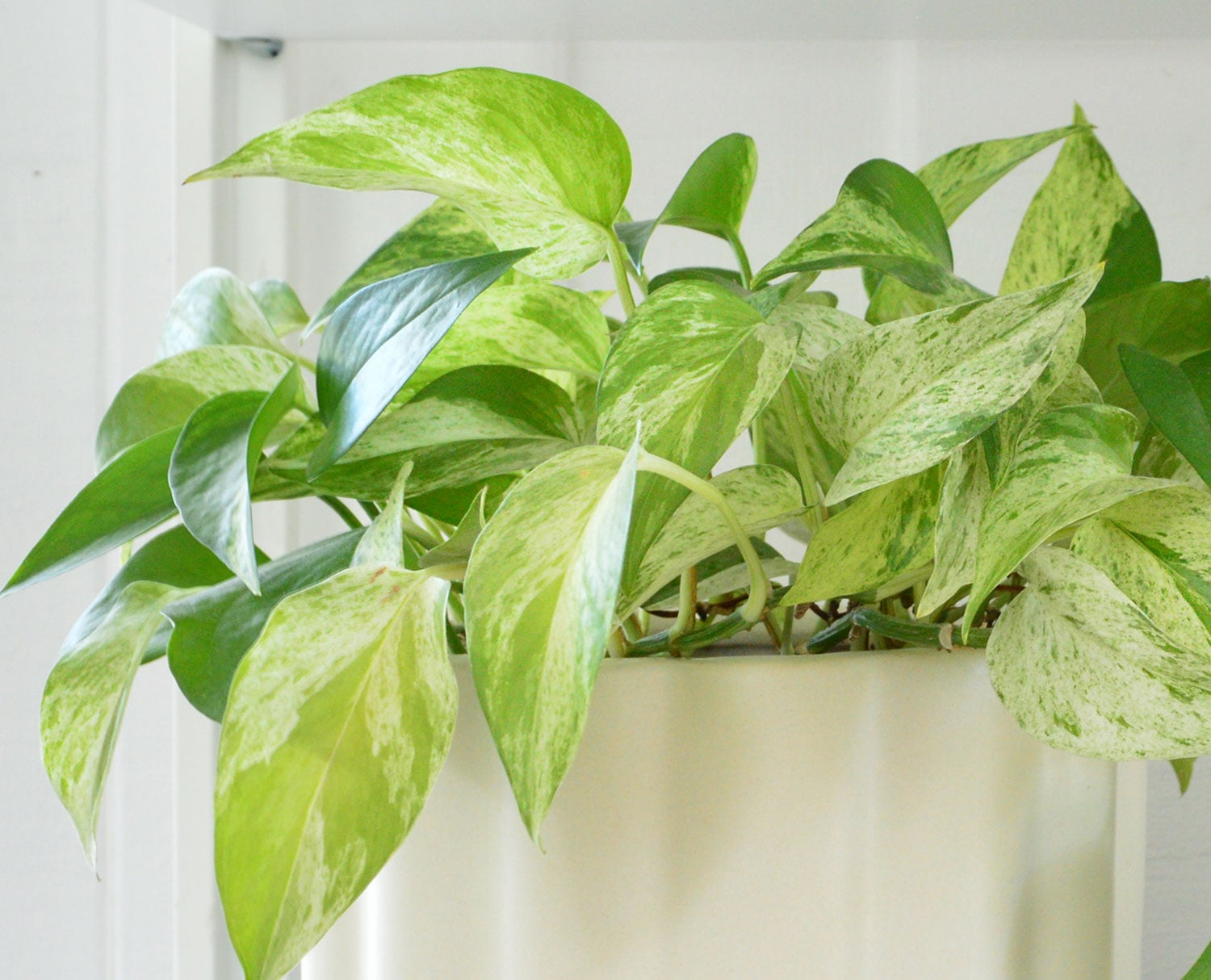
Marble Queen pothos looks as though someone splashed cream paint across a green vineand somehow made the mess elegant. Its marbled leaves brighten shelves, hanging baskets, and climbing displays, yet the plant remains forgiving enough for beginners.
That easygoing reputation has limits. Because its pale sections contain less chlorophyll, Marble Queen usually grows more slowly than greener pothos and needs bright indirect light to keep its pattern. It also handles a brief dry spell better than constantly wet soil. Master light and watering, and the rest is refreshingly simple.
What Is a Marble Queen Pothos?
Marble Queen is a variegated cultivar of Epipremnum aureum, a tropical climbing vine in the aroid family. Its heart-shaped leaves combine green, ivory, cream, and sometimes pale yellow. Every leaf has a slightly different pattern, from fine speckles to broad white swirls.
Indoors, it can trail several feet from a pot or climb a pole using aerial roots. Trailing plants stay graceful and compact with pruning, while supported vines may produce larger leaves over time.
Marble Queen Pothos Care at a Glance
| Care Factor | Best Practice |
|---|---|
| Light | Bright, indirect light |
| Water | Water when the top 1–2 inches of soil are dry |
| Soil | Loose, well-draining indoor potting mix |
| Temperature | About 65–85°F; avoid cold drafts |
| Humidity | Average household humidity or higher |
| Fertilizer | Diluted balanced fertilizer during active growth |
| Habit | Trailing or climbing vine |
| Pet Safety | Toxic if chewed by cats or dogs |
How Much Light Does Marble Queen Pothos Need?
Bright, indirect light gives the best balance of healthy growth and strong variegation. An east-facing window, a place several feet from a bright south- or west-facing window, or a spot behind a sheer curtain usually works well.
The plant can survive lower light, but growth may slow, spaces between leaves may lengthen, and new foliage may become greener. Moving it gradually into brighter indirect light can improve the pattern on future leaves, although existing leaves will not change color.
Harsh direct sun can scorch the pale areas, leaving tan, crispy patches. Gentle morning sun is generally safer than intense afternoon rays. A full-spectrum grow light is useful in dark rooms; follow its distance recommendations and use a timer for a consistent daily cycle.
How to Water Marble Queen Pothos
Water according to soil moisture, not a fixed weekday. Push a finger 1–2 inches into the mix. When that layer feels dry, soak the pot until water drains from the bottom, then empty the saucer or decorative cachepot.
The interval may be roughly one to two weeks in many homes, but season, light, pot size, soil, and temperature all change the schedule. The same plant that dries quickly in July may remain moist much longer in winter.
Overwatering Versus Underwatering
Yellow leaves, dark soft spots, mushy stems, or soil that stays wet for many days suggest excess moisture and possible root rot. A thirsty plant usually droops, curls, develops dry edges, or feels unusually light when lifted. When watering is needed, give a thorough soak rather than small surface sips.
Best Soil, Pot, and Repotting Method
Use an airy houseplant mix that drains well while holding modest moisture. Standard indoor potting soil amended with perlite, fine orchid bark, or coco coir is a practical choice. The goal is a mix that accepts water easily without staying swampy.
A drainage hole is strongly recommended. Pots without holes work better as outer covers around a removable nursery pot. Terracotta dries faster, while glazed ceramic and plastic retain moisture longer.
Repot when roots circle tightly, emerge through drainage holes, or make the soil dry unusually fast. Move up only 1–2 inches in pot diameter. An oversized container holds too much wet soil around a small root systemless luxury suite, more accidental bog.
Temperature and Humidity
Marble Queen pothos grows comfortably around 65–85°F. Keep it away from cold glass, air-conditioning vents, heaters, and sudden temperature swings. Average household humidity is usually acceptable, although moderate humidity can reduce crispy edges. In very dry rooms, a humidifier is more effective than occasional misting.
Fertilizing Marble Queen Pothos
During spring and summer, apply a balanced liquid houseplant fertilizer at half strength every four to eight weeks. Follow the label and fertilize moist soil rather than a bone-dry root ball. Reduce or pause feeding when winter growth slows. Excess fertilizer can cause salt buildup, brown tips, and root stress; more food does not magically create faster variegation.
Pruning, Training, and Fuller Growth
Trim long vines just above a nodethe bump where a leaf and aerial root emerge. Pruning keeps the plant compact and can encourage branching. Root the cut pieces and return them to the parent pot for a denser display.
For larger leaves, guide vines up a moss pole, coir pole, plank, or trellis and attach them loosely. Rotate the pot regularly for even growth, and wipe dust from leaves with a damp cloth. Skip leaf-shine products; your pothos does not need a cosmetic department.
How to Propagate Marble Queen Pothos
Propagation is easiest from stem cuttings, and every cutting must contain at least one node. A leaf without a node may survive temporarily, but it cannot grow into a complete vine.
Water Propagation
- Cut a healthy vine just below a node, keeping one to three leaves.
- Remove any leaf that would sit underwater.
- Place the node in clean, room-temperature water.
- Keep it in bright indirect light and replace cloudy water.
- Pot the cutting when several roots are about 2–3 inches long.
Roots often appear within a few weeks in warm conditions. Keep the soil lightly moist during the first days after transfer. You can also place a node directly into moist, airy potting mix; this hides the roots but avoids the water-to-soil adjustment.
Common Marble Queen Pothos Problems
Leaves Are Turning Green
Low light is the usual cause. Increase bright indirect light gradually. If one vine repeatedly produces all-green leaves, cut it back to the last well-variegated node so vigorous green growth does not dominate.
Yellow Leaves
Check the soil first. Widespread yellowing with wet mix often points to overwatering; dry soil and crisp foliage suggest prolonged thirst. Cold stress, crowded roots, fertilizer salts, or normal aging can also yellow an occasional leaf.
Brown Tips or Edges
Possible causes include irregular watering, dry air, excessive fertilizer, or mineral buildup. Review the whole routine rather than blaming humidity automatically.
Long Stems and Small Leaves
Leggy growth usually indicates insufficient light or overdue pruning. Increase indirect light, trim the vines, and propagate healthy tips. A climbing support may also promote larger foliage.
Root Rot
Remove the plant from its pot. Trim dark, mushy, foul-smelling roots with sanitized tools, discard the old soil, and repot in fresh, fast-draining mix. Take healthy stem cuttings as insurance when damage is severe.
Pests to Watch For
Mealybugs, scale, spider mites, thrips, and fungus gnats may visit. Inspect leaf undersides, stems, nodes, and the soil surface. Cottony clusters suggest mealybugs; hard brown bumps may be scale; fine webbing and pale speckles can indicate spider mites.
Isolate the plant, rinse or wipe away small infestations, and remove badly damaged growth. Insecticidal soap can help certain soft-bodied pests when used exactly as labeled, and repeat applications may be necessary. Let overly wet soil dry appropriately to discourage fungus gnats.
Is Marble Queen Pothos Toxic?
Yes. Marble Queen pothos contains insoluble calcium oxalate crystals and is toxic if chewed by cats or dogs. Exposure can cause oral pain, drooling, vomiting, swelling, and difficulty swallowing. Keep vines away from pets and small children.
Sap may irritate sensitive skin, so wear gloves when pruning or repotting, avoid touching your eyes, and wash your hands afterward. Contact a veterinarian, physician, or poison-control service after ingestion or significant exposure.
Practical Grower Experience: What the First Year Often Looks Like
A newly purchased Marble Queen pothos may spend its first few weeks doing almost nothing visible. That pause is normal. It is adjusting to new light, humidity, watering, and perhaps the emotional burden of living beside a printer. Resist the urge to “help” with frequent watering or immediate fertilizer. Give it bright indirect light, check the soil, and let it settle.
During the first month, learn the weight of the pot. Lift it after a thorough watering, then lift it again several days later. The difference becomes a useful moisture clue. Combine that with a finger test, and you will make better decisions than any fixed Tuesday-watering ritual. The surface can dry while the center remains wet, so checking only the top dusting of soil often leads to overwatering.
Growth usually becomes more obvious in spring and summer. New leaves may look pale at first and gain contrast as they harden. Marble Queen grows more slowly than greener pothos, so patience is part of the care plan. If each leaf is smaller and the gaps between nodes keep stretching, move the plant gradually into brighter indirect light.
By midyear, long vines may look sparse near the pot. This is when many growers discover that pruning is not plant cruelty. Cut above a node, root the healthy tip, and plant it back around the rim. Several cuttings create the overflowing look seen in stores. Those lush pots are rarely one heroic vine; they are usually a small committee.
Summer also reveals watering mistakes quickly. A plant in strong filtered light may dry faster, while one inside a large decorative pot may stay wet much longer than expected. The answer is not automatic weekly watering but more frequent checking. When the mix is ready, soak it fully and let every drop of excess water escape.
In fall and winter, shorter days slow growth and extend drying time. Continuing a summer watering schedule into December is a classic route to yellow leaves. Reduce or pause fertilizer until active growth returns.
The first pest scare often begins with one suspicious white speck. Investigate every node and leaf underside under bright light. Quarantine the plant if you see cottony residue, webbing, sticky leaves, or moving dots. Early treatment is far easier than managing an infestation that has toured the entire windowsill.
After a year, the best routine is usually boring: stable light, thorough but infrequent watering, occasional feeding, regular inspection, and strategic pruning. Marble Queen pothos does not need constant attention. It needs consistent conditions and an owner willing to leave the watering can alone while the soil is still damp.
Final Thoughts
Marble Queen pothos combines dramatic foliage with beginner-friendly care. Give it bright indirect light, use well-draining soil, and water only after the upper layer dries. Prune to maintain fullness, propagate node cuttings, and inspect regularly for pests.
The plant communicates clearly: greener new growth asks for more light, yellow leaves in wet soil ask for less water, and crispy edges ask you to review moisture, humidity, and fertilizer. Respond to those signals rather than a rigid schedule, and your Marble Queen can remain lush and beautifully patterned for years.
Note: Care intervals are starting points. Adjust them to your home’s light, temperature, season, pot size, and actual soil moisture.