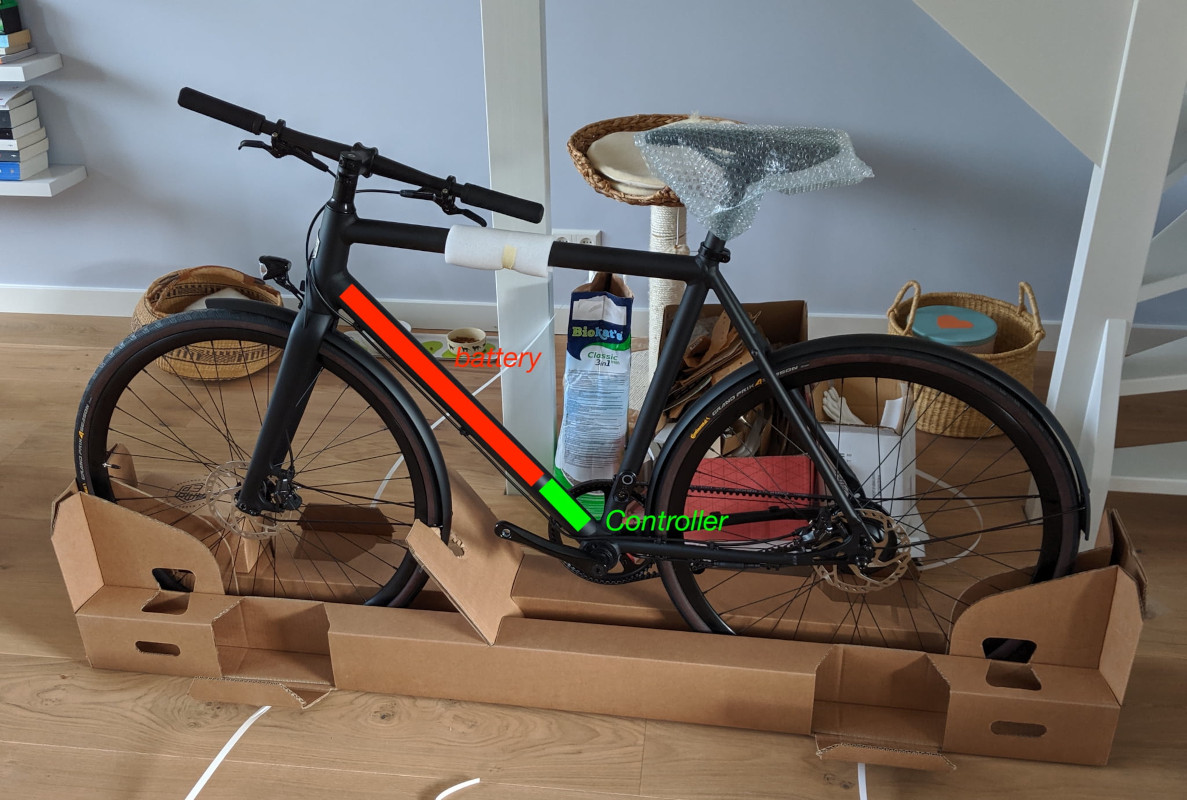
There are two kinds of e-bike owners in this world. The first kind rides happily until something breaks. The second kind hears a strange whine from the rear hub, opens a laptop, and says, “Excellent. A mystery.” This article is for the second group, and for anyone else who wants to understand why an open-source e-bike motor controller is such a big deal.
At a glance, a motor controller sounds boring. It is not. It is the tiny traffic cop sitting between your battery, your motor, your sensors, and your right wrist. It decides how much current flows, when the phases switch, how smooth the torque feels, whether the bike launches like a caffeinated squirrel, and whether the whole system remains efficient, quiet, and alive. In many ways, the controller is the bike’s real personality.
Open-source controllers matter because they replace the sealed-black-box approach with something owners can inspect, tune, repair, and improve. Instead of being stuck with one company’s idea of “good enough,” riders and builders can shape how an e-bike behaves. That means more flexibility, more longevity, and fewer expensive paperweights when proprietary support disappears.
What an Ebike Motor Controller Actually Does
An e-bike motor controller is the electronic brain that converts battery power into controlled motion. The battery delivers DC power. The motor, usually a three-phase BLDC or PMSM motor, wants carefully timed phase currents. The controller sits in the middle and makes that translation happen.
In practice, that means the controller handles a few critical jobs all at once: reading rider input, measuring current and voltage, estimating or sensing rotor position, switching MOSFETs in the inverter bridge, limiting heat, and protecting the system when something goes sideways. And because things always go sideways eventually, the protection part is not optional.
A good controller also decides how the bike feels. Is the pedal assist gentle and natural, or does it punch you in the lower back the moment you touch the crank? Does the motor hum smoothly, or sound like a kitchen appliance arguing with itself? Does the bike coast gracefully, or behave like it took offense at your riding style? Those details come from controller logic more than most riders realize.
Why Open Source Changes the Game
Traditional e-bike electronics are often locked down. Firmware may be inaccessible. Configuration tools may be limited or discontinued. Replacement parts may be hard to find. If the original vendor stops caring, the bike can become a very expensive normal bicycle.
An open-source e-bike motor controller flips that script. It gives builders access to code, configuration, and often the broader design philosophy. That opens the door to tuning power delivery, adjusting pedal-assist behavior, supporting alternate displays, experimenting with torque or cadence sensor logic, and extending the service life of hardware that would otherwise be trapped in vendor jail.
The most influential name in this space is VESC, an open-source motor control firmware platform that has spread far beyond skateboards into e-bikes, scooters, robotics, and DIY EV projects. Its popularity comes from a simple promise: control that is powerful, flexible, and visible to the people actually using it. Other open projects, including EBiCS firmware for certain e-bike controllers and community efforts around motors like the TSDZ2, show the same instinct: owners want systems they can understand, not just obey.
Open source also speeds up learning. Instead of treating motor control like wizardry guarded by a dragon and three NDAs, it lets curious builders study how real systems handle current measurement, commutation, field-oriented control, throttle mapping, thermal rollback, fault detection, and communication buses. That makes the ecosystem smarter over time.
The Core Hardware Inside an Open-Source Controller
1. The Microcontroller
The MCU is the brains of the operation. It reads sensors, runs the control loop, and decides what the inverter should do next. In modern designs, the MCU also handles communication, diagnostics, and logging. If the controller feels smooth and confident, the firmware and MCU are doing their jobs. If it feels confused, the whole bike will ride like it missed breakfast.
2. The Three-Phase Inverter
This is the muscle. Most e-bike controllers use six MOSFETs arranged in a three-phase bridge. The controller switches them rapidly to create the phase currents that move the motor. Component quality matters here because current spikes, switching losses, and heat are unforgiving. Cheap power stages have a habit of becoming educational.
3. Current and Voltage Sensing
An open-source controller needs good feedback to do good control. That includes measuring battery voltage, bus current, and often phase current. Without accurate sensing, torque control becomes guesswork, protection features become slower, and efficiency takes a hit. Great firmware cannot rescue bad measurements forever.
4. Rotor Position Feedback
Some motors include Hall sensors. Others rely on sensorless estimation using back-EMF or model-based methods. Hall sensors make startup and low-speed control easier. Sensorless control can reduce wiring and simplify some builds, but it asks more from the firmware and signal processing. A strong open-source platform gives builders options instead of forcing one religion.
5. Thermal Management and Protection
Heat is the villain in almost every compact traction system. Open-source controllers need temperature monitoring, current limiting, and fault handling that behave predictably under load. A controller that can survive a hill climb, a hot summer commute, and one very optimistic rider is already earning its keep.
FOC vs. Six-Step: Why Smooth Matters
If you spend more than five minutes reading about e-bike controllers, you will run into two control styles: six-step commutation and field-oriented control, usually called FOC.
Six-step control is older, simpler, and still useful. It energizes the motor in discrete commutation states. It works, but it tends to create more torque ripple and more audible noise. In plain English, it can feel a bit chunky. For some budget builds, that is acceptable. For a refined commuter or performance bike, it can feel like the drivetrain is wearing work boots indoors.
FOC is the smoother, smarter cousin. It treats motor currents as vectors and controls torque and flux more precisely. The result is quieter operation, better efficiency, and smoother torque delivery. That is why so many modern open-source controller conversations eventually end up at VESC-style FOC, sensorless FOC, or similar approaches. When riders say a bike feels “natural,” “silent,” or “premium,” the controller strategy is usually doing a lot of the heavy lifting.
That does not mean FOC is magic. It is more complex, more computationally demanding, and more sensitive to sensing quality and tuning. But when it is implemented well, it makes an e-bike feel less like an appliance and more like an extension of the rider.
Features That Make an Open-Source Controller Worth Using
Pedal Assist That Feels Human
Open-source controllers shine when pedal assist is configurable. Builders can tune how quickly assist ramps in, how strongly it responds to cadence or torque, and how it fades out. That matters because “assist” should feel like a helpful tailwind, not a prank.
Throttle and Multi-Mode Support
Some riders want pedal assist only. Others want throttle, walk mode, eco mode, boost mode, or fully custom ride profiles. Open platforms let those choices exist without forcing every rider into the same factory assumptions.
Regenerative Braking
Regenerative braking is one of those features that sounds like free lunch and behaves more like discounted lunch. Yes, it can recover some energy and improve control feel, especially on descents. But on lightweight e-bikes, the energy returned is often modest. Its bigger value can be braking feel, motor control, and wear reduction, assuming the battery and firmware are designed to handle it safely.
Field Weakening and Speed Extension
Advanced controllers sometimes support field weakening, which can push motor speed beyond the base range. That can be useful for performance builds, but it also adds heat, complexity, and tuning responsibility. This is where open source is both empowering and brutally honest: it gives you the option, then politely waits to see if you are wise enough to use it.
Logging, Telemetry, and Communication
USB, UART, CAN, Bluetooth, app connectivity, display support, and data logging all make a controller more useful in the real world. Builders can monitor temperature, current, faults, and ride behavior instead of guessing. That is the difference between tuning with information and tuning with vibes.
Open-Source Ecosystems to Know
VESC is the headline act. It is widely used, mature, flexible, and supported by an enormous DIY community. Its appeal is that it is not just firmware; it is an ecosystem of boards, tools, tuning practices, and community knowledge. For many builders, VESC is the shortest path from “I want control” to “I accidentally learned motor theory.”
EBiCS shows another side of the open-source movement: adapting and improving existing e-bike controller hardware rather than starting from scratch. Community firmware like this can breathe new life into older bikes, add display support, and expose modes that stock systems never offered.
SimpleFOC is especially useful for learning and low-power experimentation. It is not a drop-in answer for every high-current e-bike build, but it is excellent for understanding the concepts behind FOC, sensor integration, and open controller development.
ODrive is more famous in robotics than e-bikes, but it still matters in the conversation because its documentation illustrates how modern controllers organize cascaded control loops and torque-oriented behavior. Even when it is not the final choice for a bike, it helps explain the language of advanced motion control.
And then there are community projects around specific motors and platforms. A recent example highlighted by Hackaday showed an Ampler bike modified with an open-source controller approach based on VESC, partly to preserve repairability and customization in a system that originally leaned proprietary. That story captures the broader appeal of open source: not just hacking for fun, but reclaiming ownership.
The Safety Reality Nobody Gets to Skip
Open source does not mean careless. If anything, it demands more respect for the system. An e-bike controller lives in a world of high current, fast switching, battery risk, and compact packaging. That means electrical design, protection logic, thermal limits, charger compatibility, and battery management all matter.
In the United States, safety conversations around e-bikes increasingly point to system-level thinking. That is why standards such as UL 2849 focus on the electrical drive train, battery system, and charger combination together rather than pretending each part lives alone on a desert island. It is also why consumer guidance emphasizes using the recommended charger, following charging instructions, and not charging unattended or while sleeping.
For builders, the takeaway is simple: the best open-source controller is not the one with the most dramatic forum thread. It is the one with sane protections, known limits, careful integration, and documentation that respects reality. A flashy current number is fun until the MOSFETs become decorative smoke.
Who Should Actually Want an Open-Source Ebike Motor Controller?
This kind of controller makes the most sense for a few types of people: DIY builders, repair-minded riders, researchers, tinkerers, and anyone trying to escape vendor lock-in. It is also ideal for projects where the stock controller is discontinued, limited, or impossible to tune.
It is less ideal for someone who wants pure plug-and-play simplicity with zero learning curve. Open source rewards curiosity. It also occasionally rewards patience, careful reading, and the emotional maturity to admit that the issue was not “the firmware being weird” but the wiring all along.
Still, the upside is enormous. With the right platform, an open-source controller can make a bike smoother, more repairable, more adaptable, and more future-proof. It can turn a dead-end product into a living machine again.
Experience Section: What Living With One Feels Like
The real charm of an open-source e-bike motor controller shows up after the spec sheet stops talking. On day one, the difference may seem technical: cleaner commutation, more tuning options, better diagnostics. But after a few rides, the experience becomes personal. The bike starts feeling less like a locked appliance and more like a machine you actually know.
Imagine a commuter build that used to feel vague at low speed. The stock controller kicked in late, surged awkwardly at intersections, and cut power with all the grace of a folding chair collapsing. After switching to an open-source platform with well-tuned assist logic, the same bike can feel transformed. The motor comes in earlier, more softly, and with much better proportionality. Instead of “power now!” it feels more like “I got you.” That subtle change matters more than raw wattage numbers ever will.
Then there is the sound. Riders often underestimate how much controller strategy shapes bike noise. A rough controller can make a perfectly decent motor sound cheap. A refined open-source setup, especially one using FOC well, often makes the bike feel calmer and more expensive. The motor fades into the background. You notice tires, wind, chain noise, birds, your own breathing. In commuter use, that shift changes the whole personality of the machine.
Another big difference is confidence during troubleshooting. With a closed system, a fault can feel mysterious and expensive. With an open-source controller, you often get readable parameters, logs, tunable limits, and a community that has probably made the same mistake before you did. That does not remove the challenge, but it changes the tone from helplessness to problem-solving. A bike that reports its temperature, current draw, sensor state, and fault codes is easier to live with than one that merely blinks at you like a disappointed toaster.
There is also something satisfying about matching the controller to the way you ride. Some people want a gentle city bike with mellow startup, quiet operation, and conservative limits. Others want a cargo bike that feels unflappable under load. Others want a fun weekend build with punchy response and a little mischief in reserve. Open-source control makes those personalities possible. You are not just choosing a product; you are shaping behavior.
Of course, the experience is not all romance and elegant telemetry. Sometimes it is standing in a garage, staring at a parameter called something alarming, wondering whether changing it will improve efficiency or summon consequences. Sometimes it is learning that a beautiful firmware feature depends on sensors your motor does not actually have. Sometimes it is discovering that “just one quick tweak” is the opening chapter of a very long evening.
But even that is part of the appeal. An open-source e-bike controller invites a relationship with the machine. You become more aware of heat, load, efficiency, cadence, braking feel, and battery behavior. You start noticing how different settings affect hills, starts, range, and comfort. The bike teaches you things back.
And that may be the strongest argument of all. An open-source controller does not merely make an e-bike move. It makes the bike legible. It gives owners a path to repair, adapt, and understand their machines over time. In a market full of sealed systems, that feels refreshingly human.
Final Thoughts
An open-source e-bike motor controller is more than a clever electronics project. It is a statement about ownership, repairability, and control in both the electrical and philosophical sense. It allows builders to tune the ride, extend hardware life, and understand the behavior of a machine that many proprietary systems keep hidden.
The best versions combine smooth control, thoughtful safety, flexible communication, and community-driven improvement. They respect the realities of battery systems and heat while giving riders room to experiment, learn, and customize. That is why the idea keeps spreading: it solves a technical problem, but it also solves a trust problem.
In the end, an open-source e-bike controller offers something rare in modern mobility: transparency. And in a world full of sealed boxes, that feels like power in the best possible way.