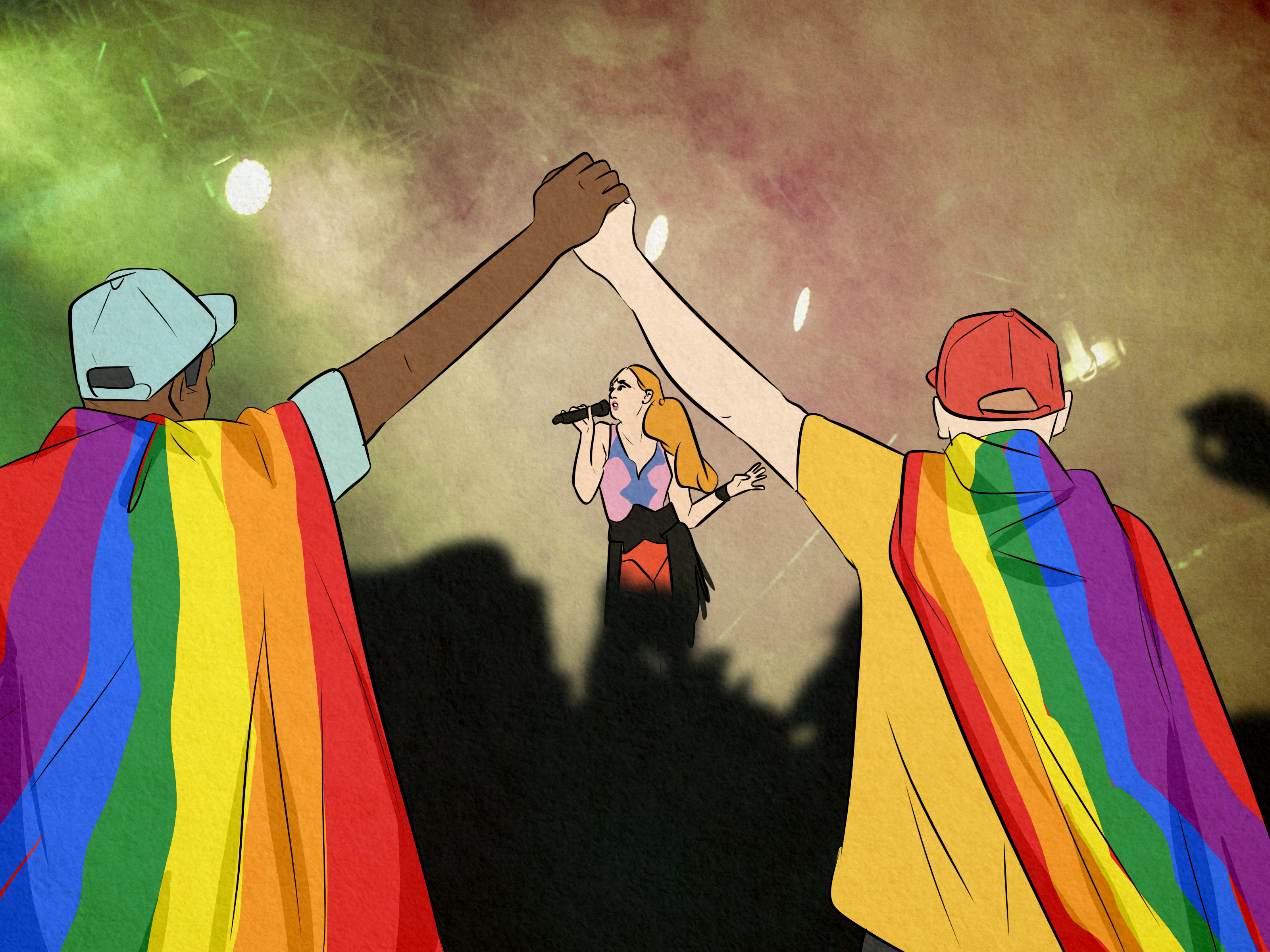
What is a Pink Pony Girl? In the world of Chappell Roan, a Pink Pony Girl is not a literal cowgirl, a horse enthusiast, or someone who owns an alarming amount of glitter bootsalthough, spiritually, she may qualify. The phrase comes from Roan’s breakout anthem “Pink Pony Club,” a song about leaving behind the expectations of home and finding freedom, identity, and chosen family in a place where self-expression is not only allowed but celebrated at full volume.
At its heart, “Pink Pony Club” is a story of transformation. The narrator leaves a small, conservative world for the bright, strange, liberating fantasy of Los Angeles nightlife. She discovers a club where people can become larger-than-life versions of themselves. The “Pink Pony Girl” becomes a symbol of someone stepping into her own power, even when that power comes with a side order of family disappointment, societal judgment, and possibly rhinestones in places rhinestones should not be.
The song has become one of Chappell Roan’s defining works because it does what great pop songs do best: it turns one person’s emotional coming-of-age into a universal invitation. You do not have to be from the Midwest, queer, a dancer, or a pop star to understand the longing behind it. Anyone who has ever wanted to run toward a truer version of themselves can hear the glittery thunder in “Pink Pony Club.”
What Does “Pink Pony Girl” Mean?
A Pink Pony Girl is the person in the song who chooses joy, performance, independence, and self-discovery over staying small to make other people comfortable. The phrase is tied to the narrator’s new identity: she is no longer just the “baby girl” someone back home remembers. She is becoming someone bolder, louder, freer, and harder to explain at Thanksgiving dinner.
The meaning is layered. On the surface, it describes a girl dancing at a club. Underneath, it represents the emotional moment when someone says, “This is where I belong,” even if the people who raised them do not understand it yet. The “pink” suggests camp, femininity, sweetness, theatricality, and fantasy. The “pony” evokes movement, showmanship, rodeo imagery, and a playful kind of rebellion. Put them together and you get a phrase that sounds cute but carries real emotional horsepower. Yes, the pony has feelings.
In SEO-friendly terms, the Pink Pony Girl meaning is about identity, queer joy, leaving home, chosen family, and finding a safe space where self-expression is celebrated. In human terms, it is about finally walking into a room and realizing you do not have to shrink anymore.
The Real-Life Inspiration Behind “Pink Pony Club”
The lore behind “Pink Pony Club” begins with Chappell Roan, born Kayleigh Rose Amstutz, leaving Missouri and moving to Los Angeles. Roan has explained in interviews that a visit to The Abbey, a famous gay bar in West Hollywood, helped inspire the song. That experience was meaningful because it gave her a glimpse of a world where queerness, drag, dance, performance, and joy were not hidden in the margins. They were the main event.
The Abbey is not literally called the Pink Pony Club, and the song’s club is fictional. Think of it as a dream version of West Hollywood queer nightlife: part gay bar, part stage, part fantasy palace, part emotional rescue boat with better lighting. Roan saw dancers, fog, spectacle, and freedom, then transformed that memory into a pop myth. The result is not a documentary. It is a glitter-dipped fable.
This distinction matters. “Pink Pony Club” is not just “a song about a bar.” It is a song about what a bar can represent when someone has grown up without spaces that feel safe, expansive, or affirming. A room with music can become a sanctuary. A stage can become a mirror. A crowd can become a community. A dance floor can become therapy with a beat drop.
The Story in the Lyrics: Leaving Home for a Bigger Life
The lyrical narrative follows a young woman who feels pulled toward Los Angeles. Home represents love, but also limitation. The mother figure in the song is not written as a cartoon villain. She represents the pain of leaving behind people who may love you but still cannot fully accept the version of you that wants to exist.
The narrator imagines the disappointment she may cause. She knows her choices may create a scene. Yet the emotional center of the song is not shameit is insistence. The key message is beautifully simple: she is having fun, she feels she belongs, and she will keep dancing. That is not escapism. That is survival with choreography.
One reason the song resonates so widely is that it captures the complicated tenderness of leaving. The narrator does not simply reject home. She carries it with her. The ache of family expectations stays in the background, even while the chorus explodes into liberation. That emotional contrast is why the song can make people dance and cry in the same four minutes, which is rude but impressive.
Why the Pink Pony Club Is a Safe-Space Metaphor
The Pink Pony Club works as a metaphor for a safe space where people can be openly themselves. In LGBTQ+ culture, nightlife venues have often served as more than entertainment spots. They can be places of community, protection, experimentation, flirtation, grief, celebration, and mutual recognition. In the song, the club is where the narrator sees people living with a freedom she has only imagined.
That is why the phrase “Pink Pony Girl” has expanded beyond the lyric. Fans use it as shorthand for someone who chooses authenticity. It can describe a queer person finding community, a small-town dreamer moving to a big city, a performer claiming the stage, or anyone who has decided that being “too much” is better than being invisible.
The club is also a fantasy of permission. It says: wear the heels, sing the note, dance badly if necessary, and stop apologizing for taking up space. Not every safe space has pink lights and go-go dancers, of course. Sometimes it is a friend’s kitchen, a group chat, a bookstore, a concert crowd, or a bedroom where someone finally admits the truth to themselves. But “Pink Pony Club” gives that emotional place a nameand a killer chorus.
Chappell Roan’s Midwest Princess Persona
To understand the song’s lore, you also need to understand Chappell Roan’s artistic persona. Roan’s work often blends drag, camp, pop melodrama, Midwestern identity, queer storytelling, and theatrical humor. She is not simply singing about freedom; she is building a whole universe where freedom wears a wig, probably has glitter eyeshadow, and might arrive 12 minutes late because the boots were difficult.
“Pink Pony Club” later became part of her debut album, The Rise and Fall of a Midwest Princess, released in 2023. The album’s larger story follows a character moving through desire, heartbreak, sexuality, city life, and self-invention. In that world, “Pink Pony Club” functions like a doorway. It is the moment the Midwest Princess sees the palace lights and realizes the palace may have been a nightclub all along.
The “Midwest Princess” idea is important because it gives the song emotional geography. The narrator is not coming from nowhere. She is coming from a place with rules, expectations, and a strong sense of what a “good girl” should be. The song’s drama comes from watching that good girl discover that being good is not the same as being whole.
The Production: Why the Song Feels Like a Queer Pop Movie
“Pink Pony Club” was co-written by Chappell Roan and producer Daniel Nigro, who has also worked with major pop artists. Musically, the song blends synth-pop, dance-pop, disco, power-pop, and theatrical ballad energy. It starts with yearning, then opens up into a chorus that feels built for arms-in-the-air catharsis.
The arrangement matters because the song does not sound small. A lesser version could have treated the story as quiet confession. Instead, “Pink Pony Club” makes the narrator’s desire enormous. The drums, synths, guitar textures, and soaring melody all help turn private longing into public celebration. It is the sound of someone opening the door to a new life and finding a smoke machine on the other side.
The song’s slow-burn success is also part of its legend. Released in 2020, it did not immediately become a mainstream smash. In fact, Roan’s career faced serious obstacles after its early release period. But the song kept finding listeners, especially through queer communities, live performances, social media, and the growing momentum around Roan’s pop identity. By 2024 and 2025, “Pink Pony Club” had evolved from cult favorite to full-blown anthem.
Why “Pink Pony Club” Became a Queer Anthem
The song became a queer anthem because it speaks directly to a familiar emotional pattern: leaving, searching, finding, becoming. Many LGBTQ+ people know the experience of growing up in places where self-expression must be edited. “Pink Pony Club” dramatizes the moment when that editing stops. It does not ask for permission. It buys the ticket, applies the lip gloss, and gets on stage.
But the song’s appeal is not limited to queer listeners. It also resonates with anyone who has moved away from home, disappointed someone by choosing themselves, or found belonging in an unexpected place. That broad emotional access is part of Roan’s genius. She writes specifically enough to feel real, but openly enough for listeners to project their own story onto the neon walls.
The anthem status also grew through live performance. Roan’s concerts often turn “Pink Pony Club” into a communal release. Fans sing it back to her as if they are not just remembering the song but renewing a vow: to keep dancing, keep choosing joy, and keep protecting the spaces that make joy possible.
The Mother Figure: Conflict Without Simple Villains
One of the most interesting parts of the lyrics is the mother figure. The narrator imagines her mother’s shock and disappointment, but the song does not flatten that relationship into simple rebellion. There is love there. There is guilt. There is fear. There is the ancient family tension of “I raised you” meeting “I have to become myself.”
This is why the song hits harder than a basic party anthem. It understands that freedom can be joyful and painful at the same time. Leaving home may be necessary, but it can still hurt. Becoming visible may feel thrilling, but visibility can also expose you to judgment. The Pink Pony Girl is not carefree because she has no problems. She is brave because she dances anyway.
That emotional complexity gives the song lasting power. It is not simply “Mom doesn’t get it, so who cares?” It is closer to: “I know this may hurt you, but hiding would hurt me more.” That is a much deeper and more relatable story.
Is the Pink Pony Club a Real Place?
The short answer: no, the Pink Pony Club is not a real club in the literal sense. The song’s setting is fictional, but it was inspired by real places, especially The Abbey in West Hollywood and the broader culture of queer nightlife. So if you are planning to type “Pink Pony Club near me” into your map app, prepare for mixed results and possibly a horse ranch.
The better question is not whether the club exists physically, but whether it exists emotionally. For many fans, the answer is yes. It exists at Chappell Roan shows. It exists in queer bars. It exists in drag venues. It exists wherever people gather to become more honest versions of themselves. The fictional club became real because listeners built it together.
Why the Song’s Lore Keeps Growing
The lore around “Pink Pony Club” has grown because the song’s real-life journey mirrors its message. It began as a risky creative choice that some industry voices reportedly did not understand. It survived an uncertain release period. It lived through fans before it conquered charts. Then, as Roan’s fame grew, the song became a symbol of artistic persistence as well as queer liberation.
That makes the lore unusually satisfying. The song about refusing to abandon your vision was itself a song Roan had to fight for. The song about finding your people found its people slowly. The song about a performer belonging on stage eventually became one of Roan’s defining live moments. Pop history loves a good underdog arc, especially when the underdog arrives in a cowboy hat.
What “Pink Pony Girl” Means in Fan Culture
In fan culture, calling yourself a Pink Pony Girl often means claiming a joyful, expressive, slightly theatrical identity. It is not necessarily gender-exclusive. A Pink Pony Girl can be anyone who connects with the song’s message. The phrase has become a mood, an aesthetic, and a tiny emotional passport stamped with glitter.
Fans have embraced pink cowboy hats, fringe, boots, rhinestones, drag-inspired makeup, and campy Western-pop fashion. The visual language is part of the song’s appeal. It gives people a costume for feelings that are otherwise hard to name. Sometimes you do not want to say, “I am processing the tension between family loyalty and self-actualization.” Sometimes you want to put on a pink hat and scream-sing. Both are valid. One is more fun at festivals.
The phrase also carries a protective quality. Because the song is so tied to queer belonging, fans often treat “Pink Pony Club” as sacred cultural shorthand. It is not just a catchy title. It represents the spaces people need in order to survive and flourish.
Experiences Related to “What Is a Pink Pony Girl?”
One reason the question “What is a Pink Pony Girl?” keeps spreading is that listeners hear the song and immediately connect it to personal experience. The details may differ, but the emotional blueprint is familiar. Many people know what it feels like to outgrow the version of themselves that made other people comfortable.
For one listener, the Pink Pony Girl experience might be moving from a small town to a city and walking into a queer bar for the first time. The music is too loud, the lights are too much, the outfits are spectacular, and suddenly the world feels wider than it did yesterday. Nobody turns to stare in judgment. Nobody asks for an explanation. The room simply says, “You can be here.” That kind of acceptance can feel almost suspicious at first. After years of bracing for criticism, peace may feel like a trick. Then the chorus hits, and the body understands before the brain catches up.
For someone else, the Pink Pony Girl moment may happen far from any club. It could be the first time they cut their hair the way they wanted, chose a name that fit, came out to a friend, left a relationship that required too much pretending, or admitted they wanted an artistic life instead of the practical one everyone applauded. The club becomes symbolic. It is the place you enter when you finally stop negotiating with your own truth.
There is also a family experience inside the song that many people recognize. Loving your family does not always mean being understood by them. Sometimes the people closest to you are attached to an older version of who you were. They may see your change as rebellion, when it is actually growth. They may call your new life dramatic, when you are simply breathing properly for the first time. The Pink Pony Girl experience includes that ache. It knows freedom can come with homesickness.
Another common experience is finding chosen family. The song captures the shock of discovering people who celebrate the exact qualities others criticized. Too loud? Perfect. Too emotional? Welcome. Too theatrical? Please stand under this spotlight. In those communities, self-expression becomes contagious. You see someone else living openly, and it gives you permission to loosen your grip on fear.
Finally, the Pink Pony Girl experience is about ongoing courage. The song is not just a one-night transformation. It is a reminder that authenticity is something people practice. You keep dancing even when doubt returns. You keep choosing the room where you feel alive. You keep building small Pink Pony Clubs wherever you can: in friendships, art, music, fashion, work, love, and the private promise not to abandon yourself again.
Conclusion: The Pink Pony Girl Is a Symbol of Becoming
So, what is a Pink Pony Girl? She is the version of you that appears when longing finally becomes action. She is the person who leaves the familiar script, finds a brighter room, and decides that joy is not something to apologize for. In Chappell Roan’s lyrics, the Pink Pony Girl is a dancer in a West Hollywood fantasy club. In the larger lore, she is anyone brave enough to choose belonging over approval.
“Pink Pony Club” endures because it gives listeners a place to put their own stories of escape, discovery, and self-acceptance. It is fun, dramatic, emotional, campy, and deeply sincerethe rare pop song that can wear rhinestones without losing its heart. The club may be fictional, but the feeling is real. And once someone finds that feeling, good luck convincing them to stop dancing.
Note: This article is based on publicly available artist interviews, music journalism, chart coverage, and cultural analysis. Lyric discussion is paraphrased for copyright-safe publication.