Baby platy fish are tiny, adorable, and surprisingly independent from day one. Unlike egg layers that arrive with a long list of complications, platy fry are born live, free-swimming, and ready to explore the tank like they already pay rent. That said, “ready to swim” does not mean “ready to survive your community tank without help.” Adult fish may snack on them, filters may pull them in, and dirty water can turn a happy nursery into a tiny disaster zone.
If you want your baby platies to grow into colorful, healthy juveniles, your job is simple in theory and slightly chaotic in practice: protect them, feed them well, and keep the water clean and stable. The good news is that platies are beginner-friendly livebearers, so once you understand the rhythm of fry care, the process becomes much easier. In this guide, you will learn exactly how to take care of baby platy fish in 9 practical steps, plus the real-life lessons many fishkeepers only learn after their first surprise batch of babies.
Why Baby Platy Fish Need Special Care
Platy fry are born as miniature fish, not wiggly little mystery commas. They can swim right away, but they are still vulnerable. Their mouths are tiny, their energy needs are high, and their environment has to stay steady. In a busy aquarium, the biggest threats are predation, poor water quality, strong filtration, and overfeeding. Yes, overfeeding is one of those classic fishkeeping plot twists: you try to be kind, and the tank punishes you with cloudy water.
The goal is not to create a fancy fish spa. The goal is to create a calm, clean, low-stress setup where fry can hide, eat often, and grow without being chased, sucked into an intake, or forced to live in a soup of leftover food.
Step 1: Separate the Fry From Hungry Tankmates
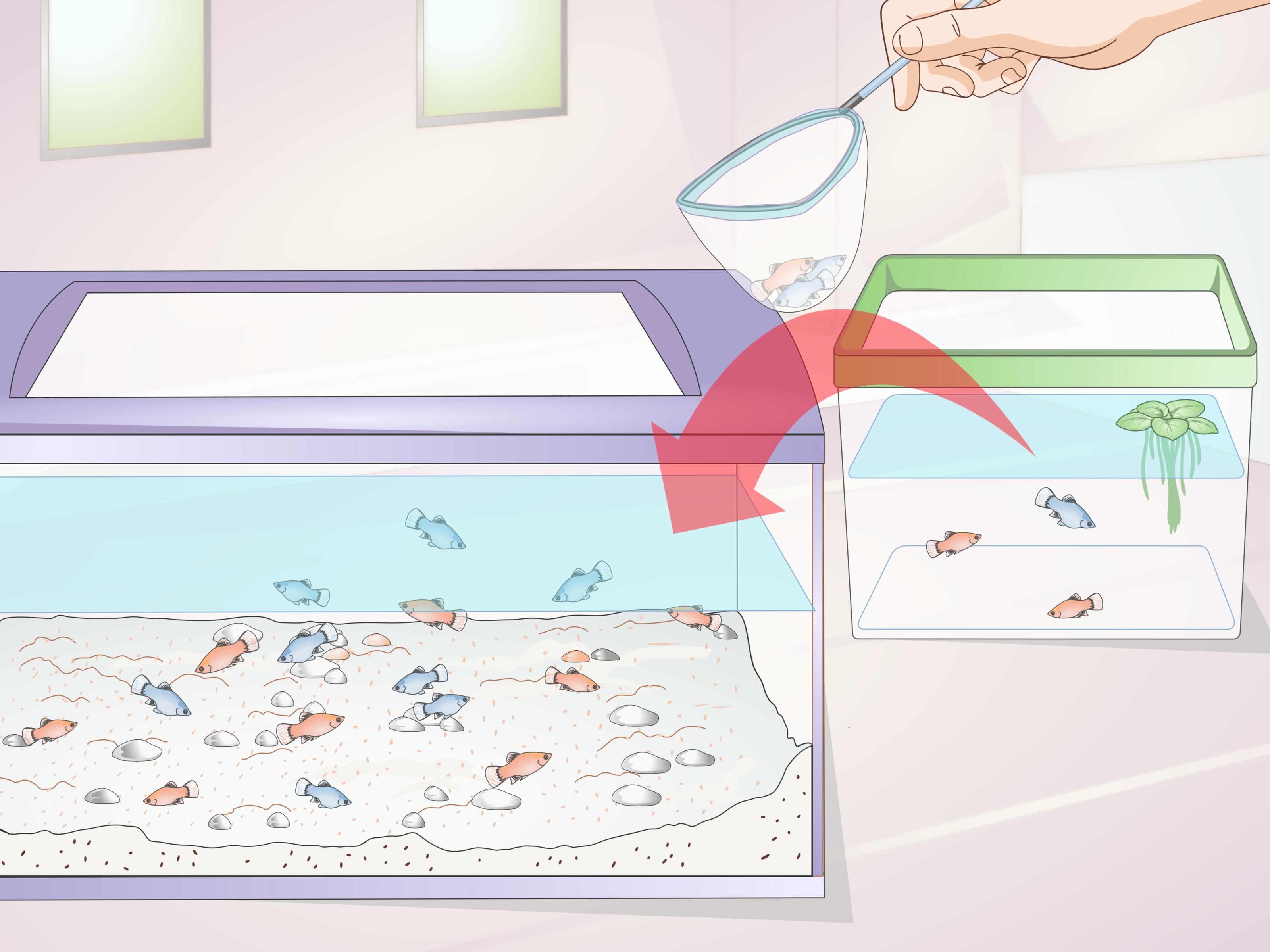
The first step in baby platy fish care is protection. Fry may survive in a heavily planted community tank, but your odds go up fast if you move the babies to a nursery tank or breeder setup. Adult fish, including platies, are not famous for their parenting ethics. A newborn fry is often viewed less as a beloved child and more as a moving snack.
Best ways to separate them
You have three practical options:
- Move the fry into a small grow-out tank
- Use a breeder box or breeder net for short-term protection
- Leave the fry in the main tank only if there are dense plants and very few predators
A separate fry tank is usually the best option because it gives you control over feeding and maintenance. Breeder boxes can work, but they are temporary solutions. They are great for emergencies, not ideal as a permanent baby apartment complex.
Step 2: Set Up a Simple Nursery Tank
A dedicated fry tank does not need to look like an aquascaping contest entry. A basic fry tank with stable water, gentle aeration, and easy cleaning is often more useful than a glamorous setup with too much equipment.
What to include
- A 5- to 10-gallon tank for a small batch of fry
- A sponge filter or very gentle filtration
- A heater if your room temperature is not reliably stable
- Fine plants, floating plants, or moss for cover
- A lid, because even tiny fish can be impressively dramatic
Keep the tank cycled if possible. A mature sponge filter is especially helpful because it provides biological filtration without turning your nursery into a baby-fish roller coaster. Bare-bottom tanks are also popular for fry care because they make it easier to spot uneaten food and waste.
Step 3: Use Gentle Filtration and Low Flow
This is one of the most important details in platy fry care. Baby fish are weak swimmers compared with adults, so strong currents can stress them out or push them around the tank all day. That is not exercise. That is chaos.
A sponge filter is usually the gold standard for baby platies. It gives you biological filtration, extra oxygen movement, and a soft intake surface that will not trap the fry. If you are using a hang-on-back or canister filter, add a sponge pre-filter to the intake so the babies do not disappear into the machine like socks into a dryer.
Rule of thumb
If the fry look like they are constantly fighting the current instead of calmly browsing and pecking at food, the flow is too strong.
Step 4: Keep the Water Stable, Warm, and Clean
Water quality matters more than perfection on paper. Baby platys do best when the water is stable, well-oxygenated, and free of ammonia and nitrite spikes. Chasing numbers every day is less helpful than maintaining consistency.
Platies generally do well in slightly alkaline, harder freshwater, and most fishkeepers aim for a stable tropical range in the mid-70s Fahrenheit. More important than hitting one magic number is avoiding sudden swings. Fry handle steady conditions far better than constant tinkering.
What to monitor
- Temperature
- Ammonia
- Nitrite
- Nitrate
- General cleanliness and oxygenation
If you are raising fry, test water regularly. Tiny fish are more sensitive to poor conditions, and problems can escalate fast in a small tank. Dechlorinate tap water before adding it, and match the replacement water temperature as closely as possible during changes.
Step 5: Feed Tiny Foods Several Times a Day
Baby platies are born ready to eat, but they need very fine food. Their mouths are small, their metabolism is fast, and they grow best with multiple light feedings instead of one giant fish buffet.
Good foods for baby platy fish
- Powdered fry food
- Freshly hatched baby brine shrimp
- Finely crushed high-quality flakes
- Microworms or other appropriately sized live foods
Freshly hatched brine shrimp are especially useful when you want fast growth and good color development. If that sounds too advanced for your current energy level, powdered fry food and crushed flakes can still do the job well. Feed two to three small meals a day, just enough that the fry finish the food quickly. Think “sprinkle,” not “snowstorm.”
Step 6: Remove Leftovers Before They Wreck the Tank
Feeding often is good. Letting food rot in the tank is not. One of the biggest mistakes new fry keepers make is confusing “frequent meals” with “constant mess.” The more often you feed, the more carefully you need to clean.
Use a turkey baster, airline tubing, or a small siphon to remove uneaten food and waste from the bottom of the tank. This is another reason a bare-bottom nursery tank is so handy. You can see the mess, remove the mess, and stop pretending the mess is “part of the ecosystem.”
Watch for these warning signs
- Cloudy water after feeding
- Film or debris collecting on the bottom
- Fry hanging at the surface or acting sluggish
- A sudden loss of babies without obvious injury
When fry start to struggle, poor water quality is often the first suspect.
Step 7: Do Small, Regular Water Changes
If you remember only one thing from this entire guide, remember this: clean water grows strong fry. Baby platys grow quickly, and that growth is powered by good food plus good maintenance. If one side of that equation fails, progress slows down.
Many successful fry keepers do small, frequent water changes rather than big, stressful ones. In a lightly stocked, stable fry tank, a few small changes each week may be enough. In a heavily fed grow-out tank, you may need very frequent partial changes to keep pollutants low. Always replace water gently and avoid sudden shifts in temperature or chemistry.
Easy routine
A practical routine is to test the water often, siphon out debris, and perform partial changes based on feeding load and test results. The babies will not send a thank-you note, but their growth rate will.
Step 8: Give Fry Cover So They Feel Secure
Even in a separate tank, fry benefit from cover. Plants are not just decoration; they act as shelter, grazing zones, and tiny confidence boosters for fish that are smaller than a grain of rice with ambition.
Useful plant choices
- Java moss
- Hornwort
- Floating plants with long roots
- Fine-leaved artificial plants if live plants are not practical
In a community aquarium, dense plant growth can dramatically increase fry survival. In a nursery tank, cover reduces stress and gives babies more places to rest and forage between meals. Just do not overcrowd the tank so much that you cannot clean it.
Step 9: Move Them to the Main Tank at the Right Time
Eventually, your baby platys stop looking like animated punctuation and start looking like real fish. That is your cue to think about graduation day.
In many setups, platy fry can move to the main tank after about 4 to 6 weeks, or whenever they are clearly too large to fit in an adult fish’s mouth. Size matters more than age. A confident, well-fed juvenile in a peaceful community has a much better chance than a tiny fry that is technically old enough but still snack-sized.
Before you transfer them
- Make sure the main tank water matches closely
- Confirm there are still hiding spots
- Acclimate them slowly
- Do not add them right after a major tank cleaning or filter change
Once they join the main tank, keep an eye on them for a few days. Most settle in just fine, especially if the aquarium is planted and not overcrowded.
Common Mistakes to Avoid With Baby Platy Fish
Even easy fish can be lost through avoidable mistakes. Here are the most common ones:
- Using a strong filter without intake protection: fry can be injured or trapped.
- Overfeeding: food that is too heavy or too frequent without cleanup can foul the water fast.
- Skipping water tests: fry tanks can look fine right up until they are not.
- Leaving babies with too many adults: plants help, but they are not magical bodyguards.
- Making sudden changes: fry do best with steady conditions, not constant adjustments.
Final Thoughts
If you want to know how to take care of baby platy fish successfully, the answer is less mysterious than it first appears. Protect the fry from larger fish, use gentle filtration, feed tiny meals several times a day, and keep the water clean and stable. That combination solves most problems before they start.
Platy fry are hardy compared with many other baby fish, which is great news for beginners. They do not need luxury. They need consistency. Once you learn that, raising them becomes one of the most enjoyable parts of freshwater fishkeeping. One day you are counting tiny orange specks in the plants, and a few weeks later you are wondering how your aquarium became an accidental elementary school.
Real-World Experience: What Caring for Baby Platy Fish Is Actually Like
One of the most common experiences people have with platy fry is not careful planning. It is surprise. You walk by the tank, notice something flicker near a plant, lean in closer, and suddenly realize your aquarium has babies. Not one baby, either. Usually enough babies to make you question whether you accidentally opened a tiny underwater daycare.
At first, most beginners worry about food. They rush to find special fry powder, hatch brine shrimp, or crush flakes into dust with the seriousness of a scientist preparing a moon mission. That instinct is not wrong, but what many people learn quickly is that water quality matters just as much as food. A fry tank can go from “everything looks great” to “why is the water cloudy?” faster than expected, especially when you are feeding multiple times a day.
Another real-world lesson is that plants are a lifesaver. In tanks with floating plants, moss, or fine cover, fry often appear calmer and survival rates seem much better. They hide, browse, and rest instead of staying exposed in open water. Fishkeepers who skip plants often end up trying to compensate with breeder boxes, decorations, or constant moving around, which usually creates more stress than necessary.
People also discover that baby platys grow in uneven spurts. A few become chunky little overachievers almost immediately, while others stay tiny for longer. This does not always mean something is wrong. It often means the bolder fry are getting to food first. That is why spreading food across the tank, adding cover, and offering more than one tiny feeding station can help. In practical terms, the shy babies deserve a lunch break too.
There is also the maintenance side nobody romanticizes. Raising fry means more siphoning, more checking, more test kits, and more moments where you stare at the tank wondering whether that speck on the bottom is debris or a fish taking a nap. You get used to doing quick spot-cleaning after meals and topping that up with partial water changes. It sounds like extra work, and honestly, it is. But it is manageable work, not impossible work.
The rewarding part comes surprisingly fast. Within a few weeks, the babies begin showing more color, more shape, and much more personality. They stop looking like transparent commas and start behaving like confident little platies. That is when many hobbyists realize they are no longer just “trying to keep the babies alive.” They are actually growing healthy juvenile fish. It is a satisfying shift.
In the end, the real experience of caring for baby platy fish is a mix of surprise, routine, and tiny victories. You learn to feed lightly, clean often, trust stable conditions, and stop overreacting to every little thing. The process teaches patience in a very practical way. And once you raise one batch successfully, you will probably look at every pregnant platy in your tank like a person who already knows exactly how this story ends.