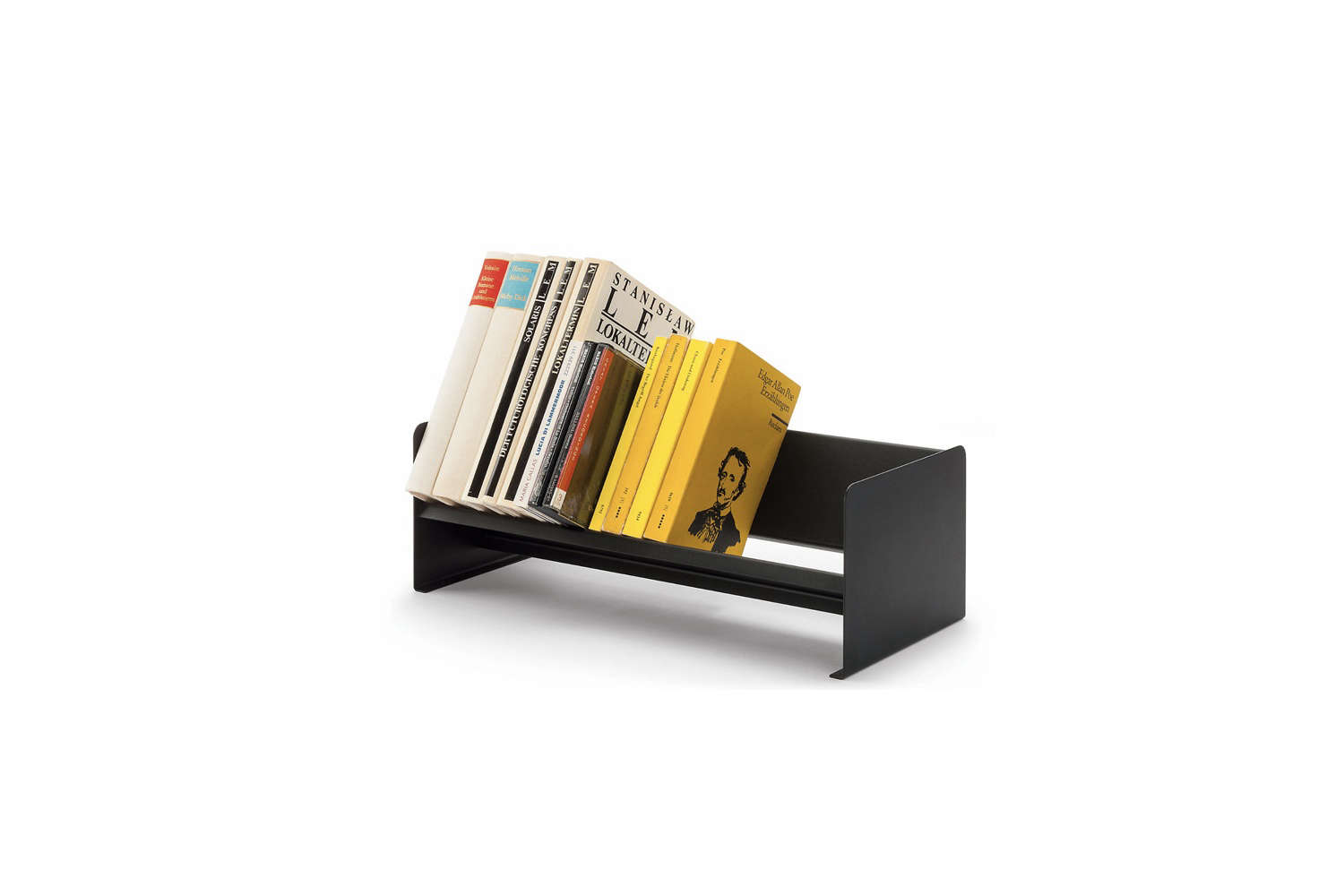
A desktop bookcase made of sheet steel is proof that useful furniture does not need to occupy half the room, require twenty-seven wooden dowels, or arrive with instructions that resemble an international peace treaty. With a compact footprint, a durable metal body, and enough structure to keep frequently used books within arm’s reach, this small organizer can transform a crowded workspace into a cleaner and more efficient reading zone.
The best designs are deceptively simple. A sheet of steel is cut, folded, joined, smoothed, and coated to create a stable miniature bookcase that works on a desk, nightstand, kitchen counter, studio table, or reception station. This guide examines how the design works, why steel is such a practical material, what to consider when buying or fabricating one, and what builders commonly learn after using the finished piece.
What Is a Desktop Bookcase Made of Sheet Steel?
A sheet steel desktop bookcase is a small freestanding organizer designed to hold books vertically or at a slight angle on a tabletop. Unlike a conventional floor bookcase, it usually has a broad metal base and raised sides that act as built-in bookends. The entire unit may be formed from one folded blank or assembled from several cut and bent pieces.
One established commercial example is manufactured from powder-coated sheet steel with folded panels, spot-welded joints, and rounded edges. It measures approximately 15.2 inches wide, 6.5 inches deep, and 4.9 inches high, while weighing about 2.2 pounds. Its relatively wide, slightly textured base helps it grip the desk without requiring traditional feet. That compact scale is large enough for several reference books or notebooks but small enough to leave room for a keyboard, coffee mug, and the mysterious collection of pens that no one remembers buying.
A Bookcase, Bookend, and Organizer in One
The design sits somewhere between a shelf and a pair of bookends. The base supports the books, while the sides prevent them from sliding outward. Depending on the shape, it may also include a low back panel, an internal divider, a front retaining lip, or a cable opening for devices stored beside the books.
This multifunctional form is especially useful for dictionaries, planners, sketchbooks, technical manuals, cookbooks, journals, and the small stack of books a reader is actively working through. Instead of disappearing into a larger shelf, those materials remain visible and easy to grab.
Why Sheet Steel Works So Well
High Strength Without Bulky Panels
Steel can provide useful stiffness with much thinner walls than most wood-based panels. That allows a metal desktop bookshelf to look visually light while still supporting a practical collection of books. Folded flanges, hems, ribs, and corners increase stiffness without dramatically increasing weight.
The geometry matters as much as the metal itself. A completely flat sheet can flex, but a folded sheet behaves more like a shallow structural channel. Even a narrow return flange along an edge can make the unit feel substantially more rigid.
A Compact Footprint
A traditional tabletop organizer may use thick wooden side panels that consume valuable width. Sheet steel sides can be considerably thinner, leaving more usable space for books. This is a meaningful advantage on small desks, dorm-room tables, shared workstations, and narrow bedside cabinets.
Easy-to-Clean Surfaces
A properly coated steel surface does not absorb coffee, ink, cooking grease, or everyday grime. Most dust can be removed with a soft cloth, while fingerprints usually surrender after a meeting with mild soap and water. There are no exposed wood fibers to swell and no veneer edges waiting for an excuse to peel.
A Modern but Adaptable Appearance
Powder-coated steel fits industrial, minimalist, Scandinavian, contemporary, and midcentury-inspired interiors. White creates a quiet architectural appearance, black looks graphic and professional, and saturated colors can turn the organizer into a deliberate accent rather than invisible office equipment.
Choosing the Right Steel Thickness
Sheet metal gauge can be confusing because a higher gauge number generally means thinner steel. The gauge number is not a direct measurement, and equal gauge numbers do not represent identical thicknesses across every metal type.
For reference, 18-gauge mild steel is about 0.0478 inch, or 1.21 millimeters, thick. Sixteen-gauge mild steel is approximately 0.0598 inch, or 1.52 millimeters. Twenty-gauge steel is around 0.0359 inch, or 0.91 millimeter. These dimensions can vary slightly by standard and supplier, so a fabrication drawing should specify actual thickness whenever accuracy matters.
A Practical Starting Point
For a compact desktop bookcase around 15 inches wide, 18-gauge cold-rolled mild steel is a sensible starting point. It is stiff enough for many small designs while remaining manageable for a properly equipped fabrication shop.
A wider unit or one intended for oversized art books may benefit from 16-gauge steel. Twenty-gauge material may work for a light-duty organizer when the design includes reinforced edges, short unsupported spans, and well-formed corners. However, thin steel without hems or ribs can feel springy and produce the famous sheet-metal wobble: not dangerous in every case, but hardly the confident entrance your hardcover dictionary deserves.
Because load capacity depends on dimensions, geometry, joints, material grade, and fabrication quality, any custom design should be tested gradually before being filled with valuable books or heavy equipment.
Designing a Functional Metal Desktop Bookcase
Start With the Books
Measure the tallest, deepest, and heaviest books you expect to store. Standard novels need less depth than textbooks, binders, or large cookbooks. A base depth of 6 to 7 inches works for many everyday books, while larger publications may need 8 inches or more.
The side panels do not need to cover the full book height. Panels between 5 and 8 inches high can provide useful lateral support while leaving titles visible. A slightly taller rear section can keep books from drifting backward if the organizer will be moved frequently.
Control the Center of Gravity
A broad base improves stability. Heavy books should sit low and near the center rather than leaning far beyond one side. If the unit is unusually tall, narrow, or loaded with large binders, increase the base depth and consider adding non-slip pads.
A desktop organizer is not generally subject to the same conditions as a tall floor-standing bookcase, but stability still matters. Avoid designs that encourage books to hang beyond the base or place excessive weight against a single narrow side panel.
Add Safe, Finished Edges
Raw sheet metal edges can be sharp enough to cut skin, scratch furniture, or damage book covers. Every exposed edge should be deburred and then protected through hemming, rolling, edge trim, or another appropriate finishing method.
A hem is created by folding an edge back onto itself. In addition to making the edge safer, it can increase stiffness and give the product a more refined appearance. Fabrication guidance commonly recommends providing an adequate return length and using consistent bend radii throughout a part.
Plan Bends Before Cutting
Sheet steel stretches on the outside of a bend and compresses on the inside. Accurate flat patterns therefore account for bend radius, material thickness, bend allowance, bend deduction, and springback. Holes and slots also need sufficient distance from bend lines so they do not distort during forming.
Professional fabrication guidance often recommends consistent bend radii, bend reliefs where flanges meet, and minimum flange lengths based on material thickness. Sheet-metal design software can calculate the unfolded blank, but the settings must match the selected material and the tooling used by the fabricator.
Tools and Materials for a DIY Version
A clean result requires metalworking tools suited to the selected gauge. Thin craft metal is not a substitute for structural sheet steel, and household scissors should remain focused on paper, coupons, and opening packages badly.
Suggested Materials
- 18-gauge cold-rolled mild steel for a typical compact unit
- Steel-compatible primer and enamel, or professional powder coating
- Steel blind rivets, machine screws, or weld material as required
- Rubber, silicone, cork, or felt pads for the base
- Optional plastic edge trim for edges that cannot be hemmed
Suggested Tools
- Sheet-metal brake or access to a fabrication shop
- Shear, jigsaw with a metal-cutting blade, nibbler, or laser-cutting service
- Drill and metal-rated bits
- Files, deburring tool, and abrasive pads
- Clamps, square, ruler, calipers, and marking tools
- Rivet gun or welding equipment, depending on the joining method
- Safety glasses, cut-resistant gloves, hearing protection, and suitable clothing
How to Make a Desktop Bookcase From Sheet Steel
1. Create a Full-Size Mockup
Build the proposed shape from cardboard before ordering metal. Load the mockup with representative books and check its width, depth, side height, and accessibility. Cardboard will not predict final strength, but it will reveal awkward proportions for the price of one shipping box and a little dignity.
2. Prepare the Flat Pattern
Transfer the confirmed dimensions into sheet-metal CAD software or work with a fabrication shop. Include all bend lines, relief notches, holes, corner clearances, hems, and joining tabs. Specify material type, actual thickness, finish, and critical final dimensions.
3. Cut the Steel
Laser cutting produces accurate profiles and clean repeatability, making it ideal for professional prototypes or small production runs. A shear is efficient for straight cuts, while a jigsaw or nibbler can be used for carefully planned home-shop work. Secure the workpiece firmly and support large offcuts so they cannot shift unexpectedly.
4. Deburr Every Edge
Remove burrs from both sides of each cut. Pay special attention to corners, slots, drilled holes, and the underside of the base. Run a cloth lightly along the finished edge; if fibers snag, more work is needed. Do not test sharpness with a bare fingertip. Your finger has already contributed enough to the project.
5. Form the Bends
Use a brake with tooling appropriate for the gauge and specified bend radius. Form the main base and side panels before closing hems that could interfere with later bends. Confirm each angle with a square and account for springback rather than assuming a nominal 90-degree bend will remain exactly 90 degrees after pressure is released.
6. Join Separate Components
Spot welding can create a clean, low-profile assembly. For a workshop without welding equipment, blind rivets provide a practical alternative because they can permanently join thin sheet materials from one accessible side. Small machine screws with locking nuts allow disassembly but create more visible hardware.
Match rivet material, diameter, and grip range to the total material thickness. Keep fasteners away from edges and bends according to the fastener manufacturer’s specifications.
7. Prepare and Finish the Surface
Degrease the steel and remove scale, oxidation, residue, and abrasive dust. Bare mild steel can rust beneath a poorly prepared coating, so surface preparation is not the glamorous part of the job, but it is the part that prevents the glamorous finish from bubbling later.
Powder coating creates a durable, uniform finish by applying dry powder electrostatically and curing it under controlled heat. Professional systems can provide strong impact, wear, and corrosion resistance when surface preparation and curing are properly handled. For a home project, a compatible primer followed by several light coats of durable enamel is more accessible.
8. Protect the Desktop
Even a smooth coated base can trap abrasive dust underneath it. Install thin non-slip pads near the corners and along long unsupported edges. The pads should be equal in thickness so the organizer does not rock. Avoid thick feet that raise the center of gravity unnecessarily.
9. Perform a Gradual Load Test
Place the completed unit on a protected, level surface. Add weight gradually while observing the base, side panels, joints, and feet. Stop if the base bows, seams separate, rivets loosen, or the unit becomes unstable. A homemade organizer should be treated as an unverified prototype until it has passed a sensible test.
Essential Fabrication Safety
Cut sheet metal can create sharp edges, flying fragments, sparks, unstable offcuts, and pinch points. Safety glasses should be worn during cutting, drilling, grinding, riveting, and deburring. Cut-resistant gloves can help during material handling, although gloves should never be worn around machinery when the equipment manufacturer warns of an entanglement hazard.
Support the sheet securely, keep hands away from cutting paths, and remove sharp scrap from the work area promptly. Power-tool users should follow the tool manufacturer’s instructions and use appropriate hearing and respiratory protection. OSHA and NIOSH guidance specifically recognizes sharp metal edges, flying particles, forceful work, and awkward postures as workplace hazards.
Anyone without suitable forming equipment or metalworking experience should have the blank cut and bent by a professional shop. Outsourcing two precise bends is generally less expensive than replacing a damaged workbench, a ruined sheet, and one’s confidence.
Where a Steel Desktop Bookcase Works Best
Home Offices
Use it for reference books, planners, project notebooks, and frequently consulted manuals. A narrow metal book organizer can sit behind a monitor or at the outer edge of the desk without dominating the workspace.
Kitchen Counters
A powder-coated steel bookcase can hold cookbooks, meal planners, and recipe binders. Choose a finish that can be wiped clean and keep the organizer away from direct heat, open flame, and standing water.
Creative Studios
Illustrators and designers can use the unit for sketchbooks, color guides, paper samples, and slim portfolios. Magnetic accessories may also work on ordinary carbon steel, although magnets should be tested first because some stainless grades are weakly magnetic or nonmagnetic.
Bedside Tables
A compact desktop bookshelf can organize current reading without creating a leaning tower beside the bed. Rounded corners and stable feet are particularly important in this location, where sleepy hands and dark rooms are regular participants.
Retail and Reception Desks
The organizer can present catalogs, menus, brochures, or appointment books. A custom color can match brand graphics, while a laser-cut logo or printed label can identify contents.
Buying Versus Building
Buying a finished desktop bookcase is the simplest option when you need one organizer in a standard size. A manufactured product should offer consistent bends, professionally treated edges, durable coating, and a predictable appearance.
Custom fabrication makes sense when the organizer must fit a specific desk recess, accommodate unusually deep books, include dividers, match an exact color, or be produced in quantity. A business ordering several units can also add labels, cable slots, handles, or mounting holes during cutting rather than modifying finished pieces later.
DIY construction is most economical when the builder already owns appropriate tools. Purchasing a brake, cutting equipment, finishing supplies, and safety gear solely for one tiny bookcase may result in the most expensive small shelf since the invention of furniture.
Common Mistakes to Avoid
- Choosing metal that is too thin: Large unsupported panels may bow or vibrate.
- Leaving exposed cut edges: Deburring alone may not be sufficient for frequently handled edges.
- Ignoring bend allowance: The final dimensions can be smaller or larger than intended.
- Drilling too close to bends: Holes may stretch or become oval during forming.
- Painting over oily steel: Contamination can cause poor adhesion and premature coating failure.
- Skipping desk protection: Dust trapped under the base can produce fine scratches.
- Overloading one side: Uneven weight can make the organizer slide, twist, or tip.
- Moving it while fully loaded: Books can shift suddenly and place unnecessary stress on the joints.
Care and Maintenance
Dust the bookcase regularly with a soft microfiber cloth. For ordinary dirt, use a damp cloth with mild dish soap, then dry the surface. Avoid steel wool, aggressive scouring pads, and strong solvents unless the coating manufacturer specifically approves them.
Inspect the underside periodically for trapped grit and check the protective pads for wear. Touch up deep chips promptly, especially on mild steel, because exposed metal can begin to corrode in humid conditions. Riveted units should be checked for looseness, while welded seams should be inspected if the organizer has been dropped.
Experience Notes From Building and Using a Steel Desktop Bookcase
The most useful lessons often appear after the drawing is finished. In a representative home-office build, the first design used a wide base cut from relatively thin steel with simple vertical side panels. It looked elegant on paper, but the unreinforced front edge flexed when the unit was lifted. Adding a narrow hem transformed the feel of the piece. The amount of metal barely changed, yet the base became noticeably stiffer and safer to handle.
Another lesson involved depth. A shallow prototype worked beautifully with paperbacks but allowed large notebooks to extend too far beyond the front. Increasing the base by roughly an inch improved support without making the organizer feel bulky. This is why measuring real books is more valuable than designing around an imaginary “average book,” a creature that apparently owns no cookbooks, binders, or oversized design annuals.
The finish also affected everyday use. Glossy paint produced a bright, polished appearance but highlighted fingerprints and small surface irregularities. A satin or fine-textured powder coat was more forgiving and gave the base additional grip. Dark colors looked dramatic but revealed dust quickly. White blended easily into a small office, while muted green and blue finishes made the organizer feel more like a design object.
Protective pads proved essential. Without them, tiny particles under the steel created faint marks on a lacquered desk. Four thin silicone pads solved the problem, although the first set was slightly uneven and caused the bookcase to rock. Replacing them with identical pads and cleaning the steel with alcohol before installation produced a stable result.
Book behavior created another surprise. A collection of similarly sized hardcovers stood neatly, but mixed paperbacks slumped into gaps. A removable internal divider fixed the issue. The divider did not need a permanent fastener; a folded magnetic partition could be repositioned as the collection changed. This simple accessory made the organizer useful for mail, tablets, and notebooks as well as books.
Joint selection influenced the final style. Visible rivets gave one version an honest workshop character and made assembly accessible without welding. A spot-welded version looked cleaner but required more surface preparation before coating so the weld areas did not remain visible through the finish. Neither method was automatically better. Rivets suited an industrial aesthetic, while spot welds supported a quieter, seamless appearance.
Daily use showed that mobility is one of the product’s strongest advantages. The entire reading stack could be moved from a work desk to a dining table or bedside cabinet. However, carrying the unit while it was fully loaded encouraged the books to shift and twist the side panels. The better habit was to remove the books, move the empty organizer, and reload it.
The final lesson was restraint. Extra slots, handles, decorative perforations, and complicated bends were tempting, but each feature added cost and another opportunity for distortion. The most successful version remained simple: a stable base, two supportive sides, safe edges, durable coating, and pads underneath. Good sheet-metal design often looks obvious after it is finished. Achieving that simplicity is the tricky part.
Conclusion
A desktop bookcase made of sheet steel offers a practical combination of strength, compact dimensions, mobility, and clean modern styling. Its success depends less on decorative complexity than on thoughtful proportions, safe edge treatment, accurate bends, stable footing, reliable joints, and a durable finish.
For most compact designs, a folded steel structure with reinforced edges can hold frequently used books without the visual weight of a conventional wooden organizer. Buyers receive an efficient ready-made storage solution, while makers gain a manageable project that demonstrates the fundamentals of sheet-metal design. Measure the intended books, select an appropriate thickness, treat every edge seriously, and test the finished unit before trusting it with a prized collection.