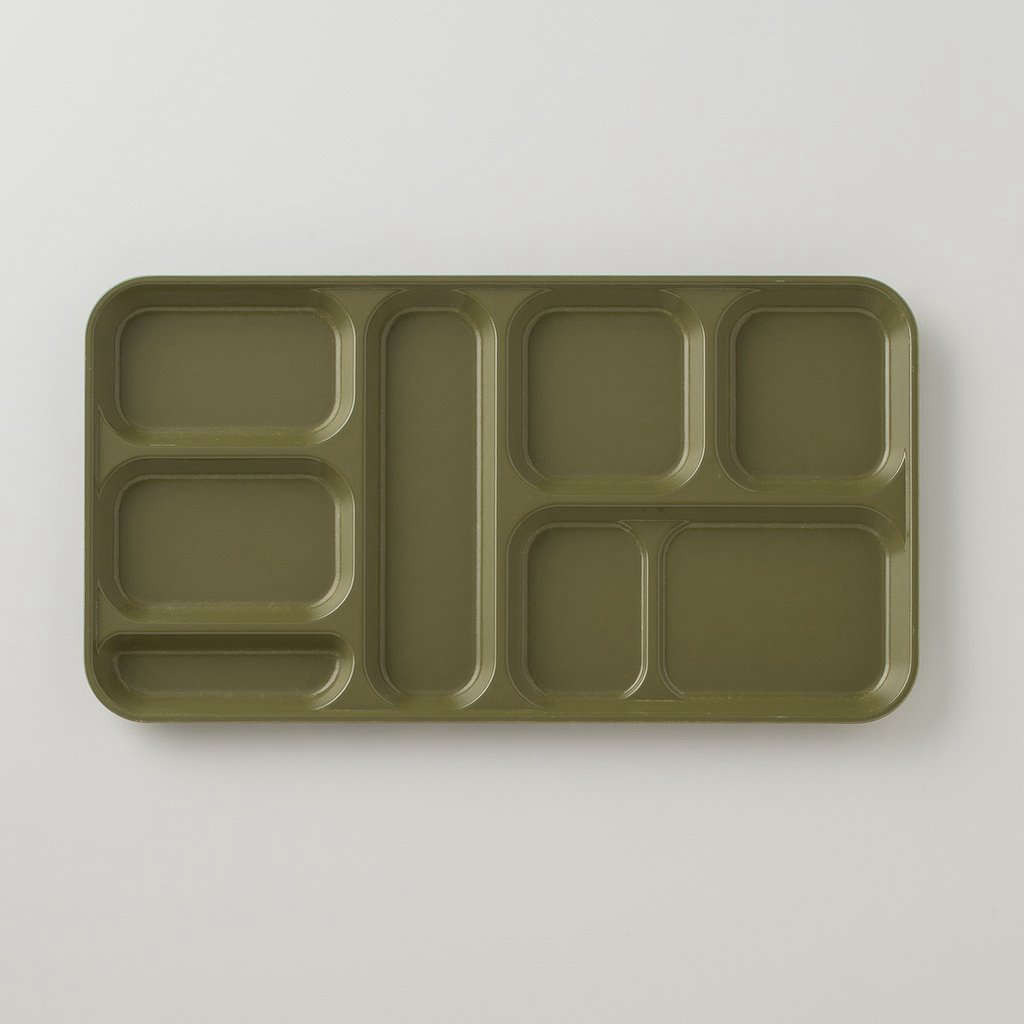
An 8-compartment cafeteria tray is what happens when a lunch tray decides it is tired of food touching other food. Gravy stays away from fruit, pickles stop invading dessert, and mystery sauce finally gets its own tiny apartment. In schools, hospitals, senior-living communities, correctional facilities, and company cafeterias, that separation can make portions easier to organize, meals easier to carry, and serving lines more predictable.
The basic design contains eight molded or formed sections in different sizes. A practical layout may include a large entrée well, a starch section, several spaces for vegetables and fruit, and small wells for condiments or garnishes. Some sellers count a utensil channel or cup recess as one compartment, so buyers should inspect the actual drawing. Eight compartments should mean eight useful spacesnot seven food wells plus a decorative trench where one lonely pea goes to retire.
What Makes an 8-Compartment Tray Different?
Most institutional trays have fewer divisions, making an eight-section model a specialized choice for varied meals, tasting menus, therapeutic diets, or programs that want a repeatable visual layout. The extra wells can reduce the need for side plates and ramekins while helping diners carry a complete meal on one stable surface.
Federal school-meal standards govern the foods offered, not tray geometry. The National School Lunch Program organizes meals around fruits, vegetables, grains, meats or meat alternates, and fluid milk. An eight-compartment tray simply provides extra room for those components, condiments, culturally diverse sides, or optional items. It is a serving tool, not a nutrition policy wearing a plastic costume.
Common Layout Features
Deep wells suit mashed potatoes, beans, pasta, and sauced foods, while shallow sections work better for sandwiches, crackers, fruit, and bread. Rounded internal corners make food easier to scoop and residue easier to remove. A wide rim, textured grip, balanced weight distribution, and an ambidextrous arrangement can improve handling for children and diners with limited dexterity.
Why Cafeterias Use Compartment Trays
Better Food Separation
Raised dividers help crisp foods stay crisp and keep fruit from taking an unscheduled bath in gravy. Compartments are not leakproof unless the manufacturer explicitly says so, but they slow migration and improve presentationan important detail when appearance influences appetite.
More Consistent Portions
Fixed wells give servers a visual map. A large section can hold the entrée, medium wells can hold produce and grains, and smaller sections can hold sauces. The tray does not replace measured scoops, but it helps staff place items consistently during a fast lunch rush.
Faster Service With Fewer Loose Dishes
A repeatable layout reduces hesitation at the serving line. Because several foods fit directly on one tray, cafeterias may also use fewer bowls, side plates, and condiment cups. That can simplify inventory and bussing, although trays with many narrow corners demand effective warewashing.
Choosing the Best Material
Polypropylene
Polypropylene is widely used because it is lightweight, durable, and relatively economical. Vollrath describes its polypropylene school trays as portion-organizing, stackable, and heat resistant up to 180°F. Limits differ by model, so the manufacturer’s current specification should determine how a tray is washed, heated, or stored.
ABS and Polycarbonate
ABS is often selected for rigidity and impact resistance, while polycarbonate is valued for toughness and dimensional stability. Carlisle’s commercial line shows that institutional trays may be made from polypropylene, ABS, polycarbonate, or melamine in different sizes and layouts. Buyers still need to verify food-contact approval, dishwasher compatibility, temperature range, and resistance to the facility’s cleaning chemicals.
Melamine
Melamine has a firm, dinnerware-like feel and offers a polished presentation, but it is generally heavier than polypropylene and may chip after rough handling. The FDA permits melamine in certain food-contact products, yet users should follow the manufacturer’s instructions and never assume that melamine tableware is microwave-safe.
Stainless Steel
Stainless steel trays resist stains and odors and can provide a long service life. They are popular where durability matters, but they are heavier, noisier when stacked, and more conductive than plastic. Look for smooth seams, rolled edges, a balanced layout, verified food-grade construction, and care instructions for the exact model.
Disposable Fiber
Molded fiber, bagasse, and paper-based trays help facilities without dishwashing capacity, but their performance varies with wet, oily, and very hot foods. “Compostable” only delivers an environmental benefit when a compatible collection and processing system exists. Local composting access, contamination rules, storage, and per-meal cost all matter.
Food Safety and Sanitation
Food-contact surfaces should be durable, nonabsorbent, corrosion-resistant where necessary, smooth, and easy to clean. Those principles appear throughout FDA food-equipment guidance and NSF standards. Cracks, deep scratches, chipped rims, warped dividers, and rough seams can trap soil or make reliable cleaning difficult. A bargain tray that becomes a microscopic apartment complex for dried cheese is not a bargain.
Cleaning must come before sanitizing because crumbs, grease, and dried sauces can interfere with sanitizer contact. Reusable trays should be scraped, washed with the correct detergent and water conditions, rinsed when required, sanitized using an approved method, and fully air-dried. USDA and CDC guidance consistently emphasizes washing food-contact items and cleaning surfaces before sanitizing or disinfecting.
Stacking lugs and drying ribs deserve attention. They keep trays from locking together and allow moisture to escape. The best tray is therefore not merely the one that fits the meal; it must also fit the dishwasher rack, drying area, storage cart, and employee workflow.
Reusable Versus Disposable
Reusable trays require an upfront purchase, washing labor, detergent, water, storage, and a reliable return system. Disposable trays require recurring purchases, freight, storage, waste hauling, and constant reordering. The better option depends on meal volume, utility costs, labor, loss rates, local waste infrastructure, and expected service life.
The EPA encourages schools to consider reuse and other waste-prevention strategies. California research and school-nutrition reporting also indicate that reusable serviceware can reduce cafeteria waste and improve food presentation, although washing capacity, transport, weight, and staff workflow remain important challenges. Reuse succeeds when the whole system works; buying shiny trays without planning the dirty-tray route is merely an expensive scavenger hunt.
How to Buy an 8-Compartment Cafeteria Tray
Confirm the Compartment Count
Request a dimensioned drawing and count the actual food wells. Determine whether the advertised total includes a utensil slot, cup holder, or sauce depression. Ask for each well’s dimensions when portion accuracy matters.
Measure the Entire System
Compare the tray’s width, length, rim, and stacked height with serving-line rails, dispensers, carts, dish racks, conveyors, and shelves. Cambro’s school-tray designs emphasize carrying features such as easy-grip handles, while other lines prioritize standardized footprints and nesting. A quarter inch can separate smooth service from a tray that jams the line every eleven minutes.
Test the Real Menu
Do not approve a tray using only crackers and an apple. Test spaghetti, gravy, cut fruit, salad dressing, beans, and oily entrées. Carry the loaded tray, tilt it slightly, scrape it, wash it, dry it, and stack it. A one-day pilot can expose problems that a glossy catalog quietly forgot to mention.
Verify Documentation
Ask for food-contact compliance, applicable NSF certification, warranty, material identification, maximum temperature, dishwasher guidance, and recommended sanitizers. NSF standards evaluate material safety, cleanability, construction, and performance. Certification should be confirmed for the exact model, not assumed because the manufacturer sells other certified products.
Calculate Cost Per Use
For reusable trays, include breakage, loss, washing labor, utilities, chemicals, and replacement. For disposables, include freight, storage, recurring orders, trash liners, and hauling. A more expensive tray may cost less across thousands of mealsbut only if it survives and returns to the dish room.
Sample Eight-Compartment Meal Layouts
School lunch: turkey sandwich, roasted potatoes, carrots, apple slices, cucumber salad, whole-grain crackers, ketchup, and a small dessert.
Hospital meal: baked chicken, rice, green beans, fruit, roll, butter, sauce, and a labeled dietary item.
Senior dining: meatloaf, mashed potatoes, peas, applesauce, soft bread, gravy, cranberry relish, and pudding.
Tasting event: eight regional dishes, cheeses, sauces, desserts, or plant-based samples arranged in a fixed sequence.
Real-World Experience: What Using an 8-Compartment Tray Is Actually Like
In real cafeteria operations, the first reaction to an eight-compartment tray is usually visual: it makes a meal look abundant. Even moderate portions fill several sections, so the tray appears colorful and complete without requiring oversized servings. This is especially useful when the menu includes small amounts of multiple foods. A scoop of corn, a few berries, a roll, and a spoonful of slaw can look intentional rather than scattered. For hesitant eaters, that organization may make unfamiliar foods feel less intimidating because each item has a defined place.
The second lesson is that not every menu needs all eight compartments. On sandwich day, two or three wells may sit empty. That is not automatically a problem, but empty sections can make a simple meal look sparse. Successful cafeterias plan tray use around menu complexity or use the smaller wells for fruit, raw vegetables, condiments, or optional toppings. The tray works best when the food program naturally offers variety; otherwise, it can resemble a parking lot at 3 a.m.technically functional, emotionally vacant.
Servers often appreciate the visual map after a short adjustment period. Once each food has an assigned location, the motion becomes repetitive and fast. Problems arise when the wells are too small for the cafeteria’s standard scoops. A rounded portion scoop does not care that the designer imagined a delicate garnish. If the utensil cannot release food cleanly into the well, service slows and rims get messy. That is why testing the tray with actual portion tools is more important than admiring it in a conference room.
For diners, balance matters as much as compartment count. A tray with one large, deep well on the far side can feel awkward when loaded with a heavy entrée. Children may tip it while reaching for milk or utensils. Better designs distribute weight across the center and provide enough rim for both hands. Textured handles are helpful, but only when they remain comfortable after hundreds of trips through a hot dishwasher.
Dish-room experience can be brutally honest. Trays with smooth curves and open corners release food quickly under pre-rinse spray. Trays with narrow channels collect rice, shredded cheese, and sauce in places that seem specifically engineered to annoy the closing shift. If trays nest too tightly, workers must pry them apart. If they stack too loosely, towers lean and storage disappears. The quiet heroes are spacing lugs, consistent molding, and a rack that holds trays at an angle where water can drain.
Staining is another practical issue. Tomato sauce, curry, beets, and strongly colored seasonings can reveal whether a light-colored plastic tray suits the menu. Darker colors may hide stains but can make food presentation less bright. Stainless steel avoids many staining concerns, although it adds weight and noise. Melamine looks more like traditional dinnerware, but facilities must respect its care limits. There is no perfect material; there is only the material whose disadvantages an operation is prepared to manage.
The strongest rollouts usually begin with a small pilot. Staff serve representative meals, diners carry the trays, dish-room employees wash them, and managers observe where the process hesitates. Feedback often identifies simple improvements: a deeper sauce well, wider rim, lighter material, different color, or a layout that works equally well for left- and right-handed users. That practical trial turns the tray from a purchasing idea into an operating tool.
Conclusion
An 8-compartment cafeteria tray can organize complex meals, support consistent serving, reduce loose side dishes, and create a cleaner presentation. Its usefulness depends less on the number eight than on thoughtful design. The wells must match real portions, the material must match the cleaning process, and the tray must fit every piece of equipment from the serving rail to the storage cart.
For most buyers, the best decision comes from comparing menu fit, sanitation fit, and workflow fit. Order samples, run a full meal through them, and ask both servers and dish-room staff what they think. The ideal tray quietly survives lunch, wash, dry, stack, and repeatwithout turning Tuesday’s applesauce into a permanent architectural feature.
Note: Product specifications, certifications, heat limits, and dishwasher compatibility vary by manufacturer and model. Verify current documentation before purchasing or placing any tray into commercial service.