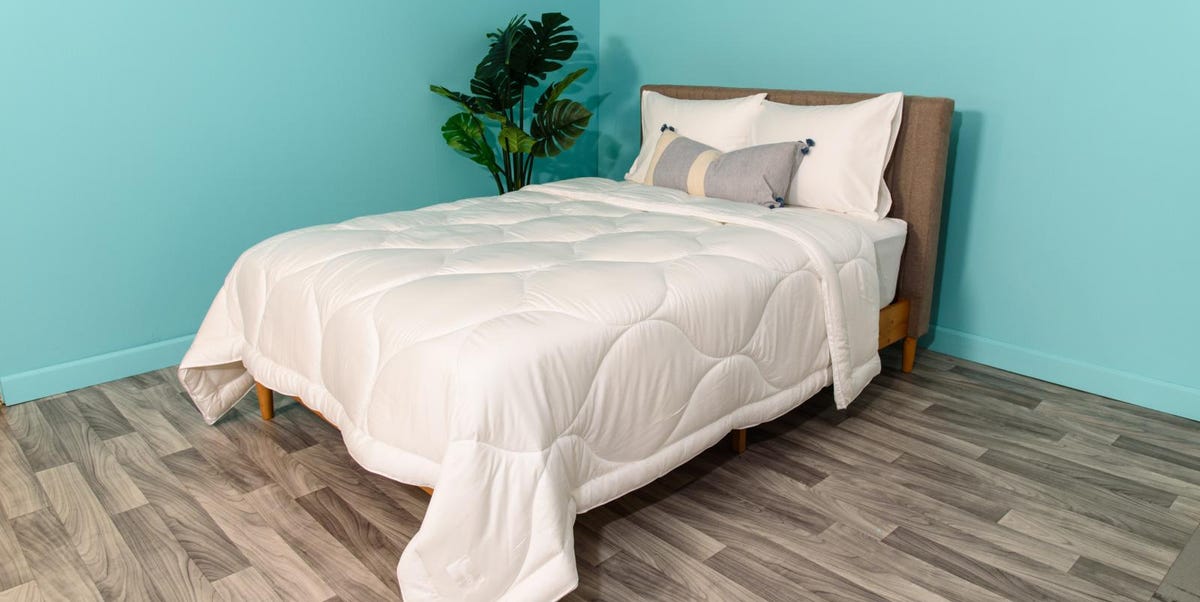
Finding the best comforter sounds simple until you are standing in front of 47 nearly identical white rectangles, all promising “cloud-like softness.” Suddenly, buying bedding feels less like decorating a bedroom and more like selecting equipment for a mild Arctic expedition.
The truth is that a great comforter can change your sleep more than people admit. It affects warmth, airflow, weight, texture, bedroom style, and whether you wake up refreshed or trapped inside a sweaty burrito. The best comforters of 2025 are not just fluffy; they are better engineered, easier to care for, more sustainable, and more specialized than ever.
This guide synthesizes expert testing, textile-lab criteria, consumer feedback, bedding-material research, and real product specifications from leading U.S. home and sleep publications. The result is a practical, reader-friendly breakdown of eight standout comforters for different sleepers: hot sleepers, cold sleepers, allergy-sensitive shoppers, budget buyers, luxury lovers, eco-conscious households, and anyone whose bed currently looks like it gave up in 2017.
How Experts Evaluate the Best Comforters
Comforter testing usually focuses on five big questions: Does it feel good? Does it regulate temperature? Does the fill stay evenly distributed? Does it survive washing? And does it justify the price after the honeymoon phase, when the new-bedding excitement wears off?
Experts also look at fill material, shell fabric, construction, stitching, weight, loft, certifications, corner loops, noise level, and whether a comforter works alone or inside a duvet cover. A baffle-box down comforter, for example, traps more air and keeps warmth evenly distributed. A sewn-through comforter may feel lighter and less bulky. Down alternative is often easier to wash and friendlier for allergy-sensitive sleepers, while true down remains famous for luxurious loft and warmth without heavy weight.
In short, the best comforter is not the “fluffiest” one. It is the one that matches your body temperature, climate, mattress size, care habits, and tolerance for wrestling a duvet cover at midnight.
Quick Comparison: 8 Best Comforters of 2025
| Rank | Comforter | Best For | Fill Type |
|---|---|---|---|
| 1 | Buffy Cloud Comforter | Best Overall | Recycled polyester down alternative |
| 2 | Bedsure Down Alternative Comforter | Best Value | Polyester down alternative |
| 3 | REST Evercool Cooling Comforter | Best Cooling Comforter | Sorona and Tencel-blend fill |
| 4 | The Company Store Premium Alberta Down Comforter | Best Down Comforter | European down |
| 5 | Crane & Canopy Ultimate Luxe Down Alternative Comforter | Best Luxury Down Alternative | Synthetic microfiber |
| 6 | Naturepedic Alpaca Comforter | Best Natural Wool Option | Alpaca wool |
| 7 | PeachSkinSheets Oversized Comforter Set | Best Oversized Comforter | Down alternative microfiber |
| 8 | Coyuchi Three Season Down Duvet Insert | Best Sustainable Down Comforter | 600-fill-power down |
1. Buffy Cloud Comforter: Best Overall Comforter
The Buffy Cloud Comforter earns its name honestly. It is light, airy, soft, and pleasantly puffy without feeling like you borrowed a camping sleeping bag from someone’s garage. Its down-alternative fill is made with recycled polyester, while the shell uses lyocell, a smooth fabric known for moisture absorption and a silky feel.
What makes Buffy stand out is construction. Instead of relying only on traditional square stitching, the comforter is designed to reduce clumping and cold spots. That matters because a comforter that feels amazing on day one but turns into lumpy bedding lasagna after a few months is not a win.
Why It Works
The Buffy Cloud is ideal for sleepers who want all-season comfort, vegan materials, a soft drape, and an eco-friendlier fill story. It feels plush but not suffocating, making it a strong pick for people who want hotel comfort without true down.
The main downside is that very cold sleepers may want the warmer version or an added blanket in winter. Still, for most bedrooms and moderate climates, this is the comforter most likely to please the largest number of people.
2. Bedsure Down Alternative Comforter: Best Value Comforter
The Bedsure Down Alternative Comforter is proof that good bedding does not have to require a suspicious conversation with your credit card. It is affordable, widely available, soft enough for everyday use, and practical for guest rooms, college apartments, kids’ beds, and anyone who wants a reliable comforter without treating it like a museum artifact.
Its polyester fill and synthetic shell are not as luxurious as premium cotton, down, or lyocell, but that is the trade-off. What you get is a machine-washable, lightweight, box-stitched comforter that can work as a standalone blanket or as a duvet insert.
Why It Works
This is the comforter for people who want comfort, easy maintenance, multiple colors, and a friendly price. It is especially useful for families because spills, pets, and surprise snack crumbs happen. No judgment. Bedrooms are real life, not furniture catalogs.
Hot sleepers may find it warmer than natural-fiber options, but for the price, Bedsure delivers impressive everyday coziness and excellent value.
3. REST Evercool Cooling Comforter: Best Cooling Comforter
For hot sleepers, the wrong comforter can turn bedtime into a weather event. The REST Evercool Cooling Comforter is designed for exactly that problem. Its fabric feels cool to the touch, and its lightweight construction helps reduce heat buildup during the night.
The shell is commonly described as silky and smooth, while the fill combines performance fibers intended to support breathability and moisture management. This comforter is not trying to be the warmest option in the room. It is trying to keep you from waking up at 3:12 a.m. wondering why your bed has become a sauna with pillows.
Why It Works
Choose REST Evercool if you sleep hot, live in a warm climate, experience night sweats, or share a bed with someone whose body temperature resembles a small furnace. It is also a good option for people who dislike heavy bedding but still want a soft, finished layer on the bed.
The trade-off is that it may feel too light for people who love a thick, cozy, winter-weight comforter. For hot sleepers, though, that is the whole point.
4. The Company Store Premium Alberta Down Comforter: Best Down Comforter
If you want classic down comfort, The Company Store Premium Alberta Down Comforter is one of the most trusted luxury-style choices. It uses 600–650 fill power European down, a cotton sateen shell, and baffle-box construction that helps preserve loft and reduce cold spots.
Down is prized because it provides warmth without excessive weight. A good down comforter feels lofty, breathable, and quietly indulgentthe bedding equivalent of ordering dessert and pretending you are “just having one bite.”
Why It Works
This comforter is best for sleepers who want premium warmth, long-term durability, and that crisp hotel-bed sensation. It is available in different warmth levels, which is important. Light warmth suits warmer rooms, medium warmth works for many year-round sleepers, and extra warmth is better for cold climates or people who keep the thermostat low.
The downside is price. Real down costs more, and it may not be ideal for vegan shoppers or people who prefer synthetic bedding. But for traditional luxury, this comforter remains a benchmark.
5. Crane & Canopy Ultimate Luxe Down Alternative Comforter: Best Luxury Down Alternative
The Crane & Canopy Ultimate Luxe Down Alternative Comforter is for people who want the plushness of down without actual down. It uses hypoallergenic microfiber fill, a 400-thread-count cotton shell, and baffle-box construction for even warmth distribution.
Many down-alternative comforters can feel flat or overly dense, but this one aims for loft and softness. It is available in multiple warmth levels, which makes it more flexible than basic one-weight comforters.
Why It Works
This is a strong choice for allergy-conscious sleepers, animal-free households, and anyone who wants a polished, premium comforter with a smoother cotton shell. It can work well inside a duvet cover, thanks to corner loops, but it also looks refined enough to use on its own if your bedroom style leans crisp and classic.
Some sleepers may notice that cotton-shell comforters have a slight rustle. That is not necessarily badit can feel luxuriousbut if you demand silent bedding, keep it in mind.
6. Naturepedic Alpaca Comforter: Best Natural Wool Comforter
The Naturepedic Alpaca Comforter is a natural-fiber standout. It uses alpaca wool fill and an organic cotton fabric shell, giving it a very different feel from fluffy down or synthetic fill. Alpaca is appreciated for temperature regulation, softness, and lower lanolin content compared with traditional sheep’s wool.
This comforter is not the puffiest pick on the list. Instead, it offers gentle warmth, breathable performance, and a cleaner material profile for shoppers who care about what their bedding is made from.
Why It Works
Choose Naturepedic if you prefer natural materials, dislike synthetic fill, or want a comforter that can help regulate temperature across seasons. It is especially appealing for eco-minded shoppers and anyone building a healthier bedroom environment.
The feel is thinner and less cloud-like than down, so it may not satisfy people who want maximum loft. But if you value breathability and natural comfort over marshmallow-level puff, this is a thoughtful upgrade.
7. PeachSkinSheets Oversized Comforter Set: Best Oversized Comforter
Some comforters are technically the right size but still leave one person in the bed fighting for coverage like it is a competitive sport. The PeachSkinSheets Oversized Comforter Set solves that problem with generous dimensions and a soft brushed microfiber feel.
The oversized design is especially helpful for tall mattresses, pillow tops, adjustable beds, or couples who have dramatically different blanket-sharing ethics. It also comes as a set, which can make styling a bedroom easier.
Why It Works
This comforter is best for people who want more drape, more coverage, and a cozy, finished bed without fuss. The brushed texture feels soft against the skin, and the larger sizing can make a bed look more polished.
It may not have the same premium construction as luxury down or wool options, but for coverage and everyday softness, it is a practical winner.
8. Coyuchi Three Season Down Duvet Insert: Best Sustainable Down Comforter
The Coyuchi Three Season Down Duvet Insert is a beautiful choice for shoppers who want real down but also care about responsible sourcing and organic materials. It features 600-fill-power down inside a down-proof organic cotton shell, with stitch-through box construction to keep the fill distributed.
As the name suggests, this is designed for three-season use. It is warm and lofty but not necessarily built for the harshest winter nights unless layered with additional bedding.
Why It Works
Choose Coyuchi if you want a more sustainable luxury comforter, organic cotton, natural loft, and a lighter down feel. It suits sleepers who like breathable warmth rather than heavy insulation.
The price is higher than many comforters, but the materials and sourcing help justify the investment for shoppers who prioritize sustainability alongside comfort.
Down vs. Down Alternative: Which Comforter Should You Choose?
Down comforters are known for loft, warmth, breathability, and long-term durability. They feel luxurious because down clusters trap air efficiently, creating insulation without adding much weight. If you want that classic five-star hotel feel, down is hard to beat.
Down alternative comforters use synthetic or plant-derived fibers to mimic the softness of down. They are often less expensive, easier to clean, hypoallergenic, and animal-free. The trade-off is that they may feel heavier for the same warmth level and may not last as long as high-quality down.
Hot sleepers should look for cooling fabrics, lyocell, bamboo viscose, lighter weights, or moisture-wicking shells. Cold sleepers should focus on fill power, baffle-box construction, medium-to-extra warmth options, and breathable cotton shells. Allergy-sensitive shoppers may prefer down alternative, alpaca, or washable comforters with clear care instructions.
Comforter Buying Guide: What Really Matters
1. Match Warmth to Your Sleep Style
A comforter should support your normal sleep temperature. If you wake up sweaty, avoid extra-warm down and dense polyester fills. If you wake up cold, do not buy a super-light cooling comforter just because it has pretty marketing photos.
2. Check the Construction
Baffle-box construction creates small internal walls that allow fill to loft more fully. Box stitching is simpler and usually more affordable, but it can compress fill slightly. Wave stitching can help reduce clumping in certain down-alternative designs.
3. Think About Care Before You Buy
A dry-clean-only comforter may sound luxurious until your dog jumps on the bed after meeting a puddle. Machine-washable comforters are more convenient for families, pet owners, allergy sufferers, and snack-in-bed realists.
4. Look for Corner Loops
If you plan to use a duvet cover, corner loops are your friends. Without them, your insert may slide around inside the cover and form a mysterious lump near your left knee.
5. Do Not Ignore Size
Thick mattresses often need larger comforters for proper drape. Couples may also prefer oversized options to avoid nightly blanket negotiations.
Personal Experience: What Living With a Good Comforter Actually Feels Like
The first thing people notice after upgrading to a better comforter is not always warmth. It is consistency. A cheap comforter can feel fine at bedtime and disappointing by morning: the fill shifts, one corner turns flat, another corner becomes strangely dense, and your feet somehow end up in the cold zone. A well-made comforter feels more even across the whole bed. It does not demand attention. It simply lets you sleep.
In real life, the best comforter is the one that disappears into your routine. You make the bed, it drapes nicely, it does not require theatrical fluffing, and it still feels inviting at night. That is why construction matters so much. Baffle boxes, quality stitching, and stable fill are not glamorous details, but they are the reason a comforter still feels good after months of use.
Hot sleepers often have the most dramatic experience. Switching from a dense polyester comforter to a cooling or breathable comforter can feel like someone finally opened a window in your bedding. It does not magically turn summer into a mountain cabin, but it reduces that trapped-heat feeling that causes tossing, flipping, and the classic one-leg-out-of-the-covers survival pose.
Cold sleepers experience the opposite joy. A quality down or warmer down-alternative comforter can create cozy insulation without making the bed feel heavy. The best versions warm up gradually and hold heat evenly. That matters in winter, especially if your bedroom gets chilly or your heating system believes “barely adequate” is a personality trait.
Couples may benefit most from choosing the right size and weight. A queen-size comforter on a queen bed can work, but a larger or oversized comforter often feels more peaceful. Nobody wants to wake up at 2 a.m. because their partner has rolled into a blanket burrito with the confidence of a professional thief. Extra width and better drape can genuinely improve shared sleep.
Care also becomes part of the experience. A comforter that looks beautiful but is impossible to clean may become stressful. Machine-washable down alternative is practical for households with children, pets, allergies, or breakfast-in-bed ambitions. Down and natural-fiber comforters may need more careful cleaning, but they can reward that care with years of performance.
The biggest lesson is that comfort is personal. One person’s dreamy cloud is another person’s overheating disaster. A great comforter should match how you sleep, not how a product photo looks. Think about your climate, your body temperature, your laundry habits, your mattress height, and whether you like airy loft or gentle weight. When those details line up, your bed stops being just furniture and becomes the place you look forward to all day.
Conclusion
The best comforters of 2025 prove that bedding has become smarter, softer, and more specialized. The Buffy Cloud Comforter is the best overall pick for most sleepers thanks to its airy feel, recycled fill, and smooth lyocell shell. Bedsure is the best value for budget-friendly comfort, while REST Evercool is the top pick for hot sleepers who need serious cooling performance. The Company Store Premium Alberta Down Comforter remains a luxury classic for down lovers, and Crane & Canopy offers a polished down-alternative upgrade.
Naturepedic is ideal for natural-material shoppers, PeachSkinSheets solves the coverage problem with oversized softness, and Coyuchi delivers sustainable down comfort with organic cotton. In the end, the best comforter is not the most expensive one or the puffiest one. It is the one that helps you sleep better, wake up happier, and stop blaming your bedding for your morning mood.