“`
Game of Thrones did not simply create viewers. It created detectives. For eight seasons, fans paused candlelit scenes, translated prophecies, tracked family trees, interrogated sword names, and treated every meaningful stare like it had been notarized by the Citadel. Some theories were hilarious nonsense. Some were so persuasive they practically walked into canon wearing a direwolf cloak. And a few remain wonderfully unhinged in that very specific Westerosi way: ridiculous at first glance, oddly convincing after three paragraphs, and dangerous to your sleep schedule by midnight.
The best Game of Thrones fan theories work because George R.R. Martin’s world is built on history repeating itself, unreliable stories, secret bloodlines, political irony, and prophecy that behaves like a drunk raven: it arrives late, makes a mess, and refuses to explain itself. HBO’s adaptation answered some mysteries, ignored others, and left enough smoke in the room for fans to keep shouting, “But what about the dragon has three heads?” into the void.
Below are six of the most insane but convincing Game of Thrones theories: the ones that made fans sound completely deranged at family dinners, right up until the evidence started looking uncomfortable.
1. R+L=J: Jon Snow Was Never Ned Stark’s Son
Let’s begin with the granddaddy of modern Game of Thrones fan theories: R+L=J. For years, fans argued that Jon Snow was not the illegitimate son of honorable Ned Stark, but the child of Rhaegar Targaryen and Lyanna Stark. On paper, that sounded like conspiracy-board madness. In practice, it explained nearly everything.
Ned Stark was too honorable to casually betray his wife. Lyanna’s death at the Tower of Joy was too mysterious to be a random tragic footnote. Rhaegar’s obsession with prophecy, Lyanna’s “promise me” plea, and Ned’s lifelong guilt all pointed toward a hidden baby whose identity could destabilize the Seven Kingdoms. That baby, of course, was Jon Snow, a man raised as a bastard but born at the center of the realm’s biggest political secret.
Why it was convincing
The theory was not built from one clue; it was built from a fortress of clues. Jon looked more Stark than Targaryen, but his story kept brushing against fire, dragons, royal blood, and prophecy. Ned refused to talk about Jon’s mother. Robert Baratheon’s hatred of Targaryens made the secret deadly. If Robert had learned that Rhaegar and Lyanna had a son, baby Jon would have needed more protection than a toddler with a dragon-shaped pacifier.
By the time the show revealed Jon’s parentage, R+L=J had gone from “insane fan theory” to “the fandom’s unpaid research department solved the case.” It remains the gold standard because it proves that wild theories can be right when they are grounded in character, theme, and suspiciously dramatic childbirth.
2. Bran Stark Was the Night Kingor Accidentally Created Him
Now we step into colder, weirder territory. One of the strangest Game of Thrones theories claimed that Bran Stark was somehow the Night King. Not just connected to him. Not just his enemy. The actual icy murder king himself.
The theory exploded after the show revealed Bran’s ability to influence the past. In “The Door,” Bran’s visions do not merely show history; they disturb it. Hodor’s entire life becomes the result of Bran’s future panic echoing backward through time. That single revelation turned the show’s magic system into a terrifying question: if Bran can accidentally break Hodor across decades, what else could he break?
Why fans bought it
The theory usually goes like this: Bran travels into the distant past to stop the Children of the Forest from creating the first White Walker. He wargs into the man being transformed, gets trapped, and becomes the Night King. It is bonkers. It is also not completely random. Bran and the Night King share a strange psychic connection. The Night King can touch Bran inside a vision. Bran’s mark helps destroy the protective magic around the Three-Eyed Raven’s cave. Suddenly, Bran’s powers look less like a gift and more like the universe handing a teenager the keys to a time machine and saying, “Please don’t cause an apocalypse.”
The show did not confirm Bran was the Night King. Still, the theory remains convincing because it fits one of the saga’s favorite ideas: history is not clean. Heroes can become monsters. The person trying to prevent disaster may be the reason disaster happens. Also, Bran becoming king at the end makes the whole thing even creepier if you enjoy ruining your own afternoon.
3. Tyrion Lannister Was Secretly a Targaryen
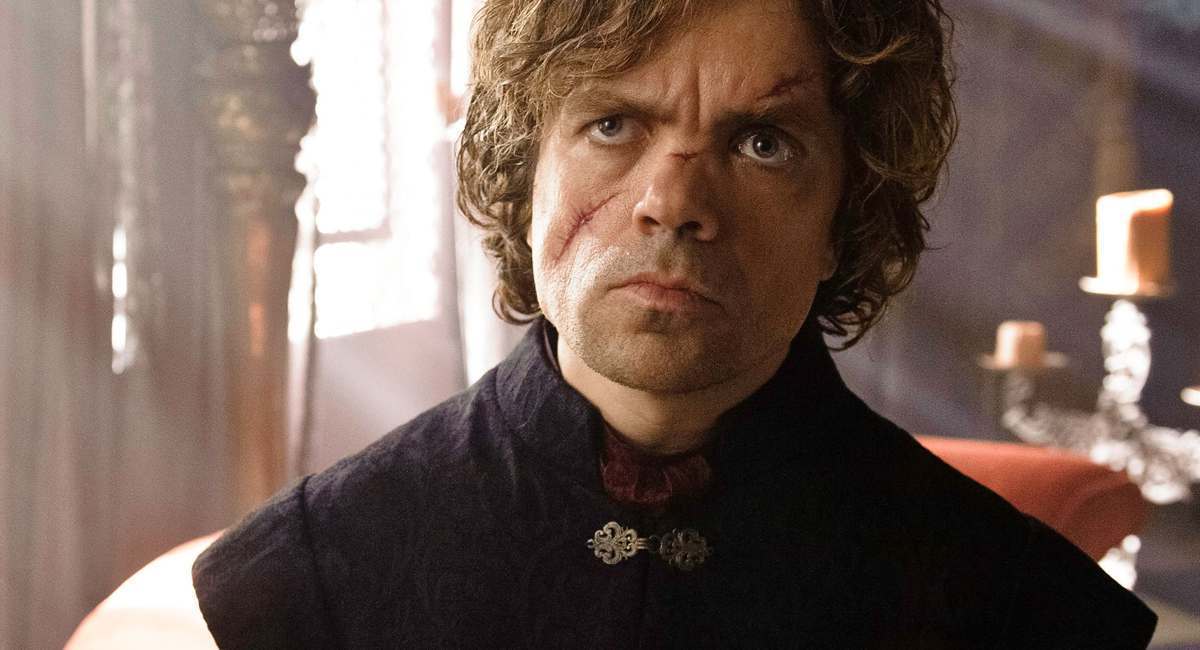
Few theories are as emotionally messy as the idea that Tyrion Lannister is not Tywin Lannister’s son. According to this theory, Tyrion is actually the child of Aerys II Targaryen, the Mad King, and Joanna Lannister. That would make Tyrion a secret Targaryen, a possible dragon rider, and the most sarcastic member of a family already famous for dramatic hair and poor impulse control.
At first, the theory sounds like fan-service with a silver wig. But then the evidence starts knocking. Aerys was known to have an inappropriate fascination with Joanna. Tywin’s hatred of Tyrion always seemed larger than grief over Joanna’s death. Tywin repeatedly tells Tyrion he is “no son” of his, which could be ordinary crueltyor one of those statements that later turns into a neon sign.
The dragon connection
Tyrion’s fascination with dragons is another major clue. In the books, he reads deeply about dragon lore and dreams of dragons as a child. In the show, he survives an intimate encounter with Daenerys’s chained dragons, which is not exactly a normal Tuesday for anyone with a Lannister surname. Fans also connected Tyrion to the “three heads of the dragon” prophecy, imagining Jon, Daenerys, and Tyrion as the three riders destined to face the Long Night.
But the theory has a weakness, and it is a big one: making Tyrion a Targaryen could undercut the tragedy of his relationship with Tywin. Their dynamic is powerful because Tyrion is Tywin’s son in all the ways Tywin hates most. He is intelligent, political, proud, ruthless when cornered, and painfully capable of seeing through the family myth. If Tyrion is not Tywin’s blood, the irony loses some bite. Still, as a theory, it remains deliciously plausible. Like most Lannister secrets, it smells expensive and emotionally poisonous.
4. Azor Ahai Was Not One Person
The prophecy of Azor Ahai, also called the Prince That Was Promised, produced enough fan debate to power Dragonstone for a decade. Melisandre believed a legendary savior would be reborn to fight the darkness. Fans immediately began asking the obvious question: who gets the flaming sword and the worst job description in Westeros?
Jon Snow seemed like the strongest candidate. He died and returned. He fought the dead. He carried a Valyrian steel sword. His hidden Targaryen bloodline gave him mythic weight. Daenerys also fit the prophecy: born amid salt and smoke, linked to fire, and responsible for waking dragons from stone eggs. Arya complicated everything by killing the Night King, making her the literal person who ended the immediate White Walker threat.
The trinity theory
The most convincing version of this theory argues that Azor Ahai was never meant to be one person. Instead, the prophecy fractured across several characters. Daenerys brings dragons back into the world. Jon unites the living and ultimately kills Daenerys, echoing the myth of Azor Ahai sacrificing Nissa Nissa to forge Lightbringer. Arya delivers the fatal blow to the Night King. No single hero completes the entire checklist, but together they fulfill the shape of the prophecy.
This theory works because Game of Thrones loves humiliating anyone who expects a clean chosen-one narrative. Prophecy in Westeros is real, but it is rarely polite. It arrives translated, mistranslated, gender-bent, symbol-heavy, and covered in enough ambiguity to make a maester fake a headache. Azor Ahai as a shared destiny feels more Martin-esque than one shiny hero holding a flaming sword while everyone else claps in the snow.
5. Jaime, Not Tyrion, Was the Valonqar
Cersei Lannister’s life was haunted by prophecy. As a girl, she was told that a younger, more beautiful queen would cast her down and that the “valonqar” would wrap hands around her pale throat and choke the life from her. In High Valyrian, “valonqar” means little brother. Cersei naturally assumed this meant Tyrion, because Cersei’s hobbies include wine, paranoia, and blaming Tyrion for weather patterns.
But many fans argued that the prophecy actually pointed to Jaime. Jaime was Cersei’s twin, but he was born after her, making him technically her younger brother. He was also the person she loved most, which would make the betrayal sharper, crueler, and far more poetic.
Why Jaime made sense
Jaime’s entire arc moved away from Cersei’s orbit. He lost his sword hand, gained a conscience, built a complicated bond with Brienne, and slowly recognized the rot beneath his family’s golden surface. If anyone was positioned to stop Cersei at the moment she became too dangerous, it was Jaime. He had already killed one monarch to save King’s Landing. Killing Cersei to prevent another catastrophe would have completed his Kingslayer arc with brutal symmetry.
The show chose a different ending, with Jaime and Cersei dying together beneath the Red Keep. But the valonqar theory remains one of the fandom’s strongest because it understood the emotional mechanics of the story. Tyrion killing Cersei would be revenge. Jaime killing Cersei would be tragedy. And in Game of Thrones, tragedy usually gets the better parking spot.
6. The White Walkers Were Not EvilThey Had a Mission
The final theory asks a dangerous question: what if the White Walkers were not simply evil ice monsters? What if they had a purpose?
The show revealed that the Children of the Forest created the first White Walker as a weapon against men. That changes the moral equation. The Night King was not born as a supernatural villain twirling an icicle mustache. He was made. Humanity, as usual, helped build the thing that later tried to annihilate humanity. Very on-brand.
The case for a motive
Some fans believed the White Walkers were marching south for a specific reason: to destroy Bran, erase memory, punish mankind, restore balance, or complete a magical cycle that began thousands of years earlier. Their silence made them scarier, but it also made them mysterious. They arranged bodies in symbols. They turned babies. They ignored certain opportunities and pursued others. That behavior suggested ritual, not random hunger.
The theory became especially interesting when Bran became the Three-Eyed Raven, essentially the living archive of Westeros. If the Night King wanted to destroy human memory, Bran was the obvious target. Under that interpretation, the final battle was not just life versus death; it was memory versus oblivion. The dead did not merely want bodies. They wanted the story to stop.
The show ultimately kept the Night King fairly simple: a supernatural extinction threat. Still, this theory remains convincing because the series repeatedly shows that “monsters” often begin as victims of older violence. The White Walkers may have been the scariest thing beyond the Wall, but the oldest sin belonged to the living.
Why These Game of Thrones Fan Theories Still Matter
Even years after the finale, Game of Thrones fan theories continue to thrive because they offer something the ending could not fully provide: the pleasure of possibility. Fans do not only theorize to predict what happens next. They theorize to understand what a story means. R+L=J made Ned’s honor more complicated. The Bran-Night King theory made time travel terrifying. Tyrion Targaryen turned family hatred into potential dynasty drama. Azor Ahai debates transformed prophecy into a puzzle about sacrifice. The valonqar theory sharpened Cersei and Jaime’s doomed love. The White Walker motive theory gave the apocalypse a moral backstory.
Theories are also a form of affection. Nobody builds a 4,000-word argument about dragon genetics unless they care deeply, or unless they have accidentally consumed too much cold brew. Game of Thrones rewarded that attention for a long time. It trained viewers to notice names, songs, scars, dreams, bloodlines, and suspiciously placed blue flowers. When the show later simplified some mysteries, fans kept doing what the story had taught them to do: look closer.
A Rewatcher’s Experience: Living With the Theories
Experiencing Game of Thrones through fan theories is a little like attending a royal wedding where every guest is secretly carrying a dagger. You may arrive for the spectacle, but soon you are studying seating arrangements, family grudges, and whether the guy in the corner has been dead for two seasons. The theories change the way the story feels. A casual scene becomes a clue. A throwaway line becomes a confession. A wolf, a raven, or a dragon looking slightly to the left suddenly feels like it should be cross-examined.
On a first watch, Jon Snow is the brooding underdog at the Wall. On a theory-aware rewatch, every conversation about bastards, honor, kings, and blood becomes loaded. Ned is no longer simply a stern father with excellent cloak posture; he becomes a man carrying a secret so dangerous that telling the truth could murder a child. That makes his silence heavier. It also makes his execution more tragic, because he dies without the world knowing one of his greatest acts of love.
Bran’s story changes even more dramatically. Without theories, Bran’s visions are strange fantasy machinery. With theories, they become a loaded weapon. Every flashback feels unstable. Hodor’s fate teaches viewers that the past is not safely behind glass. Once that rule exists, it is impossible not to wonder where else Bran’s fingerprints might be hiding. Was he only watching history, or nudging it? Was he chosen because he could remember everything, or because he had already changed something he should not have touched? That is the kind of question that makes a rewatch feel less like entertainment and more like politely losing your mind.
The Tyrion Targaryen theory creates a different experience. It makes his dragon scenes glow with possibility, but it also forces a viewer to ask whether a twist would improve the story or merely decorate it. That is one of the best lessons fan theories offer: not every convincing idea is thematically necessary. Sometimes the most powerful answer is not “secret bloodline,” but “family can be cruel even when the blood is real.” In that sense, rejecting a theory can be as satisfying as believing it.
The same is true of Azor Ahai. Watching the final seasons with the prophecy in mind can be thrilling and frustrating. Jon fits. Daenerys fits. Arya unexpectedly fits. Jaime almost fits certain redemption patterns. The prophecy becomes less like a treasure map and more like a cracked mirror. Everyone reflects part of it, but nobody owns the whole thing. That ambiguity can annoy viewers who want a clean answer, but it also gives the story its mythic texture. Legends are not spreadsheets. Westeros would absolutely fail at spreadsheets.
In the end, the best experience of these theories is communal. The fun is not only in being right. It is in arguing passionately with strangers over fictional genealogy, realizing someone has found a clue you missed, and laughing when a theory is both absurd and weirdly elegant. Game of Thrones may be over, but the theory machine still rattles in the crypts. Somewhere, a fan is still explaining why a prophecy, a sword, and a suspicious baby name prove everything. Honestly, the realm could do worse.
Conclusion
The most convincing Game of Thrones theories endure because they are not random guesses. They are built from the story’s own obsessions: blood, memory, prophecy, sacrifice, power, and the awful things families do while insisting it is all for legacy. Some theories became canon. Some collapsed harder than a Frey dinner invitation. Others still hover in that addictive space between impossible and irresistible.
That is the magic of Westeros. The dragons are impressive, the battles are massive, and the betrayals are plentiful, but the real wildfire is interpretation. Fans keep returning because the world feels bigger than the screen, older than the characters, and slipperier than any official answer. Theories let us keep wandering its secret passages. They remind us that in Game of Thrones, the truth is rarely dead. It is usually hiding in a tower, wearing someone else’s name, and waiting for Bran to stare at it ominously.