Somewhere along the way, the internet turned dating into airport security. A person puts their phone face-down on the table? Suspicious. They take four hours to answer a text? Clearly they have joined a secret society. They own a cat? Apparently that is now a full psychological profile.
Red flags matter. They can help people recognize manipulation, disrespect, coercion, dishonesty, and unsafe behavior. But when every harmless quirk gets labeled a warning sign, the phrase starts losing its usefulness. Not every awkward habit is a clue. Not every preference is a personality disorder. And not every person who likes a quiet Friday night is plotting something in a basement filled with labeled jars.
This conversation is really about context. A behavior by itself rarely tells the whole story. Patterns, intentions, accountability, respect for boundaries, and the way someone responds when concerns are raised tell us far more than whether they text with periods or own exactly one decorative pillow.
When Did Every Quirk Become a “Red Flag”?
The modern red-flag conversation began with a useful goal: helping people spot harmful relationship patterns before they become painful or dangerous. Genuine warning signs often involve a repeated attempt to control another person, ignore consent, isolate them from friends or family, lie consistently, intimidate them, or make them feel responsible for someone else’s bad behavior.
But social media has a tendency to flatten human behavior into tiny, dramatic headlines. A 20-second video cannot explain someone’s family history, work schedule, anxiety level, communication style, cultural background, personality, or whether they were simply driving when a text arrived. As a result, a normal difference can get treated like evidence in a true-crime documentary.
That does not mean people should ignore discomfort. If something feels off, it is fair to pay attention. The trick is to ask better questions: Is this a one-time habit or a recurring pattern? Is anyone being harmed? Can the person discuss it honestly? Do they respect boundaries when asked? Is this a compatibility issue, or is it actually unsafe behavior?
35 “Red Flags” That May Be Completely Harmless
These behaviors are not automatically good, bad, attractive, or compatible for everyone. They simply do not prove that someone is deceptive, dangerous, selfish, or emotionally unavailable. A yellow sticky note is not a red flag. It is just a sticky note.
-
1. Taking a While to Reply to Texts
People work, sleep, drive, study, care for children, attend meetings, forget where they put their phone, or simply need a break from notifications. A delayed reply becomes concerning only when it is part of a larger pattern of deliberate cruelty, manipulation, or disappearing without explanation after making commitments.
-
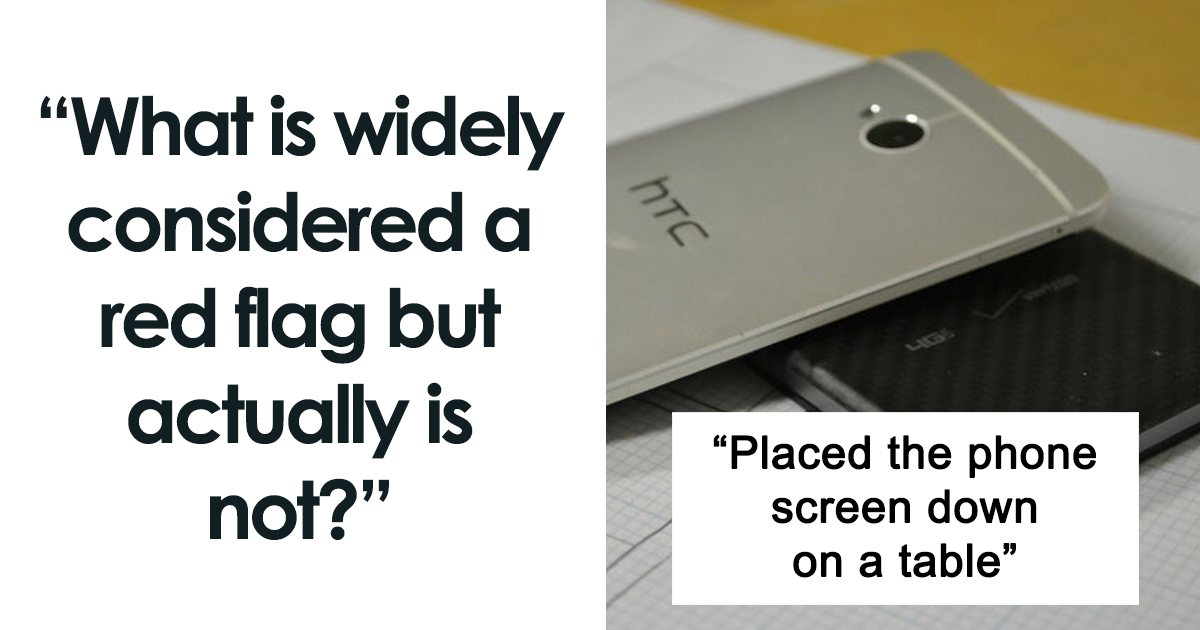
2. Keeping Their Phone Face-Down
A phone placed face-down may mean someone wants to focus on the person in front of them, reduce distractions, protect battery life, or avoid lighting up a dark restaurant like a tiny emergency flare. Privacy is not automatically secrecy.
-
3. Not Using Social Media
No Instagram, no TikTok, no elaborate vacation photos beside an infinity pool? That may be a lifestyle choice, not an alibi problem. Some people dislike social media, prefer privacy, or find that constant comparison makes them unhappy.
-
4. Having Very Few Friends
Some people prefer a small circle. Others moved frequently, work unusual hours, are introverted, or invest deeply in two close friendships instead of maintaining 200 casual acquaintances. Friend quantity is not a character score.
-
5. Enjoying Time Alone
Being independent is not the same as being emotionally unavailable. Someone who enjoys solitude may also enjoy your company enormously; they just do not require a committee meeting every time they make coffee.
-
6. Being Quiet in a Group
Not everyone is auditioning to host a game show. Some people warm up slowly, observe first, or feel more comfortable in one-on-one conversations. Quietness can be temperament, shyness, social anxiety, fatigue, or simply a preference for listening.
-
7. Avoiding Eye Contact Sometimes
Limited eye contact can happen for many reasons, including shyness, anxiety, neurodivergence, cultural norms, distraction, or discomfort in a new setting. It is not a reliable lie detector, despite what every police drama has tried to convince us.
-
8. Saying “No” to Sharing Passwords
Healthy relationships need trust, not surveillance software. A person may reasonably protect private conversations, work accounts, family messages, financial information, or simply their right not to turn their phone into a communal bulletin board.
-
9. Having Friends of a Different Gender
Friendship is not automatically a secret audition for romance. People can have respectful, platonic friendships across genders. The relevant issue is honesty and boundaries, not whether someone owns a mixed-gender contact list.
-
10. Being Single for Several Years
A long period of being single can mean someone focused on work, healing, family, school, travel, health, or simply waited for a relationship that made sense. It may even suggest they did not treat dating like a buy-one-get-one-free sale.
-
11. Never Having Been Married
Marriage history is not a moral report card. People marry later, never marry, marry after a long relationship, or decide the institution is not for them. The important questions are about values, expectations, and future goals.
-
12. Having Little Dating Experience
Someone may have prioritized other parts of life or simply not met the right person. Inexperience is not evidence of immaturity, dishonesty, or future failure. Everyone has a first serious relationship, even if it happens later than expected.
-
13. Living With Parents as an Adult
Housing costs, caregiving, cultural traditions, temporary setbacks, school, and family obligations all shape living arrangements. The question is not “Do they live with family?” but “Are they responsible, respectful, and working toward a life that fits their goals?”
-
14. Not Being Close to Their Parents
Family distance can be painful, complicated, healthy, necessary, or all four at once. Some people reduce contact because of abuse, addiction, chronic conflict, neglect, or repeated boundary violations. A cheerful holiday card does not tell the whole family story.
-
15. Owning a Cat
A single person with a cat is not automatically “too weird for society.” They may simply like animals, enjoy companionship, and appreciate a roommate who does not ask to borrow money but does occasionally knock things off shelves.
-
16. Loving Kids or Being Gentle With Babies
Kindness toward children should not be automatically treated as suspicious, especially when it comes from men. Caring behavior, patience, and warmth are human qualities, not gender-specific warning signs.
-
17. Being a Dad Alone at a Playground
A father spending time with his child is parenting, not performing something strange. Treating involved dads as suspicious sends a miserable message about who is “allowed” to care for children in public.
-
18. Preferring Separate Hobbies
Couples do not need to become one giant hobby blob. One person can love rock climbing while the other prefers baking, gaming, painting, gardening, or reading mystery novels about suspiciously wealthy people in damp mansions.
-
19. Not Loving Big Parties
Declining a crowded event does not mean someone hates people. They may dislike noise, feel drained by large groups, have sensory sensitivities, need sleep, or simply prefer dinner with three friends over shouting near a speaker.
-
20. Eating the Same Foods Repeatedly
Some people are creatures of habit. Others have food sensitivities, budget limits, busy schedules, autism-related preferences, or zero interest in pretending a complicated brunch menu is a personality test.
-
21. Being Bad at Small Talk
Not everyone can glide through a conversation about weather, traffic, and whether avocado toast has “gone too far.” A person may be awkward at introductions and still be thoughtful, funny, loyal, and excellent at deeper conversations.
-
22. Having a Messy Car or Bedroom
A cluttered space may reflect a hectic week, executive-function challenges, depression, ADHD, caregiving duties, or plain old disorganization. It becomes a relationship issue when someone expects others to manage their responsibilities or refuses to improve after honest discussions.
-
23. Forgetting Minor Details
Forgetting the name of your cousin’s dog is not the same as not caring. Memory varies under stress, fatigue, ADHD, overwhelming workloads, and everyday life. What matters more is whether a person makes an effort to remember what truly matters to you.
-
24. Being Nervous on a First Date
Awkwardness is not a criminal record. People may talk too fast, laugh too loudly, spill a drink, or forget how forks work when anxious. First-date nerves are often proof that the person cares how things go.
-
25. Being Protective of Their Time
Setting boundaries around work, rest, family, exercise, or personal time can be healthy. A person who says, “I cannot talk tonight, but I can call tomorrow,” may be showing reliability rather than rejection.
-
26. Not Wanting to Move in Quickly
Wanting to take a relationship slowly can be a sign of thoughtfulness. Shared rent, toothbrush storage, and whose name goes on the streaming account are not minor decisions. Pace should be negotiated, not pressured.
-
27. Not Introducing You to Everyone Immediately
Some people keep early dating private until the relationship feels established. That is different from hiding you indefinitely, lying about your existence, or refusing to integrate you into their life after meaningful time has passed.
-
28. Getting Jealous Sometimes
Jealousy is an emotion, not an automatic accusation. Most people feel it occasionally. The concern is what someone does with it: communicating honestly is one thing; checking your phone, isolating you, threatening you, or starting a fight is another.
-
29. Crying Easily
Some people cry when stressed, happy, frustrated, moved by a movie, or confronted by a commercial involving a golden retriever. Tears are a response, not manipulation by default. Patterns of guilt-tripping and weaponized emotion are different issues entirely.
-
30. Being Blunt or Direct
Direct communication can feel refreshing to one person and harsh to another. It becomes a problem when “I’m just honest” is used as a permanent coupon for cruelty. Respectful directness, however, can prevent confusion and resentment.
-
31. Not Drinking Alcohol
Someone may avoid alcohol because of health, faith, medication, addiction recovery, finances, athletic goals, pregnancy, family history, or personal preference. Choosing sparkling water is not a suspicious plot twist.
-
32. Going to Therapy
Therapy is not evidence that someone is “broken.” It may show self-awareness, emotional responsibility, grief work, recovery, personal growth, or a willingness to understand their patterns rather than blame the universe for everything.
-
33. Needing Time to Cool Down During Conflict
A person who says, “I am too upset to speak well right now, but I want to continue this later,” may be preventing a worse argument. The key is returning to the conversation, not using silence as punishment or disappearing for days.
-
34. Not Posting Their Partner Online
Some couples are private. Some people barely post anything. The lack of a romantic anniversary carousel does not automatically mean the relationship is secret or shameful. Consistency between real life and online life matters more than captions.
-
35. Having Different Relationship Preferences
Wanting marriage, not wanting marriage, desiring children, not wanting children, needing more affection, needing more space, loving travel, or hating camping are not red flags by themselves. They may be compatibility questions. Compatibility is not condemnation.
Actual Red Flags Are About Patterns, Power, and Harm
Calling harmless quirks “red flags” can make it harder to recognize the behaviors that truly deserve concern. A red flag is usually not “they use too many emojis.” It is closer to a repeated pattern that makes you feel unsafe, controlled, degraded, confused, or afraid to express normal needs.
Examples of behavior that deserve serious attention
- Pressuring someone into sex, intimacy, spending money, sharing passwords, or making commitments.
- Trying to isolate a partner from friends, family, coworkers, or support systems.
- Using threats, intimidation, destruction of property, or aggressive outbursts to gain control.
- Lying repeatedly, especially when confronted with evidence or when the lies affect safety, money, fidelity, or major life decisions.
- Mocking boundaries, calling someone “crazy” for having needs, or punishing them for saying no.
- Turning every conflict into a situation where one person is always at fault and the other is never accountable.
- Using jealousy as an excuse to monitor, control, accuse, or restrict another person.
A healthy relationship is not perfect. People get tired, stressed, distracted, jealous, defensive, and occasionally impossible before breakfast. The difference is that healthy people can usually listen, reflect, apologize, repair, and make a sincere effort to change harmful patterns.
How to Tell a Quirk From a Real Warning Sign
Look for repetition, not one awkward moment
One late reply is a busy afternoon. Fifty late replies paired with broken promises, dismissive behavior, and no effort to communicate may be a relationship problem. Context turns a tiny clue into useful information.
Ask whether there is respect
Does the person respect your privacy, time, comfort, friendships, body, and right to disagree? Respect is much more informative than whether they order pineapple on pizza. Although, emotionally, pineapple debates can feel very serious.
Notice what happens after you communicate
People do not need to read minds. A good sign is someone who can hear a concern without immediately attacking, mocking, minimizing, or flipping the blame. They may not agree with every request, but they can discuss it with honesty and care.
Separate incompatibility from danger
You are allowed to decide that a behavior does not work for you. Maybe you need frequent texting, while someone else prefers a few thoughtful messages a day. Maybe you love social events, while they recharge in quiet places. That can mean “not a match,” not “this person is bad.”
Why Online Conversations Can Make Us Overdiagnose Each Other
Online relationship advice often rewards certainty. “Leave immediately” is punchier than “Ask a clarifying question and observe the pattern over time.” But real human connection is rarely neat enough to fit on a meme template.
People also bring personal history into dating. Someone who has been lied to may become extra alert when a partner is private with a phone. Someone who grew up around unpredictable conflict may panic when another person asks for space. Those reactions deserve compassion, but they should not automatically become a verdict on someone else.
Trust does not mean ignoring evidence. It means gathering evidence fairly. Curiosity is often more useful than assumptions. Instead of saying, “You never text back because you do not care,” try, “When I do not hear from you for a long time, I feel disconnected. What communication style works best for you?”
That is less dramatic than declaring a five-alarm emergency because someone left you on read while buying groceries. It is also far more likely to produce a useful answer.
Extended Experiences: What People Learn After Stopping the Red-Flag Olympics
Many people have a moment when they realize they have been treating dating like a scavenger hunt for flaws. They meet someone who does one tiny thing differently, and suddenly their brain opens a detective board with red string, pushpins, and a photo labeled “SUSPICIOUSLY POLITE.” Sometimes that instinct comes from experience. Sometimes it comes from fear. Sometimes it comes from watching too many strangers diagnose relationships from a 14-second clip.
One common experience involves texting. A person may believe that a partner who does not answer immediately is uninterested. Then they date someone with a demanding job, a long commute, or a firm policy of not touching their phone during family time. At first, it can feel unfamiliar. But over time, the person may discover that the delayed texter is actually dependable: they call when they say they will, remember important details, show up on time, and give full attention when they are present. Suddenly, a three-hour response gap looks less like rejection and more like adulthood happening.
Another lesson comes from privacy. Some people grew up believing that openness means access to everything: passwords, messages, location sharing, diaries, browser history, and perhaps a blood sample for good measure. But a healthy adult relationship can include privacy without secrecy. A partner who does not want to hand over every password may still be honest, devoted, affectionate, and emotionally transparent. The bigger question is whether privacy protects dignity or hides harmful behavior. Those are not the same thing.
Then there is the quiet person. They may show up to a party, smile politely, speak to two people, and spend the rest of the evening having a meaningful conversation with the host’s dog. Some observers will assume they are rude, arrogant, antisocial, or “off.” But quiet people often become the steady partners and friends who remember what you said three months ago, listen without interrupting, and appear with soup when you are sick. They may not charm the entire room in ten minutes, but they can build deep trust over time.
People also learn not to judge family distance too quickly. Someone who does not speak to a parent may be protecting themselves after years of chaos, neglect, manipulation, or abuse. Another person may love their family but maintain firm boundaries because every conversation somehow turns into an argument about their haircut, job, body, or life choices. Family estrangement can be sad, but it is not automatically proof that the estranged person is the problem. Sometimes distance is not cruelty; it is survival with fewer phone calls.
Jealousy is another area where experience adds nuance. Feeling jealous is human. It can show up when someone fears losing attention, compares themselves to another person, or remembers an old betrayal. A mature partner can say, “I am feeling insecure today, and I know that is mine to manage,” without making it another person’s job to shrink their life. The red flag is not the feeling. It is the behavior that follows: accusations, monitoring, threats, isolation, humiliation, or punishment.
Finally, many people discover that compatibility matters more than labels. Someone may be a perfectly decent person who wants more social time, more texting, a faster relationship pace, or a different lifestyle than you do. That is not a court case. It is information. You do not need to call someone toxic because they are not your preferred flavor of human. Sometimes the healthiest conclusion is simply, “This is not for me, but I hope it works beautifully for someone else.”
Final Thought: Save “Red Flag” for the Things That Deserve It
Relationships need discernment, not perfectionism. A person can be private, awkward, introverted, inexperienced, independent, emotionally expressive, slow to text, close to a cat, distant from family, or deeply allergic to group brunches and still be a wonderful partner.
The strongest relationship advice is not “ignore everything” or “panic at everything.” It is to watch patterns, communicate directly, respect your own boundaries, and give people enough room to be human. Real red flags involve harm and control. Harmless quirks are simply proof that nobody was assembled in a factory with identical settings.