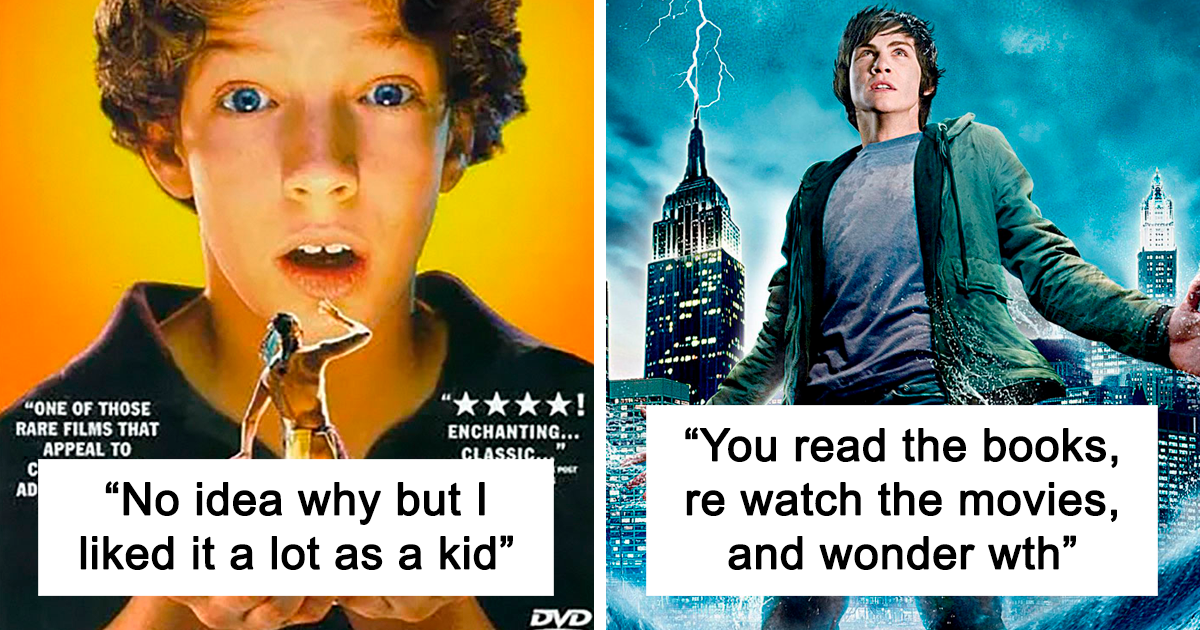
Rewatching a childhood favorite is a dangerous hobby. You press play expecting warm nostalgia, quotable dialogue, and perhaps a comforting reminder of simpler times. Instead, you may discover that the “romantic hero” is alarmingly controlling, the hilarious prank is technically a felony, and the charming high school students appear to have been held back for approximately 14 years.
That does not mean every dated movie deserves to be erased, canceled, or launched into the sun. Films are cultural time capsules, complete with the attitudes, blind spots, fashion disasters, and comedy trends of their eras. The awkwardness begins when nostalgia remembers only the soundtrack while adulthood notices everything happening between the songs.
Critics and audiences frequently reassess older movies as social expectations change, especially films built around questionable romances, invasive pranks, stereotypes, body-shaming, or behavior that was once dismissed as harmless comedy. Rewatching can preserve nostalgia while also revealing what has aged worst.
So, adjust your nostalgia goggles and prepare for secondhand embarrassment. Here are 30 movies that can feel surprisingly cringey when you rewatch them as an adult.
Teen Movies That Become Uncomfortable Adult Viewing
1. Grease
The songs remain irresistible, the jackets remain cool, and the final flying car remains completely unexplained. Yet the central message now feels awkward: Sandy earns romantic happiness after transforming herself to satisfy Danny’s social expectations. Add lyrics and conversations that treat pressure and sexual persistence as jokes, and the hand jive suddenly becomes an uncomfortable dance around some very dated ideas.
2. Sixteen Candles
This coming-of-age comedy once seemed like a colorful celebration of adolescent chaos. As an adult, however, it is difficult to ignore the racial caricatures, casual cruelty, and disturbing treatment of an intoxicated teenage girl. The romantic fantasy survives only if viewers sprint past several scenes while covering their eyes and yelling, “The 1980s were complicated!”
3. Revenge of the Nerds
The underdogs are supposed to be lovable, but many of their schemes involve spying, exploitation, and severe violations of consent. What once played as geeks getting revenge on bullies now resembles a collection of criminal complaints waiting to be filed. Being unpopular does not magically make every action heroic.
4. American Pie
There is still energetic chemistry among the cast, and some of the awkward conversations about adolescence remain funny. The infamous hidden-camera storyline, however, is impossible to excuse as harmless teenage mischief. Adult viewers are less likely to laugh and more likely to wonder why nobody called a lawyer. Even nostalgic rewatchers have described laughing occasionally while cringing at the movie’s treatment of privacy and women.
5. Never Been Kissed
A journalist poses as a high school student, develops feelings for a teacher, and eventually reveals that she is an adult. The movie wants this to feel like destiny. Adult viewers may instead spend the final act calculating how many careers, school policies, and professional boundaries have been hurled into a dumpster.
6. The Breakfast Club
The performances and central idea remain powerful: teenagers are more complicated than the labels adults assign them. Nevertheless, the romance between Claire and Bender feels less charming once his harassment is viewed without an ’80s soundtrack softening it. Even Molly Ringwald has discussed elements that have not aged well, while later reassessments have also noted the movie’s limited representation.
7. Pretty in Pink
Andie’s handmade style is still delightful, and James Spader remains magnificently unpleasant. The trouble is Duckie, whose relentless pursuit of Andie is presented as devoted friendship even when he repeatedly ignores her preferences. Adult viewers may sympathize with his heartbreak while also wishing he would discover boundaries, therapy, or another hobby. Modern reassessments have similarly found that parts of the supposed high school classic aged poorly.
8. She’s All That
A popular boy accepts a bet to transform an “unattractive” girl who is already obviously beautiful. His revolutionary makeover strategy involves removing her glasses. The film remains glossy fun, but its view of popularity, female value, and romantic honesty is about as deep as the puddle created by the iconic prom dance sprinkler system.
9. The Hot Chick
The body-swap premise offers plenty of opportunities for absurd comedy, but many jokes rely on gender stereotypes, racial caricatures, and the idea that anything outside conventional masculinity is automatically hilarious. Watching it today can feel like opening a time capsule filled entirely with discarded punch lines.
10. Easy A
Emma Stone’s performance remains sharp, charismatic, and far better than most teen-comedy protagonists deserved. Even so, adult viewers may notice that several jokes depend on homophobic language and stereotypes. The film’s broader defense of female autonomy still works, but portions of its dialogue reveal how quickly supposedly progressive comedy can date.
Romances That Look Less Romantic With Adult Eyes
11. The Notebook
The rain-soaked kiss is iconic, and the older couple’s storyline remains deeply moving. Unfortunately, young Noah’s behavior includes refusing to accept rejection and threatening his own safety to pressure Allie into a date. Teenage viewers may see passionate determination; adults may see a parade of red flags wearing suspenders.
12. Twilight
The blue-tinted atmosphere and dramatic soundtrack still provide premium comfort viewing. Yet Edward watches Bella sleep without permission, tracks her movements, and repeatedly frames control as protection. The romance becomes far stranger once adulthood teaches you that mysterious staring is not communication and bedroom trespassing is not a love language.
13. The Kissing Booth
Its candy-colored energy helped turn it into a heavily rewatched streaming hit, even while critics questioned its relationship dynamics. As an adult, the rules controlling Elle’s romantic choices, the possessiveness presented as passion, and the repeated disregard for personal boundaries make the central relationships feel less dreamy and more exhausting.
14. Love Actually
The airport montage still delivers holiday warmth, but several storylines weaken under adult inspection. A man silently pursues his best friend’s wife, a prime minister becomes interested in an employee while holding immense power over her, and another relationship treats a woman’s body as a recurring office joke. Love is all around, but apparently human resources is not.
15. Bridget Jones’s Diary
Bridget remains funny, vulnerable, and wonderfully imperfect. What feels different now is the movie’s obsession with treating her ordinary body as a crisis requiring constant commentary. Adult viewers may also recognize how inappropriate her workplace relationships are and wonder why every professional gathering resembles a speed-dating event with stationery.
16. What Women Want
A male advertising executive gains access to women’s private thoughts and uses that information to advance his career and manipulate relationships. The fantasy initially appears to teach him empathy, but an adult rewatch raises uncomfortable questions about privacy, workplace harassment, and why supernatural eavesdropping was considered an acceptable personal-development program.
17. Overboard
A man discovers that a wealthy woman has amnesia, convinces her that she is his wife, takes her home, and puts her to work caring for his children. The movie packages deception and exploitation as romantic revenge. Chemistry between the leads keeps it watchable, but the premise now sounds less like a comedy and more like the opening episode of a true-crime documentary.
18. Garden State
The soundtrack remains excellent, and the portrayal of post-college uncertainty still connects with some viewers. Yet Sam often functions less like a complete person and more like a quirky emotional rescue service for a troubled male protagonist. The movie’s carefully arranged sadness can also feel painfully self-consciousas though every lamp is waiting to be photographed for an indie album cover.
19. Blank Check
A child receives a fortune, buys a mansion, hires adults, and becomes romantically involved with an adult woman who believes he is connected to a mysterious wealthy employer. The fantasy of unlimited childhood spending is still appealing. The kiss between an adult and a child is not. That scene arrives like a surprise tax audit for your nostalgia.
20. Shallow Hal
The movie attempts to argue that inner beauty matters, but it spends most of its running time using larger bodies as visual punch lines. Its moral message and comic machinery work against each other so aggressively that the lesson becomes nearly impossible to hear over the fat jokes. Modern criticism frequently identifies it as an especially painful example of early-2000s comedy aging badly.
Childhood Favorites That Test the Power of Nostalgia
21. The Lizzie McGuire Movie
The Roman setting, glittery wardrobe, and finale remain concentrated early-2000s joy. As an adult, however, Paolo’s plan is hilariously fragile, the supervision of the school trip seems nonexistent, and several musical moments inspire affectionate secondhand embarrassment. Adult rewatch commentary has similarly celebrated the nostalgia while admitting that parts of the movie are spectacularly cringey.
22. Space Jam
It combines professional basketball, cartoon physics, celebrity cameos, and a soundtrack that once made every school gym feel important. Adult viewers may notice that the plot is mostly a feature-length marketing meeting with animated interruptions. Still, the sheer confidence of pairing Michael Jordan with Bugs Bunny makes the cringe oddly comforting.
23. Star Wars: Episode IThe Phantom Menace
The visual imagination is enormous, and the final lightsaber duel remains thrilling. The stiff dialogue, trade negotiations, awkward comic relief, and strangely emotionless conversations are harder to overlook as an adult. Nostalgia has encouraged a kinder reassessment of the prequels, but even sympathetic viewers recognize that affection and objective smoothness are not the same thing.
24. Batman & Robin
The neon production design, endless ice puns, and anatomically enthusiastic costumes make this superhero adventure impossible to take seriously. That may now be its greatest strength. As an adult, you stop expecting a dark Batman story and begin appreciating it as a two-hour toy commercial directed by a nightclub laser. It remains a famously chaotic yet strangely rewatchable cinematic disaster.
25. Catwoman
The basketball scene alone has become a monument to baffling editing. Add catnip jokes, supernatural cosmetics, leather-heavy costume design, and dialogue that sounds translated from another planet, and the adult rewatch becomes a festival of disbelief. The movie is regularly remembered as one of the weakest modern comic-book adaptations.
26. Wild Wild West
Will Smith battles a giant mechanical spider in a steampunk Western filled with clashing tones and jokes that land with the grace of an anvil. Childhood viewers may remember gadgets and explosions. Adults are more likely to notice racial humor, aggressive innuendo, and a script that appears to be arguing with itself.
27. The Master of Disguise
Children may be delighted by silly voices, exaggerated costumes, and the famous turtle disguise. Adults may feel as though they have accidentally wandered into a 90-minute commercial for a discontinued children’s cereal. The experience becomes less “family comedy” and more “test of psychological endurance featuring an impressive makeup department.”
Movies Whose Cultural Problems Become Harder to Ignore
28. The Blind Side
The film presents itself as an uplifting true story, but adult viewers may be uncomfortable with how strongly it centers a wealthy white family while simplifying the perspective and agency of Michael Oher. The emotional structure makes the family the engine of his success, reinforcing a familiar Hollywood savior narrative. Later criticism has made the movie’s framing even more difficult to watch without questions.
29. Gone with the Wind
Its scale, costumes, performances, and place in film history remain significant. Its romanticized portrayal of the antebellum South, racist stereotypes, and distortion of slavery are equally significant. Adult viewing requires historical context rather than uncritical nostalgia, which is why modern presentations have often paired the movie with explanations of its damaging depictions.
30. Breakfast at Tiffany’s
Audrey Hepburn’s style and screen presence remain magnetic, but Mickey Rooney’s grotesque portrayal of Mr. Yunioshi overwhelms any attempt at carefree nostalgia. The performance is not merely dated; it is a glaring racial caricature that interrupts the film every time it appears. Adult viewers may still admire the movie’s elegance while confronting the ugliness built into it.
The Adult Rewatch Experience: What Changes When You Change
The strangest part of rewatching an old favorite is realizing that the movie has remained exactly the same. The DVD did not sneak into film school overnight. The streaming version did not develop new political opinions. We changed, and adulthood arrived carrying a clipboard.
As children and teenagers, we usually follow emotion before logic. We understand that the hero wants the girl, the underdog wants revenge, and the awkward kid wants popularity. We rarely stop to investigate whether the hero respects the girl, whether the revenge is wildly disproportionate, or whether popularity is worth betraying every recognizable feature of your personality.
Adults notice practical consequences. We wonder who paid for the damaged building, why no teacher reported the obvious misconduct, and how a supposedly unemployed character affords a spacious apartment in Manhattan. We also recognize power imbalances more easily. The charming boss dating an employee no longer seems spontaneous. The older love interest pursuing a teenager stops looking sophisticated. The friend who refuses to accept “no” becomes less devoted and more alarming.
Comedy changes too. A joke that once seemed outrageous may now feel lazy because adulthood exposes the person standing underneath the punch line. Body-shaming jokes become less amusing after seeing friends struggle with self-image. Stereotypes become harder to ignore after meeting people whose lives are reduced to those stereotypes. Cruelty becomes less entertaining when you understand how long humiliation can stay with someone.
Then there is the technical cringe. Childhood imagination can turn plastic sets into magical kingdoms and clumsy computer effects into breathtaking spectacle. Adult eyes notice the visible wires, inconsistent lighting, recycled explosions, and extras who clearly have no idea where to run. Dialogue that once sounded profound may resemble something written in the margin of a high school notebook immediately after a breakup.
Yet cringe is not always a reason to stop watching. Sometimes it becomes part of the entertainment. Batman & Robin is more enjoyable when treated as an explosion of camp rather than a failed attempt at seriousness. The awkwardness of The Lizzie McGuire Movie can strengthen its nostalgic appeal because it captures an era when matching socks, butterfly clips, and public lip-syncing seemed perfectly reasonable.
A thoughtful adult rewatch allows two reactions to exist simultaneously. You can love a performance while criticizing the screenplay. You can sing every lyric from Grease while questioning its romantic message. You can admire the historical importance of an older film without defending its stereotypes. Appreciation does not require surrendering judgment, and criticism does not automatically erase affection.
In fact, noticing these problems may lead to a richer relationship with movies. Instead of consuming them as untouchable artifacts of childhood, we begin seeing how stories influence ideas about romance, beauty, popularity, race, masculinity, and success. We notice what earlier filmmakers assumed audiences would acceptand what modern audiences now challenge.
The ultimate adult-rewatch experience is therefore a mixture of laughter, discomfort, fondness, and disbelief. You may pause the movie to explain to younger viewers that certain behavior is not normal. You may text an old friend asking, “Why did we watch this every weekend?” You may also discover that beneath the dated jokes and questionable relationships, a sincere performance or emotional moment still works.
That contradiction is the real power of nostalgia. It does not preserve the past perfectly; it preserves how the past felt. Rewatching the movie reveals the distance between that feeling and the person you have become. Sometimes the result is beautiful. Sometimes it is educational. Occasionally, it involves a grown adult whispering, “Oh no,” while a character makes the worst romantic decision imaginable.
Conclusion
Movies do not have to age perfectly to remain meaningful. Some of the titles on this list still feature memorable performances, fantastic music, creative production design, or scenes capable of transporting viewers directly back to childhood. Their flaws simply become more visible when examined through adult experience and modern cultural awareness.
The best response is neither blind defense nor automatic rejection. Laugh at the ridiculous costumes, question the unhealthy romances, recognize the stereotypes, and keep the genuinely good parts. A cringey adult rewatch can ruin a favorite, rescue it as camp, or transform it into a valuable conversation about how entertainmentand audienceshave changed.